Commercial Roofing in Maryland Farms, Brentwood, TN
The first sign in a mature office park is a ceiling tile that has been replaced twice in the same spot. A property manager notices the second replacement, and the pattern says the leak is slow, the source is above and the roof has been patched around it more than once. Maryland Farms, the office complex in Brentwood, TN, was built a few years after the city's 1969 incorporation on land that had been an American Saddle Horse farm and race track. A park that old may have roofs repaired, recovered or replaced in sections, and the layers show the history.
We trace the second tile backward to the first patch, and from there to the cause.
What an older office park teaches
One multi-tenant office property in the park, a 1975 Class B building of about 117,000 square feet on roughly 5.6 acres, shows the scale of office space that has stood there for decades. The age of an office park is a reason to look for older assemblies, extra layers and patches from several eras.
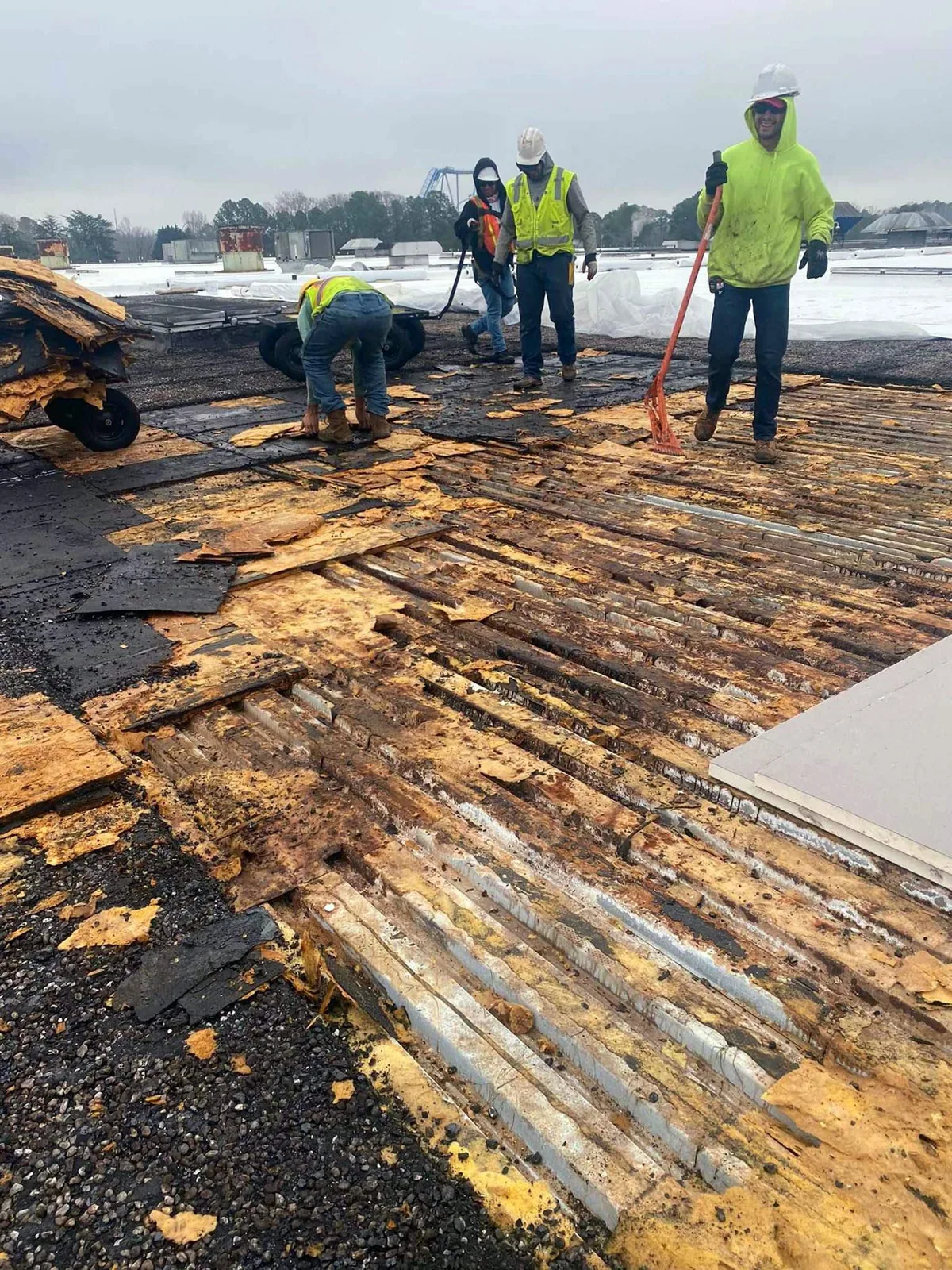
On the first walk we cut a core to count layers and read the insulation. A roof with three layers has had two earlier decisions made about it, and the wet one is usually the oldest. The count tells us whether a recover is even possible, because a deck that already carries several layers may not take another.
Patches tell their own story. A cluster of patches around one drain means the drain has been the problem for years. A line of patches along a seam means the seam has been opening and closing with the seasons. We photograph each cluster and mark it on the plan, because the pattern shows where the cause is and where the money has already gone.
Tenants, ceilings and the timing of repairs
A multi-tenant office roof is shared, but the ceilings under it belong to different tenants with different schedules. A leak over one suite can damage a neighbor's carpet two rooms away, because water follows the deck. The property manager has to know whose space is affected, who must be warned and when the work can happen.
We map each finding to the suites below it and tell the manager which tenants to notify. Roof work is scheduled outside business hours where possible, and the crew protects the ceiling grid, the carpet and any equipment under the work area. The report lists each finding by suite, so a landlord and tenants see the same facts.
Interior evidence is part of the trace. A property manager's list of stained tiles, with dates and weather, is as useful as anything we find on the roof. If the stains appear only after rain from the west, the cause is on the west side. If they appear after a thaw, the cause is probably ice at a drain or a seam opened by cold. We ask for the list before we climb.
Ground-level mechanical access
Shops, a grocery store and hotels sit within about a mile of the Eastpark property, which has 469 parking spaces, the profile of an office park that is open and active during the day. Many office parks of this age keep mechanical equipment at ground level or on low roofs that are easy to reach, which makes service visits frequent and walk-path wear common.
We look for scuffing, thin spots and cuts along any route a technician uses, and we recommend walk pads where wear shows. A walk pad is cheap, and a puncture under one is cheaper to prevent than to find after a rain.
Heat, rain and tornado season
Franklin, the market city, gets about 53.79 inches of precipitation in a year and July highs near 90.8 degrees on average. Brentwood falls in the Dixie Alley tornado region, where risk peaks from November through May; the city's list of notable tornadoes begins with December 24, 1988 and includes January 30, 2013 and March 1, 2017. An older roof is more likely to have loose edges, aged sealant and worn flashings when a storm line arrives.
We check edges and terminations before the season, photograph them and fix what is loose. After a storm, we check again, and the two sets of photographs show what the storm changed.
Heat movement is easy to overlook in an office park. A roof that bakes all afternoon expands against curbs, pipes and parapets, and sealant at those joints loses its grip over the years. We press on each sealed joint, note any that no longer hold and replace them as part of regular maintenance, which costs far less than a repair after a wet week.
Repair, recover or replace
The decision follows the core. With dry insulation and local damage, a repair is enough. If the sheet is worn but the layers are dry and the deck is sound, a roof recover may fit. If several layers are wet, a replacement with tear-off is the scope the evidence supports, and the report says so with the core photographs beside it.
Cost follows the scope: repairs are small, a recover adds a membrane and a replacement adds tear-off, disposal and the insulation current code requires. A change of state codes on August 17, 2025 to the 2021 international editions affects insulation and assembly choices, and the city confirms the edition for a project.
Planning for the roof you cannot see
Some roofs in a mature park may need replacement within a few years, and the budget should not be a surprise. The core results, the moisture scan and the repair count give a property manager what is needed to rank roofs for a capital request. A roof with wet insulation in two cores and a repair every winter belongs at the top of the list. A roof with dry cores and tight seams can wait.
We write the ranking with the evidence beside it and offer a short written summary for the owner or lender. If the owner wants a second opinion on timing, the same photographs and cores can be reviewed by anyone.
Planned work is almost always cheaper than emergency work, because material can be ordered, tenants can be told and the weather window can be chosen. The ranking turns an unknown into a calendar.
A file the next manager can read
Property managers change, and the roof history often leaves with them. We leave a file with a roof plan, a photo trail, core results and a ranked list of findings. The roof asset record adds each later visit, so the file grows with the roof.
For owners with other offices nearby, the same file format covers Brentwood and Cool Springs, and a commercial roof inspection in either place ends the same way.
A maintenance visit includes clearing drain strainers, checking sealant at every penetration, walking the seams, photographing the condition of each section and updating the file. The visit takes a morning on a small building and a day on a larger one, and it produces the dated trail that every later decision rests on.
Commercial Roofing Questions
How do you find the source of a slow leak?
We map the stained tiles, follow the deck line uphill and probe seams, drains and equipment curbs in that section. A moisture scan confirms which layer is wet.
Can a roof with several layers be recovered?
Only when the insulation is dry and the deck can carry more weight. A core and a scan decide, and wet layers call for tear-off.
Who is told when roof work affects a suite?
The property manager, with a list of affected suites and dates. We provide the map and the schedule.
Do walk pads really help?
Yes. They protect the membrane along service routes, where most punctures begin.
What does the roof walk leave me with?
A short written summary with dated photographs, causes for each finding and a recommended next step.