Commercial Roofing in Cool Springs, Franklin, TN
A ceiling stain on the ninth floor of a Cool Springs office building is the first sign of a failure that started somewhere on the roof above it. The water did not fall straight down. It ran along a deck, a pipe or the top of a board until it found a way through. In Franklin, TN, we follow that failure back from the stain to the opening, and we do it on the actual roof with photographs, so the cause is a fact and not a guess.
The district
Cool Springs sits in the McEwen character area, which spans 6,680 acres between Brentwood to the north and the Harpeth River to the south, with about 1,100 vacant acres remaining, mostly east of I-65. CoolSprings Galleria sits at the I-65 and Moores Lane interchange and is the center of a regional commercial district of about 150 stores and 6,500 parking spaces.
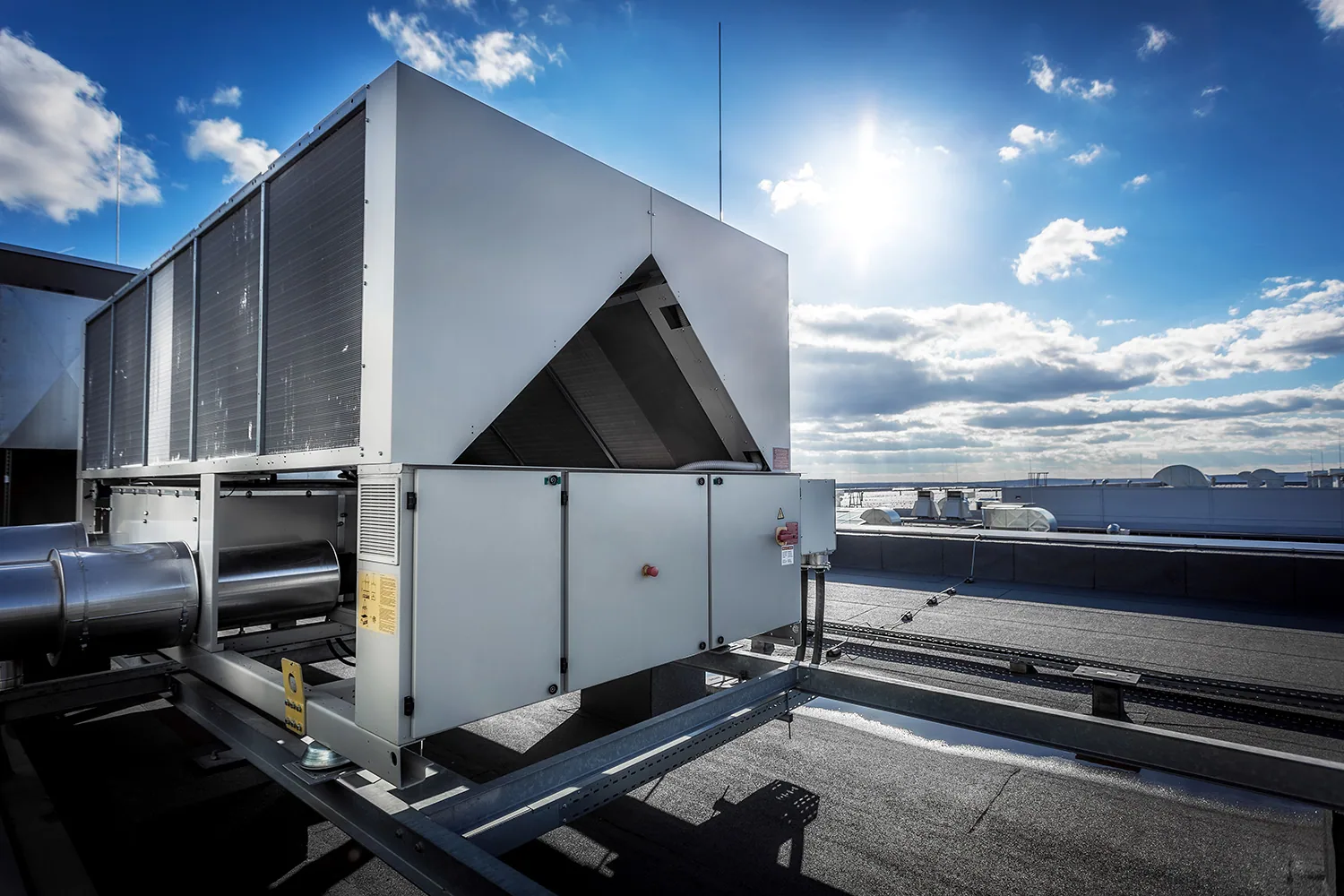
Offices east of I-65 usually stand six to eleven stories, and infill is turning surface parking lots into office buildings and hotels. The result is a district of tall, low-slope roofs with rooftop mechanical equipment. That equipment is where most failure sequences begin.
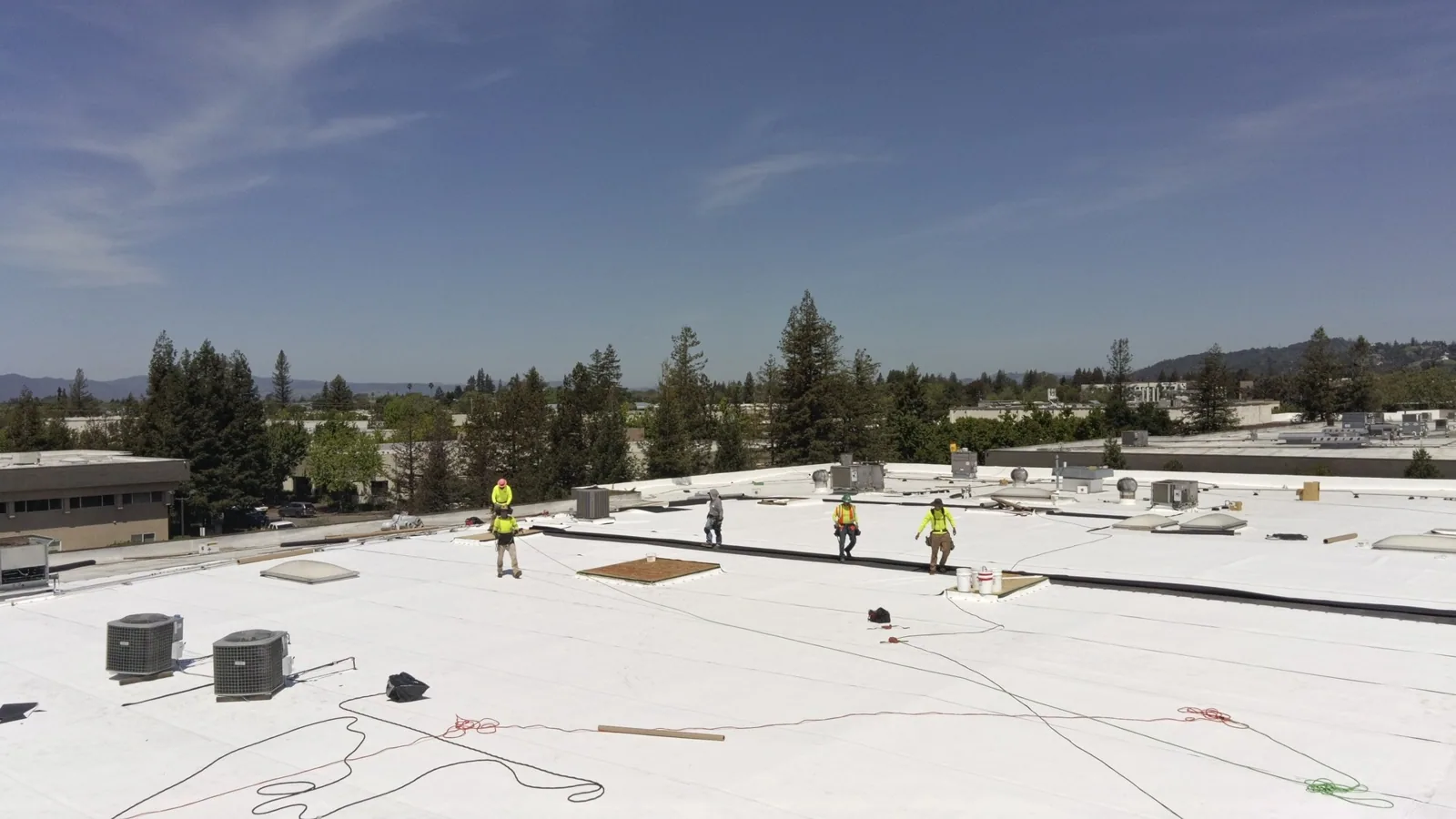
A Class A multi-tenant office building on Cool Springs Boulevard covers 263,598 square feet and dates from 2008, and Franklin has 47 office listings that add up to about 2.1 million square feet, so one owner can hold several roofs of that scale. We measure each roof and read its layers one section at a time.
The same lesson holds for hotels and parking-structure buildings now filling in the district. A new building has a new roof, but a new roof still has curbs, drains and flashing, and its first year is when installation faults show.
What fails first
On a tall office roof, the first failures are around the equipment. A curb flashing corner opens. A condensate line drips onto the sheet. A pipe boot cracks at the collar. A drain strainer clogs with leaves. None of these looks serious from the roof hatch. Each can start a sequence.
We number the curbs and drains on the roof drawing. We photograph each one. Then we check them in order. A clean list of numbered items is the fastest way to find the one that failed.
New roofs fail in a pattern too. A flashing corner folded badly. A boot sealed with the wrong sealant. A drain bowl set a quarter inch proud of the deck. These are installation faults, and they show up in the first rain seasons. A first-year walk finds them while a warranty still covers them.
What is happening underneath
Water that enters at a curb spreads along the top of the insulation. It soaks the top board. It finds the next seam, the next penetration or the deck. The ceiling stain may be thirty feet from the opening.
This is why a patch at the stain does nothing. The opening is somewhere else, and the wet layer between them keeps feeding the leak. A moisture survey maps the wet layer. A core cut confirms it. Then the repair can start at the opening and extend to the edge of the wet area.
Tall roofs add a special problem: the interior stack. Water that enters at the roof can run down a pipe chase or a stair core and appear several floors below. The stain a tenant reports may be two floors under the real opening. We ask which floor, which room, and which wall, then work upward through the building's stack to the roof.
Weather on tall roofs
Normals for 1991 to 2020 give the city about 53.79 inches of precipitation, with July highs near 90.8 F, an all-time high of 108 F and a low of minus 22 F. A tall roof is exposed on every side, so wind and heat load are greater than on a ground-level roof.
The July 2026 warning for northeastern Williamson County named Franklin and gave 60 mph gusts and three-quarter-inch hail as the numbers to plan around. Once a warning like that has passed, the edges get checked first, then the equipment, then the field.
How to confirm the cause
A hose goes on the suspected curb or flashing, starting low and working up, while a second person watches the ceiling below. We probe seams. We check each drain by running water and timing how long it takes to clear. A moisture survey looks for wet insulation, and a core cut confirms.
The standing-water line is part of the test. A pond that outlasts the rain points to a low deck or a blocked drain. Clearing a strainer is a small repair. Tapered insulation to fix a low spot is the bigger job. The report separates them.
A good test leaves a trail. We note the time, the water used, the location tested and what the person watching the ceiling saw. That trail is the proof that the cause was found. If the stain stops after the curb is sealed and tested, the sequence is closed. If it does not, we move to the next item on the list.
Repair or replace
Local failures over dry insulation call for repair. A roof that is aging but dry might be coated or covered. Where wet insulation spreads across a section, that section gets replaced. Every path is priced as a range, and waiting a year has its own cost.
Permits follow the state's 2021 codes, which took effect August 17, 2025, unless the city has adopted a stricter edition, and we ask before pricing. We confirm the edition at the permit office. Work at the curbs follows the same order as rooftop equipment curb repair and flashing failure repair: corners first, then caps, then bases.
Cost follows cause. A resealed curb corner is small. A rebuilt curb with new flashing is larger. A section of wet insulation is the largest, since it adds board replacement and a new membrane over the area. Access and staging are listed as their own lines, so a manager can pull the building's costs apart from the roof's.
What to check next
Once the repair is done, keep an eye on the ceiling through the next heavy rain. Check the strainers. Look at the curb corners. Put the date in the roof file. Walking the roof each spring before storm season is a habit worth keeping, and preventive maintenance can carry it between larger projects.
Owners with property nearby on the Carothers Parkway corridor or along Mallory Lane and Royal Oaks Boulevard can use the same record format, and a roof condition report can rank the roofs together.
Commercial Roofing Questions
Why is the stain not under the hole?
Water runs along the deck, a pipe or the top of the insulation before it drips, so the stain marks where it emerged, not where it entered.
Can a tall building's roof be worked on while it is occupied?
Yes. We plan access, noise and air intakes with the property manager before any date is set.
What is a numbered curb list?
A drawing that numbers each rooftop curb and drain, with photographs. It narrows a search to a few items.
How is a hail warning handled?
We walk the edges first, then the equipment, then the field, and record what we find with dates.
What does a roof walk cost?
The walk is the start of the record. We give a budget range with the written summary.