Duro-Last Roofing Systems in Franklin, TN
A prefabricated sheet that does not quite reach a parapet is the first sign of a measurement failure, and on a Duro-Last roof in Franklin, TN, it is a lesson that starts before the sheet is made. The membrane is cut and welded to size in a factory from field measurements. If the measurements are off, the sheet arrives wrong and cannot be stretched to fit. So we teach the failure from the start: the survey, the drawing, the check and the second check, then the install.
What the system is
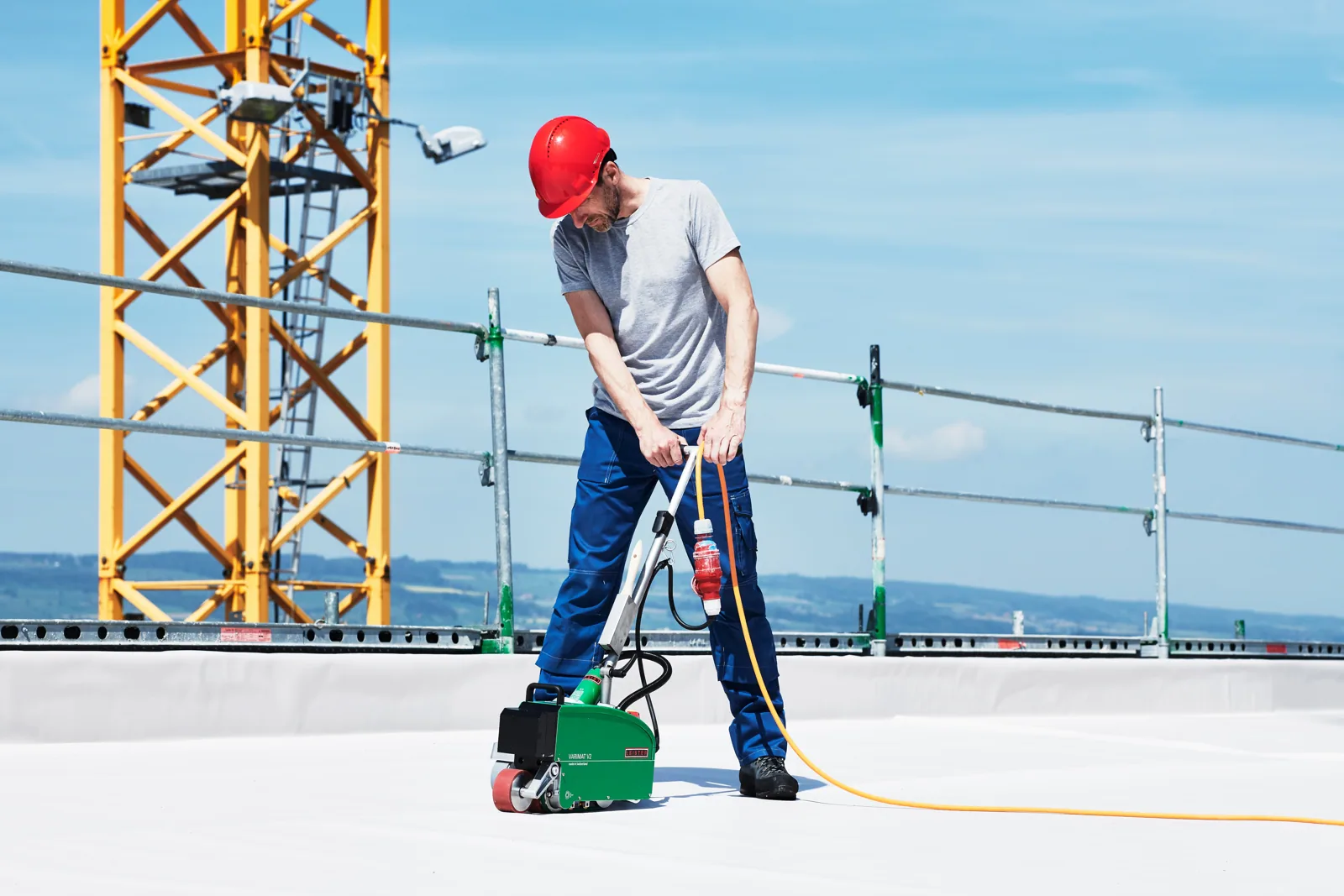
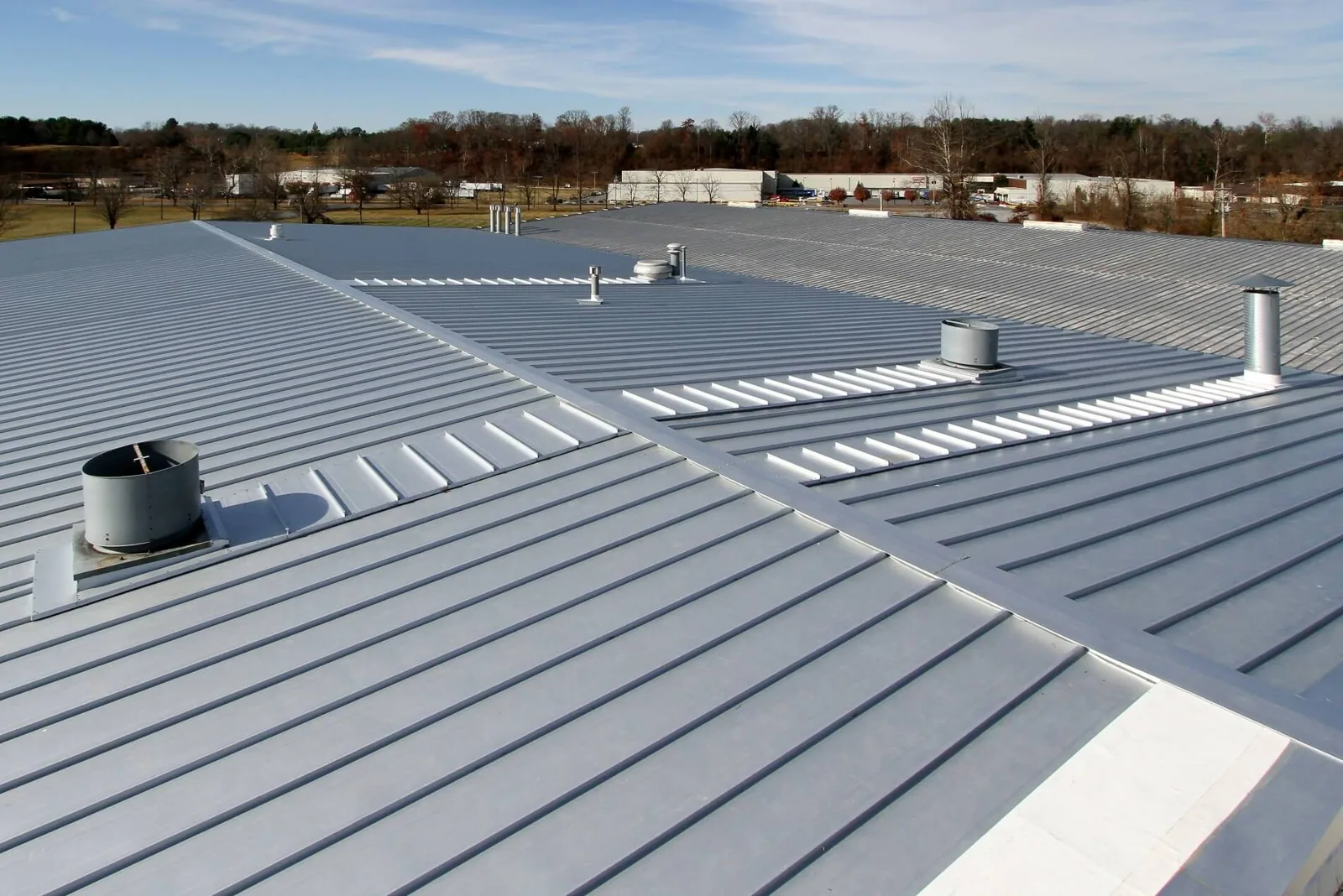
Duro-Last is a manufacturer of PVC roofing that is fabricated to the dimensions of each roof. Large panels are welded in the factory, with flashings, boots and corners made in advance, so fewer seams are welded on the roof. Where panels overlap, the field seams are welded with hot air and probed for bond. A repair is made by cleaning the surface and welding on a new piece.
The sheet is PVC, so it resists grease, many chemicals and standing water better than some other membranes. It also ages in the way PVC does, with slow plasticizer loss that can stiffen the sheet. That slow stiffening is why an older PVC roof gets a probe at every seam before any patch goes on.
Prefabrication shifts risk from the roof to the survey. A conventional membrane can be cut on site to fit a surprise. A prefabricated one cannot. That is why the drawing, not the sheet, is the key document, and why we keep it with the roof file after the job.
The first sign: a bad measurement
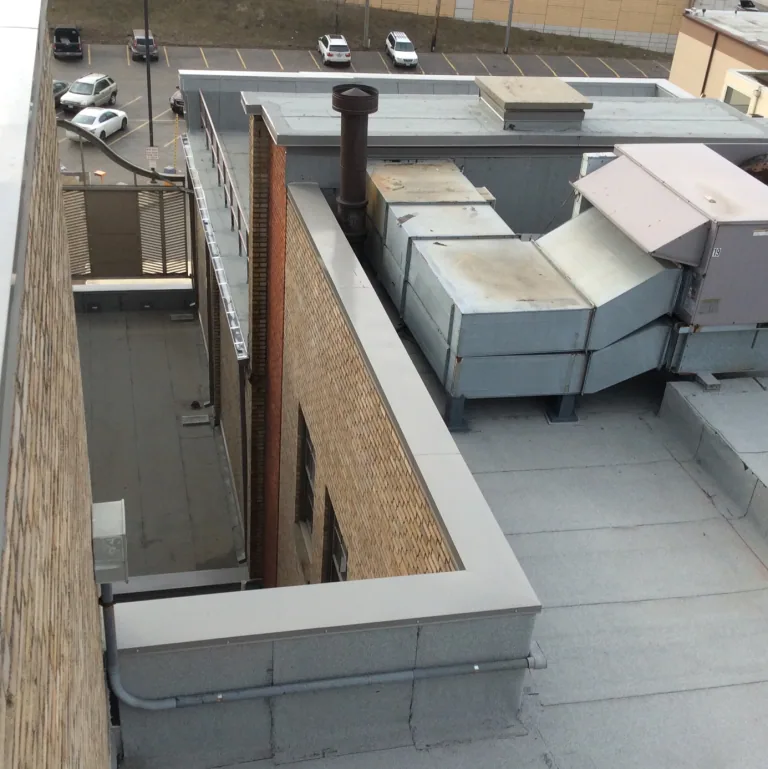
The first sign of a prefabricated-roof failure is often a measurement error. A parapet taller than recorded. A curb moved since the survey. A drain a foot off. The sheet arrives and does not fit, and the crew must improvise in the field. Improvisation produces extra seams in the worst places.
We prevent it by measuring twice. The survey records dimensions, penetrations, curb heights and drain positions on a drawing. A second person checks the drawing against the roof. When the material arrives, the crew checks it against the drawing before unrolling a single panel.
The drawing also records what the sheet will sit on. Deck type, insulation thickness, parapet height and the position of every drain go on it, and the existing roof is probed for wet insulation. If the old roof must come off, the tear-off is planned by section. If it can stay, the surface is cleaned and tested before the new sheet is attached through it into the deck.
Document the survey with photographs from the same positions the crew will use later. A photo of each corner, each curb and each drain, tied to the drawing, gives the installer a visual check and gives the manager a record of the roof as it stood before the new sheet covered it.
Where it shows up
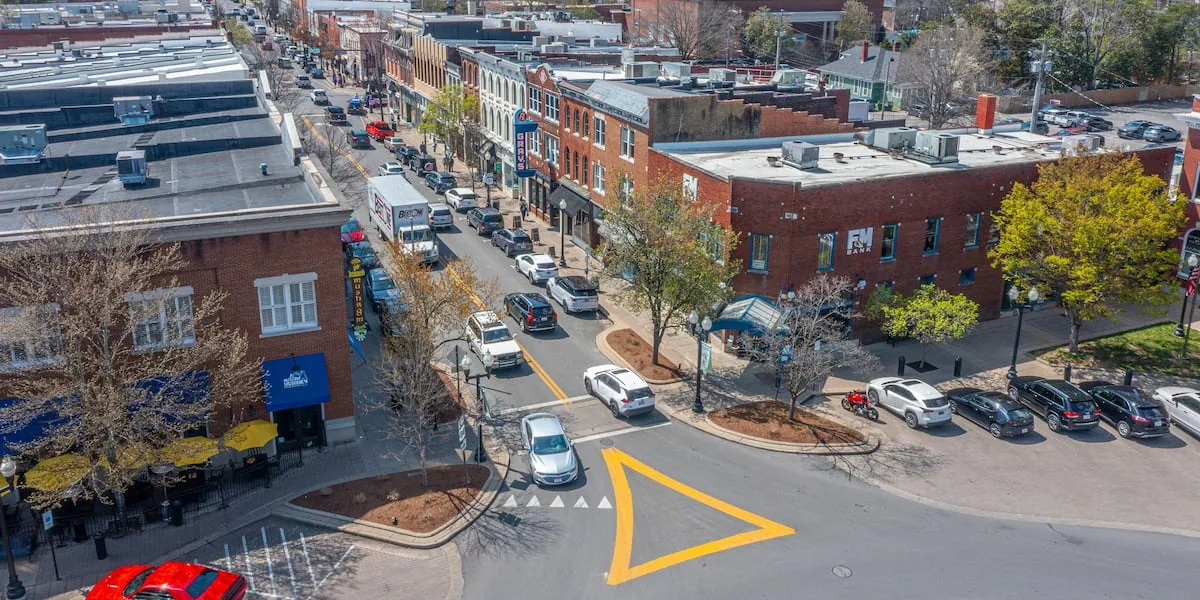
Industrial use is primary in Franklin's Southall area, concentrated along Columbia Avenue south of Downs Boulevard, including a rock quarry, and it represents nearly half of the region's industrial development. Commercial and office space next to Columbia Avenue is in larger, warehouse-style buildings.
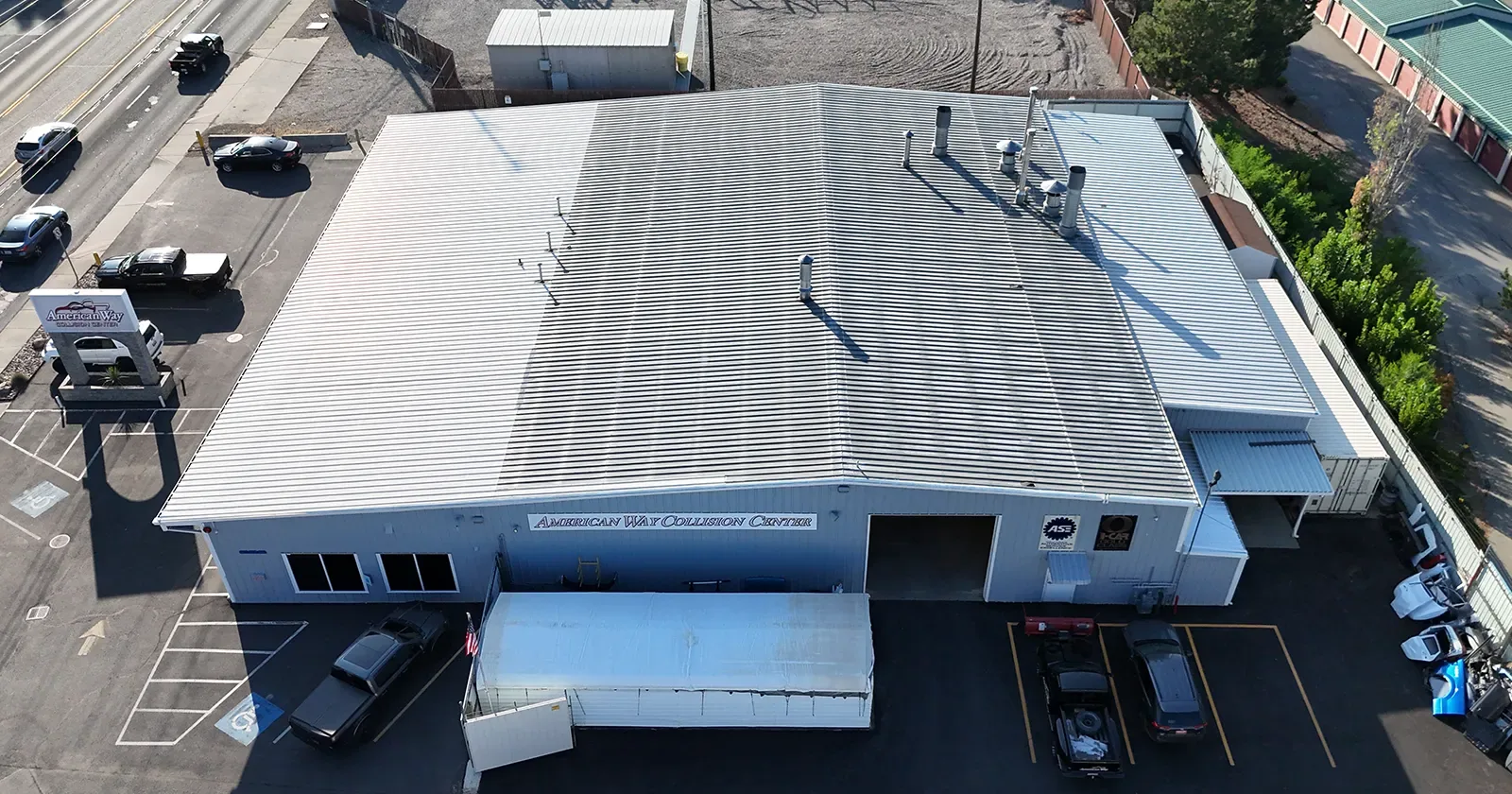
Wide roofs with many penetrations are the places where prefabrication helps. Pipes, vents and curbs can be boots made to fit, welded in the factory. In Southall along Columbia Avenue, the survey starts with those penetrations, since each one needs a measured position.
Wide roofs also hold water in more places. A low spot that was shallow on survey day can pond after a hard rain, and the drain strainer is the first suspect. We check strainers on every visit and record the standing-water line, since a pond left alone tests every seam it touches.
Getting the sheet to the roof
North of Mack Hatcher Boulevard, numerous curb cuts, driveways and access roads on Columbia Avenue create congestion that affects truck and crew access. A prefabricated roof arrives as large rolls on a truck, and the truck needs a place to turn and unload. The crane or lift needs a place to stand. The plan names them before the order is placed.
On an occupied building, the same access plan keeps tenants and deliveries clear of the lift. A roof is not finished at the roof. It is finished at the dock, the road and the lift. A plan that ignores access fails the same way a bad seam does, only earlier.
How to confirm the weld
We probe every field seam with a blunt tool and look for unbonded edges. We pull a fastener test at the perimeter. We check flashings at corners and curbs. A moisture survey shows whether the insulation is dry before the sheet is attached over it, and a core cut confirms.
Heat plays a part. By NOAA's normals, a July mean high of about 90.8 F and a record of 108 F are hard on a dark PVC sheet. A dark PVC sheet runs hotter than the air, so welding is scheduled for the cooler hours and the crew watches for softening where the sheet touches fasteners.
Hail and wind come too. A warning issued for northeastern Williamson County in July 2026, which named Franklin, mentioned gusts near 60 mph, hail to about three-quarters of an inch and possible roof damage. After a warning like that we walk the edges first, then the boots, then the field.
Repair or replace
A roof with local failures over dry insulation takes a repair. A sheet that still welds but is stiffening may stay on a shorter inspection cycle. A sheet that will not weld, or that has cracked across a section, needs replacement of that section. A roof recover is an option when the insulation is dry and the roof can carry the added layer.
The permit office confirms which edition governs a reroof; the state's 2021 codes have applied since August 17, 2025, and cities may adopt stricter ones. A Sika Sarnafil sheet is another heat-welded thermoplastic, and a Versico roof has seam and flashing details of its own.
What to check next
After an install, probe the seams after the first heavy rain. Check the boots. Look at the perimeter fasteners. Write the date in the roof file, and keep the drawing, since it is the record of what was measured and what was made.
The file records the sheet layout, the seams, the repairs and the dates. It shows a lender or an insurer how the roof was kept, and it gives the next crew a starting point.
Keep one more habit. Before any prefabricated reroof, walk the roof with the person who will approve the drawing, and let them point to the curbs and drains on the real roof as they find them on paper. Two sets of eyes catch the curb that was moved last year and the drain that was capped. Ten minutes on the roof saves a wrong panel.
Commercial Roofing Questions
Do you work on Duro-Last roofs?
We install, repair and maintain prefabricated PVC membranes of this kind, after confirming the sheet and seams.
Why measure twice?
The sheet is made to size off site. A wrong measurement cannot be fixed on the roof.
Can a prefabricated sheet be repaired?
Yes. We clean the surface, weld on a new piece and probe the bond.
What happens to the old roof?
It can be torn off, or covered if the insulation is dry and the structure can carry the added layer.
How long does installation take?
It depends on roof size and details, though prefabrication shortens the time the roof is open.