Commercial Roofing on Columbia Avenue and in Southall, Franklin, TN
A dark ring on a warehouse floor, under a drain that is not leaking, is the first sign of a roof failure that has moved sideways, and on Columbia Avenue in the Southall area of Franklin, TN, where industrial roofs run long and wide, it is a lesson in how far water travels. The ring is not under the opening. It is under the place where a line of insulation finally let go. We walk that failure backward from the floor to the roof and then along the deck to the real opening.
The district
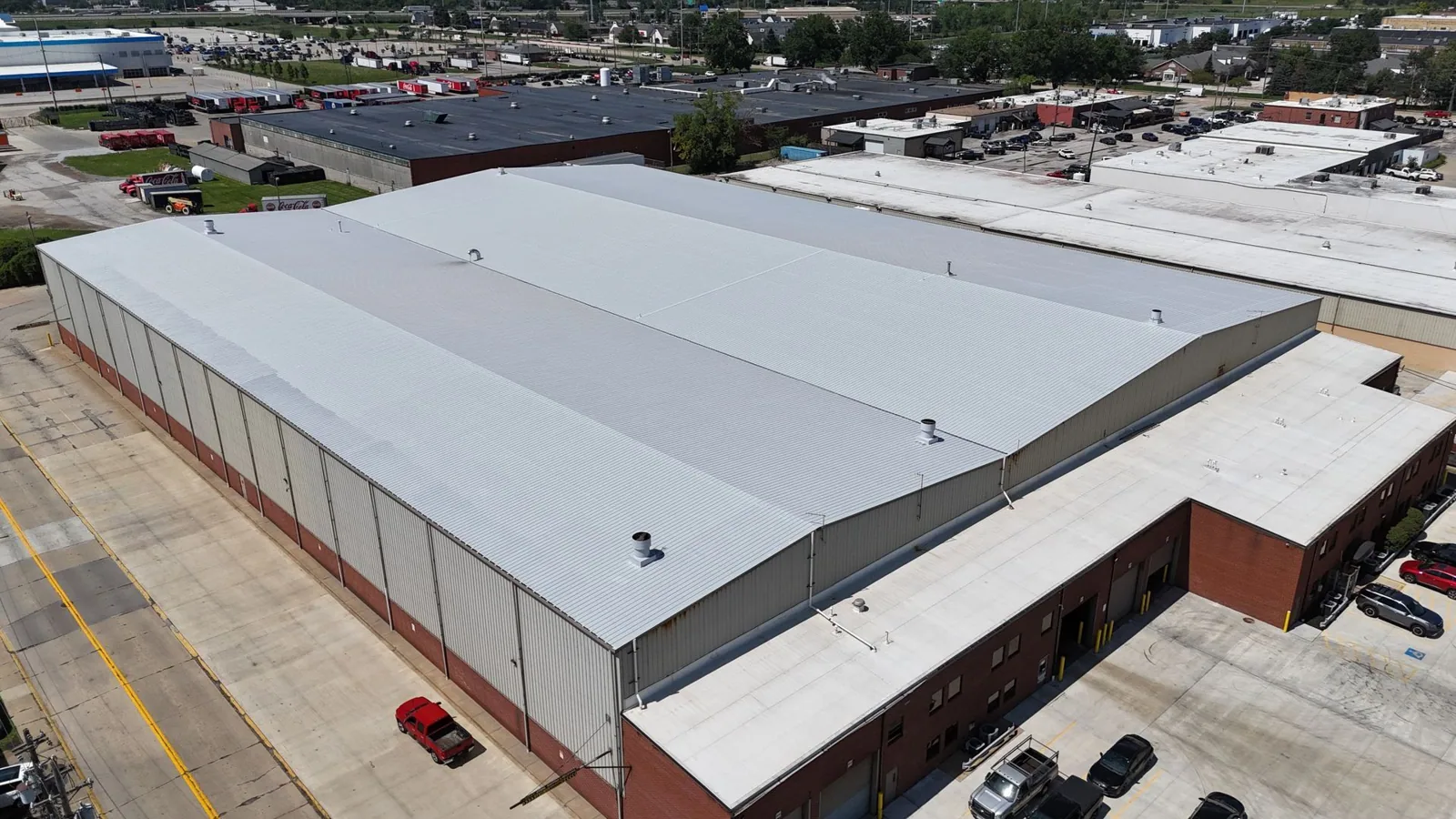
Southall's main use is industrial, concentrated along Columbia Avenue south of Downs Boulevard around a rock quarry, and it accounts for nearly half of the region's industrial development. Commercial and office space adjacent to Columbia Avenue is in larger, warehouse-style buildings.
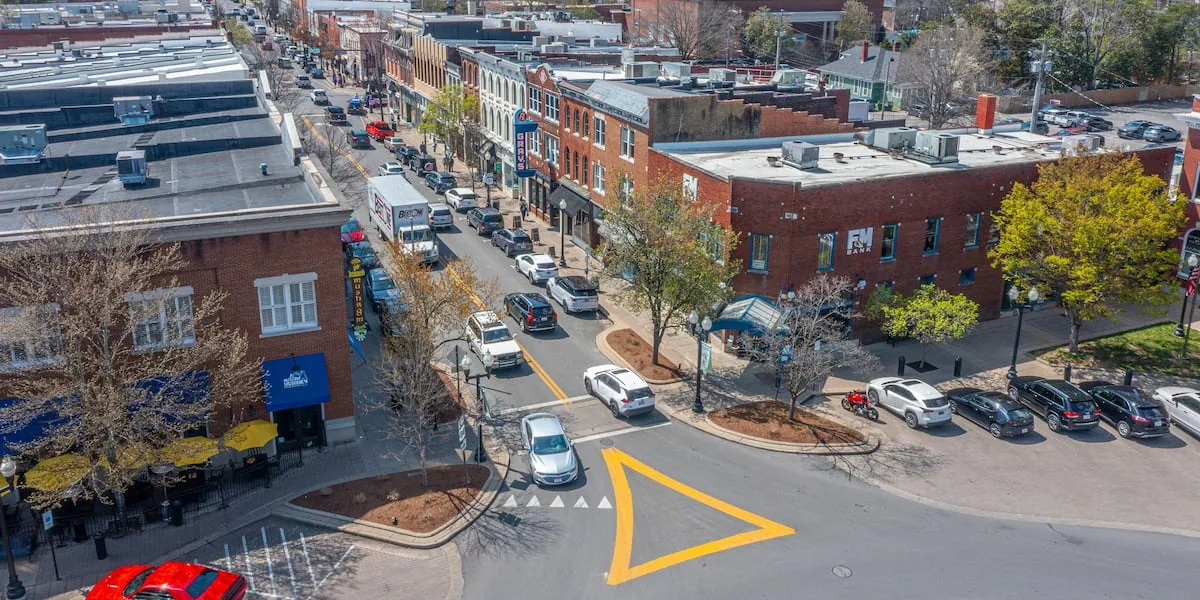
Columbia Avenue is the primary corridor through Franklin's Southall area, shifting from suburban to urban character moving north. Up north of Mack Hatcher Boulevard, Columbia Avenue's many curb cuts, driveways and access roads clog with traffic and slow trucks and crews. Large buildings and busy roads shape the work.
Truck access is part of the scope. A tractor-trailer delivering roll goods needs a place to turn, a lift needs ground that can carry it, and a dumpster needs a spot that does not block a dock. We walk the site with the property manager before the order is placed, mark each point on a plan and name the delivery hours. Dock hours and shift changes decide when material can arrive.
What fails first
On a long industrial roof the first failures are at the penetrations and the drains. A vent stack with a cracked boot. An exhaust fan curb with an open corner. A drain strainer clogged by dust and leaves. A seam running along a wall where the sheet has pulled. Each is small. Each can start the sequence.
We number the penetrations and drains. We photograph each. We check them in order, starting with the ones closest to the stain. On a roof with forty penetrations, a numbered list is the only way to keep the search honest.
Dust and debris matter on an industrial roof. Plants that vent particulate leave a film on the sheet and fill drain strainers faster than a clean office roof would. We note the source of any deposit, photograph the film and test whether the sheet beneath is soft. A dirty roof is not a failed roof, but a dirty roof with clogged drains is on its way.
What is happening underneath
On a large deck, water that enters through a small opening travels along the top of the insulation, guided by the flutes of a steel deck or the slope of a tapered layer. It can cover a long distance before it finds a joint to drip through. The drip point is often a lap in the deck, a fastener or a penetration far from the true opening.
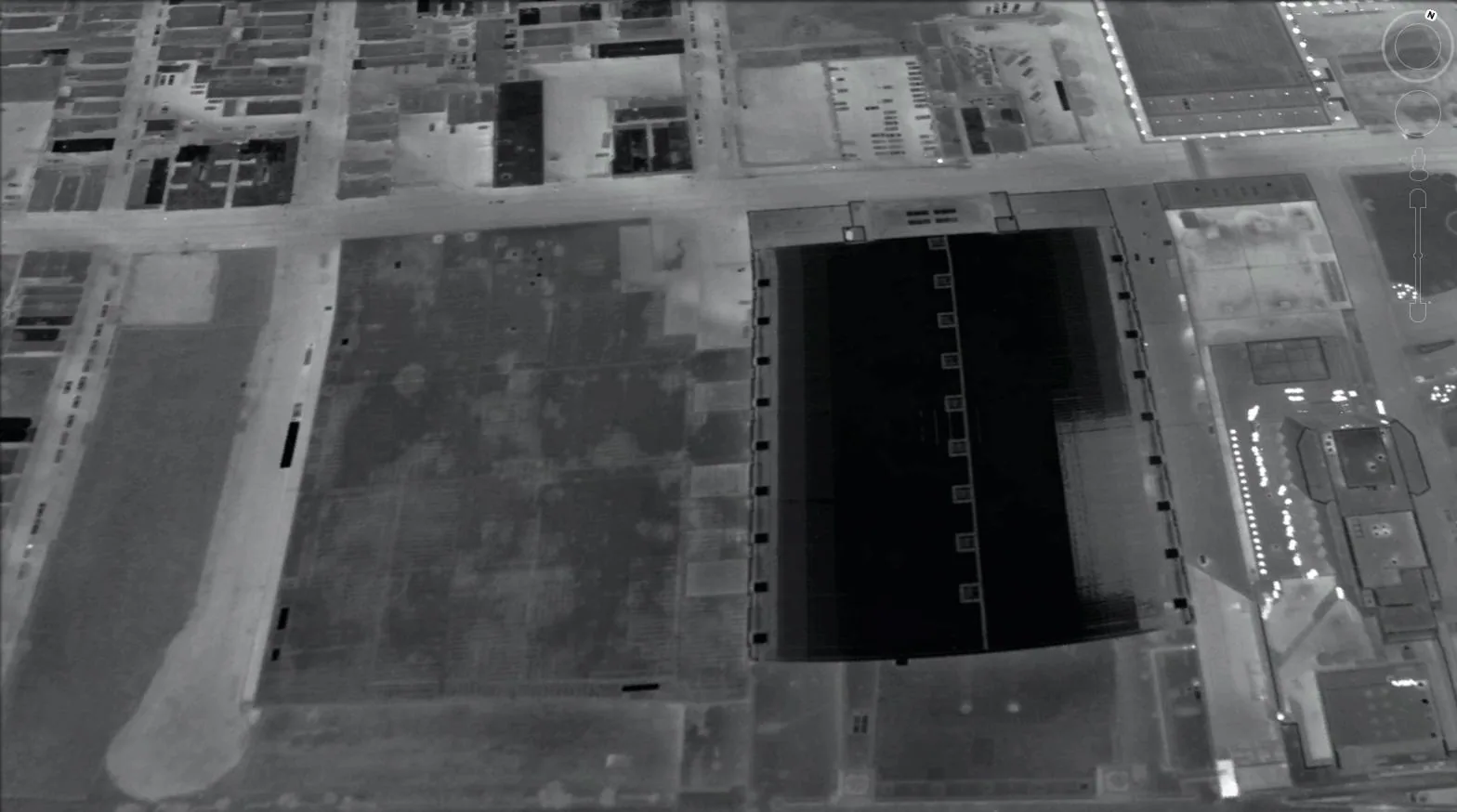
An infrared moisture survey maps the wet area. The shape of the wet area points back to the source, like a stain spreading from a spill. A core cut at the center of the map confirms the wet layer, and a second at the edge confirms the boundary.
Steel decks add a second path. Water can travel along a flute for dozens of feet, and a rusted fastener head or a lap in the deck becomes the drip point. The floor stain then sits well away from the real opening. We follow the flute direction on the drawing, since it shows which way the water ran.
What the buildings do
Industrial buildings carry process loads. Exhaust stacks, make-up air units, long runs of conduit and pipe on supports. Southall holds nearly half of the region's industrial development, so those loads are common here.
What a particular plant does, and how its roof was made, is not something the street shows, so each roof gets read. We note the stacks, the supports, the units and the curbs. We check what the equipment puts on the sheet: heat, oil, vibration, water. The record says what we saw.
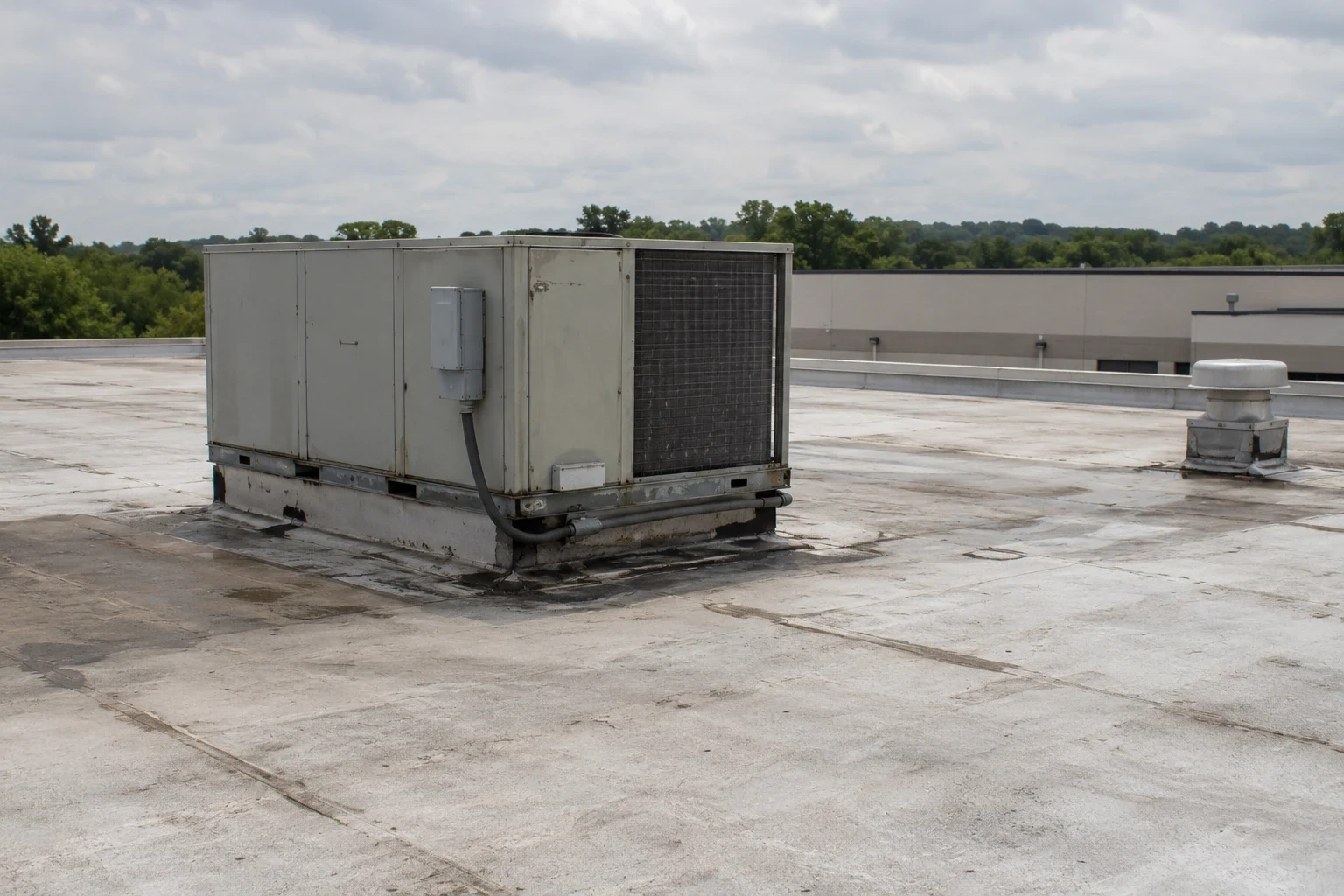
Equipment supports deserve their own check. Pipe supports that rest on the sheet wear it where they move. Make-up air units on curbs shed condensate. Exhaust stacks drop deposits around their bases. Each of these has a standard fix, such as a protection pad, a drain line or a collar, and the report lists which ones are missing.
Weather on wide roofs
Annual precipitation of about 53.79 inches, a July mean high near 90.8 F and extremes of 108 F and minus 22 F make a wide dark roof work hard. A wide dark roof in July runs well above the air temperature, and the sheet expands. In a hard freeze it contracts. Seams and flashings take the strain.
Large roofs also have a lot of edge. The August 12, 2023 EF0 tornado near Highway 96 is a reminder that wind reaches this county, and we check edge metal and coping after any warning that names the city.
Repair or replace
Local failures over dry insulation call for repair. A dry roof that has simply aged might take a coating or a recover. Wet insulation across a section means replacing that section, and a wide roof can be done in stages. Each path has a cost range, and a year of waiting has a separate cost.
A reroof is permitted under the edition the city uses, with the state's 2021 codes as the floor from August 17, 2025. Warehouses and plants are the common building types here (warehouse roofing, manufacturing plant roofing), and PVC is a sheet often chosen where oils and chemicals are present.
On a wide roof, staging cuts cost. One section at a time is opened, repaired and closed, with the crew and lift moving along the length. The estimate lists sections, order and weather holds, and a manager can fund them over more than one budget year without leaving the roof exposed between stages.
What to check next
After a repair, check the floor under the old stain after the next heavy rain. Look at the drains. Check the boots. Write the date in the roof file. Walk the roof again before the first hard freeze.
Owners who also hold property on Mallory Lane and Royal Oaks Boulevard or along Murfreesboro Road can keep one file format and rank the roofs together.
Keep two lists by the roof hatch, where a new facilities lead will find them on the first walk. One lists penetrations by number, with the date each was last checked. The other lists drains by number, with the date each was last cleared. Two lists, kept current, cover most of what goes wrong on a long industrial roof, and they let a new facilities lead pick up the work without a handover meeting.
Commercial Roofing Questions
Why is the floor stain not under the roof opening?
Water travels along the deck and the top of the insulation before it drips. The stain marks where it came out.
How do trucks reach the roof job?
We plan the route, the turning space and the lift location with the property manager before the order is placed.
Can a large roof be done in stages?
Often yes. Each section is closed and tested before the next begins.
What does equipment do to a roof?
It adds heat, vibration, water and foot traffic. We check what each unit puts on the sheet.
What goes in the roof file?
Photographs, a numbered list of penetrations, test results, repairs and dates.