Versico Roofing Systems in Franklin, TN
A stain on the ceiling below a rooftop unit is the first sign of a curb leak, and on a Versico single-ply roof in Franklin, TN, it is a failure worth tracing step by step. The unit is not the problem. The curb it sits on is a box set into the roof, and the flashing around that box is where the sheet is cut, folded and sealed. When the flashing fails, water follows the curb into the building. We walk that failure backward from the stain to the open joint.
What a single-ply system includes
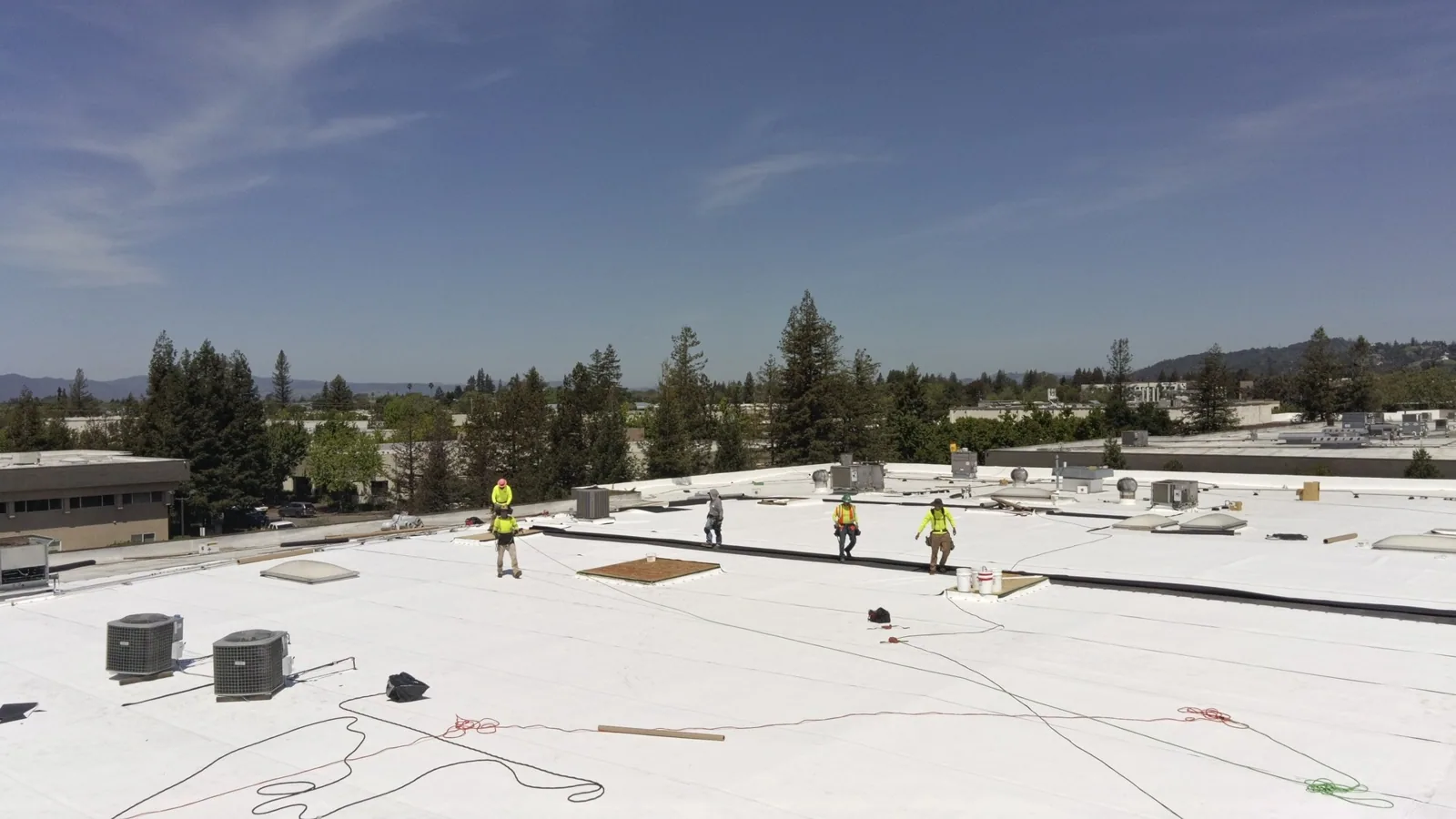
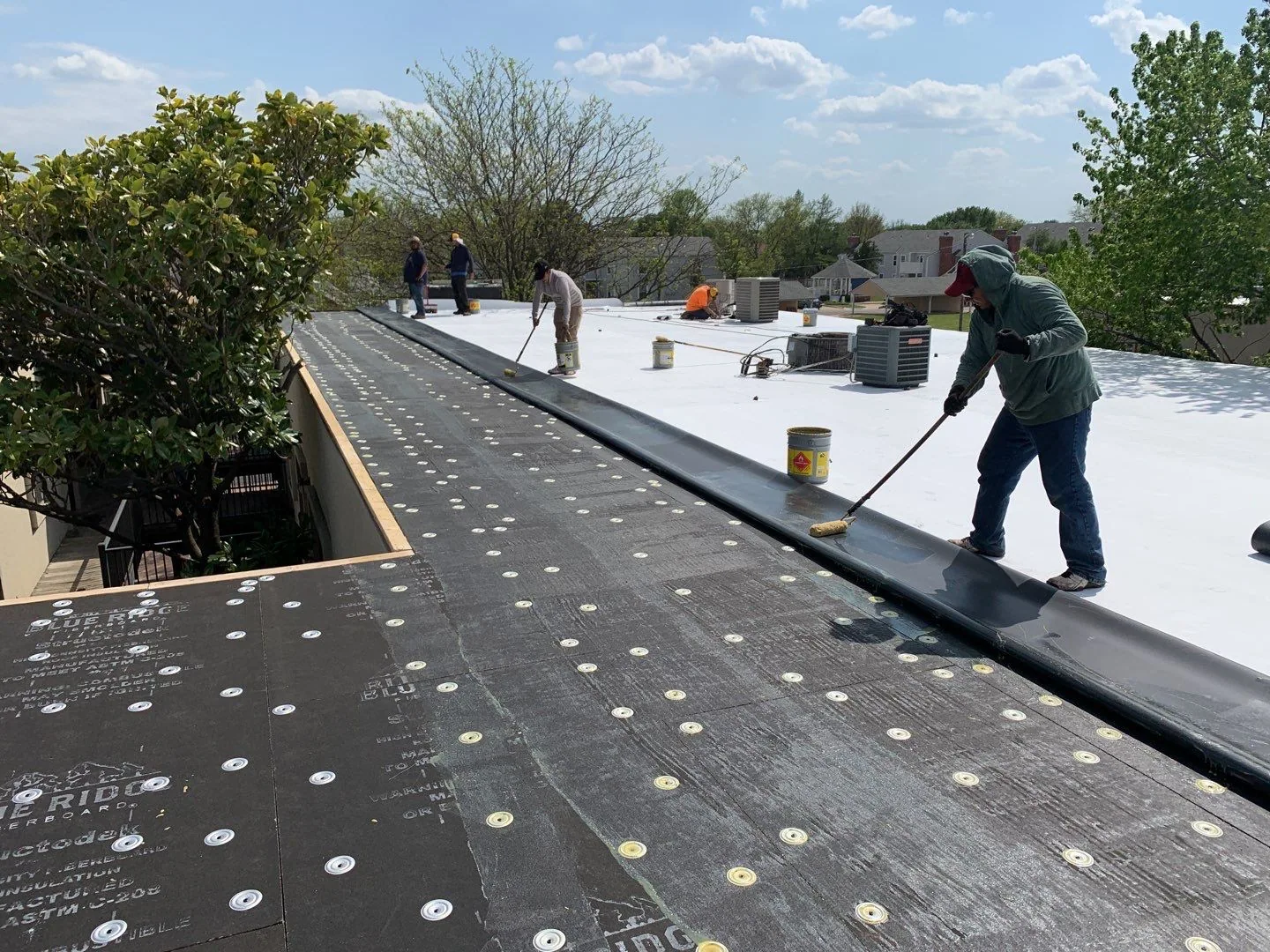
Versico is a manufacturer of single-ply roofing systems. A system is more than a sheet. It includes insulation, cover board, fasteners and plates or adhesive, seam tape or welds, flashings, pipe boots and edge metal. Each part has a job in keeping water out and the sheet in place, and the published details show how the parts connect.
The sheet may be thermoplastic, joined by hot-air welding, or cured rubber, joined by tape or adhesive. We note which on the first walk, along with the attachment pattern and the thickness where it can be read. Those facts go on the roof drawing, and any later crew can plan against them.
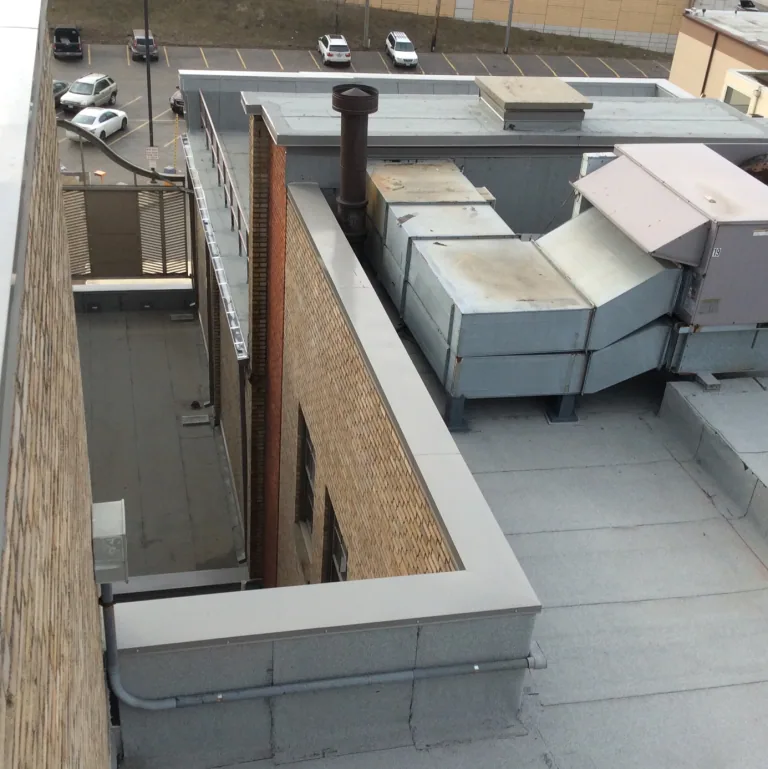
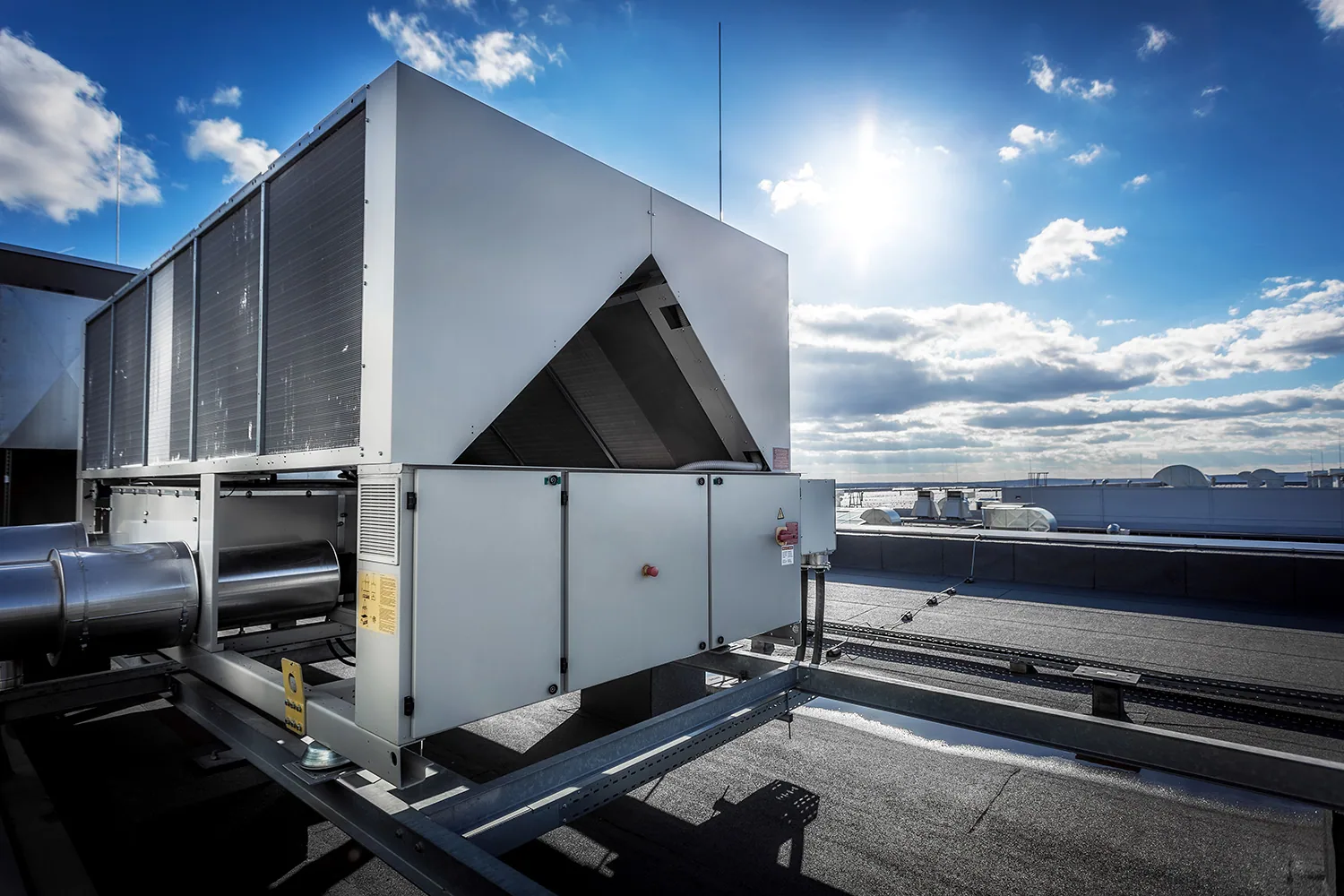
The curb itself is part of the roof. It may be wood, metal or a prefabricated unit, and it is fastened to the deck or the structure. If the curb moves, the flashing moves with it. So the check includes the curb's fasteners, its seams and the point where it meets the deck.
The first sign
On a roof with many curbs, the first sign is a stain near a unit. We photograph it, mark it on the drawing and go up. Then we check the curb in order. The base flashing, where the sheet turns up the side of the curb. The top edge of the flashing, where it is fastened and sealed. The corners, where the sheet is folded. The sealant lines. The unit's own connections, which a flashing failure repair would also address.
Flashing corners are the usual weak point. They are folded or cut, and they take heat movement at the join. A corner that has opened lets in a small steady flow, and the water finds its way down the curb into the ceiling. The photo trail shows the order of events.
The sequence is predictable once you have seen it. Sealant dries. A corner opens a hairline. Water enters in small amounts during heavy rain. The insulation near the curb takes it up and holds it. Weeks later, the ceiling shows a ring. The ring is the end of the sequence, not the start, and treating the ring does nothing for the corner.
Where it shows up
On August 7, 1991 CoolSprings Galleria opened at the I-65 and Moores Lane interchange with about 150 stores on two floors and 6,500 parking spaces, and it is the center of a regional commercial district. A retail property on Mallory Lane lists spaces from 1,274 to 15,308 square feet. Retail roofs of this type carry units for individual spaces, and tenant changes can add or move them.
Each addition is a cut in the roof. We count them. We mark which are in service. We recommend removing the ones that are not, since each unused curb is a place for the sequence to start. On the Mallory Lane and Royal Oaks corridor, a first walk begins with that count.
A tall office building nearby has the same issue at a different scale. East of I-65, offices usually rise six to eleven stories, and the rooftop equipment on them sits on low-slope roofs. A technician with a work order walks the same path each visit, and that path wears the sheet. We mark the path and recommend walk pads along it.
Heat movement and the curb
Summer highs near 90.8 F in July, with 108 F on record, work on every curb. In July a dark sheet gets hotter than the air, and the flashing around a curb moves with it. The movement is greatest at corners and at the top edge of the flashing. Sealant dries and cracks. Fasteners work loose. A curb that was tight in spring can leak in August.
We check each curb in late spring, before the heat, and again after a hot summer. We re-seal, re-fasten or replace the flashing as needed, and we note the date. A curb with a dated check is a curb that will not surprise anyone.
Storms add their own steps. The August 2023 EF0 near Highway 96 shows that tornadoes do reach Franklin; the National Weather Service reported minor roof and exterior damage to a few businesses on that highway. Units and curbs near an edge take wind first, so the post-storm walk checks the curb fasteners and the unit's straps.
How to confirm it
A curb leak is confirmed by testing. We water-test the flashing with a hose, starting low and moving up, while someone watches the ceiling. We probe the seams at the base. We check the unit's condensate line and drain pan, since a leaking pan can look like a leaking roof. A moisture survey shows whether the insulation near the curb is wet.
That last point matters. If the insulation around a curb is wet, the repair is larger than the flashing. The wet boards have to be cut out and replaced, and the report says how far the wet area reaches.
If a unit is old, we also look at its connections. Refrigerant lines, electrical conduit and gas lines pass through the roof at the curb, and each passage has its own boot or seal. A boot cracked at the collar is a common source and a simple repair. A line that was pulled out of its seal when a unit was swapped is a harder one to find, and the water test is what shows it.
Repair or replace
A cracked sealant line is a small repair. A failed corner is a larger one. A curb with a rotted base or wet insulation around it calls for rebuilding the curb and replacing the boards. Each is priced as a range, and the cost of waiting through another summer is shown beside it.
A rebuilt curb may need a permit, and the edition that applies follows the state's August 17, 2025 move to the 2021 codes unless the city has adopted a newer one. Work on rooftop equipment curbs follows the same steps on any roof, while a TPO roof and a Carlisle SynTec roof each have their own flashing details, and a welded Sika Sarnafil sheet has others again.
What to check next
After a curb repair, watch the ceiling after the next heavy rain. Look at the flashing corners. Check the condensate line. Write the date in the roof file. Number the curbs on the drawing if they are not numbered already.
A numbered curb list is the simplest tool a manager can have. When a stain appears, the list narrows the search to two or three units, and the repair starts at the right place.
Commercial Roofing Questions
Do you work on Versico roofs?
Yes, for single-ply roofs. The sheet family and attachment are identified first.
Why do curbs leak?
The flashing around a curb is cut and folded, and heat movement opens corners and sealant lines.
Could the leak be the unit itself?
Yes. A leaking condensate pan can look like a roof leak. We check it first.
How do you test a curb?
We run water over the flashing, starting low, while someone watches the ceiling below.
Should unused curbs be removed?
Yes. Each one is a cut in the roof, and removing it lowers the number of places that can leak.