Sika Sarnafil Roofing Systems in Franklin, TN
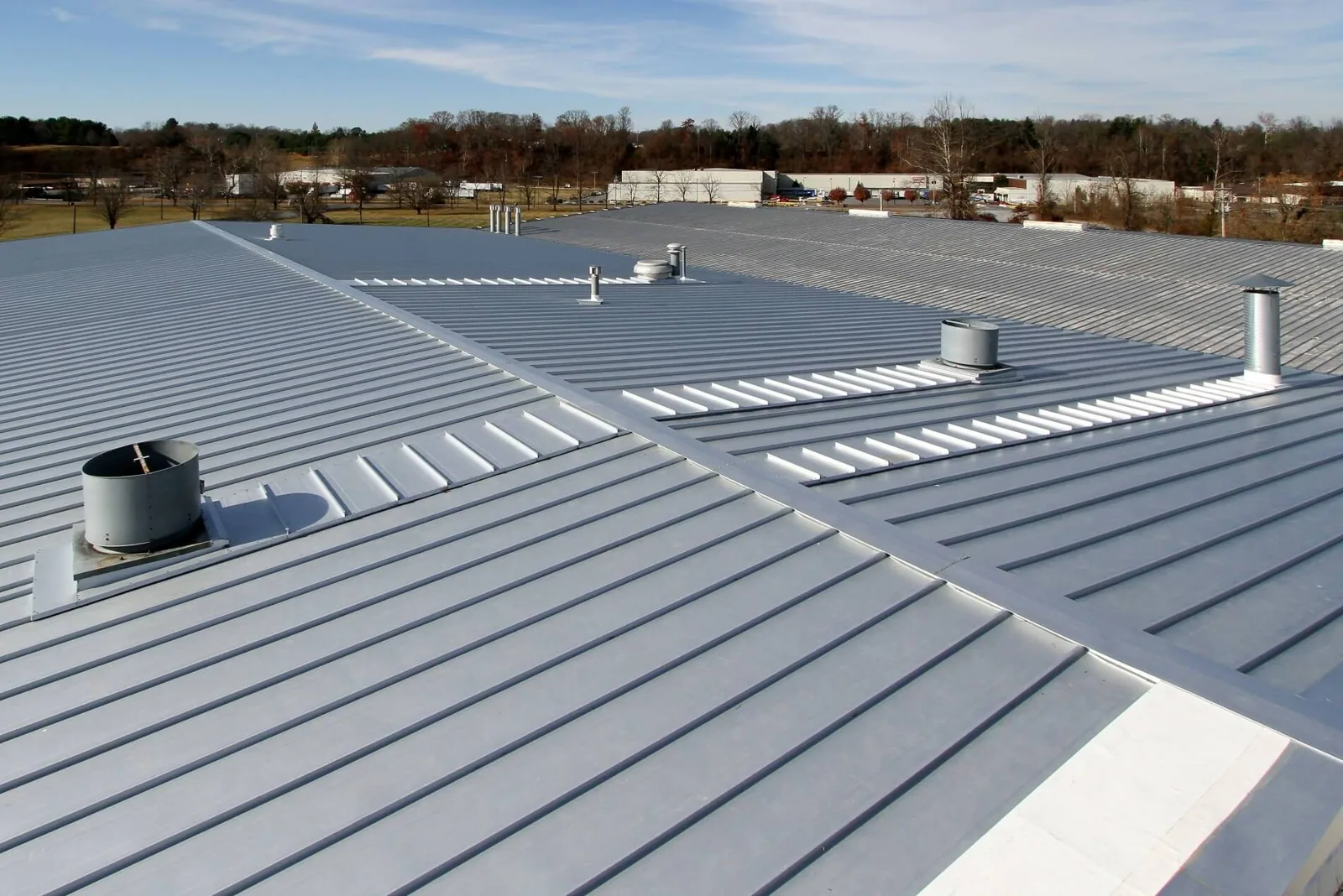
A gray sheet that has turned stiff and slightly cloudy near an exhaust fan is the first sign a manager notices on a welded thermoplastic roof, and on a roof that carries a Sika Sarnafil system in Franklin, TN, it is worth walking backward. The cause might be grease, heat, age or a cleaner used years ago. The consequence might be cracking at the next fold. Sika Sarnafil is a manufacturer of thermoplastic roofing membranes and liquid-applied waterproofing, and the way these sheets age is a lesson in itself.
What the sheet is
A thermoplastic membrane is a sheet of polymer, usually reinforced with a scrim. Hot air softens it at the seam and fuses one sheet to the next into a continuous bond. A good weld is as strong as the sheet around it and can be tested with a probe along the edge. A later repair is made by cleaning the old sheet and welding a new piece over it.
The same chemistry gives the sheet its resistance to many fats, oils and cleaning agents. That is why PVC-family sheets are common near kitchens and on healthcare buildings. Plasticizer, the softening agent in the sheet, slowly leaves an aging PVC sheet, and the loss shows first at folds and corners.
Liquid-applied products work differently. A resin is brushed or rolled over a prepared surface, often with fabric embedded in it, and it cures into a continuous layer around penetrations and drains. Where a roof has many odd details, a liquid-applied flashing can be more dependable than cut and folded sheet, and it is repaired by cleaning and adding a new coat.
The first sign
On an aging welded roof the first signs are quiet. A sheet that cracks when it is folded back at a corner. A flashing that has shrunk away from a wall. A weld line that is clean but dull. A patch that never fused. Each is a step in a sequence that starts with the loss of flexibility and ends with a split.
We flex the sheet at corners, probe the seams and cut a small sample when we need to see the scrim and thickness. We photograph each sign and mark it on the roof drawing. The photo trail shows the pattern across the roof, and the pattern points to the cause.
One more sign is easy to overlook: color. A welded sheet that has turned from a clean gray to a streaked brown near a vent is carrying a deposit. The deposit may be grease, dust or a chemical film. It is worth wiping a test patch and watching whether the sheet underneath is soft, tacky or intact. The result tells us whether the deposit is on the sheet or in it.
Heat and cold
NOAA's normals put July highs near 90.8 F, the record high at 108 F and the record low at minus 22 F. A dark sheet in July runs hotter than the air, and a stiff sheet in January loses its give. The swing between the two works at every corner and curb base.
Plasticizer loss speeds up in heat. So does the stiffening that follows. We note the age and exposure of each section and plan checks accordingly. A roof near rooftop equipment that vents heat or oils gets more frequent probes, since the exposure is local and the sheet beneath ages faster.
Hail and wind come too. A thunderstorm warning in July 2026 for Franklin and its neighbors cited gusts near 60 mph and small hail. Small hail seldom opens a thermoplastic sheet, but it can dent a stiffened one, so the post-storm walk covers the field as well as the edges.
Where it shows up
Healthcare is a heavy presence in Franklin: the city's 2024 annual financial report puts Community Health Systems at 3,923 employees, Williamson Medical Center at 1,900 and Cigna Healthcare at 1,500. Healthcare uses such as Williamson Medical Center sit near the Murfreesboro Road corridor on the interstate's east side, a corridor that also mixes banks, grocery stores, restaurants and pharmacies in older developments than those to the north.
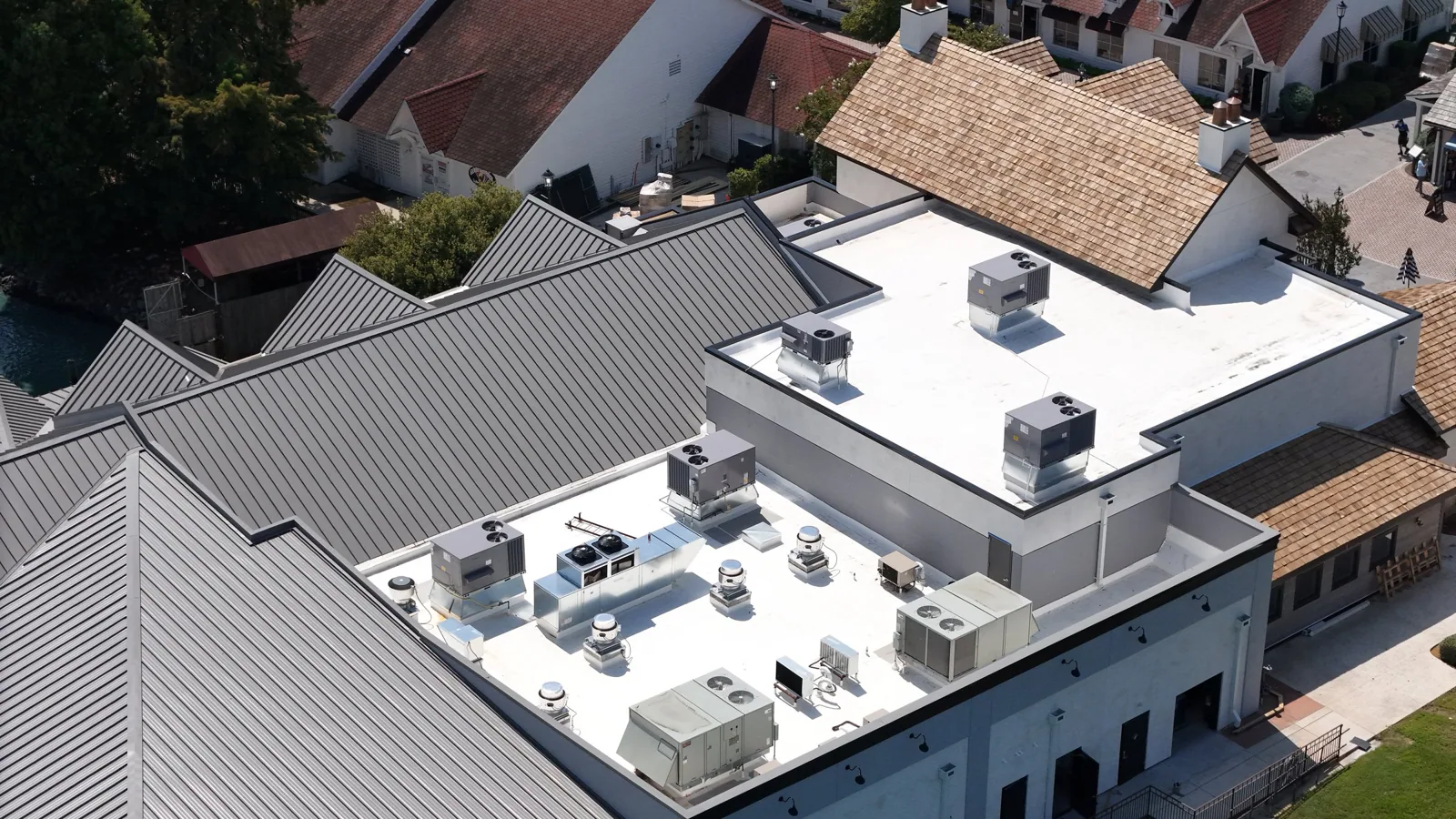
Kitchens, labs and mechanical rooms put exhaust on the roof. We map every outlet and check the sheet around it. Near the Murfreesboro Road corridor, the walk begins with those outlets, and a hospital roof adds access rules for patient buildings.
On a medical roof the plan comes before the date. Air-intake protection, noise limits and infection control are agreed with the facility contact first. A hot-air weld near an intake is scheduled for a time when the unit can be shut down or protected, and the contact is told the hour in writing.
The same walk applies to clinics and offices in Cool Springs and in the McEwen area around it, where tall low-slope roofs carry rooftop mechanical equipment. Every outlet, intake and curb is counted and photographed, and the Harpeth River's floodplain in downtown Franklin is a reminder that water, once it has a path, uses it.
How to confirm it
We probe the welds, flex the sheet at corners and cut a sample from a low-stress area. A moisture survey checks the insulation beneath, and a core cut confirms what it shows. We clean a test patch, weld on a new piece and probe the bond to see whether the old sheet will still fuse.
That last test decides a lot. If the sheet fuses, repairs are straightforward. If it will not, the sheet has aged past repair and replacement is on the table. The report states the result and gives the cost of each path.
Water leaves its own record. Water that stands again after each rain marks a low deck or a blocked drain. A pond is not a reason to blame the sheet. We clear the strainer, measure the depth and fix the cause before judging the membrane.
Repair or replace
Local failures over dry insulation mean repair. A sheet that still welds but is stiffening may be kept on a shorter inspection cycle. A sheet that refuses to weld, or has cracked across a section, is replaced in that section. A roof recover is possible when the boards underneath are dry and the structure can carry another layer.
Before any section is replaced, we ask the permit office which code edition governs, since the state's 2021 adoption took effect August 17, 2025. A prefabricated PVC range from Duro-Last and a single-ply line from Versico each carry their own details.
What to check next
After a repair, probe the new weld after the first heavy rain. Look at the area around any exhaust outlet. Check the strainers. Write the date in the roof file. If a section is stiffening, set the next probe date and keep to it.
The file records the sheet type, the exposure, the tests and the repairs. A lender, an insurer or a new owner can read the file, and the next crew begins from what it shows.
Commercial Roofing Questions
Do you work on Sika Sarnafil roofs?
We install, repair and maintain welded thermoplastic membranes of this kind, after identifying the sheet and attachment.
Can an old welded sheet be re-welded?
Often yes, after cleaning. We test a small patch first and probe the bond.
What is plasticizer loss?
The slow loss of softening agents that leaves an old sheet stiff. It shows as cracking at folds and corners.
Why is this sheet used near kitchens?
Its chemistry resists many fats and oils that attack other single-ply sheets.
How often should welds be probed?
At least each spring, and more often on sections that are stiffening or sit near exhaust.