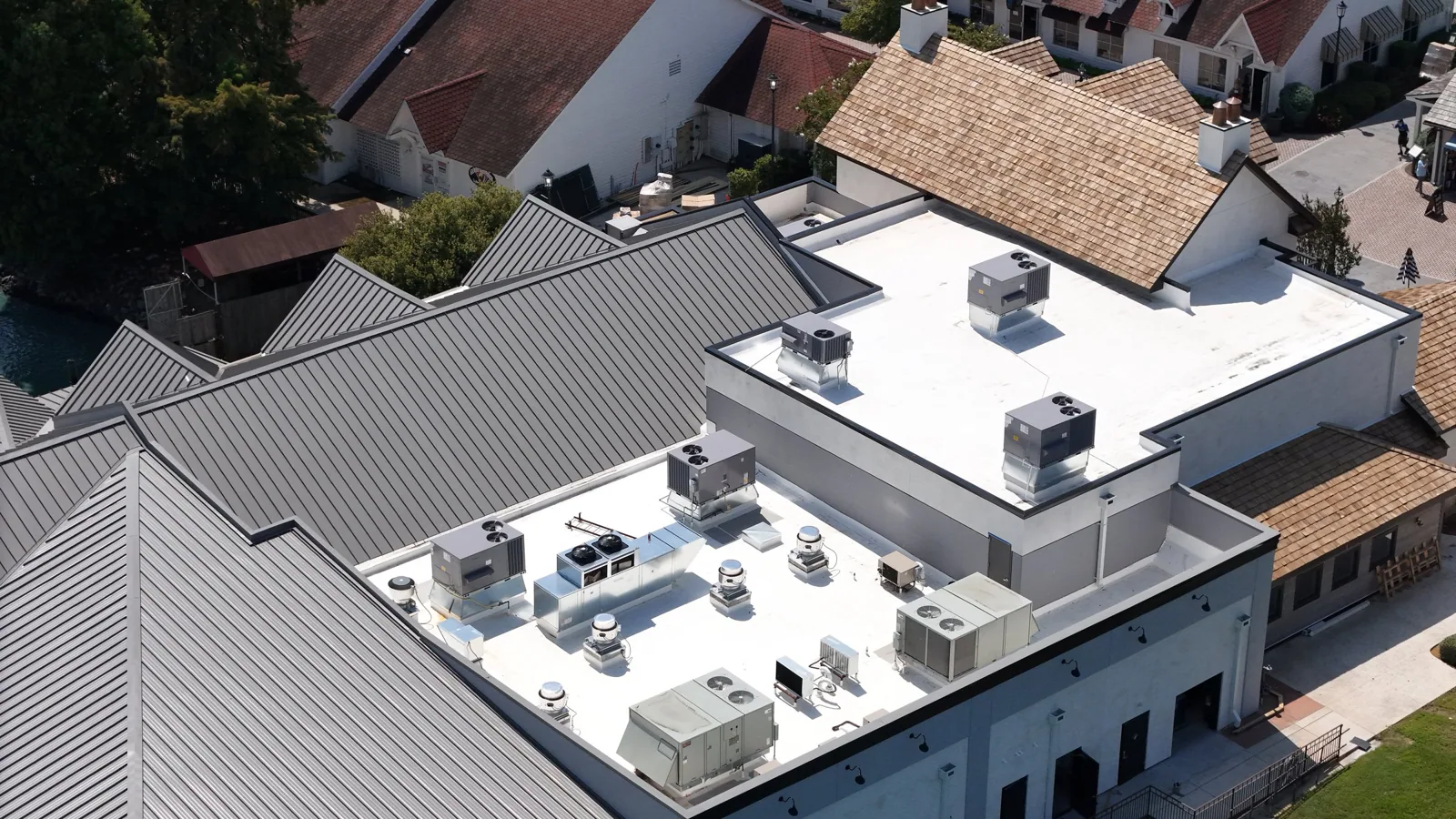
GAF Commercial Roofing Systems in Franklin, TN
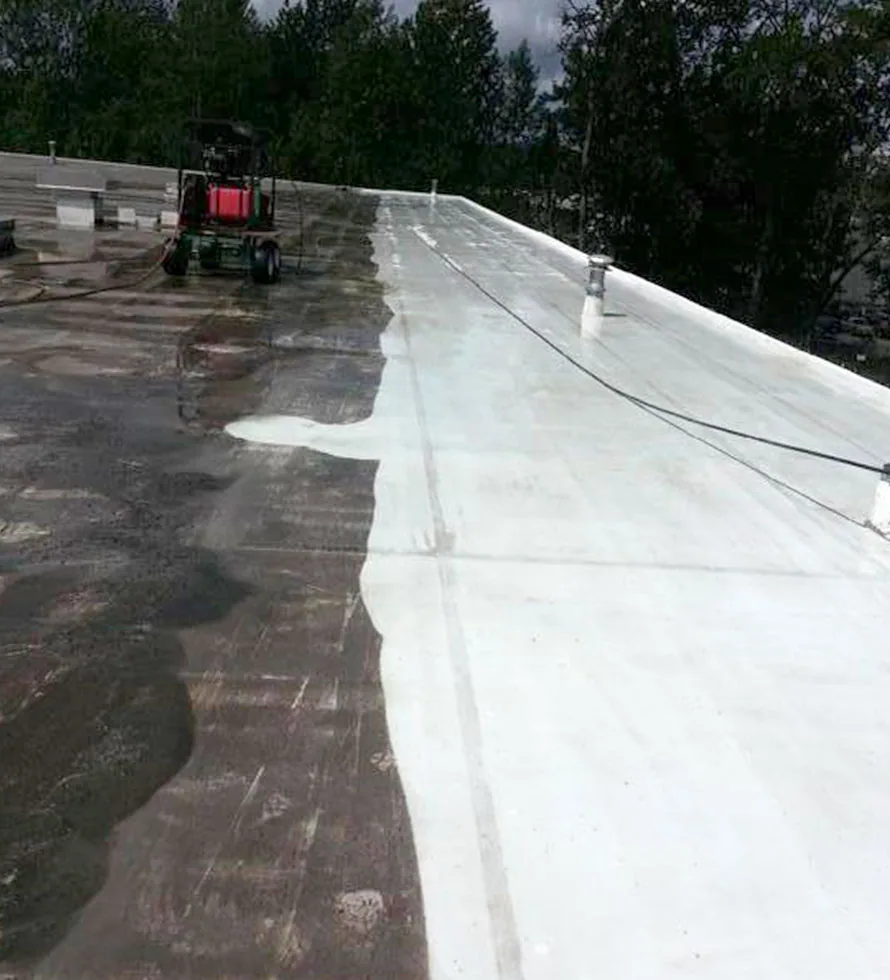
A brown ring spreading across a ceiling tile is the first sign of trouble, and on a roof carrying a GAF commercial system it can have one of three causes. The sheet may be a heat-welded single-ply, a layered asphalt membrane or an older roof under a coating, and each one fails in its own sequence. A manager who learns the sequence can follow it from the stain back to the cause. That is how we approach every GAF-type roof in Franklin, TN: name the system, find where the water stopped, and repair the cause before the symptom.
The first sign
Water on a ceiling rarely sits under the hole in the roof. It runs along a deck flute, a pipe or the top of an insulation board before it finds somewhere to drip. The stain tells you which room is affected. It does not tell you which detail failed. That is why a roof walk begins with the stain and moves up and outward, following the route water would take.
We photograph the stain, mark its position on the roof drawing and walk the likely path on the roof. Drains, curbs, seams and wall flashings along that path are checked in turn. This is the photo trail, and it is the record a manager can carry to the next inspection.
Water-path thinking is not new in Franklin. In the 2010 flood the Harpeth stood at 35.32 feet through downtown Franklin, and damage across Williamson County reached about 1,500 residential and commercial structures. A roof is a smaller watershed, with the same rules: water goes where gravity and obstruction send it, and the damage shows up at the lowest or the weakest point.
What is underneath
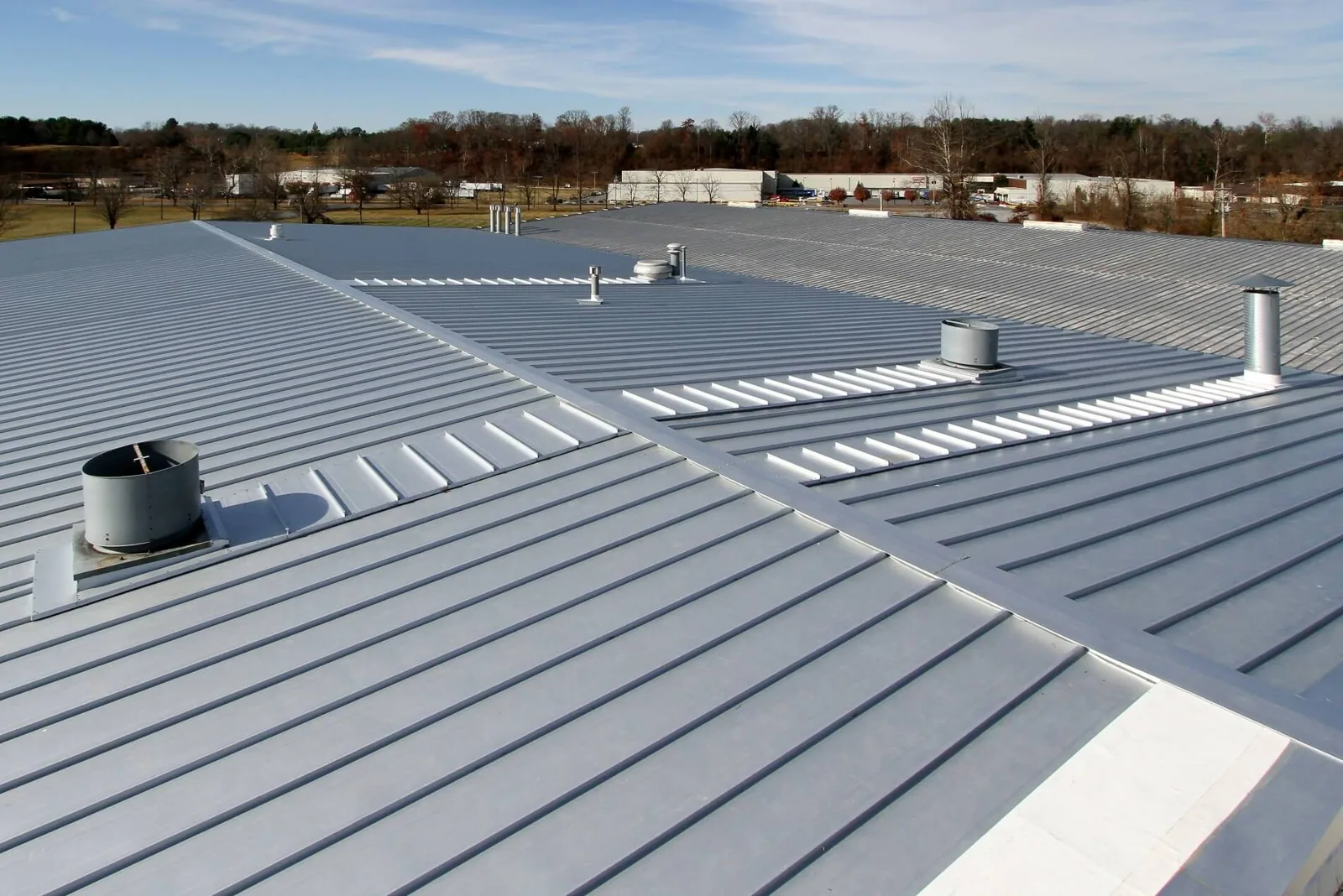
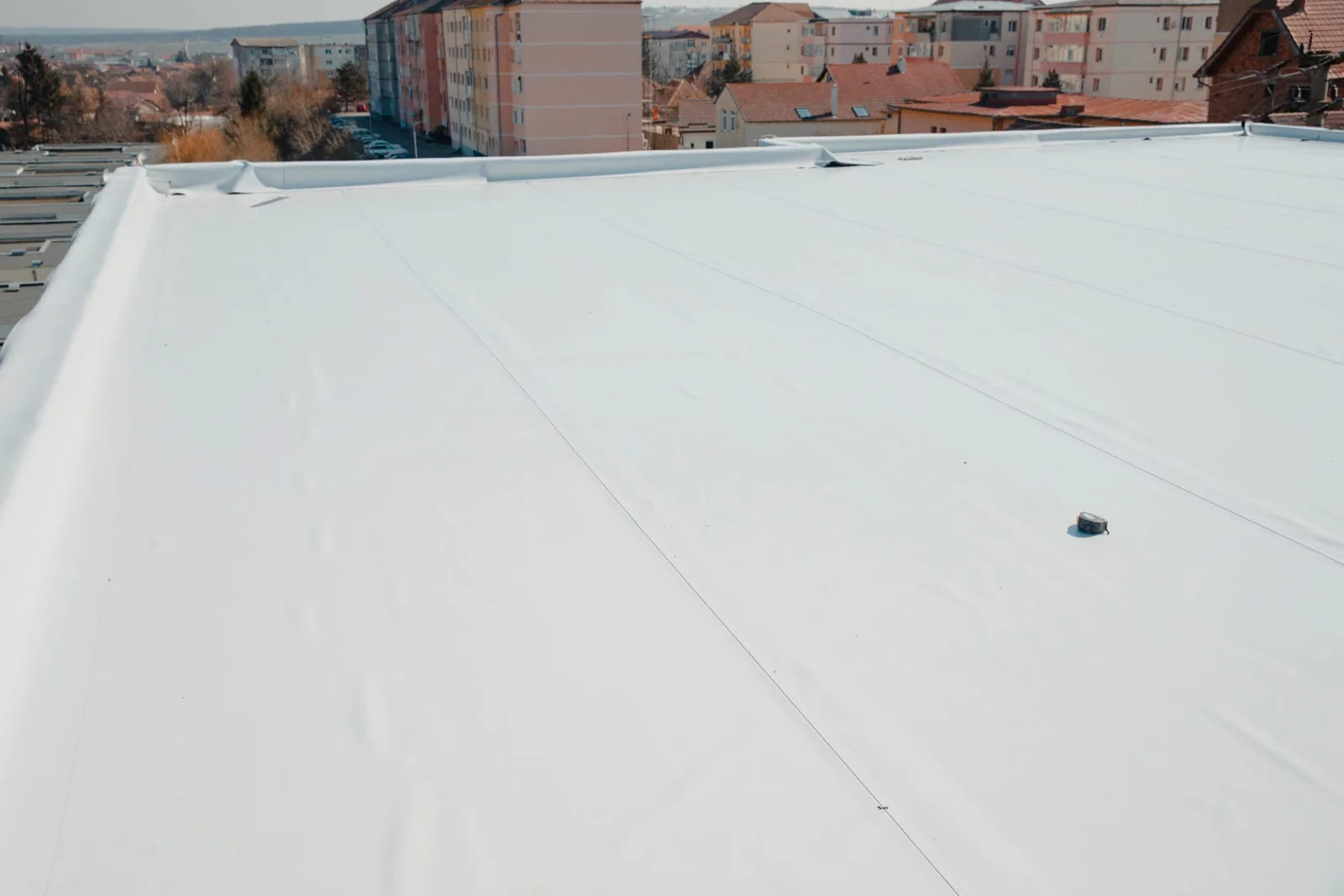
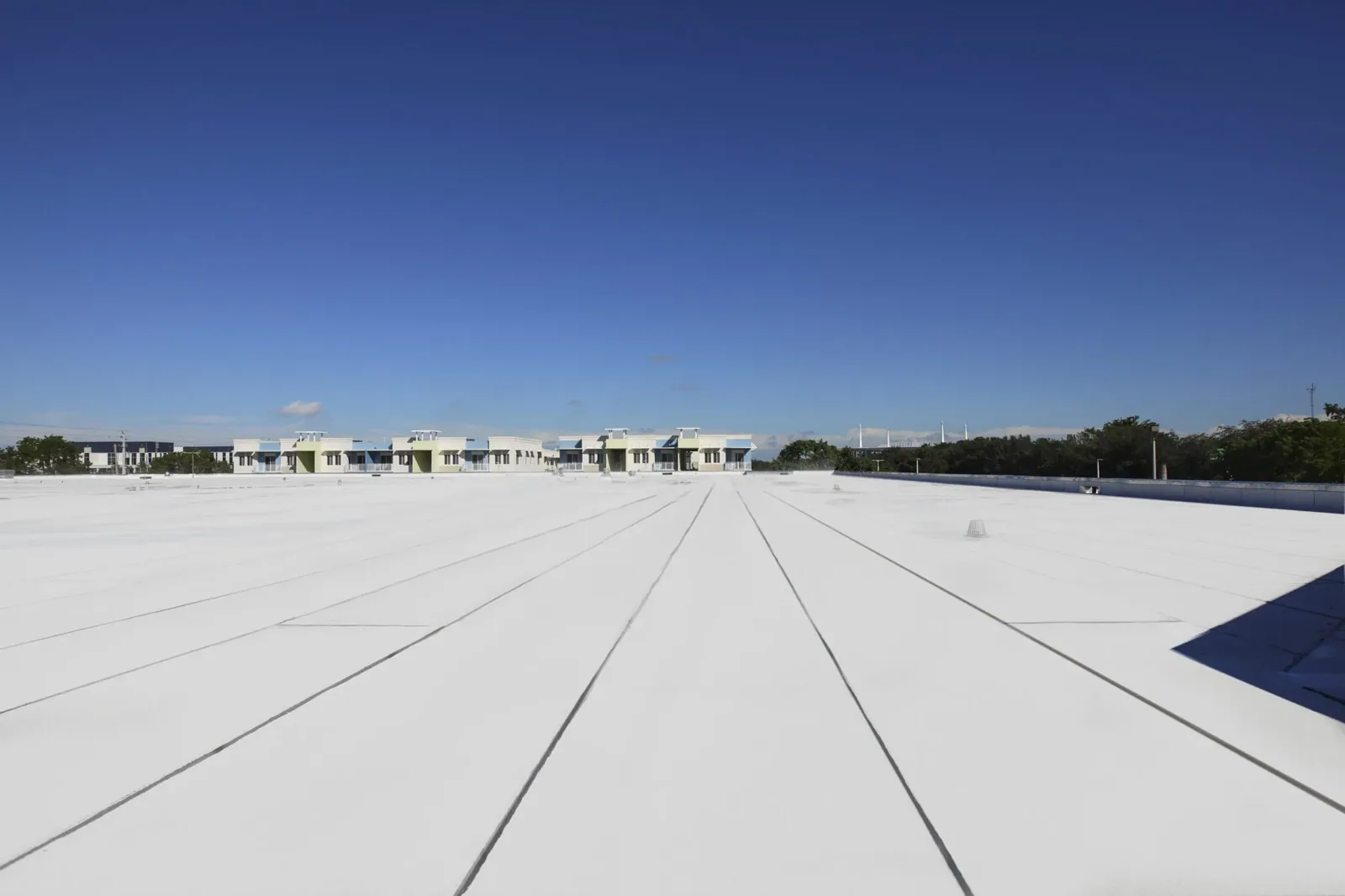
GAF is a manufacturer whose commercial range includes more than one kind of roof. Thermoplastic single-ply sheets are fused at the seams with hot air. Asphalt-based membranes, such as modified bitumen and built-up roofs, are made of layered plies and surfacing. Liquid-applied coatings restore an existing surface. A repair that suits one will damage another, so the first job is identification.
We read the seams, the surfacing and the attachment. We look for markings, check the paperwork and, if needed, cut a small core. The result goes into the roof file as a plain statement of what is on each section. A manager who has that statement can ask better questions of any contractor, including us.
The pattern on an aged roof
Aged single-ply roofs often show seams lifting at walls, boots cracked at the collar and patches that never bonded. Aged asphalt roofs show blisters, granule loss and cracked laps. Coated roofs show chalking, thin spots and pinholes. Each pattern points to a cause. Lifted seams point to movement and poor adhesion. Blisters point to trapped moisture. Pinholes point to thin coating or a dirty surface.
Franklin gives these failures plenty of time to start. A normal year brings the city roughly 53.79 inches of rain, July afternoons near 90.8 F on average and an all-time high of 108 F. Heavy rain finds weak details. Summer heat moves membranes and softens sealant. Both are part of the sequence.
How to confirm it
A cause is not a guess until a test supports it. We probe seams with a blunt tool, flex the sheet at corners, tap blisters and pull a fastener where the attachment is in doubt. A moisture survey maps wet insulation, and a core cut confirms what the survey shows. Each test answers one question and is written down.
The standing-water line matters too. If a pond remains a day after rain, we record its edge, its depth and the drain that should have emptied it. A pond without a clogged drain points to a low spot in the deck, which is a different repair from clearing a strainer.
Repair or replace
The choice follows the findings. Failures that are local over dry insulation call for repair. An aging but dry roof may take a coating or a roof recover. Wet insulation across a section calls for replacement of that section. The report gives each path a cost range and the cost of waiting another year.
In Tennessee each city decides whether to adopt a building code. The state itself has applied the 2021 editions of most international codes since August 17, 2025, so a replacement is checked against whichever edition the city has chosen. We confirm with the permit office which edition applies to a replacement. The same method applies to a TPO roof or a modified bitumen roof, and the Carlisle SynTec and Soprema systems have their own published details.
What it costs
Cost follows cause. A clogged drain strainer is a small repair. A seam that has opened along a wall is a larger one. Insulation soaked across a section is the largest, since it adds board replacement, drying time and a new membrane over the area. The report separates these items so a manager sees which ones came from the building and which came from the roof.
Access adds to the bill as well. The corridor west of I-65, including Mallory Lane and Royal Oaks Boulevard, has many curb cuts and heavy peak-hour traffic, and that affects delivery and crane planning. A job that needs a lift, a dumpster and a truck turning radius costs more where the road is tight, and the estimate says so.
What to ask, and what to check next
Ask any roofer four things about a GAF-type roof. What system is on each section? What was the cause of the leak, and how was it confirmed? What does the repair cost, and what does it cost to wait? What will the record show afterward? We answer those on the roof, with photographs, and we send a short written summary.
Ask, too, what the roofer does not know. A roof that has not been tested has not been fully described, and a good report says which parts were walked, which were probed and which could only be seen from a distance. That clarity about method is what makes the findings usable.
After a repair, the next step is a short list: confirm the drain strainers are clear, probe the repaired seam after the first heavy rain, and photograph the stain area from below. On the large, low-slope roofs of Cool Springs, a spring walk before storm season catches most problems while they are small.
The roof file records what was found, what was done and when to look again. A manager with that file can answer a lender, an insurer or a new owner with dated photographs.
Keep the strainers clear between visits. A handful of leaves at a drain is enough to start the sequence again.
Commercial Roofing Questions
Do you work on GAF roofs?
We install, repair and maintain commercial roofs of this kind. We identify the system on each section before choosing repair materials.
How do you know which system I have?
We read the seams, surfacing and attachment, check the paperwork and cut a small core if needed.
Will a repair affect my warranty?
It can, if the method is outside the terms. We read the terms before scheduling work.
Can an older roof be coated?
Sometimes. The insulation must be dry and the surface must take the coating. A moisture survey and an adhesion test confirm both.
What is a photo trail?
A dated set of photographs showing each step of the failure, from stain to cause, tied to the roof drawing.