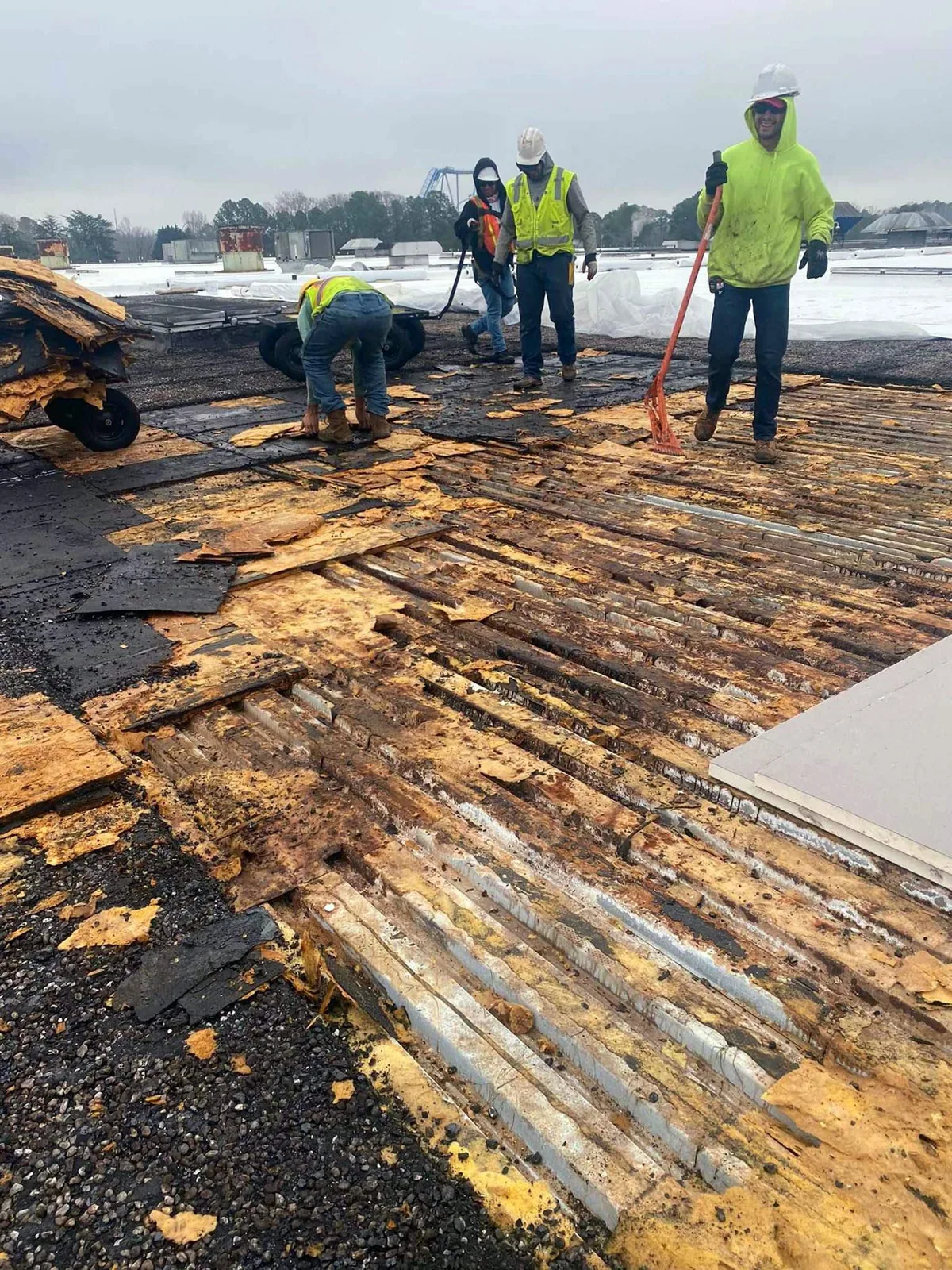
Modified Bitumen Roofing in Franklin, TN
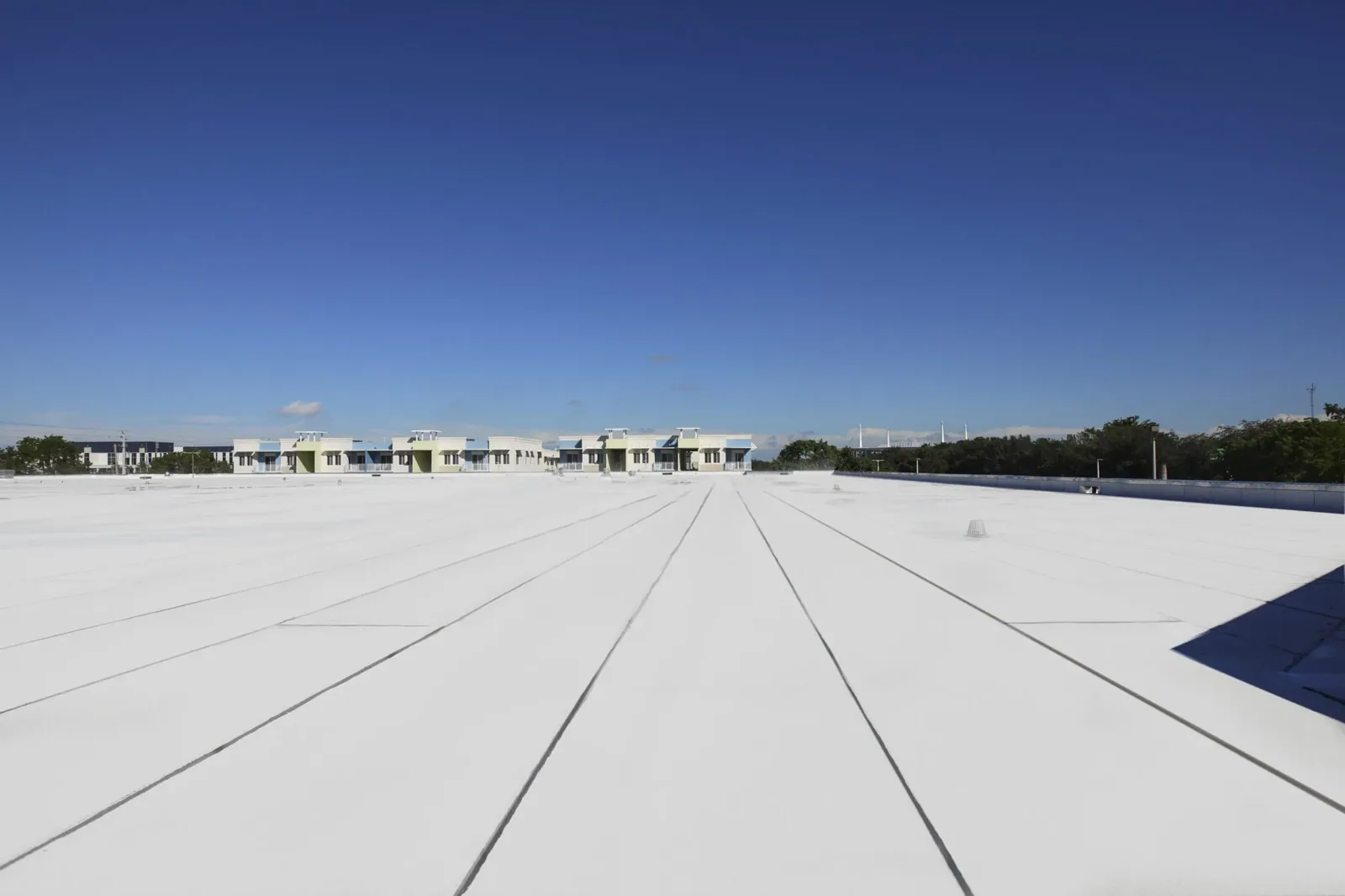
Black granules collecting in a downspout or a gutter are the first sign that a modified bitumen roof is wearing from the top down. The granules are the roof's sunscreen, and where they have gone, the asphalt beneath is open to sun, and the job is to walk the wear backward: how fast the surface is going, what is under it, and whether a lap or a flashing has already opened. Modified bitumen is an asphalt sheet blended with a polymer, laid in two or three layers and finished with a granulated cap, and it is one of the oldest low-slope systems still in wide use.
Franklin, TN adds about 54 inches of annual rain, July afternoons near 91 F, hard freezes and spring storm lines to the load that sheet carries. Commercial Roofing Franklin walks the roof step by step, explains each sign in plain words, and sends a short written summary with photographs.
SBS and APP, in plain terms
Two polymers are used. SBS is a rubber-like additive that lets the asphalt stretch and spring back as the deck moves, which suits places with big temperature swings. APP is a plastic-like additive that holds shape in heat and is usually torch applied. Both come as rolls. Both are laid over a base sheet or insulation, joined at laps, and flashed at walls with stripping plies or separate flashing sheets. The installation method matters as much as the product: torch, hot asphalt, cold adhesive, or self-adhering backing each leave a different seam, and each ages differently. A torch-applied APP seam tends to show a clean bead of melted asphalt at the edge, while a cold-applied seam shows adhesive squeeze-out. Knowing which one is on the roof tells us how to repair it, since a patch has to be compatible with what is beneath it. We pull a small sample when the records are missing, and we note the cap sheet color, the granule size, and the number of layers visible at an edge.
Reading the surface
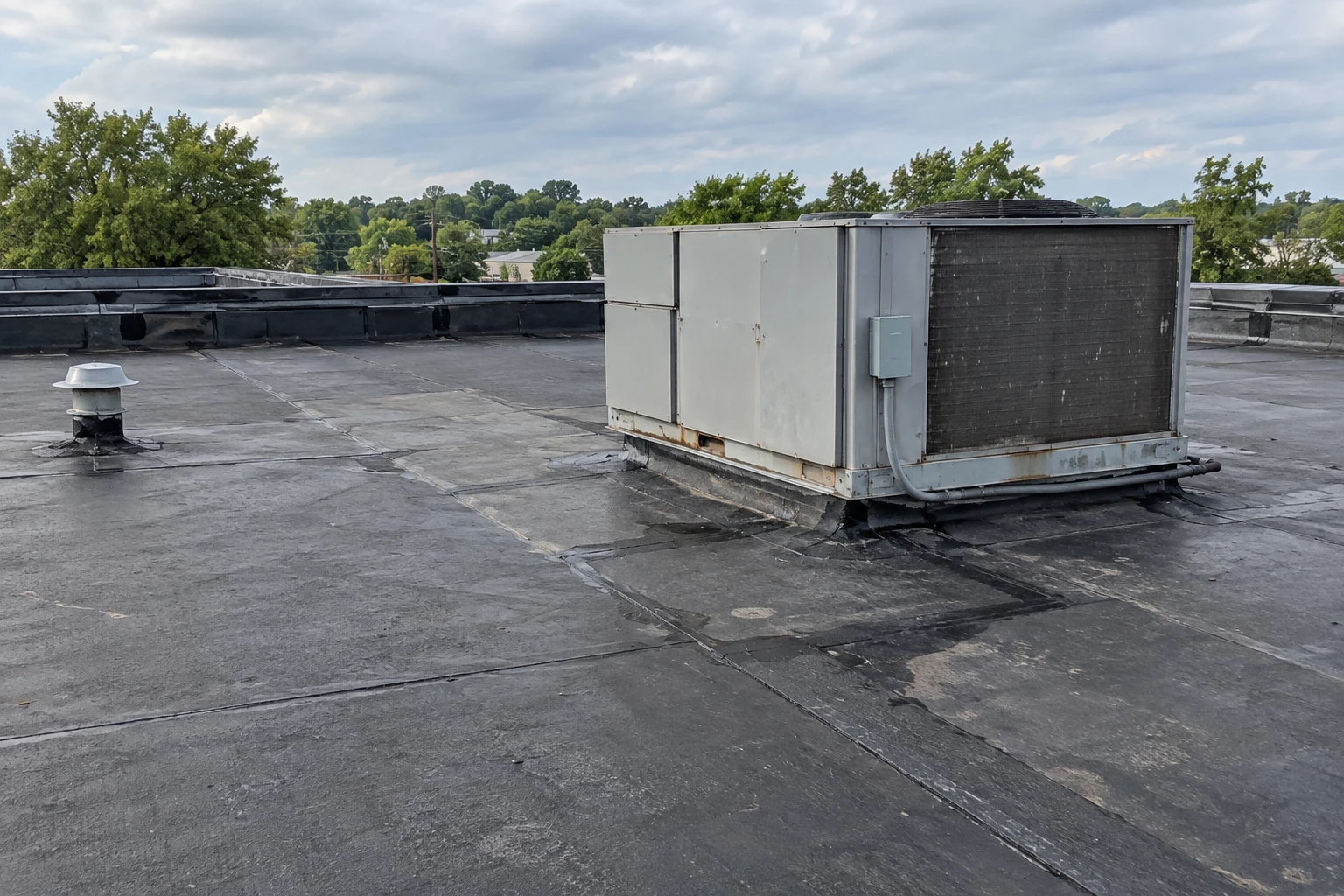
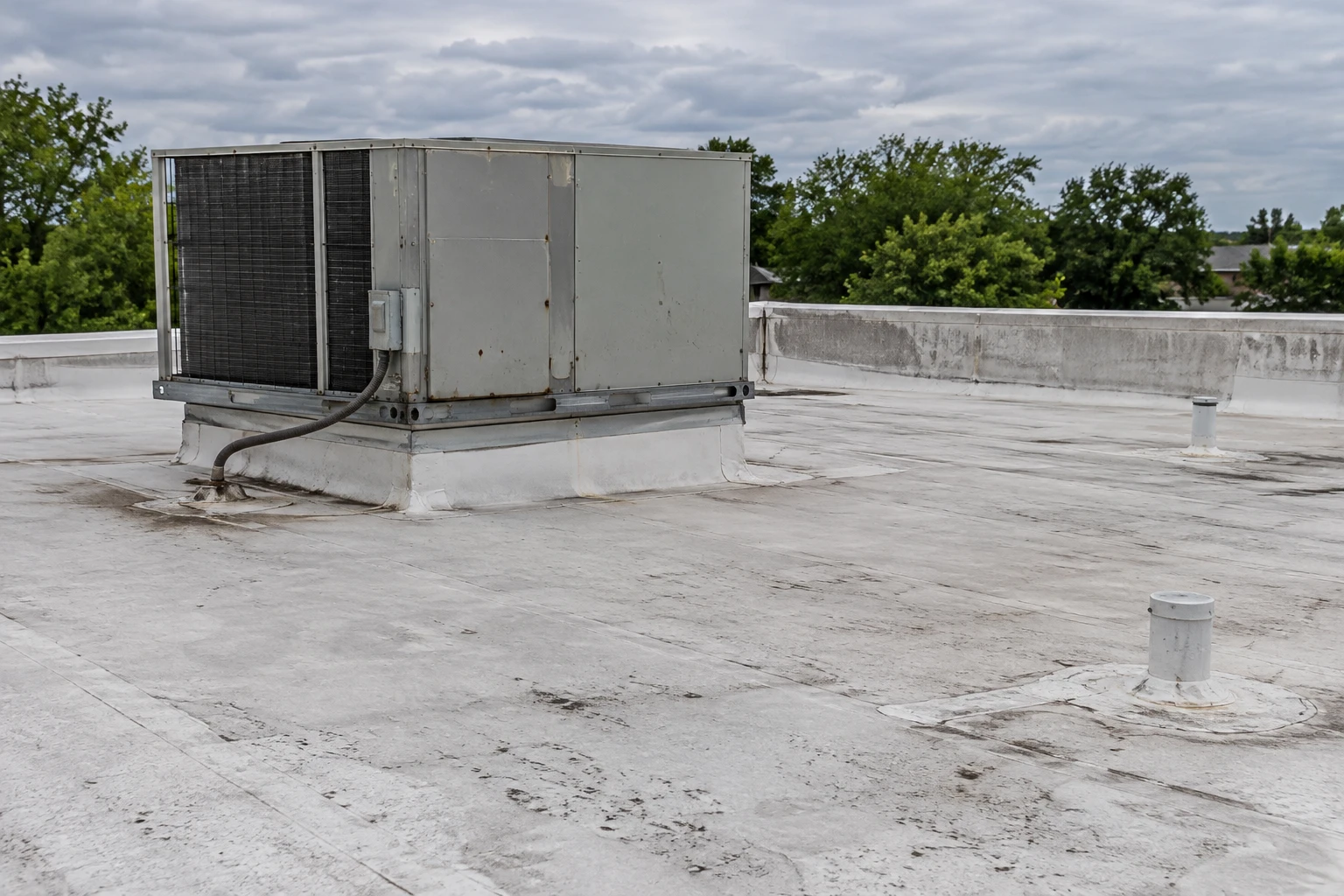
A new cap sheet is evenly covered with granules. An old one shows bald patches, usually along high-traffic paths, in valleys, and at the bottom of slopes where water runs. We look for cracks in the exposed asphalt, a pattern of fine lines called alligatoring, and blisters where moisture or air is trapped between layers. A single closed blister can be photographed and watched. A split blister is an open door. We mark each bare area on the roof plan, because the amount of exposed asphalt decides whether a coating will do or whether the sheet is nearing the end. Valleys and low spots collect granules, and a handful of them in a drain strainer is a sign worth recording. The photograph of a bare patch with a coin beside it gives the owner a way to compare next year's roof to this year's, which is more useful than a general statement that the roof is aging.
Laps and flashings
Laps are the places where one sheet overlaps the next, and flashings are the places where the roof turns up a wall or a curb. Both are handmade and both fail before the field does. We probe each lap for an edge that no longer resists, look for asphalt bleed-out that shows a good bond, and check for fishmouths, where the edge has curled up and left a channel. At walls, we look at the stripping ply and the counterflashing for cracks, gaps, and lifted edges. A flashing that has split lets water behind the sheet, and a stain can appear far from the cause. To trace it, we start at the stain, mark the nearest wall or curb on the roof, and work outward along the flashing line with a probe. The repair is usually a new strip of flashing sheet, bonded well beyond the damage and sealed at the top edge, and the old material is cut back to a clean, solid edge first.
Heat movement and cold
Asphalt softens in July sun and stiffens in a January freeze. The roof expands and contracts on a daily cycle, and that movement pulls at laps and flashings. A modified bitumen roof with a good bond takes that movement for years. One with a weak bond opens along the weakest line. In Franklin, a record range from minus 22 F to 108 F means the sheet has seen both extremes. Winter is also when a crack in the sheet freezes and widens, so a leak that shows up after a thaw often began in the previous summer. We ask when the stain first appeared and in what weather, since that history narrows the search. A stain that appears only after a hard freeze points to a crack that opens in the cold. A stain that appears after any heavy rain points to a lap, a flashing, or a clogged drain.
Wind, hail, and tornado lines
The EF0 tornado that crossed Highway 96 in August 2023 left minor roof damage at some businesses, and the July 2026 warning for northeastern Williamson County named hail as large as three-quarters of an inch. After a storm, we check the perimeter for lifted laps and loose edge metal, then look at the surface for hail bruises and fractured granules. Hail marks can hide below a surface that looks fine, so we press and probe. Hail that is small by the numbers can still bruise an aged sheet with little granule cover left, and a bruise that does not leak today can crack within a season. The photographs of each bruise go in the file with a date, which helps if a claim is considered later.
Repair, coat, recover, or replace
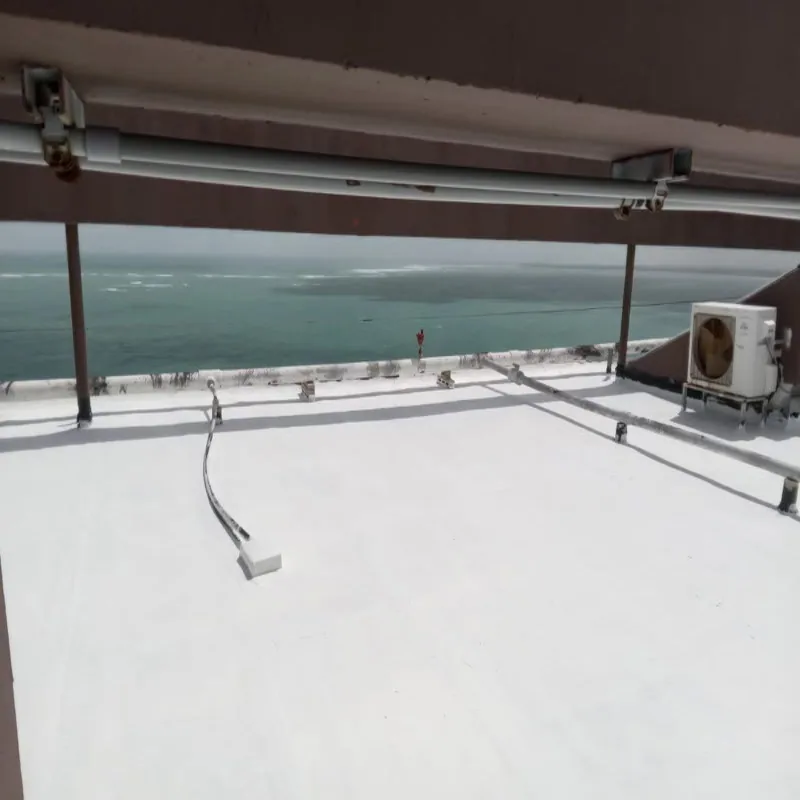
A lap or a flashing repair is a small job when the substrate is dry. A sound sheet with granule loss can take a reflective coating, such as acrylic or silicone. A dry roof with a good deck can take a recover. Wet insulation across several bays points to a full replacement. We scan the roof with an infrared moisture survey and cut test samples to find out which applies. The building official sets what a replacement requires, and the state's 2021 code editions have applied since August 2025.
Where it fits in Franklin
Modified bitumen suits roofs with many penetrations and a lot of foot traffic, because the layered sheet can be cut and flashed in place and takes wear well. Larger office properties along Carothers Parkway and near Cool Springs are the kind of buildings where an owner compares layered systems with single-ply. A built-up roof is the heavier relative, and TPO is the lighter alternative.
Commercial Roofing Questions
Why are there granules in my gutters?
The cap sheet is wearing. A little is normal on a new roof. A steady flow means the surface is thinning and the roof is aging faster.
Can a bitumen roof be torch-applied on an occupied building?
Open flame needs a fire watch and a clear plan for combustible material near the roof. Many occupied buildings use cold adhesive or self-adhering sheets instead.
What does alligatoring mean?
Fine surface cracks in aged asphalt. It signals that the top surface has dried out, and it is worth coating or planning before cracks reach the plies.
Can I walk on a bitumen roof?
Yes, but hot days soften the surface and shoes can scuff it. Walk pads protect the paths to equipment.
Should a patched roof be replaced?
When patches are frequent and insulation is wet, yes. We count patches and moisture on the walk and put both numbers in the summary.