Carlisle SynTec Roofing Systems in Franklin, TN
A seam that lifts at a wall is the first sign most managers see on a single-ply roof. It looks like a small flap of sheet, sometimes with a dark line of dirt under it. It is also the end of a longer sequence, and on a Carlisle SynTec roof in Franklin, TN, we walk that sequence backward from the flap to the cause. The cause might be heat movement, a poor weld, a cleaner that left residue or a wall that has shifted. Each has its own repair.
Single-ply is a family
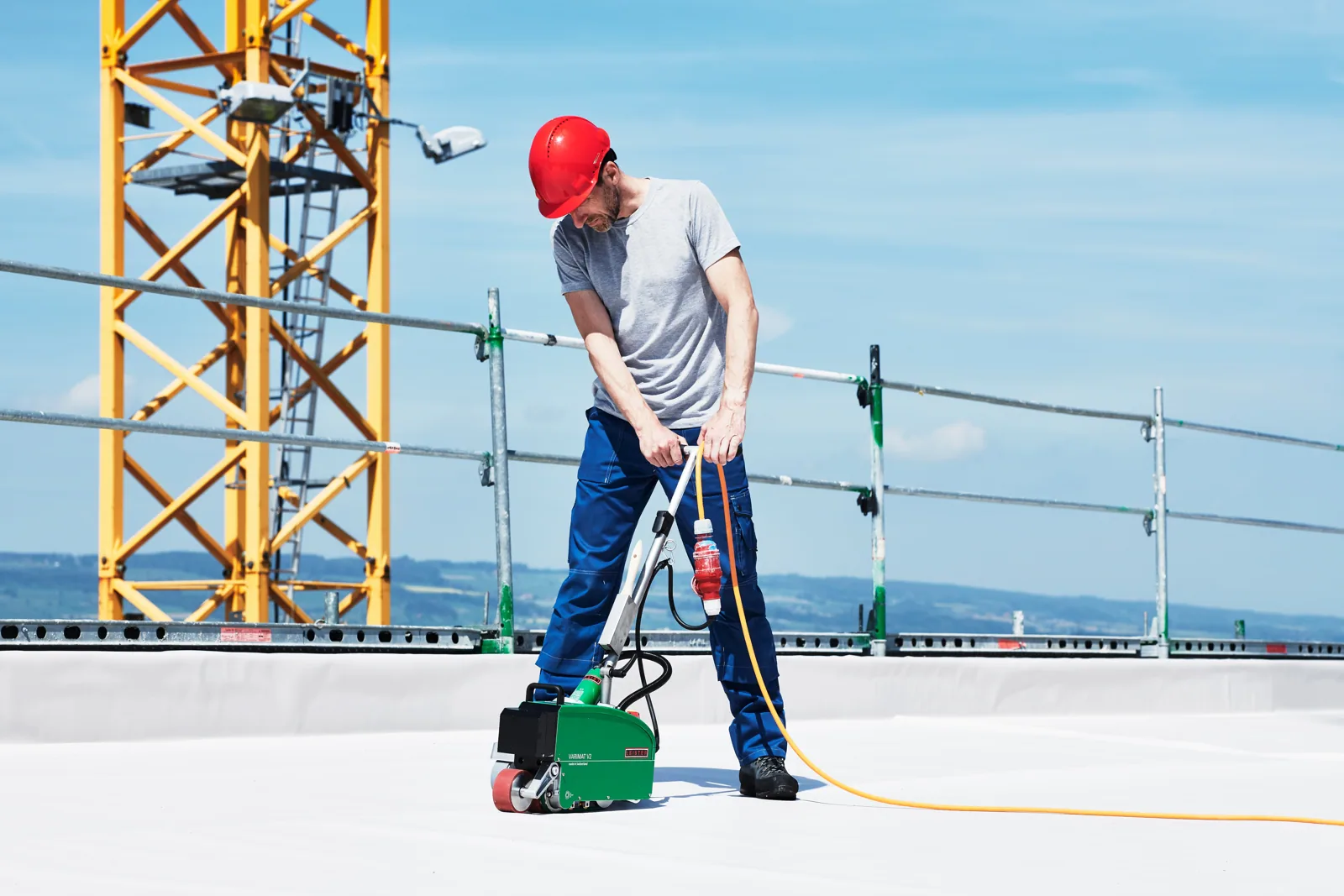
Carlisle SynTec is a manufacturer of single-ply roofing systems and the parts that go with them. Single-ply is a category, not one product. Thermoplastic sheets, such as TPO and PVC, soften under hot air and fuse at the seam. Thermoset sheets, such as EPDM, are cured rubber and are joined with tape or adhesive.
That difference decides the repair. A welded seam is cleaned and re-welded. A taped seam is cleaned, primed and re-taped. If the wrong method is used, the repair fails within a season. So the record starts by naming the sheet family and the way it is held down, whether by fasteners, adhesive or ballast.
The parts around the sheet matter as much as the sheet. Insulation boards, cover boards, plates, fasteners, bar, sealant and flashing all carry water or hold the sheet down. A part from a different source can work, but only if it is compatible with the rest. When we repair, we name each part used and where it went, so the next crew knows what is on the roof.
The first sign on site
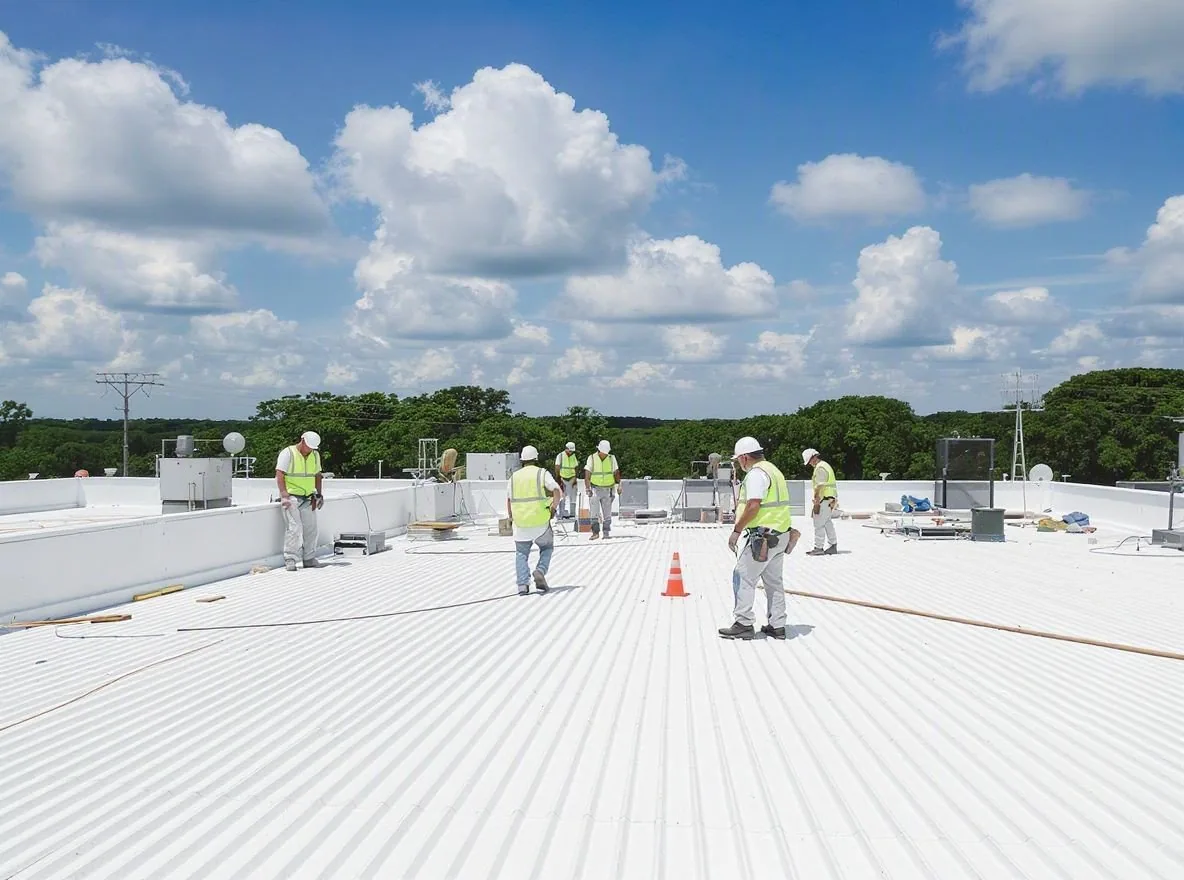
On a roof walk we start where the manager's report starts, at the stain or the flap. We photograph it and mark it on the roof drawing. Then we move uphill along the route water would take. Seams, boots, drains and curb bases along that route get a closer look.
Most findings repeat. Seams opened at a wall. Flashing that has shrunk away from a rooftop unit. Boots cracked at the collar. Patches placed over wet insulation. Each is a step in a failure sequence, and the photo trail shows the order.
One analogy helps. A roof seam is like a zipper on a wet jacket. It keeps water out as long as every tooth is engaged, and a few missing teeth let water through at a steady drip. A probe along the seam finds the missing teeth, and the repair closes them. The analogy ends there, since a weld is a fused bond, not a mechanical one.
Heat movement
July highs near 90.8 F and a record of 108 F make a dark sheet hot. A dark sheet on a summer afternoon runs hotter than the air. It expands, then contracts at night. The movement works at every seam, corner and curb base, and a weak weld shows it first. The record low is minus 22 F, so the sheet also stiffens in a hard freeze.
We look for the signs of that cycle. Wrinkles at corners. Flashing pulled from a wall. Sealant that has cracked. A repair that ignores the cycle tends to fail at the same place. A good one gives the sheet room to move, with flashing fastened at the right spacing and sealant sized for the gap.
Hail and wind add their own steps. The National Weather Service warned in July 2026 that storms across northeastern Williamson County, Franklin among the named places, might bring 60 mph gusts and hail to about three-quarters of an inch. We check the field for bruises and the edges for lifted metal after a storm like that, and we log what we find with dates.
Where it shows up in Franklin
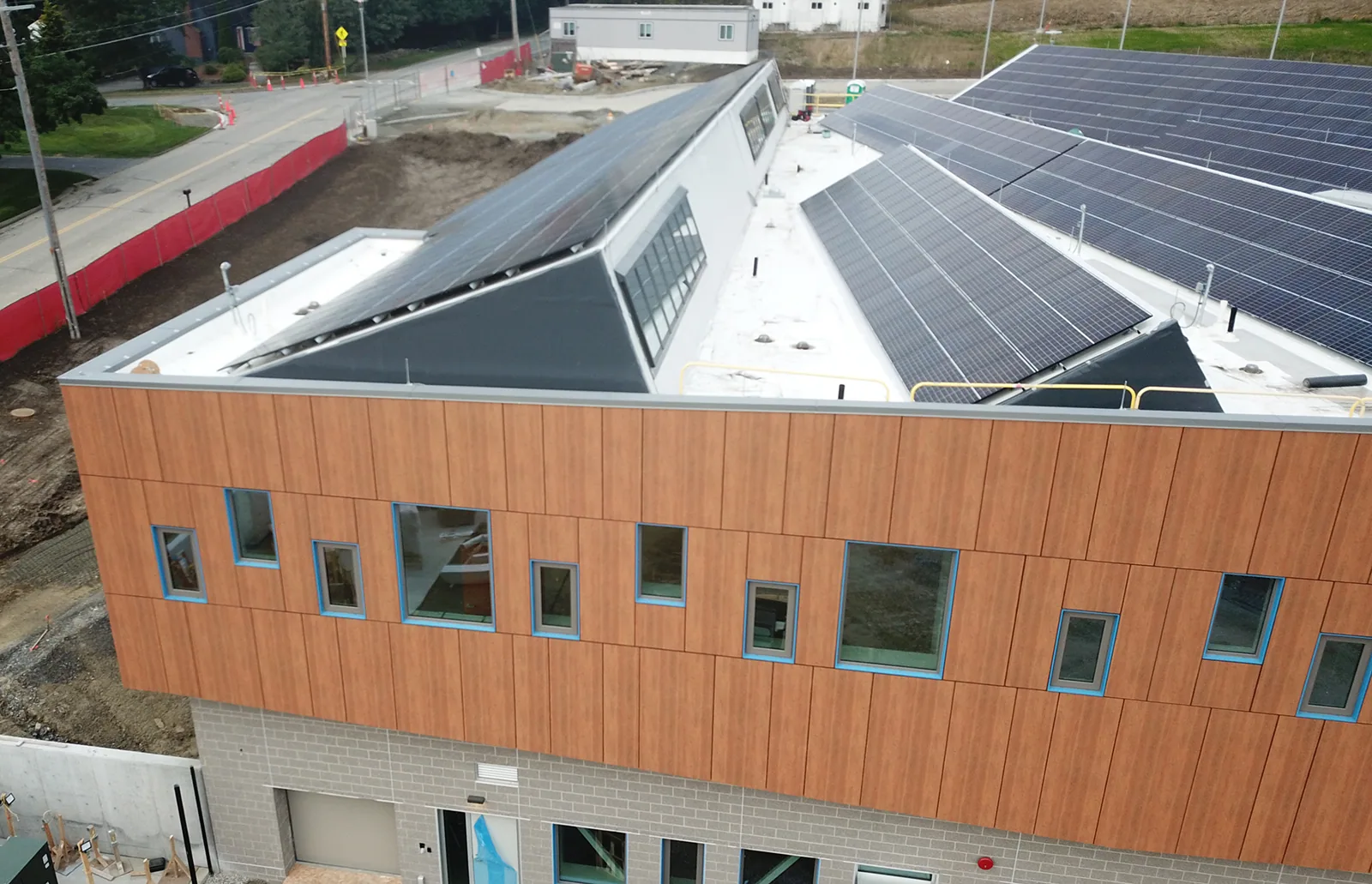
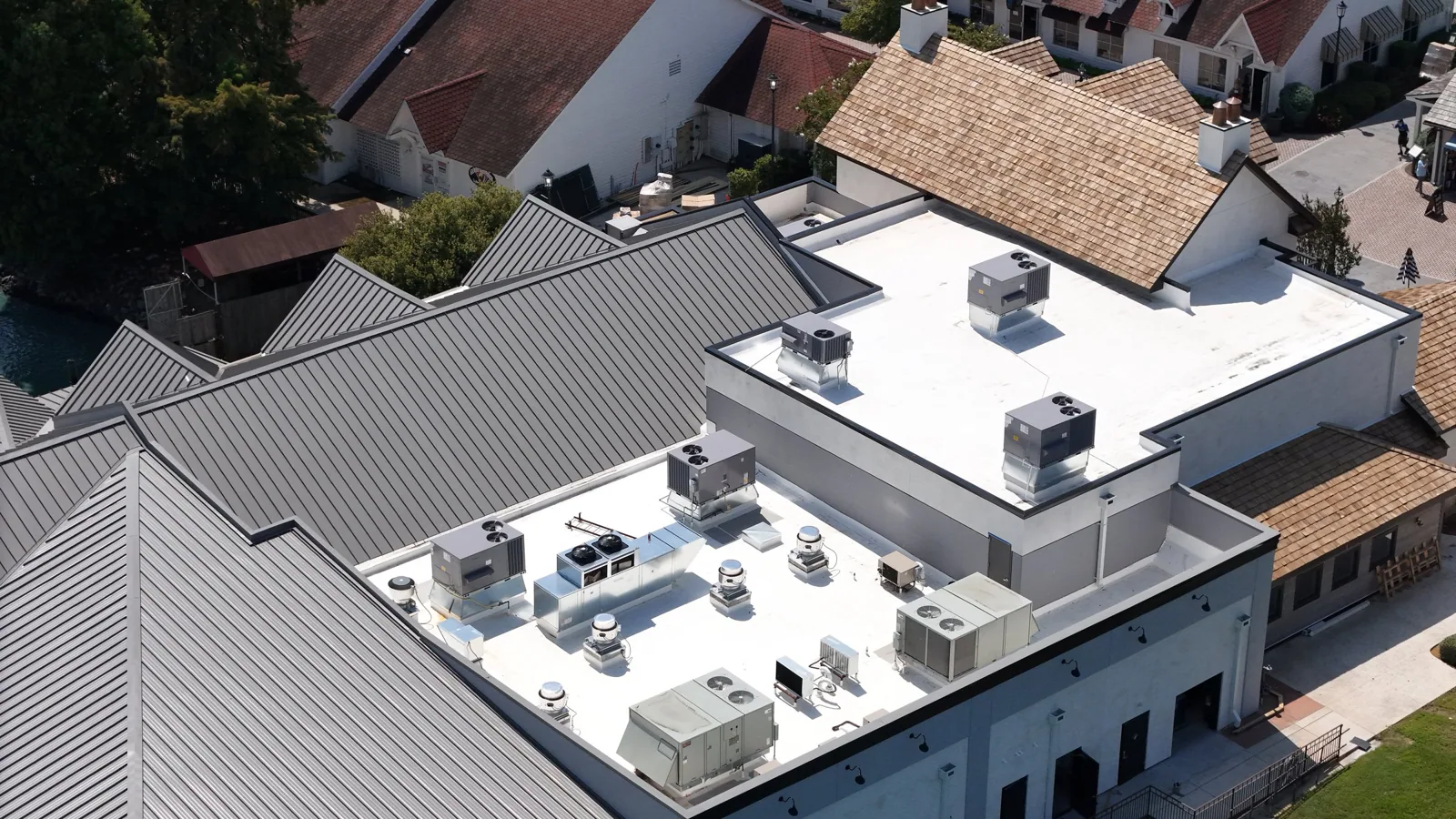
In Franklin's McEwen area, 6,680 acres hold close to 12 million square feet of commercial, office and industrial buildings. East of I-65, office buildings usually rise six to eleven stories, and their rooftop mechanical equipment sits on low-slope roofs. Every unit has a curb, and every curb is a spot where the sheet is cut and flashed.
That is why the Carothers Parkway corridor and the rest of Cool Springs get a curb count on every first walk. We number the curbs on the drawing, check the flashing base by base and note which units are in service. A later leak call then starts from a record instead of a search.
Not every roof is a high-rise. Just west of CoolSprings Galleria, offices, showrooms and institutional users occupy large warehouse-style buildings. Their roofs are wide, with long runs to the drains, and ponding is the main worry. A drain strainer left clogged for a month can hold water on a wide roof long enough to test every seam it touches.
How to confirm the cause
We probe welded seams with a blunt tool and look for unbonded edges. We check taped seams for lifted splices. We run a moisture survey to find wet insulation, and a core cut confirms what it shows. A fastener pull test checks the attachment at the perimeter. Each test answers one question.
The standing-water line is part of the test. Water that remains a day after rain shows where the deck is low or the drain is blocked. Clearing a strainer is a small repair. Correcting a low spot with tapered insulation is a larger one. The report separates them, so a seam failure repair is not mistaken for a drainage problem.
Repair or replace
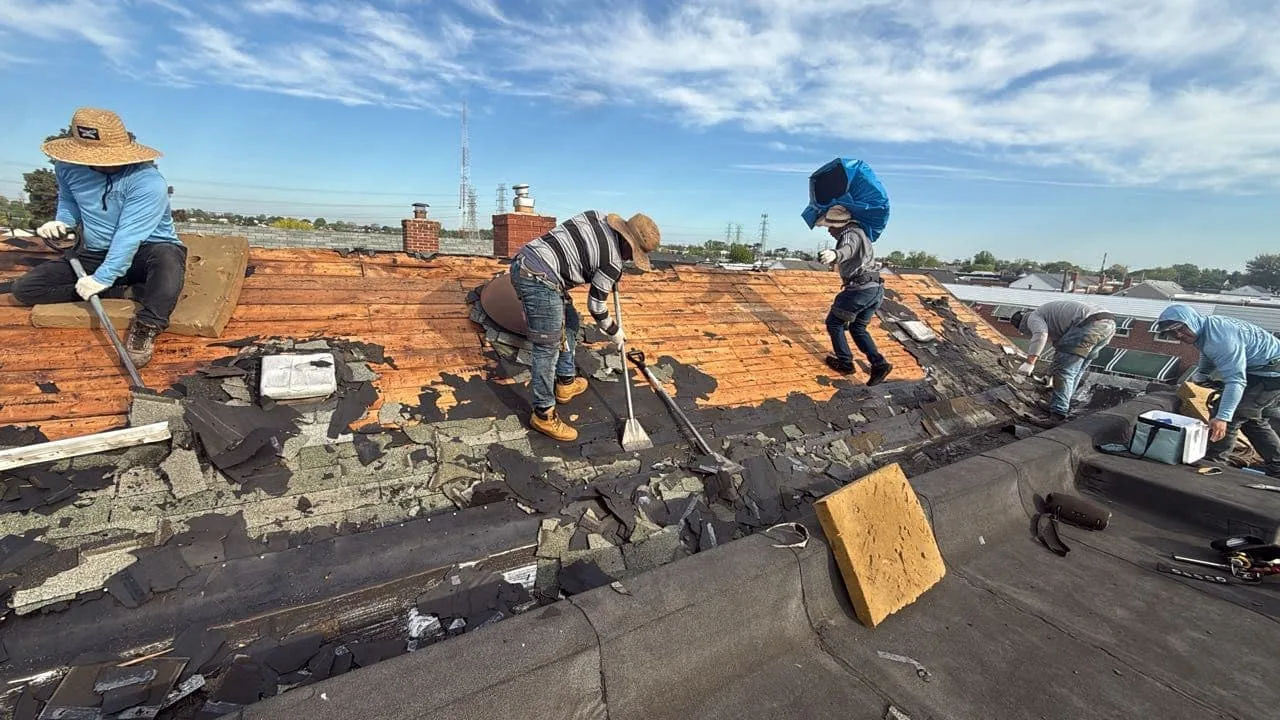
Local failures over dry insulation call for repair. An aging but dry sheet may take a coating or a recover. Insulation soaked across a section calls for replacement of that section. Each path gets a cost range, and the report shows what it costs to wait another year.
Cities may adopt editions equal to or stricter than the state's 2021 set, in force since August 17, 2025, so the permit office tells us which one applies before we price a new sheet. A PVC sheet and an EPDM sheet fail differently at the lap, and a Versico or Duro-Last roof calls for its own seam method again.
What to check next
After a repair, probe the seam again after the first heavy rain. Look at the stain area from below. Check the drain strainers. Write the date in the roof file. A spring roof walk before storm season is the cheapest insurance a manager can buy, and it takes an afternoon.
The file records the sheet family, the attachment, the repairs and the dates. Lenders, insurers and new owners can read it, and the next crew starts from facts instead of memory.
Write down three dates before leaving the roof: when it was walked, when the repair was made, and when to look again. A roof file with three dates is more useful than a long report with none.
Commercial Roofing Questions
Do you work on Carlisle SynTec roofs?
We install, repair and maintain single-ply systems of this kind. The sheet family and attachment are identified first.
Why do seams lift?
Heat movement, poor adhesion or a dirty surface at the time of welding. The photo trail shows which one applies.
Can a welded seam be repaired?
Yes. We clean the sheet, weld on a new piece and probe the bond.
What is a fastener pull test?
A check of how much load a fastener holds in the deck. It shows whether the attachment is still sound.
How often should I walk the roof?
At least once each spring and after any severe storm.