Johns Manville Roofing Systems in Franklin, TN
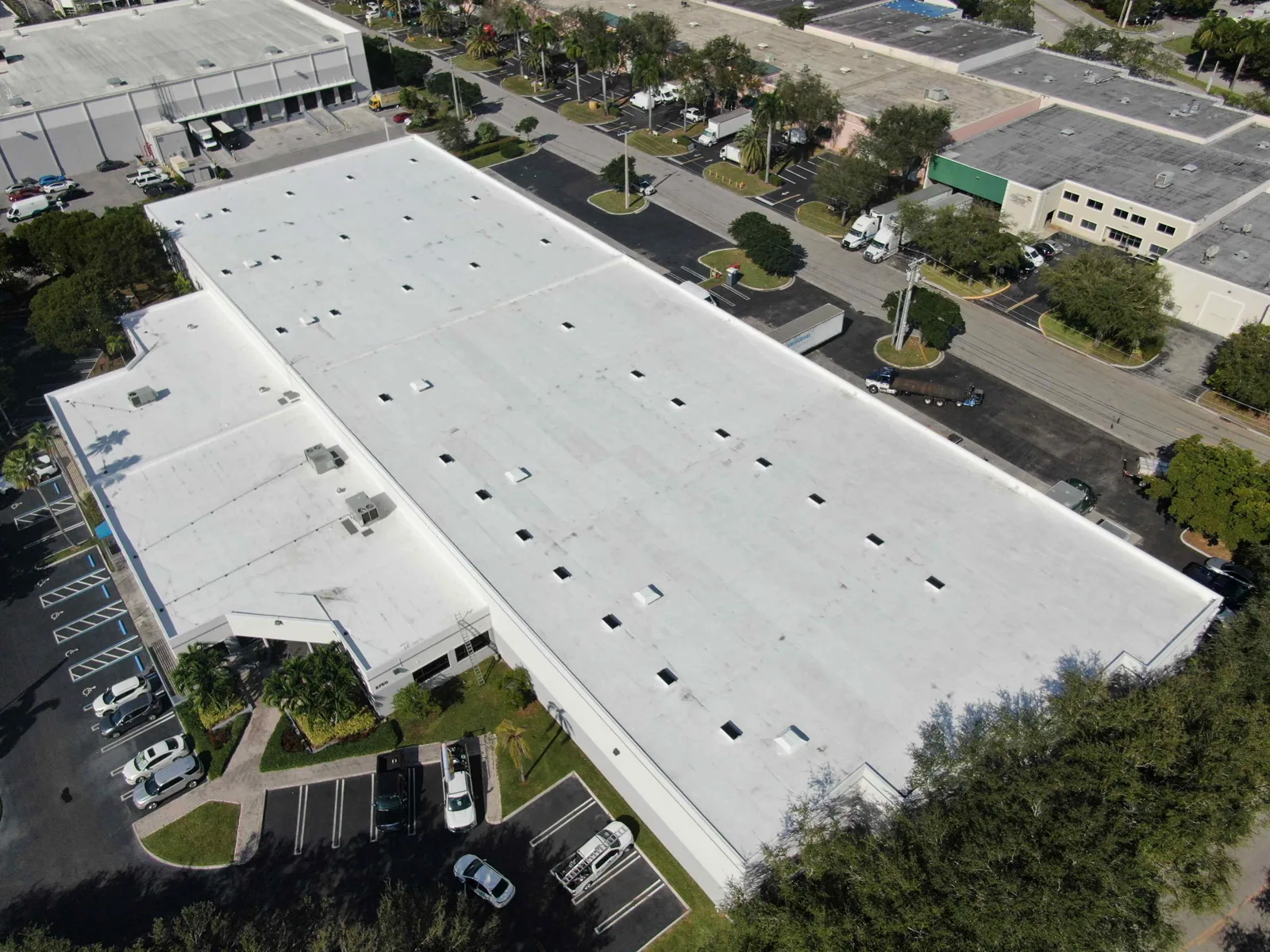
A soft spot underfoot is the first sign of a wet layer, and on a roof that carries Johns Manville insulation or membrane it is easy to miss from the surface. The sheet may look dry and flat. Underneath, the top board may be soaked, crushed or delaminated. We walk that failure backward in Franklin, TN: from the soft spot, through the wet layer, to the opening that let water in. Johns Manville is known for commercial roofing membranes and for roof insulation, so the layers are as much a part of the lesson as the surface.
A roof is a stack
A low-slope roof is built in layers. The deck carries the load. Insulation boards sit on the deck, usually polyisocyanurate, and give most of the thermal value. A cover board protects the insulation from traffic and hail. The membrane keeps water out of all three. Tapered insulation adds slope so water travels to the drains.
When a manufacturer supplies both the boards and the sheet, the pieces are designed to work together. A repair that swaps one layer for something else needs a compatibility check. We record, for each roof section, the layers, their thickness and the way they are attached. That record is the key to every later repair.
Fasteners tell their own story. Plates that have rusted, screws that have backed out and boards crushed around a fastener head all point to attachment problems that a surface walk misses. We pull a sample of fasteners across the roof section, test them in the deck and record the pattern. An attachment problem is a wind problem as much as a leak problem, and it changes the repair.
The first sign
A wet layer rarely announces itself. Water enters through a small opening, spreads along the top of the board and soaks it slowly. The membrane above may stretch or sag. In a cold snap, the water freezes and expands. The first sign a manager sees may be a stain months after the real failure.
We look for the soft spot, the sag and the dark patch that stays wet. A moisture survey maps cool zones across the roof, which usually mean wet insulation. A core cut, a small round sample through all layers, confirms it. We photograph the sample and patch the hole the same day.
Cold adds a step. Franklin's record low is minus 22 F, and water in a wet board freezes and expands, which can open a seam that was tight in autumn. If the first sign appears after a hard freeze, we check the layer under it before anything else. Thaw follows, and the water that was locked in ice moves again.
Where the water stopped
Franklin is a city that knows what water does when it has nowhere to go. The Harpeth stood at 35.32 feet in downtown Franklin during the flood of May 1-2, 2010, a few inches over the 1948 record, and about 1,500 residential and commercial structures in Williamson County took damage. A roof is a small watershed with its own rules, and water stops at the first obstacle.
On a roof, the obstacle is often a clogged strainer, a low spot or a blocked scupper. The water stands, finds a seam and works into the board. We trace the standing-water line after rain, record its edge and depth and find the drain that should have emptied it. The cause, not the stain, decides the repair.
Large office roofs
Office buildings in Cool Springs often have large, low-slope roofs with rooftop equipment, and a Class A multi-tenant office building on Cool Springs Boulevard can run to 263,598 square feet of floor. A building that size is read one roof section at a time, with the layers of each section logged on their own line.
On such a roof the checks are specific. How many layers of insulation? Is the top board wet? Do the curbs for the rooftop units have sound flashing? Where does each drain discharge? The answers go on the roof drawing, section by section, for each of the Cool Springs office roofs.
Rooftop equipment on these buildings often changes over time. A chiller added in one year, an exhaust fan in another, a satellite mount in a third. Each addition cuts the roof. We count them all, mark the ones in service and recommend removing the ones that are not, since fewer penetrations mean fewer places for the sequence to start.
Healthcare roofs
In Franklin's 2024 annual financial report, Williamson Medical Center shows 1,900 employees and Community Health Systems shows 3,923. Healthcare roofs add constraints: air intakes, noise limits and infection control. A wet layer under a clinic roof is more than a repair, because moisture in insulation can lead to mold in the space below if a leak persists.
On a hospital roof or a medical office roof, access and sequencing are settled before the first panel is lifted, and the plan names the shutdown windows before work starts.
The same discipline applies to a clinic suite on the second floor of a mixed-use building. We ask where the air intakes are, which hours are quiet and who must be told before a unit is shut down. Those answers become part of the schedule, written before any date is set. A repair that closes the roof at the wrong hour is a failure of its own.
Repair or replace
If the wet area is small and the sheet is sound, we cut out the wet boards, replace them and patch the membrane. If the wet area is large, we replace the whole section. A recover, a new membrane over a dry existing assembly, saves tear-off cost where the roof can carry the added layer. Each path in the report carries a cost range, plus the cost of another year of waiting.
For a replacement, the permit office names the edition: the state moved to the 2021 international codes on August 17, 2025, and a city can go further. We confirm the edition at the permit office. A roof recover is considered only after the moisture survey, and the GAF and Holcim Elevate systems follow their own published details.
Cost follows the layer. A patched membrane over dry boards is the least expensive repair. Replacing a few wet boards and patching over them costs more. A full section replacement costs the most. The report lists each item, so a manager can see which cost comes from the roof and which from the building's access and hours.
What to check next
After any insulation repair, check the core cut location after the next heavy rain. Look at the area from below. Clear the strainers. Write the date in the roof file. If the cut was made in a traffic lane, add a walk pad.
The file records each layer, each test and each repair. That file lets a manager answer a lender's question in minutes, and the next crew will not need to cut the same hole twice.
Commercial Roofing Questions
Do you work on Johns Manville roofs?
We install, repair and maintain commercial membranes and insulation of this kind. We identify the layers before choosing repair materials.
What is tapered insulation?
Insulation cut at a slight slope so water moves to the drains and low spots are removed.
How big is a core cut?
A few inches across. We patch it the same day with a compatible repair.
Can wet insulation dry in place?
Rarely enough to matter. Wet boards usually have to be replaced, and the survey shows how much.
Does added insulation change wind resistance?
It can, since thicker assemblies need longer fasteners. We review the attachment.