Medical Office and Clinic Roofing in Franklin, TN
A drip over an exam room is a failure with an unusual first sign: the clinic closes the room. The roof problem becomes a scheduling problem, a patient problem and sometimes a regulatory one, all before anyone has found the leak. The closed room is our starting point, and we follow the water backward through ceiling, insulation and membrane to the roof crossing.
We work on low-slope and metal roofs over medical office buildings and clinics in Franklin, TN, from repair to full replacement. From the stain onward we trace the water path, mark the cause and return a short written summary with photos. Patient hours, intakes and infection-control rules shape every job. Emergencies are answered at any hour, holidays included.
The first sign
In a clinic, the first sign usually comes from staff. A nurse reports a stain above a sink. A front-desk lead notes a smell after rain. A tile near a procedure room sags. Each report is logged with a date and a room, and the log is a map of where the roof is failing.
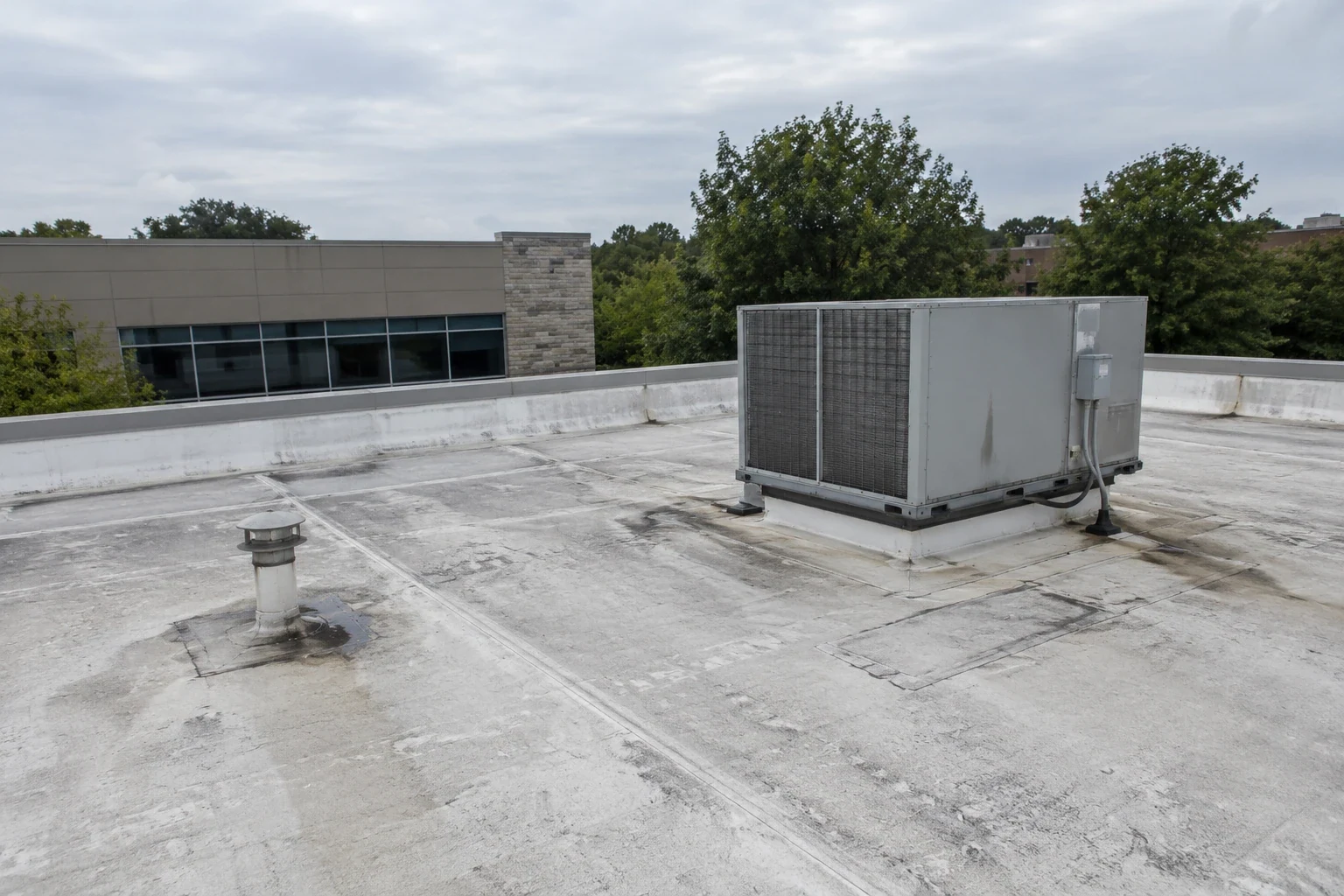
We ask for that log before the walk and lay it over the roof plan. Rooms that share a wall or a plumbing chase often share a leak. Then we climb and look at the details above those rooms: rooftop units, exhaust fans, plumbing vents and the drains that serve that part of the roof. The usual suspects are few. The trail from the stain to the entry is what takes patience.
Tenant improvements leave their own marks. A suite that was gutted and rebuilt for a new practice may have new exhaust, new plumbing vents and new rooftop equipment, each cut through the roof by a trade that was not a roofer. We look for penetrations that do not match the original drawings and for sealant used where a flashing should be.
What is happening underneath
A medical office roof is a quiet sandwich with a lot of penetrations. Plumbing vents, exhaust for restrooms and labs, rooftop units for each suite and sometimes medical gas or vacuum exhaust all pass through it. Every penetration carries a flashing, and every flashing is a possible entry.
Water travels the insulation and drops at the first gap in the ceiling, sometimes several feet from where it came in. Wet insulation grows mold in a closed ceiling space. That is why we confirm before we repair. A moisture survey maps the wet layer, and cores show whether it is dry, damp or saturated. The map decides how much of the roof is repaired and how much is replaced.
Moisture can start inside a clinic. Sterilization rooms, labs and restrooms push humid air upward, and a poorly vented space condenses on the underside of the deck. The stain looks like a leak and is not. We check exhaust runs and attic or plenum conditions before we blame the membrane, so the repair matches the cause.
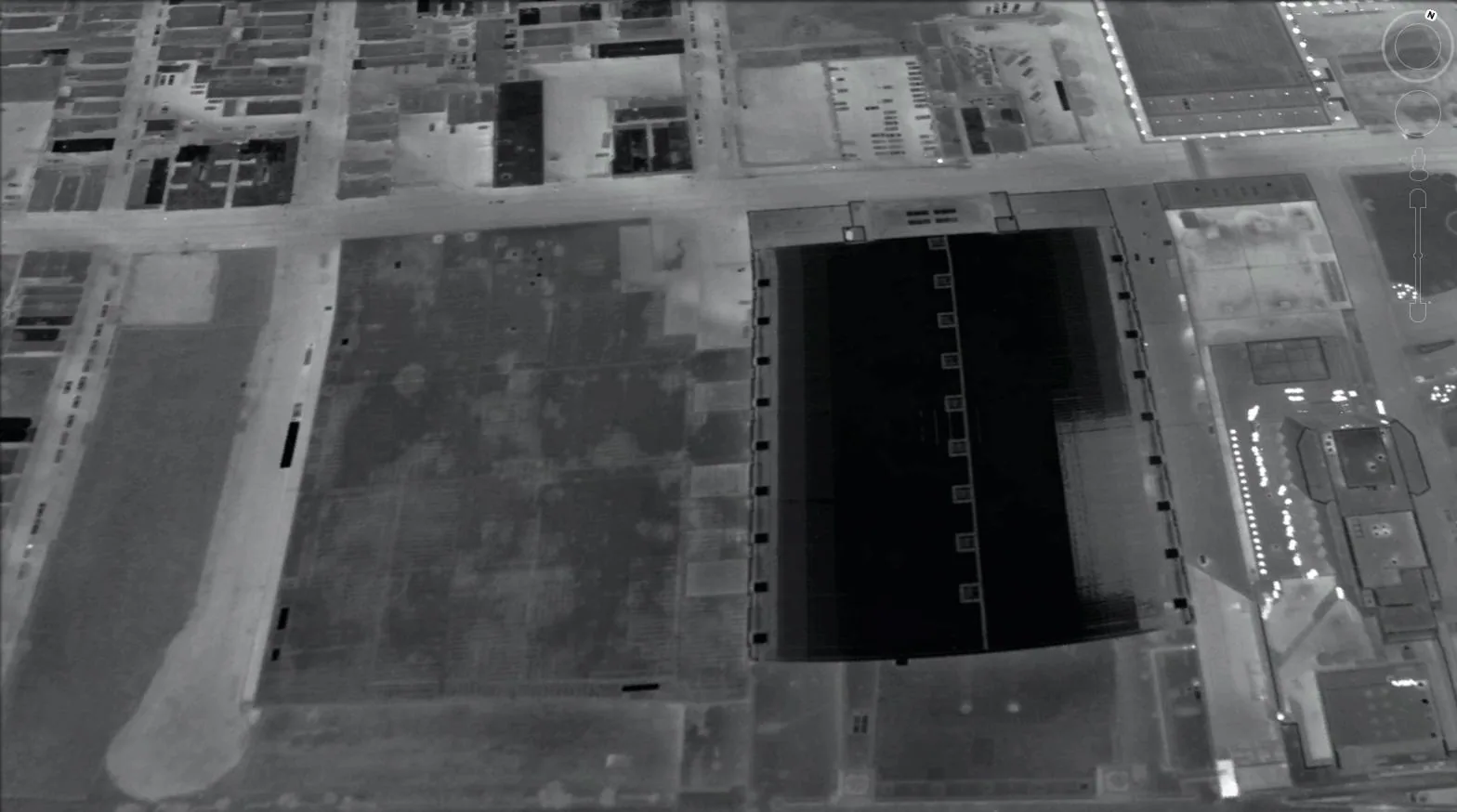
An infrared moisture survey is the least disruptive way to map a medical roof, since it needs no cutting and no interior access. Cores confirm the readings in a few marked spots. Compared with an ordinary office roof, the extra care here goes into what sits below, not into the membrane itself.
Working around patients
Care comes first. Intakes near the work area are marked and protected. Noisy steps are scheduled outside appointment peaks where we can, and we coordinate with the practice about procedures that cannot tolerate vibration or odor. Dust control, barriers and clean-up at the end of each shift are written into the plan. Quiet-hour windows often differ by suite: a procedure room may need silence in the morning while an administrative suite tolerates noise until noon. The plan lists each suite with its own hours so the crew never has to guess.
Access and parking are managed too. Patients with limited mobility should never have to cross a work zone, so we mark safe paths and keep entrances clear. For an occupied building, occupied building reroofing is planned in sections, each closed in by the end of the day.
Records matter in healthcare. Every roof opening, repair and clean-up is photographed and logged, with the date, the area and the materials used. If a regulator, insurer or landlord asks what was done above a procedure room, the file answers in minutes. We deliver the same record at close-out.
The same record tells the practice which suites were affected and when each was cleared to reopen.
Where clinics sit in Franklin
Williamson Medical Center is listed with 1,900 employees in Franklin's 2024 annual financial report, and Community Health Systems is listed with 3,923. Healthcare uses cluster near the Murfreesboro Road corridor east of the interstate, where auto repair and sales, banks, grocery stores, restaurants and pharmacies sit in developments older than those to the north.
Roofs along an older, mixed corridor can span many ages, so the first walk records what each one is. The Murfreesboro Road corridor and the offices of Cool Springs each start with that first walk, and a core cut shows how many layers and repairs a roof carries.
Weather and the medical roof
Expect about 54 inches of rain in a Franklin year, July highs near 91 degrees and recorded temperatures from minus 22 up to 108. The heat works the seams in summer, and rain tests the drains. Estimated winds of 75 mph came with the EF0 tornado of August 12, 2023, which touched down near Highway 96 and Royal Oaks Boulevard and caused minor roof damage at some businesses.
For a clinic, the practical lesson is to keep drains clear, edge metal tight and rooftop units flashed, and to walk the roof after a storm line. A warning for northeastern Williamson County in July 2026 flagged 60 mph gusts and hail up to three-quarters of an inch, which is worth a quick roof check even when no leak has shown.
Repair or replace
Cause before cure. Commercial roof repair handles an isolated failure when the insulation is dry. A worn membrane over widely wet insulation points to replacement. Options are weighed against the practice schedule and the rooms below. A larger campus building follows the lessons of hospital roofing, with more constraints on intakes and noise.
Commercial Roofing Questions
How do you keep dust and odor out of a clinic during roof work?
We mark and protect air intakes, sequence tear-off and hot work away from them, use barriers where needed and clean at the end of each shift. The plan is shared with the practice first.
Can exam rooms stay open during repairs?
Often, with limits. Rooms directly under open work may close for a short time. We schedule around appointment peaks and tell staff which rooms are affected each day.
What causes mold after a roof leak?
Wet insulation and damp ceiling tiles in a closed space. A moisture survey finds wet insulation early, and removing it matters more than patching the stain.
Do older medical offices have more roof layers?
They can. Roofs on older buildings may have been recovered or repaired several times. A core cut shows the layers and the moisture before any scope is priced.
What should a practice send before a visit?
Share the roof age, a floor plan showing exam rooms and intakes, the staff leak log and earlier repair invoices. Then we trace the failure on the roof and send back a short written summary for your files.