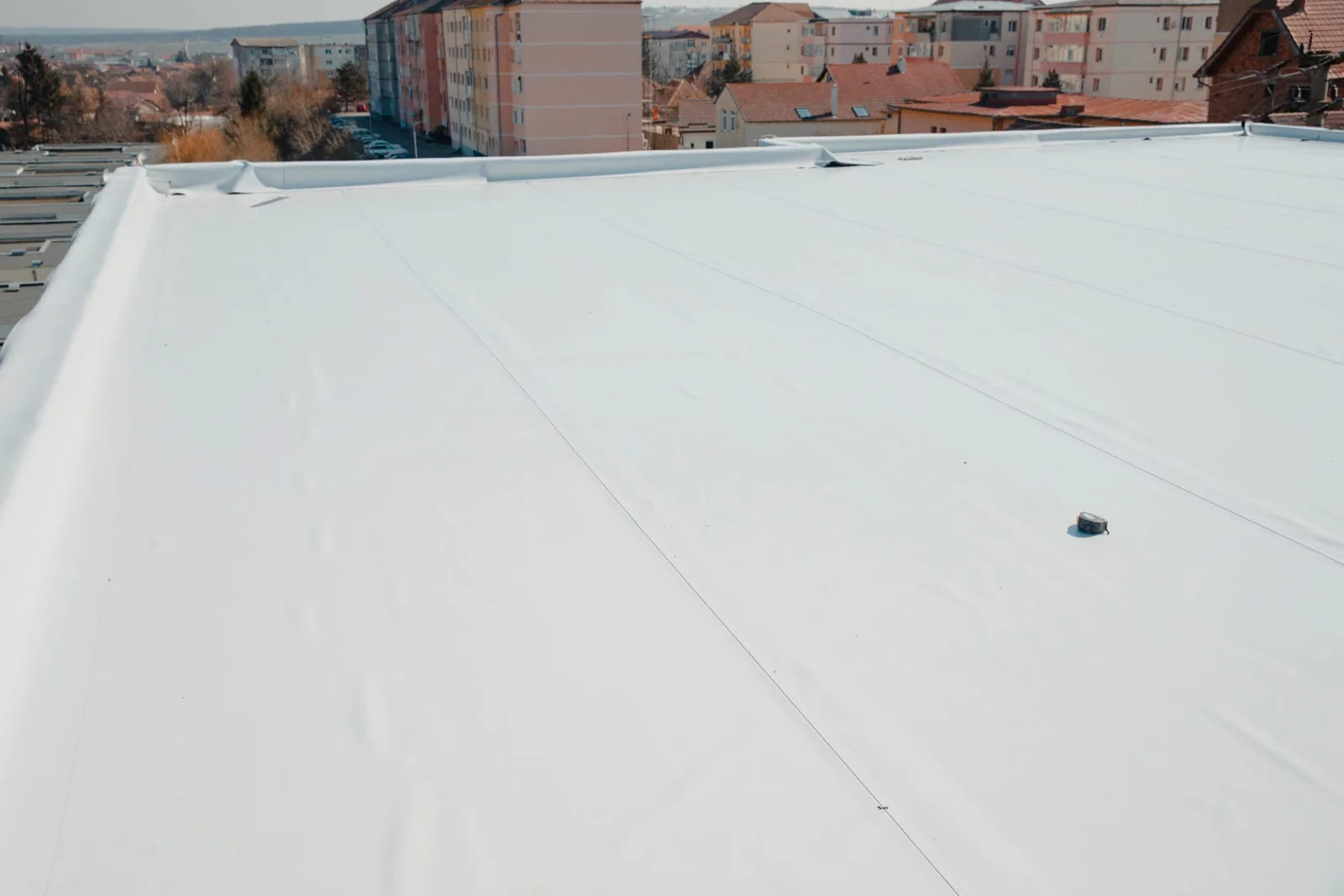
Holcim Elevate Roofing Systems in Franklin, TN
A strip of edge metal hanging loose after a storm is the first sign of a wind failure, and on a roof carrying a Holcim Elevate single-ply it is worth walking backward from. Holcim Elevate is the name now used for the business formerly known as Firestone Building Products, so a roof in Franklin, TN, may carry either name on its paperwork. The lesson is the same under both: wind starts at the edge, lifts a lap, and then works inward across the sheet. Catch it at the edge and the repair is small.
What is on the roof
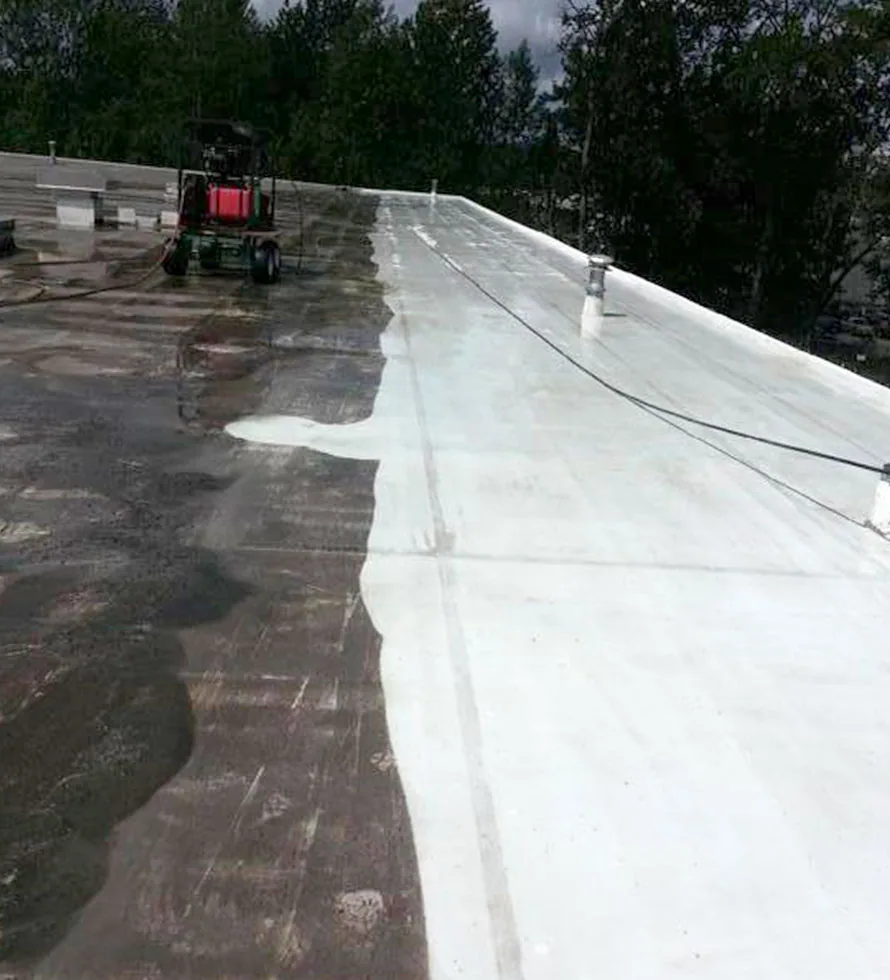
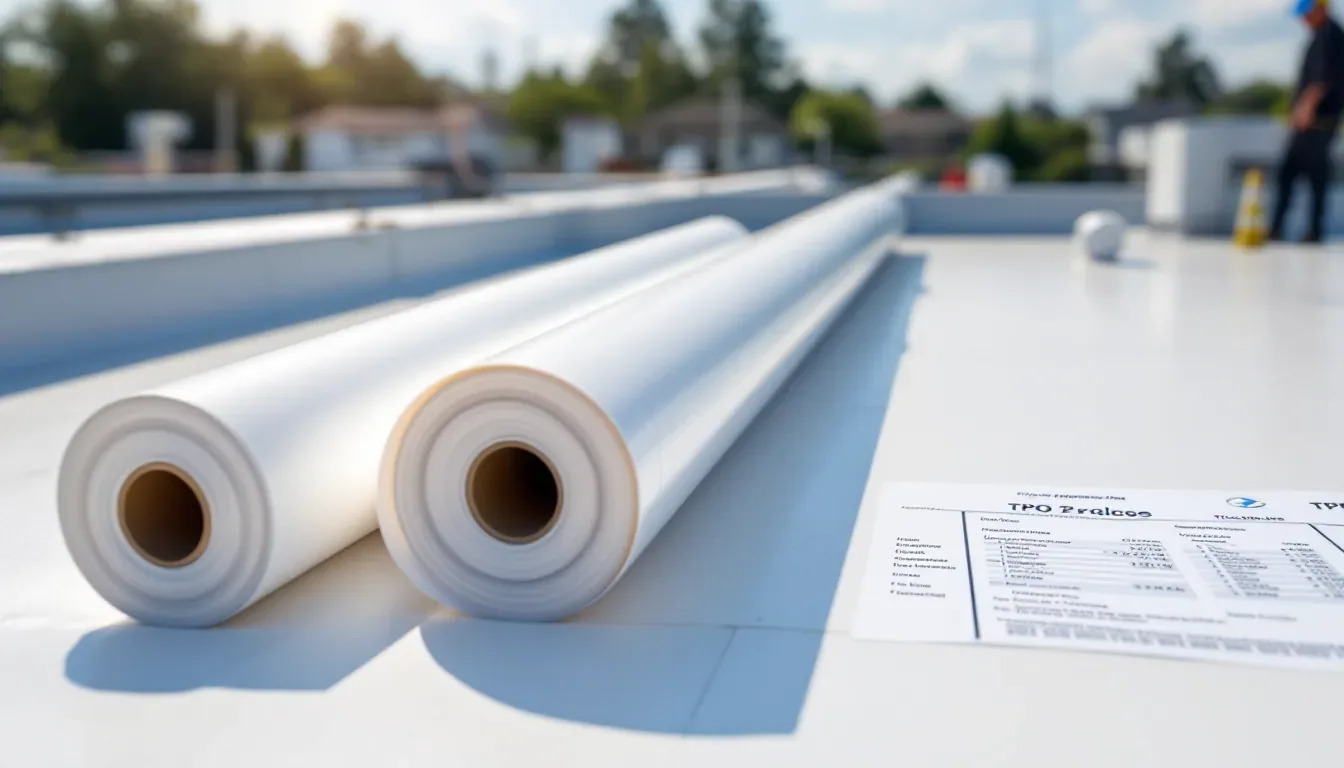
The manufacturer's commercial range includes single-ply membranes in more than one polymer family, polyiso insulation and metal edge and accessory products. One building can carry several parts from the same source, with the sheet, boards, fasteners and edge metal designed as a set. When a repair brings in a part from another source, the first question is whether it is compatible with what is already there.
We record the sheet type, the attachment method, the edge profile and the insulation for each roof section. A mechanically attached sheet and a fully adhered sheet fail in different places, and the record keeps that distinction in front of anyone planning work later.
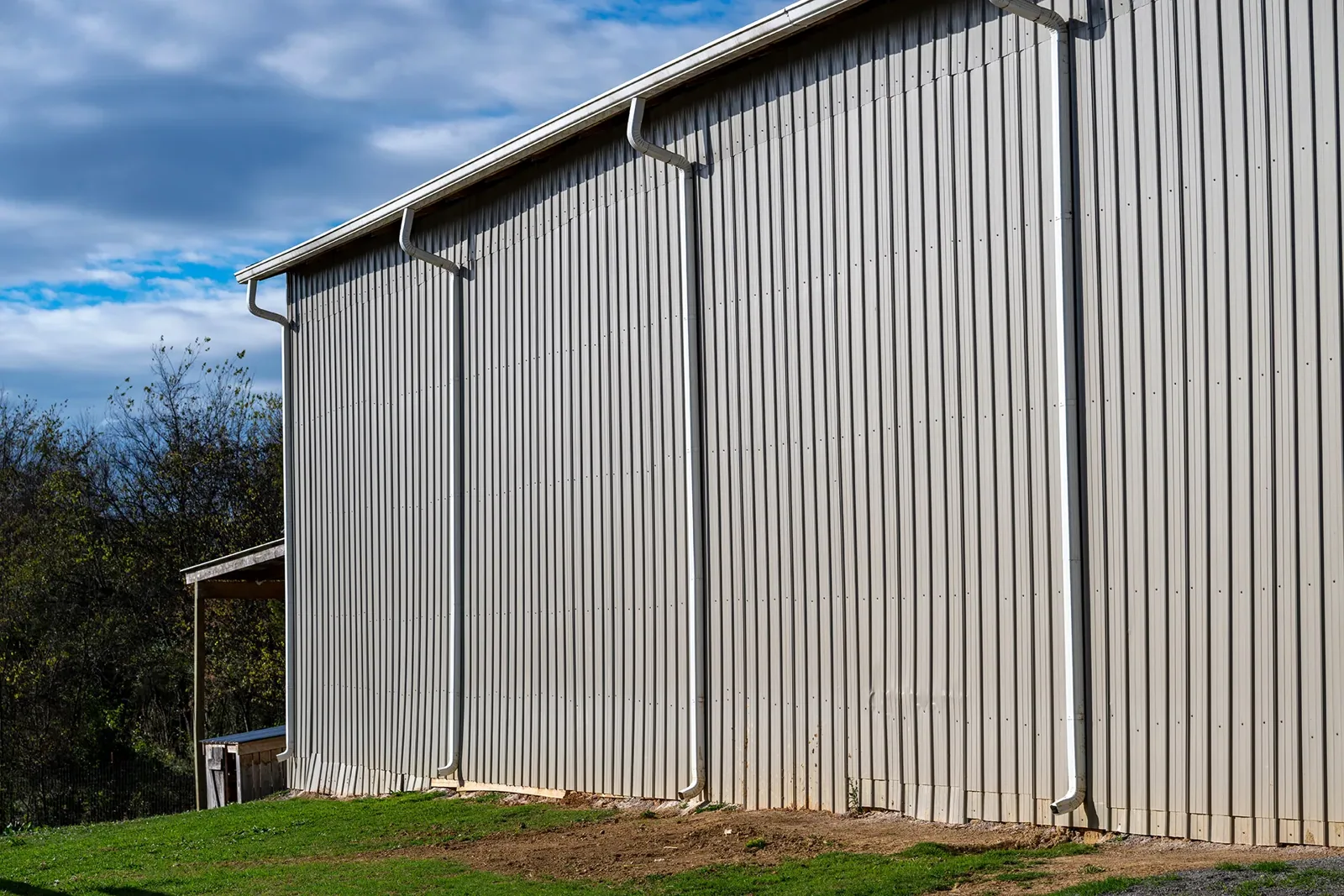
Edge metal and coping get their own line on the roof drawing. The profile, the gauge where it can be read, the cleat or clip system and the sealant at each joint are noted, because a coping changed in an earlier repair may differ from the original and may not carry the same rating. We photograph each joint and record its condition.
The first sign
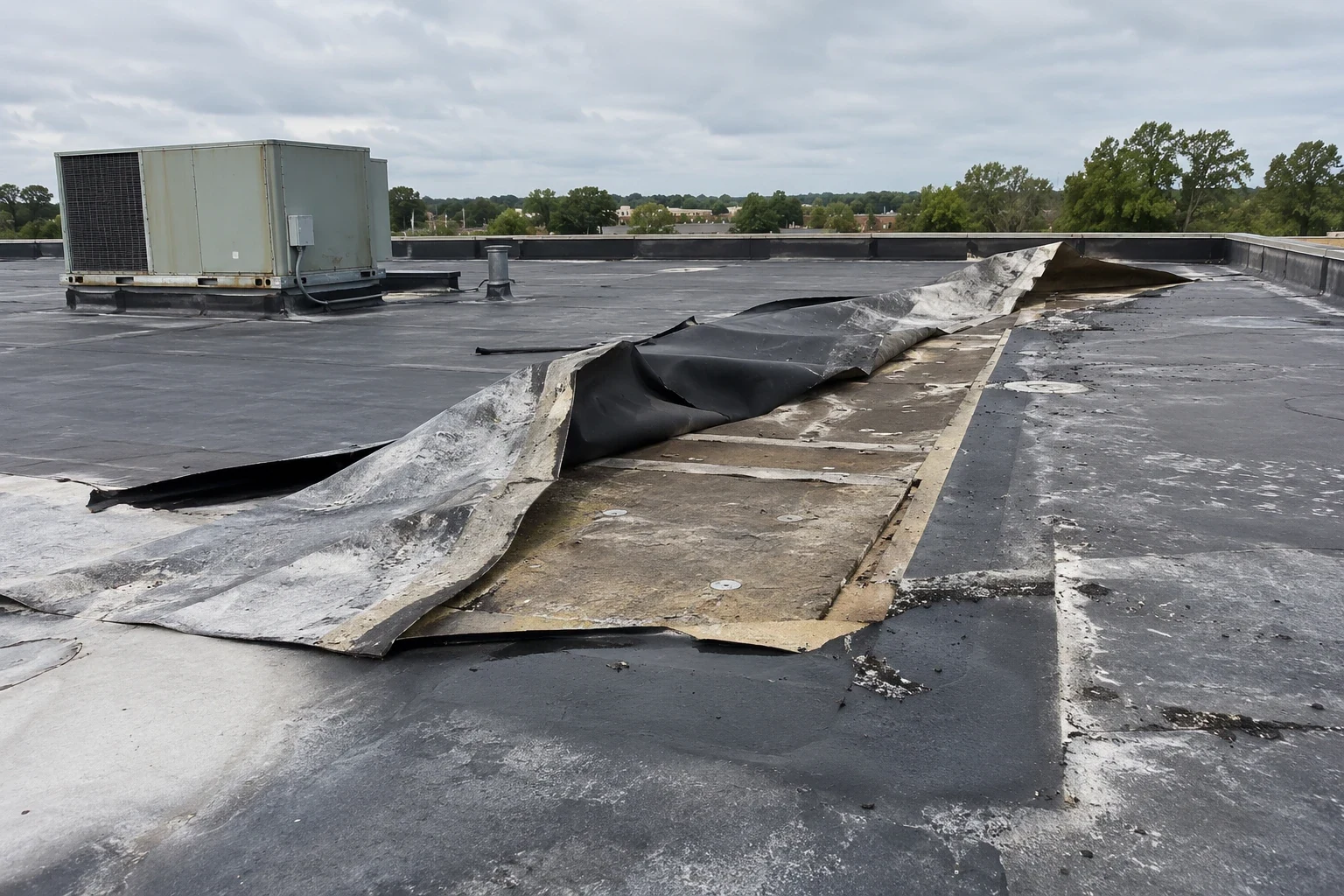
After a storm, the first sign is usually at the perimeter. A coping lifted at a joint. Edge metal bent outward. A row of fasteners backed out. The sheet itself may look flat and tight in the field while the edge has started to peel.
We photograph each sign and mark it on the roof drawing. Then we walk inward from the edge. The first ten feet of a roof see the highest uplift, since wind curls over the parapet and pulls up at corners. A lap that has lifted there is the start of a sequence, and the photo trail shows how far it has gone.
The quietest version of this failure is the one nobody sees. A fastener backs out a quarter inch in a heat cycle. A plate rusts. A sealant line shrinks. None of these opens a leak on the day it happens. Months later a gust finds the weakness and the sequence starts. That is why a spring walk matters even when nothing has gone wrong.
Storm lines in Franklin
A weak tornado, an EF0 with estimated 75 mph winds, came down on August 12, 2023 near Highway 96 and Royal Oaks Boulevard and ran about 1.9 miles; some Highway 96 businesses had minor roof and exterior damage, the National Weather Service reported. The same storm system downed trees near Fairview, and several funnel clouds were reported near Franklin. The July 2026 warning for northeastern Williamson County named Franklin, Brentwood and Nolensville and expected gusts near 60 mph.
These are weather facts, not predictions about a roof. They are reasons to check the perimeter before the season starts and again after any warning that names the city.
How to confirm it
A lifted edge is confirmed by testing, not by looking. We pull a sample of fasteners at the perimeter and corners and measure what each holds in the deck. We check the edge metal for loose laps, missing sealant and bent cleats. We probe the laps in the first ten feet for bond.
If the tests show a weak attachment, the repair is not a patch. It is a new fastening pattern at the edge, new plates and often new edge metal. The report separates this from cosmetic damage, and it shows the cost of each.
The standing-water line is part of the same walk. Water that sits along an edge is often the result of a blocked scupper or a sagging parapet cap, and it keeps the sheet wet where the wind is already working. We clear the scupper, check the cap and record the water line before and after.
Where it shows up
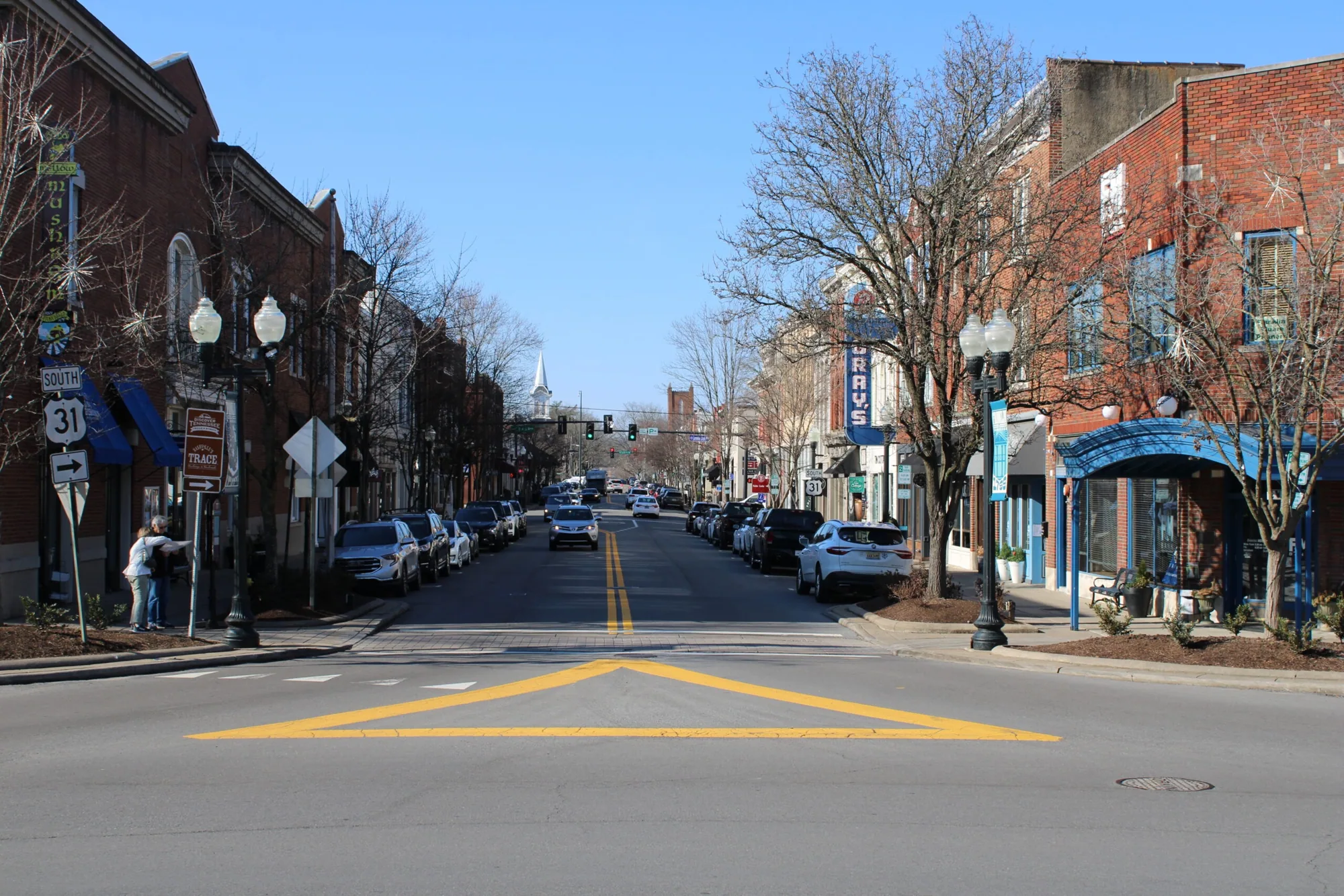
Mallory Lane and Royal Oaks Boulevard, west of I-65, are mostly four-lane divided roads with many curb cuts, driveways and peak-hour congestion, and that shapes delivery and crane planning. Warehouse-style buildings west of CoolSprings Galleria hold offices, showrooms and institutional uses. These roofs are wide, and the edge is long.
That length matters. A wide roof has a lot of perimeter to inspect and a lot of edge metal to hold. On a roof like this, edge work is planned as its own task, with the lift, the delivery truck and the crew scheduled around the traffic. On the Mallory Lane and Royal Oaks corridor, the first walk starts at the edge.
On a roof with parapets all around, the edge and the drains are the same system. Water leaves through scuppers cut into the parapet, and a scupper lip set too high holds water against the sheet. We check the lip height, the flashing around the opening and the downspout below. A loose scupper is both a leak path and a wind risk.
Repair or replace
A lifted edge with sound attachment behind it is a repair. A lifted edge with failed fasteners calls for a new edge system. A sheet that has peeled across a section calls for replacement of that section. Each one is priced as a range, with the cost of sitting through another storm line shown beside it.
A new edge system is permitted under whichever edition the city uses, and the state's own default became the 2021 set on August 17, 2025. Wind damage roof repair after a storm begins at that same perimeter, and a TPO, Carlisle SynTec or Versico sheet gets the same edge check.
Cost depends on the length of edge. A short run of loose coping is a half-day repair. A full perimeter re-fastening is a larger job and often needs a lift. The estimate states the linear feet involved, the access plan and the weather hold rules, so a manager can see what the number is built from.
What to check next
After an edge repair, check it after the next gusty day. Look for new gaps at the coping. Check the laps in the first ten feet. Write the date in the roof file. Keep the photographs, since an adjuster will want to compare before and after.
The file records the sheet, the attachment, the edge profile and the repairs. With the file, a lender or insurer sees how the edges were kept, and the next crew begins with facts.
Keep a short list near the roof hatch: edge metal checked, fasteners sampled, laps probed, scuppers clear, date. A list of five items, filled in twice a year, is the simplest record a building can keep.
Commercial Roofing Questions
Is Holcim Elevate the same as Firestone Building Products?
It is the current name of the business formerly known as Firestone Building Products. Older roofs and paperwork may carry the earlier name.
Do you work on these roofs?
Yes, for single-ply roofs. The sheet and its attachment are identified before any repair.
Why does wind start at the edge?
Wind curls over the parapet and pulls up at corners. The edge sees the highest uplift.
What is a lifted coping?
A metal cap on a parapet that has come loose at a joint. It lets water in and gives wind a grip.
When should edges be checked?
Each spring and after any warning that names the city.