Commercial Roofing on the Murfreesboro Road Corridor, Franklin, TN
A grocery store ceiling tile that has turned brown near the cold case is the first sign of a roof failure with a refrigeration clue in it, and on the Murfreesboro Road corridor in Franklin, TN, where grocery stores, pharmacies, banks and restaurants share the same road, it is a good place to teach the sequence. The stain is below. The cause is above, and often in the equipment that serves the cold case. We walk it backward from the tile to the roof.
The corridor and what lines it
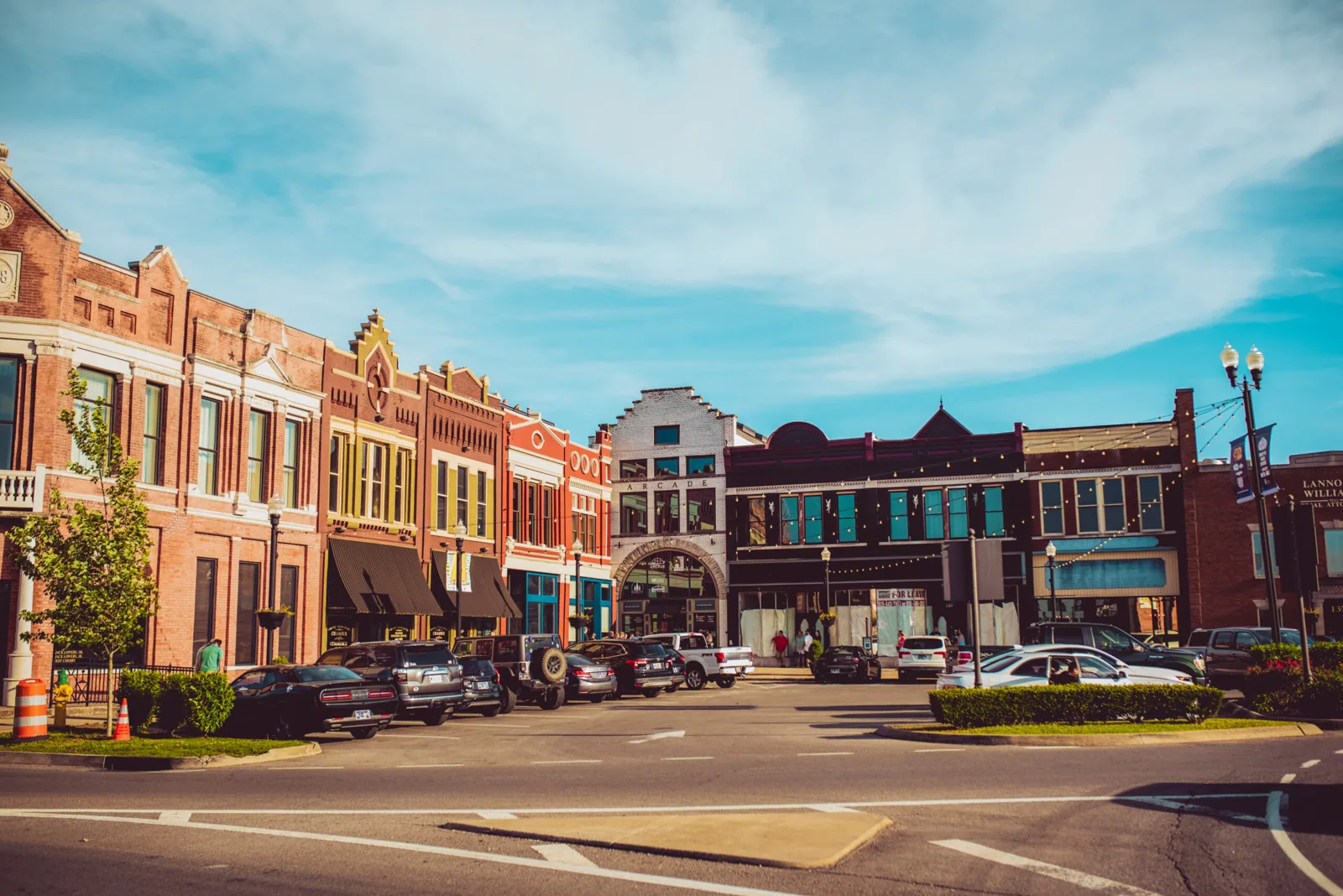
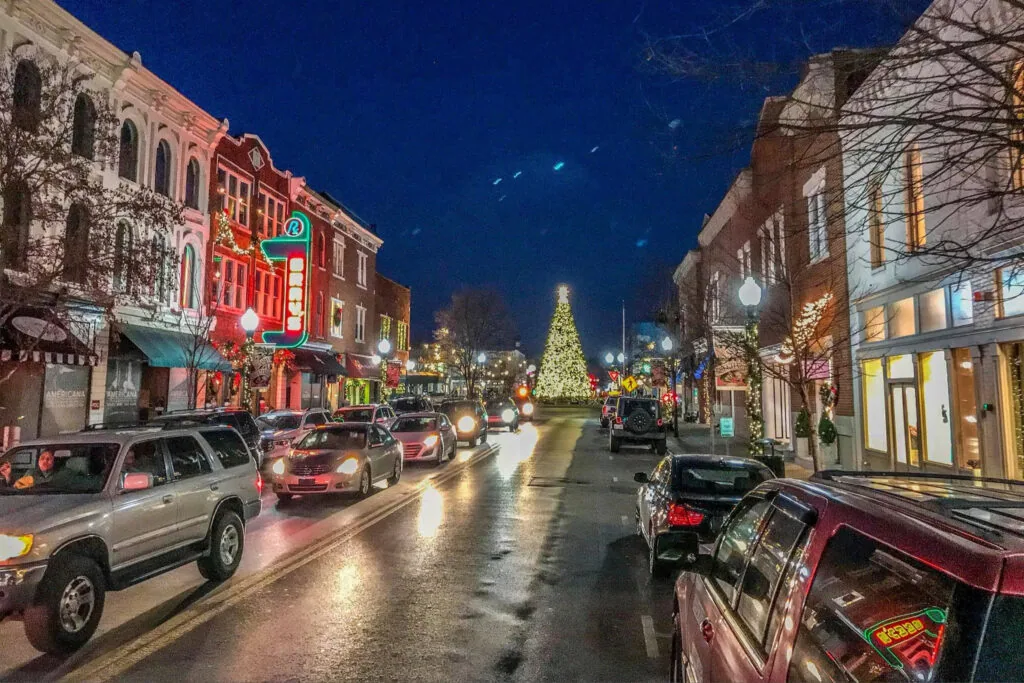
Murfreesboro Road runs past car repair and dealerships, banks, supermarkets, restaurants and drugstores, in developments older than the ones to the north. Williamson Medical Center and similar healthcare uses stand near the corridor, on the east side of the interstate, and the city plan suggests more incentives could encourage major redevelopment.
Mixed use means mixed roofs. A bank, a pharmacy and a restaurant on one road will have different equipment, different hours and different needs. We read each roof, record what is on it and plan the repair to that building.
Franklin's 2024 annual financial report lists Williamson Medical Center at 1,900 employees, and the medical and office uses around it add constraints such as air intakes and quiet hours. A roof job beside a clinic is planned around those facts, with the facility contact told the dates and hours in writing.
What fails first
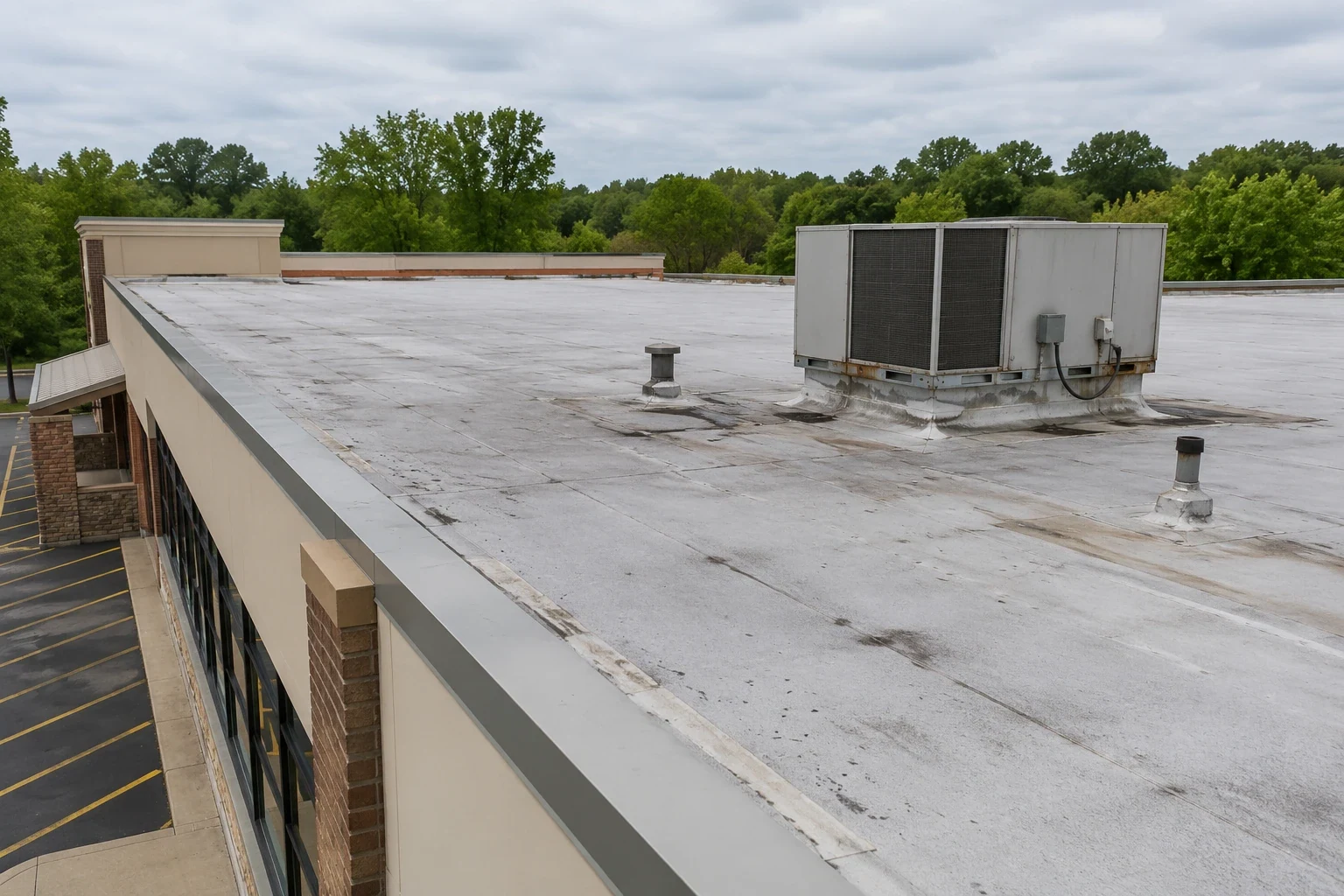
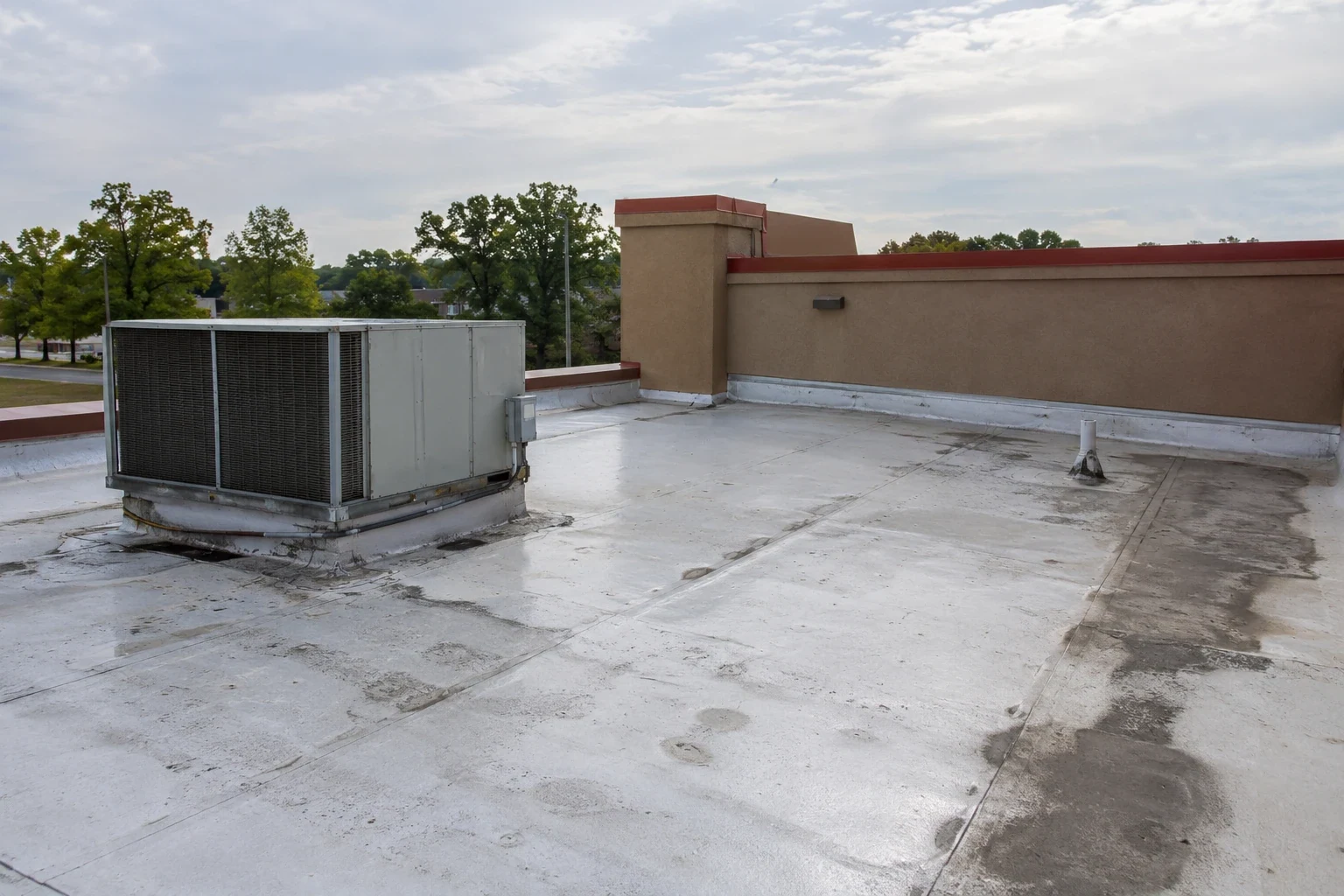
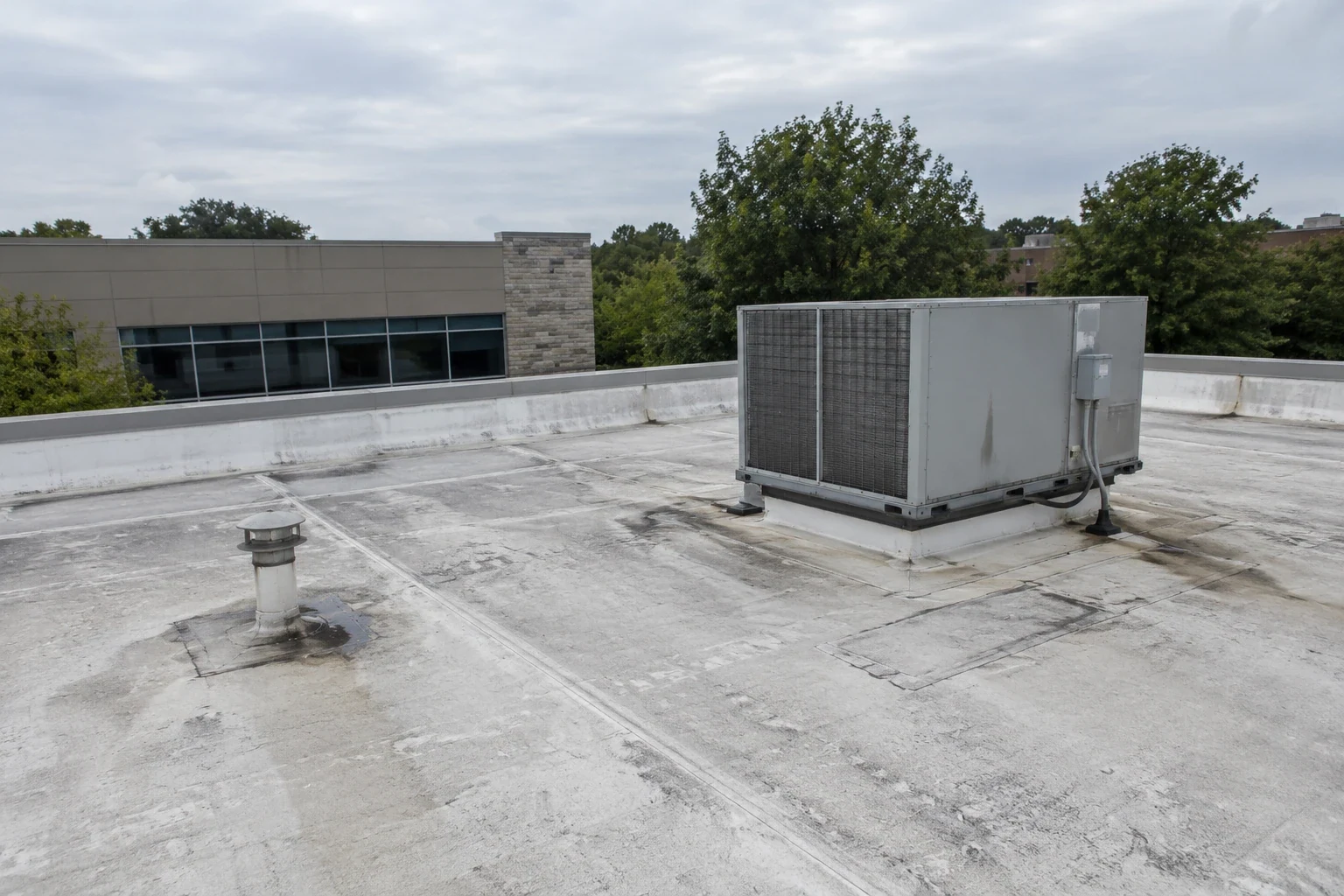
Each building type has its own first sign. A restaurant roof shows grease on the sheet near the exhaust fan. A grocery roof shows condensers and long refrigerant lines on curbs, with wear on the sheet where technicians walk. A bank roof may show few penetrations and a clean field, with drains as the main point of failure. A pharmacy roof often carries a unit or two over the dispensing area.
We list the equipment on each roof, count the curbs and photograph the drains. The list tells us where the sequence is most likely to start.
One more sign deserves a mention: a roof that has had several patches. Layers of patches tell a story. Each patch marks a past leak, and a cluster shows where the water keeps coming. We map the patches on the drawing, since the cluster points to a cause that earlier repairs missed.
What is happening underneath
Water behaves the same on every roof. It finds the lowest or weakest point. On a restaurant roof, grease makes the sheet slick and attacks some membranes, so the weak point may be the sheet itself. On a grocery roof, condensate from refrigeration units can add water at a curb, so the weak point is the pan or the line.
A moisture survey shows where the insulation is wet. A core cut confirms. Then the repair can follow the water back to its source. If the source is a condensate line, the roof repair is incomplete until the line is fixed.
Any development can be altered over time. Units added, units moved, signage hung, antennas mounted. Each alteration leaves a penetration, and not every penetration was flashed to the standard of the original roof. We count them all and check each one, since a small unflashed pipe can send as much water in as a failed seam.
Weather and older roofs
The city's normals show 53.79 inches of annual precipitation and extremes of 108 F and minus 22 F. Rain finds weak details. Heat moves seams. A hard freeze stiffens sheets and cracks sealant.
The corridor's developments are older than those to the north, and the walk reads the sheet, the seams and the layers to learn what each roof actually is. The report says what is there. A roof that has been maintained can outlast a younger one that has not.
Storm warnings bring their own checks. A warning for northeastern Williamson County in July 2026 named Franklin and expected gusts near 60 mph with small hail. After a warning like that we walk the edges, check the equipment straps and look at the field for bruises, then record what we see with dates.
How to confirm it
We probe seams. We check each curb and boot. We run water through each drain and time the flow. We look at the units and their connections. Wet insulation is mapped by a moisture survey and confirmed with a core cut.
Standing water is part of the test too. A pond left behind by the rain marks a low spot or a clogged drain; both need fixing, but only one is a roof repair. The report separates them, with photographs for each.
On a roof over an operating grocery or pharmacy, tests are scheduled with the manager. A water test over a ceiling needs someone below to watch it, and the store may want the area cleared. We plan the test for a quiet hour and leave the area as we found it.
Repair or replace
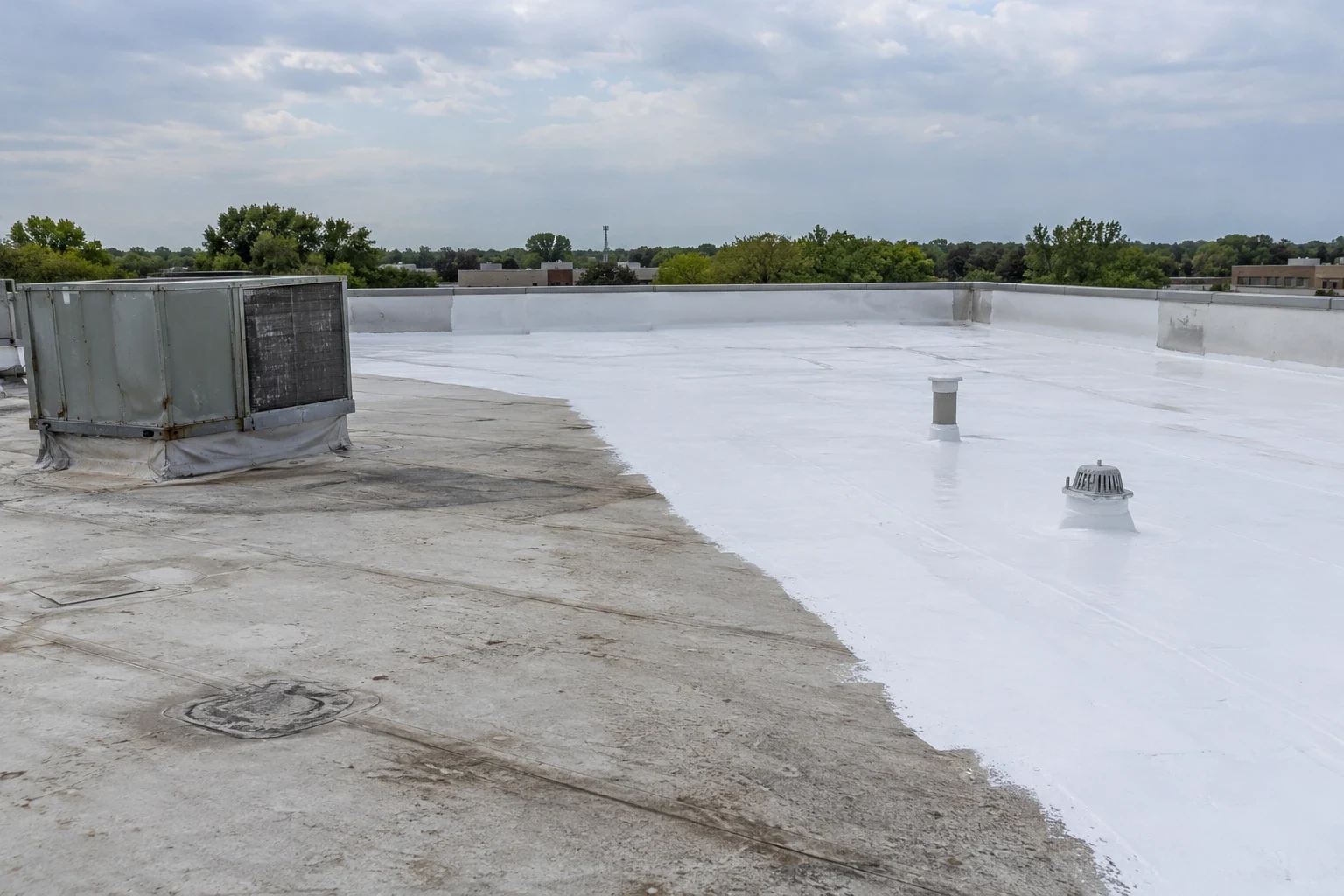
Local failures over dry insulation are a repair job. A roof that is old but dry might take a coating or a recover instead. Wet insulation across a section calls for taking out that section. Every option is priced as a range, with a year of waiting priced beside it.
Since August 17, 2025 the state baseline has been the 2021 international codes, and we confirm with the permit office what a replacement needs. A grocery store roof, a restaurant roof and a medical office roof each raise their own questions along this road, and roof coating restoration is one way to extend a dry roof.
Cost follows cause. A sealed pipe is small. A rebuilt curb is larger. A section of wet insulation is largest. The report separates the lines and shows access and hours on their own, so a manager can tell what the building adds apart from what the roof adds.
What to check next
Following a repair, watch the ceiling through the next heavy rain. Check the condensate lines. Look at the drains. Write the date in the roof file. For a grocery or restaurant, add a check of the exhaust area every season.
Anyone who also owns in Historic Downtown Franklin or in Columbia Avenue and Southall can use one file format for all the roofs and rank them side by side.
Keep the file short and dated. A one-page summary on top, the photographs behind it and the equipment list at the back are enough. When a new tenant moves in and asks for a unit on the roof, the file shows where the penetrations are, where the drains run and which areas are already crowded, and the new unit can be placed without adding a leak.
Commercial Roofing Questions
Can a refrigeration unit cause a roof leak?
Yes. A leaking condensate line or pan can pass for a roof leak. We check it first.
Does grease damage a roof?
It attacks some membranes and leaves others untouched. We identify the sheet and choose repairs for it.
Can a redevelopment plan affect repair choices?
Yes. If a building will be rebuilt, repairs are sized to the time left. If it will stay, the findings feed a longer plan.
How do you handle a pharmacy or bank roof?
We plan hours and noise with the manager, and we keep entrances and drive-through lanes clear.
What goes in the roof file?
Photographs, equipment counts, test results, repairs and dates.