Commercial Roofing in Bellevue, Nashville, TN
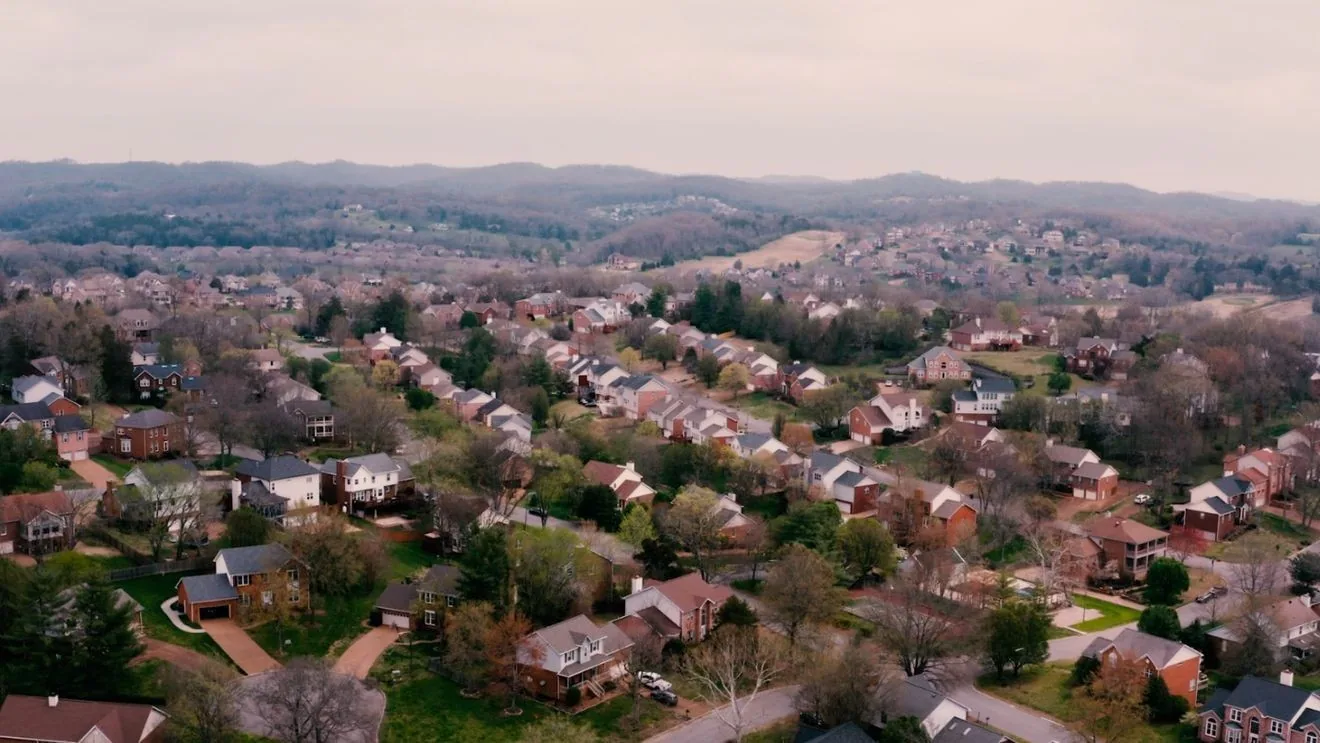
A bucket that never moves is the first sign. It sits in the same place after every rain, someone empties it each morning, and by now everyone has stopped noticing it. Bellevue, a Nashville neighborhood about 13 miles southwest of downtown via I-40 with an estimated 77,862 residents in 2016, has retail concentrations where a bucket like that can sit under a roof for a long time. The former Bellevue Center mall on Highway 70S has been replaced by One Bellevue Place, a retail lifestyle center with a theatre, grocery, community center and the Ford Ice Center.
We walk a repeating drip backward to its source, and we start by asking whether it is rain at all.
The bucket and its calendar
A drip that appears only after rain points to a roof entry. A drip that appears on humid days, or every morning, points to condensation. A drip that appears in summer when the air conditioning runs points to a cold surface meeting warm air. The calendar of the bucket is the first clue.
We ask when the drip started, what the weather was and how much water collects. We photograph the location, mark it on the plan and measure the room's humidity. Those readings split the problem into two roads. One leads to the roof surface. The other leads to the air in the building.
Buckets also hide a second problem. A bucket that catches a drip protects the floor, but it also stops anyone from seeing how the drip changes. We replace it with a marked tray and a log: date, time, amount and weather. After a week, the pattern is usually plain, and the cause is easier to name.
Redeveloped ground, mixed roofs
A site that has been redeveloped carries the history of its changes. New buildings stand where an enclosed mall once did, connected by walkways, plazas and service roads. Roofs from different periods and different builders sit close together, and the junctions between them are where water finds its way.
We number each roof section across the site and rate each on its own. The file shows the system, the age if known and the repair history. Where two roofs meet, we photograph the flashing and the gutter or drain that serves the joint. The lifestyle center is a reminder that a site is a collection of roofs, not one. A shopping center roofing plan treats it that way.
Construction history matters here as well. A building completed in one phase and extended in another has a seam in its roof where the two meet. The seam is a flashing detail, and it moves with temperature. We check it for gaps and lifted metal, and we record its condition in the file.
Cold rooms and wet air
Grocery stores, coolers and ice facilities keep surfaces cold while the air around them is warm and moist. Where those two meet, moisture condenses. In a roof assembly, warm humid air that leaks into a cold deck turns to water on the underside of the deck or in the insulation, and the water drips from the ceiling as if the roof leaked.
An ice rink such as the Ford Ice Center keeps a cold interior inside a warm, humid summer, which stresses a roof assembly from below. The walk and a core cut show whether the assembly has a vapor layer and whether it is working. A grocery store roofing job faces the same physics.
The fix is often in the building, not the roof. Sealing penetrations from below, repairing an air barrier or adjusting ventilation can stop condensation at the source. We say so plainly in the finding and separate it from the roofing scope, so the owner can assign each to the right trade and budget.
Theatres and wide spans
A theatre is usually a tall box with few windows and a very large roof. Few drains serve a big area, and a blocked drain puts a heavy pool of water over a long span. The failure sequence begins with a strainer, a pool and a bend in the deck, and it ends in a ceiling stain far from the drain.
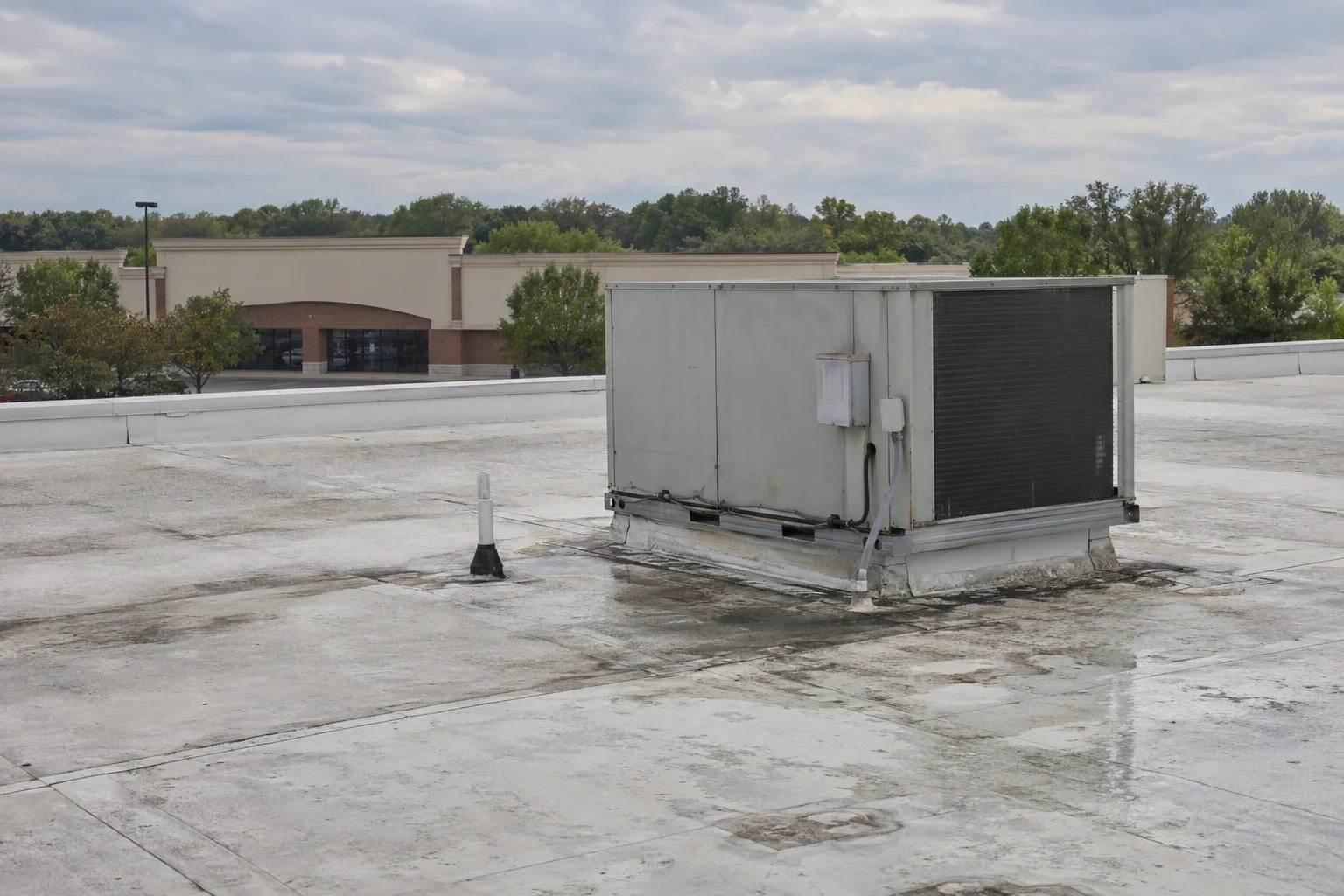
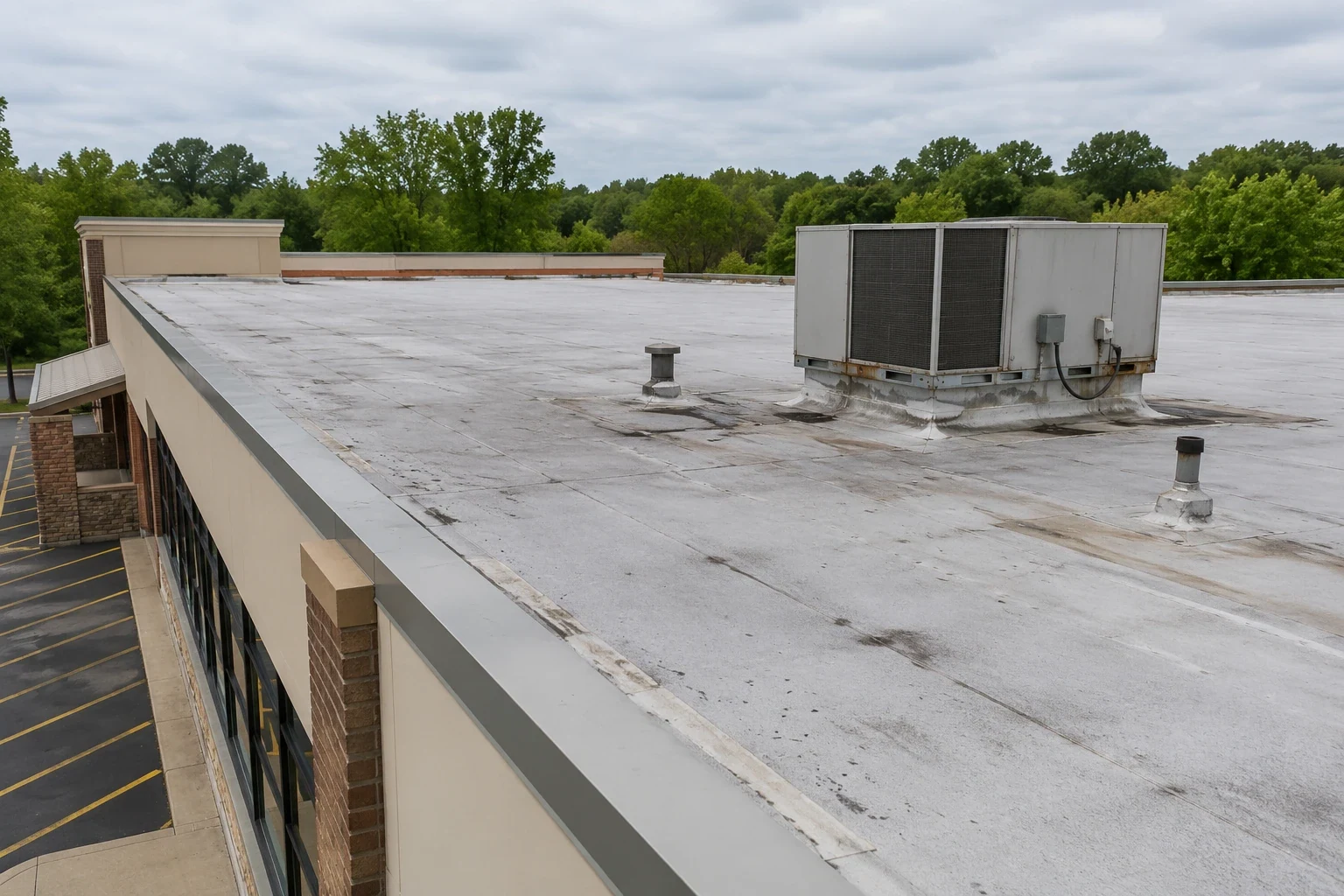
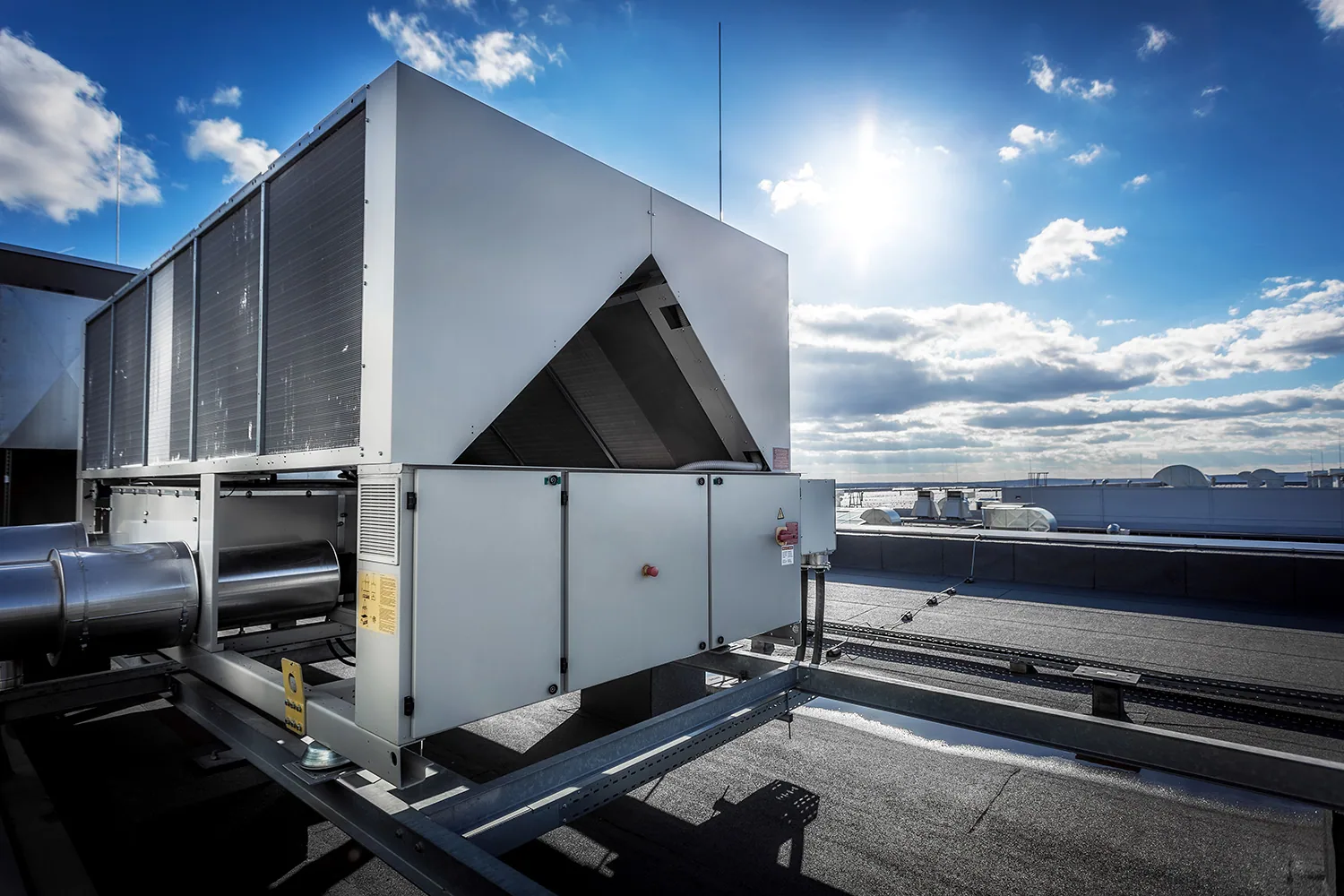
We check each drain, strainer and overflow first and measure the pool after rain. We then check the equipment: large roofs often carry many rooftop units, and each adds weight and a penetration. An equipment curb and support review covers the details, with a numbered photo for each unit.
Interior fixtures add to the stakes. Seating, screens and lighting hang under a large roof, and a leak over any of them costs more than the repair. We mark those zones on the plan and rate the roof above them with extra care, so the first response goes to the sections with the most to lose.
Retail along 70S and beyond
Retail concentrations sit near the Highway 70S and I-40 interchange, at Highway 70S and Old Hickory Boulevard, and near Old Harding Pike and Highway 100. Retail roofs share a set of failures: seams that open at corners, flashings that pull from parapets, ponding in low spots and units that leak condensate. A strip of shops under one roof shares those failures across tenants, and a single leak can be reported by three different stores.
The plan names the roof sections by shop numbers, so a tenant's report matches a section on the plan. A short reporting card helps managers do it: shop number, time, weather and a photograph. The entries build the log that shows which section is failing and how often.
Parking lots shed water toward shop fronts, and a roof edge that overflows onto a sidewalk becomes a safety issue. We check scuppers, gutters and downspouts at the building line and photograph each discharge.
Heat is the other retail constant. Franklin's mean July high is near 91 degrees, and rooftop units run hard against it, so condensate lines and coil leaks are common sources of local wear. The log records each unit's condition and the surface beneath it.
How to confirm it, and what it costs
We confirm in order: log the drip's calendar, measure humidity, walk the roof above, scan with an infrared moisture survey and cut a core at the warm spot. The result sorts the problem into roof entry or condensation. A roof entry is repaired at the surface. A condensation problem is solved with air sealing, vapor control or ventilation.
Cost follows the area, the access, the number of units, the insulation condition and the system. For an occupied retail site, the schedule matters too, since work at night or in sections costs differently from work in the open. The same steps carry to buildings in Belle Meade or downtown Nashville.
When the drip is solved, the file keeps dated photos, a marked plan and a materials note. A manager who opens it next year sees what the drip was, what caused it and how it was fixed.
Commercial Roofing Questions
How can I tell condensation from a leak?
A leak follows rain. Condensation follows humidity and temperature. The calendar of the drip and a humidity reading usually separate them.
Can a cold interior cause roof damage?
Yes, indirectly. Moist air that reaches a cold deck turns to water inside the roof and can wet the insulation.
Why do big roofs pond at low spots?
Few drains serve a large area, and a blocked one holds a pool over a long span.
How does a strip of shops report a leak?
By shop number, time and weather, with a photograph. The plan ties each number to a roof section.
Do you take emergency calls?
Day or night. The first visit stops any entry and measures humidity, so rain and condensation are told apart.