Commercial Roofing in Downtown Nashville, TN

Two floors below the roof, a brown ring on a ceiling tile is the first sign. A manager sees the ring, calls it a leak and asks where it came from. We walk it backward. The ring is the end of a chain, and the start of that chain is often not directly above the stain.
Downtown Nashville is built up with towers, a large convention center and the business district around them. Interstates 40, 65 and 24 converge near the core, which includes the central business district, Broadway, Legislative Plaza and the Music City Center. Roofs here share a few problems: limited staging space, tenants on every floor and wind that reaches higher surfaces first.
The first sign
Start inside. Note the stain, the date and the weather the night before. A ring that grows after rain points to a roof entry. A ring that grows on a dry day points to condensation or a leaking pipe. That one question saves a day of searching. Ask the tenant on that floor, too. Cooling coils, sprinkler lines and window seals all make rings that look like roof leaks.
Next, find the same spot on the roof. Water can travel along a deck or between insulation layers before it drops, so the entry may sit several feet away. We mark the stain location on a roof plan, then check every drain, curb and wall tie-in within a wide radius. Each candidate gets a number and a photo. The photo trail is the record we compare against at the next visit.
What is happening underneath
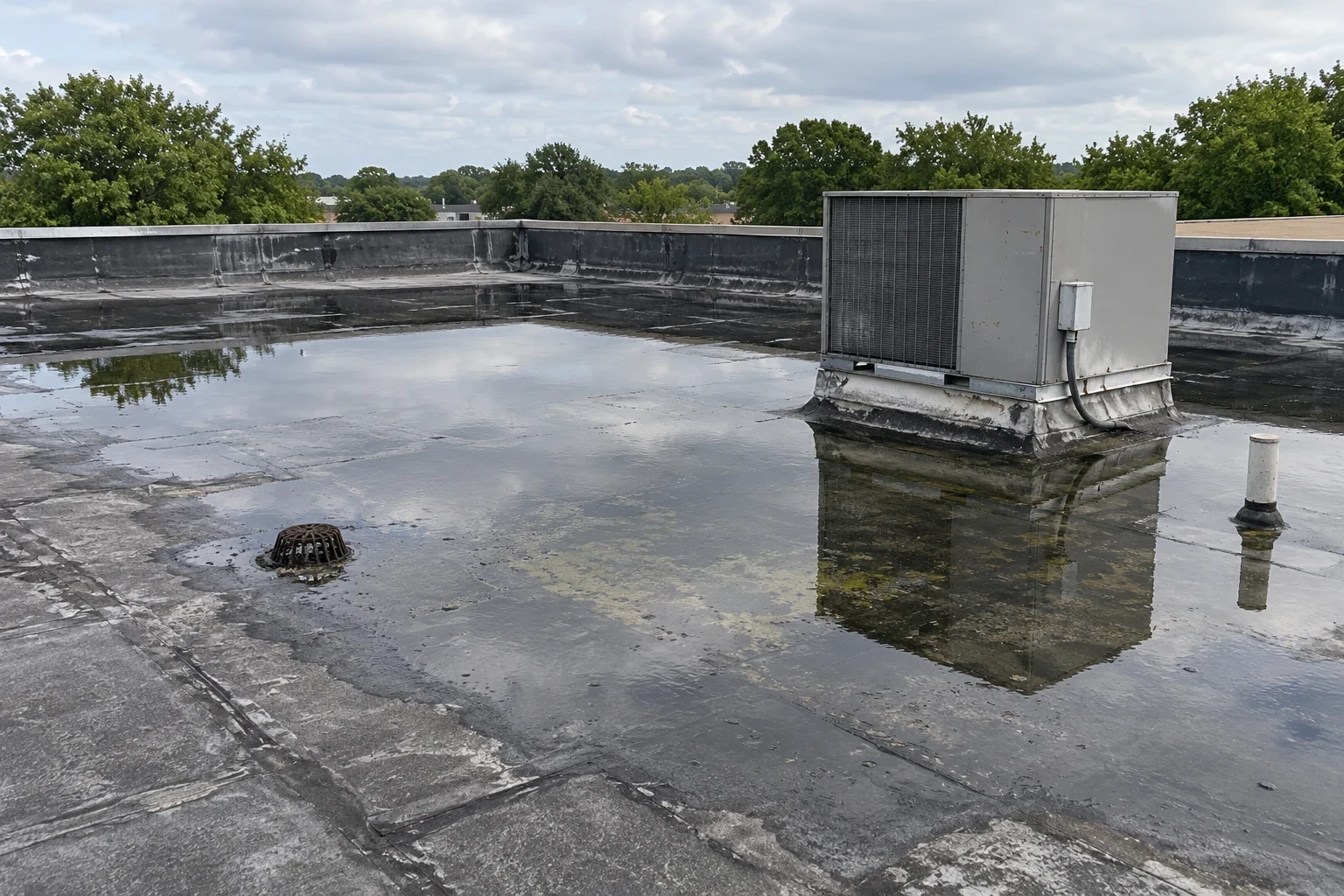
A commercial roof is a stack: deck, insulation, membrane. Water that gets through the membrane does not drop straight down. It soaks the insulation, spreads sideways and finds the lowest or weakest path through the deck. That is why a small hole can wet a large area.
Wet insulation is the real cost. It loses its insulating value and holds water against the membrane from below. In summer heat, trapped water turns to vapor and pushes at seams. In winter, it freezes. Franklin's climate record is a useful yardstick for the region: about 53.79 inches of annual precipitation, a mean July daily high near 90.8 F and a record low of minus 22 F. A roof here works through heavy rain, heat and hard freezes, and downtown roofs do the same.
Where the wind gets in
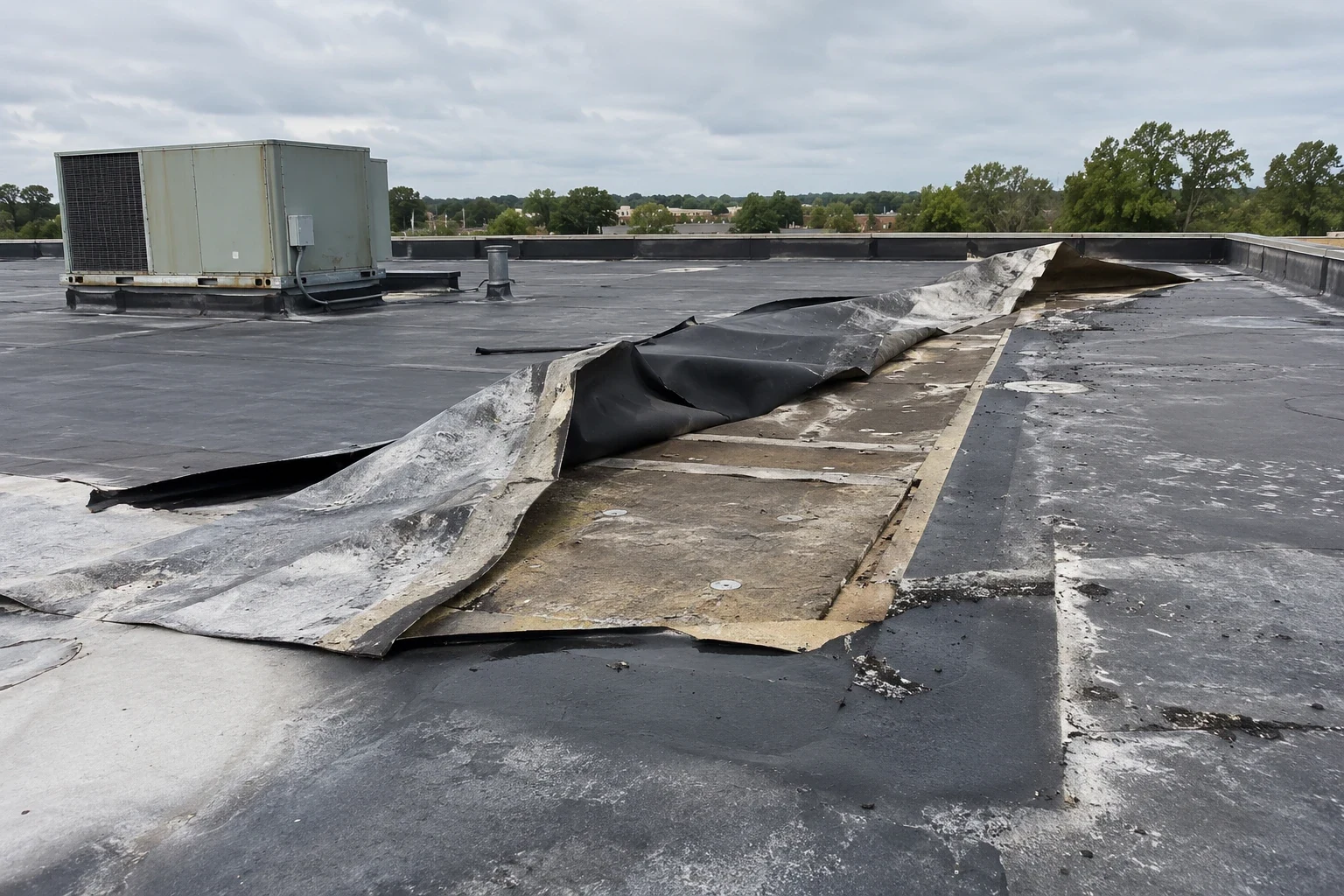
Downtown Nashville had 33 towers at least 300 feet tall as of April 2023. High roofs meet stronger wind than low ones, and wind pulls hardest at edges and corners. A lifted length of coping or a loose edge flashing is often the first break. Once wind gets under a membrane at the edge, it can peel the sheet back across the roof.
The March 3, 2020 tornado tracked just north of downtown, with EF-2 damage to businesses and apartments in Germantown and EF-3 damage in East Nashville's Five Points. That event was north of the core, and it is a reminder of what a hard storm can do in the city. After any high-wind event, we walk the perimeter first. A wind damage walk covers fasteners, edge metal and flashing, and a tornado damage review adds a check for impact and debris.
How to confirm it
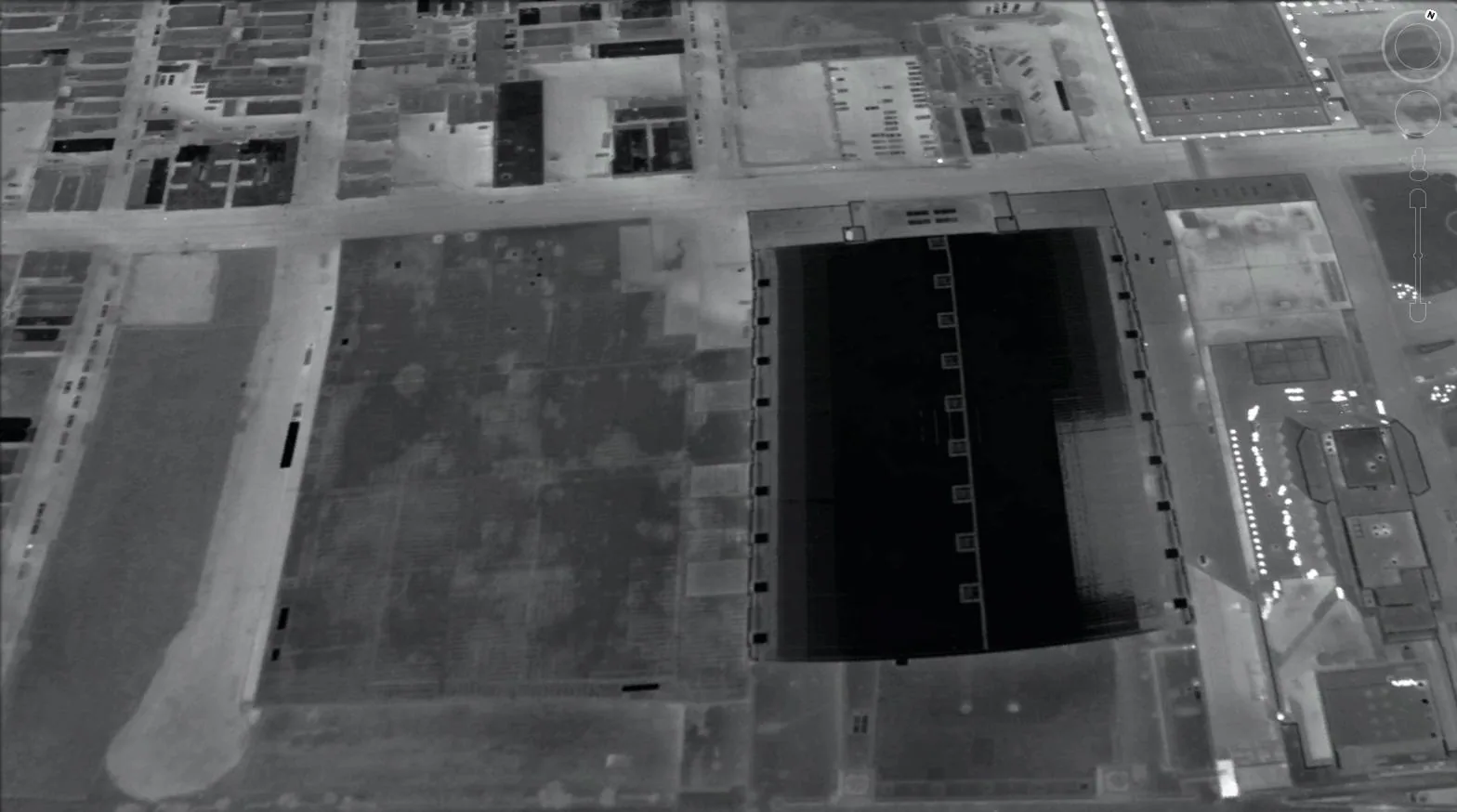
We use three tools. A moisture scan shows where insulation is wet, even when the surface looks fine. A hose test, one opening at a time, proves which detail leaks. Core samples confirm the layers and the depth of the wet zone. An infrared moisture survey works best at dusk, when wet insulation holds heat longer than dry.
We never wet several details at once. If we did, we could not say which one failed. The result is a short list: this flashing, this seam, this drain. Each item has a cause, a location and a repair. That list is the first written deliverable, and the property manager keeps it.
What it costs
Cost follows four things. The first is roof area and how much of it is wet. The second is the number of details: drains, curbs, pipes and wall tie-ins. The third is access, which downtown means a hoist, a crane or a long carry. The fourth is time, because work that must stop for tenant hours or weather takes more days.
We list each item as its own line. A repair that fixes one flashing is priced by itself. A recover or replacement is priced by section. The facility team can then approve the urgent part and plan the rest in the next budget, with the written scope in hand when the finance office asks what the roof will cost. Cost also grows with delay, because wet insulation spreads. A leak found early is a small bill. A leak ignored through a winter is a bigger one.
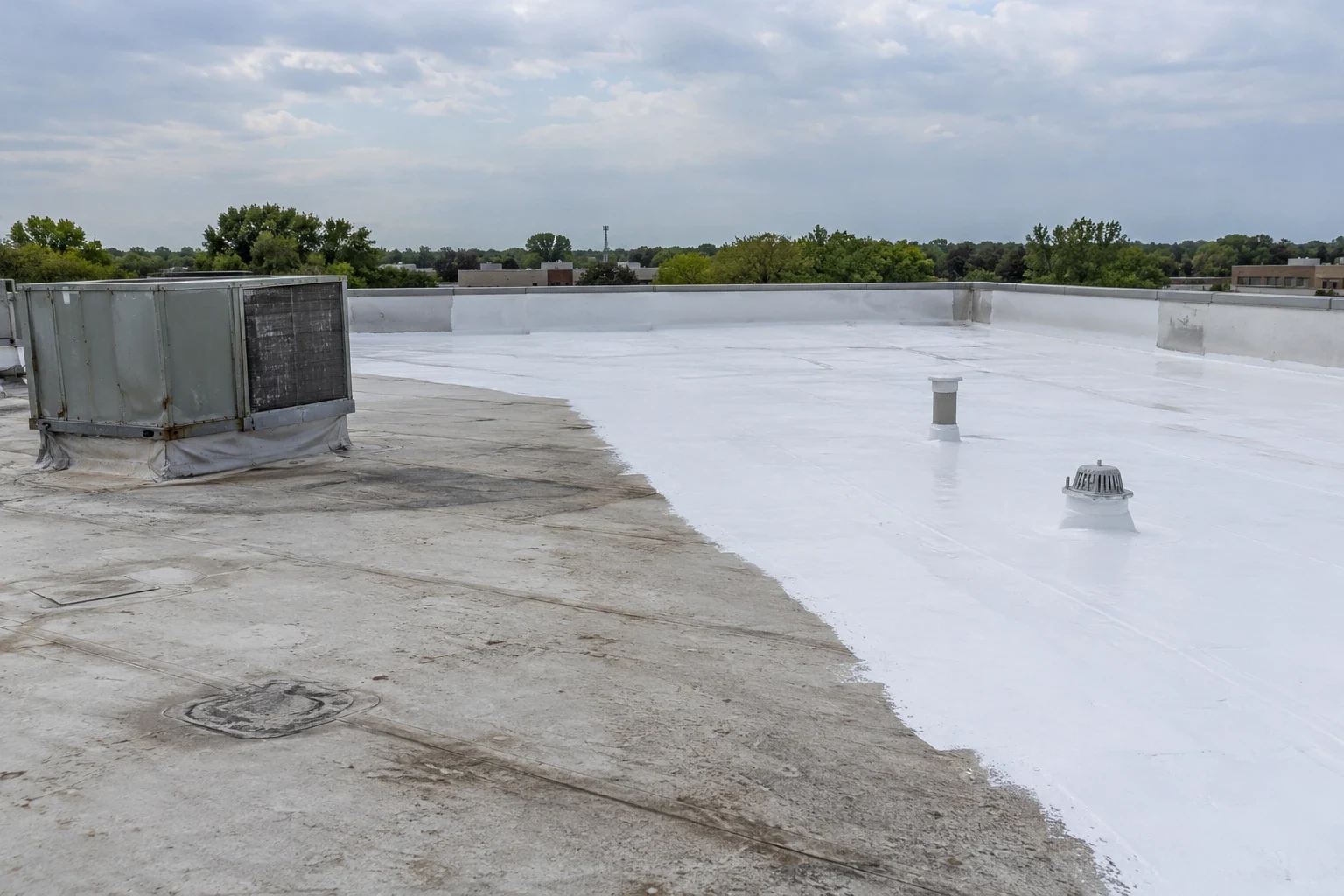
The written summary shows each cost driver and the likely range. It also shows what each repair keeps and what it removes, so the owner can compare repair, coating and replacement on the same sheet.
Access and staging
Downtown sites have little room. Material may come up by hoist or crane, and street space may be limited. We settle the delivery route, the staging area and the work hours with the manager before the first truck. Because tenants occupy the floors below, noisy work moves to agreed hours, and the interior below the active section is protected.
The same planning applies to a reroofing job on an occupied building. The roof is dried in at the end of each shift, and a weather hold is called in writing when conditions stop the work. Code and permit rules also need checking: Tennessee does not require a city to adopt a building code, and the state adopted the 2021 international editions effective August 17, 2025, so we confirm the edition the local office applies.
Repair or replace
Isolated failures over dry insulation are repairs. Wet insulation over a wide area, a membrane pulled back from the walls or repeated trouble at the same details lead to recover or replacement. We set the paths side by side with their cost drivers. Donelson and Antioch, east and southeast of the core, get the same treatment.
Commercial Roofing Questions
How do you tell a roof leak from a pipe or condensation leak?
Timing tells most of it. A leak that follows rain points to the roof. A stain that grows on a dry day points to a pipe or to condensation. We check the stain against the weather record and then test the likely roof entries one at a time.
Can work happen with tenants on every floor?
Yes. The interior below the active section is protected, noisy work moves to agreed hours and each roof section is dried in before the crew leaves.
What does a tall building change about the roof?
The wind load. Edges and corners see the most pull, so fasteners, coping and edge flashing get the closest look.
How long does an infrared survey take?
The scan itself runs at dusk after a sunny day and takes hours, not days. Core samples at the flagged spots follow, and the written results come with a marked roof plan.
What should a manager send before the first roof walk?
The roof plan, any past inspection notes and photos of the stains. With those, the walk starts at the most likely cause.