Grocery Store Roofing in Franklin, TN
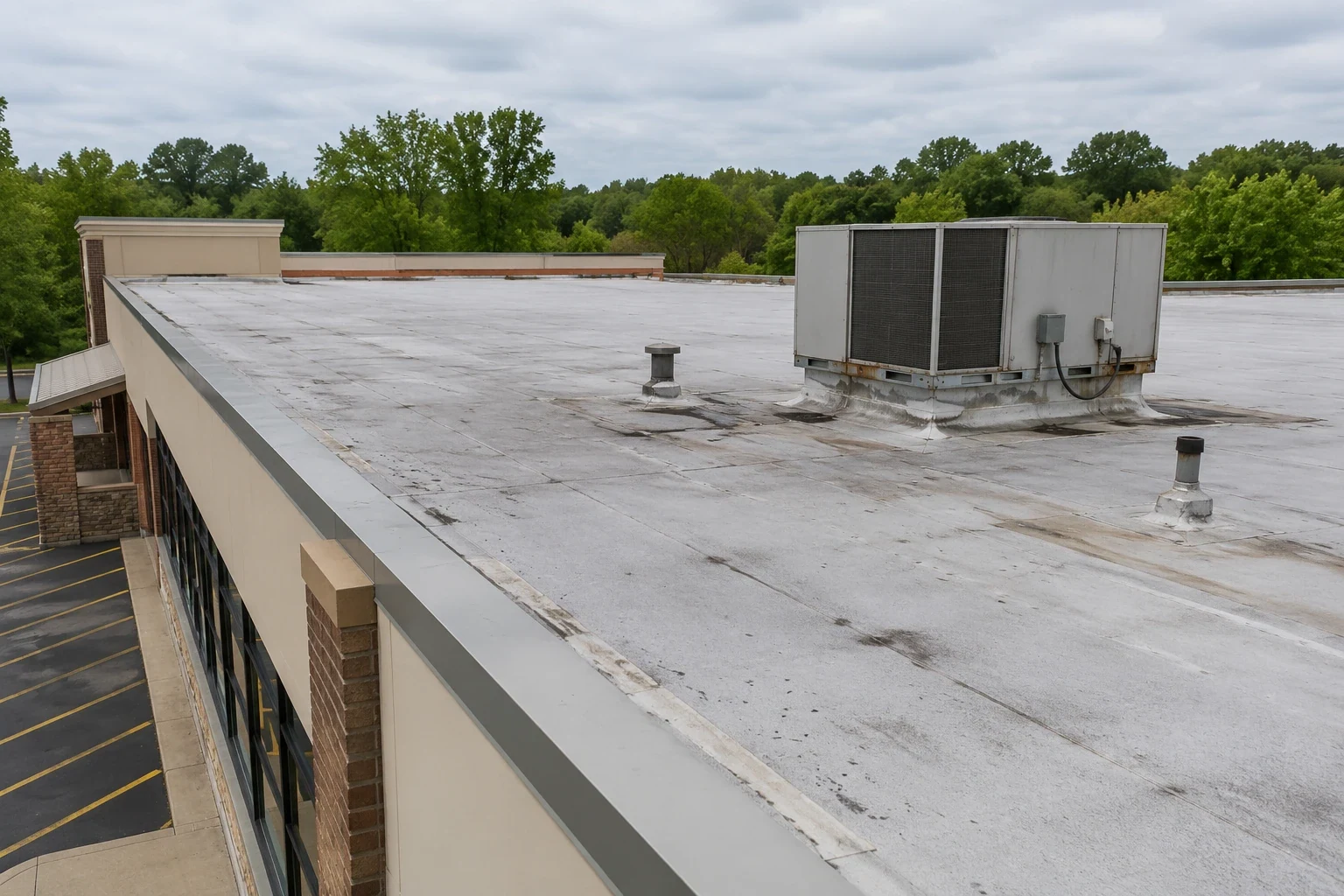
A wet floor is the first sign on a grocery roof, and in a grocery a wet floor is a safety event before it is a roofing problem. A drip lands in the produce aisle, a cone goes out and a manager calls. The wet spot is where the water stopped. That wet spot is our starting point, and from it we work backward through ceiling, insulation and membrane to the entry.
We repair, recover and replace low-slope roofs on grocery stores in Franklin, TN. From there we follow the water path, mark the cause and send back a brief written summary with photos. Store hours, deliveries and food safety shape the schedule. We answer emergencies day and night, holidays included.
The first sign
Grocery roofs report through the sales floor and the back of house. A drip near produce, a stained tile over a cooler, a wet corner in the receiving area, or ice at a case line each point to a different part of the roof. Store managers and refrigeration technicians keep their own notes, and both help.
We ask for both and lay them over the roof plan. A drip near a case line often points to a refrigeration penetration, not the membrane. A drip in the center of the sales floor points to a drain or a seam. A wet receiving area points to a canopy or a wall termination. The pattern tells us where to start the walk.
Receiving and dock areas get their own line. Trucks back to the dock, doors cycle all day and the canopy and wall flashing take the abuse. Water at a receiving door may enter at the canopy above it, and an overflowing gutter can wet the dock apron and create a slip hazard. We check the canopy, the wall termination and the nearest drain, and we photograph the water line after rain.
What is happening underneath
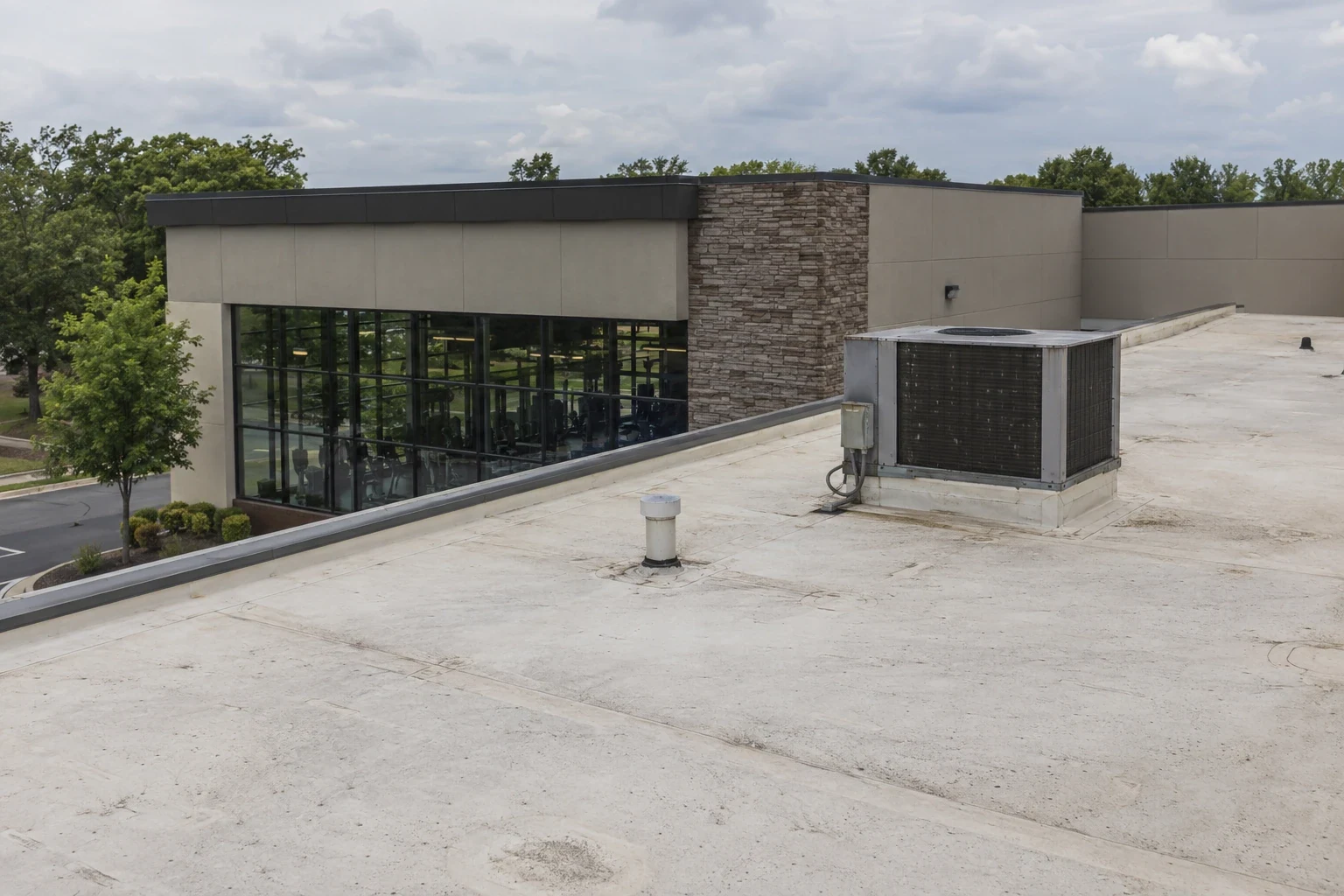
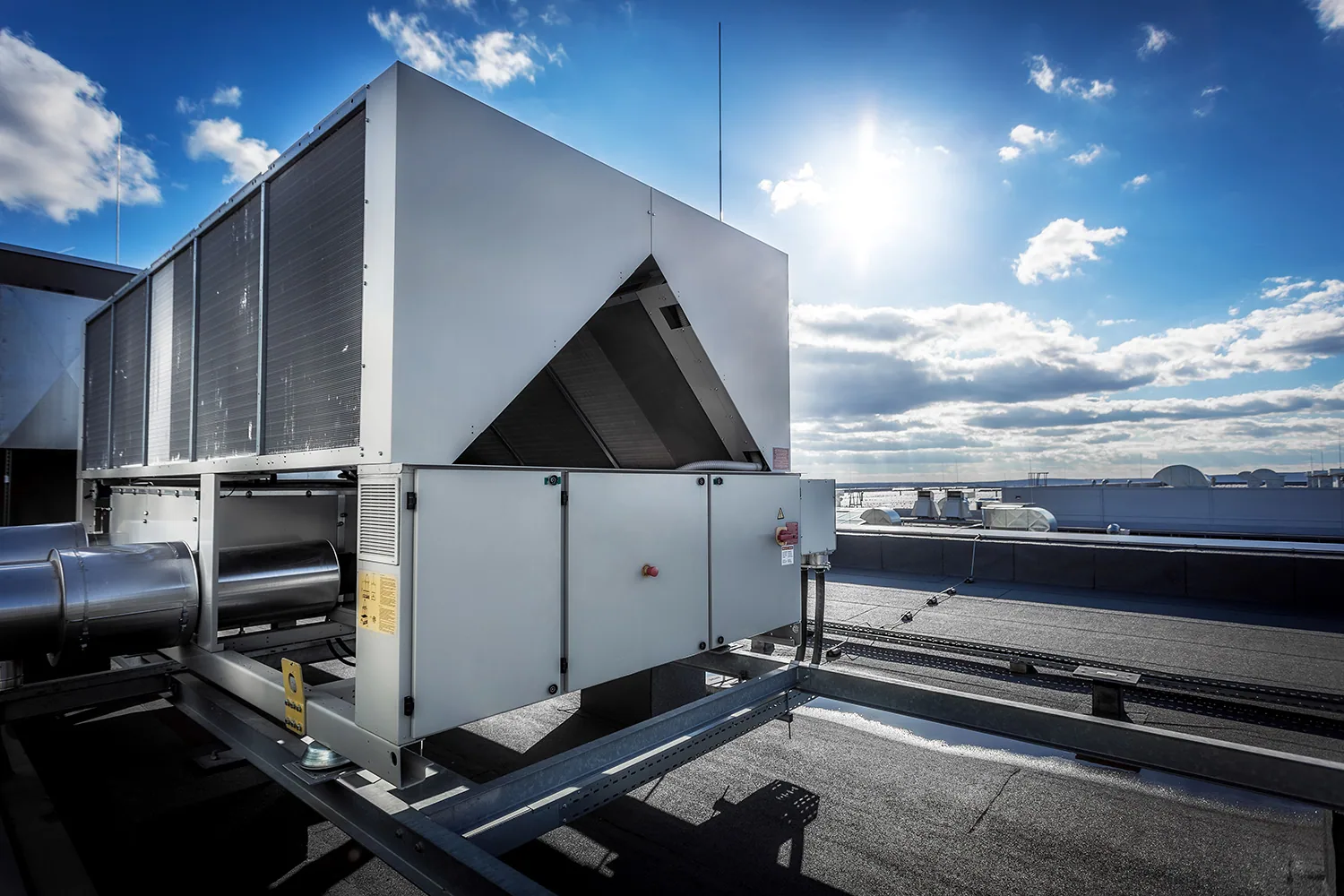
A grocery roof carries a lot of equipment: condensers, compressors, air handlers, exhaust fans and refrigerant lines. Each line is a penetration, each unit has a curb and each curb has a flashing. Technicians service them often, and every visit is a chance to scuff, cut or loosen something.
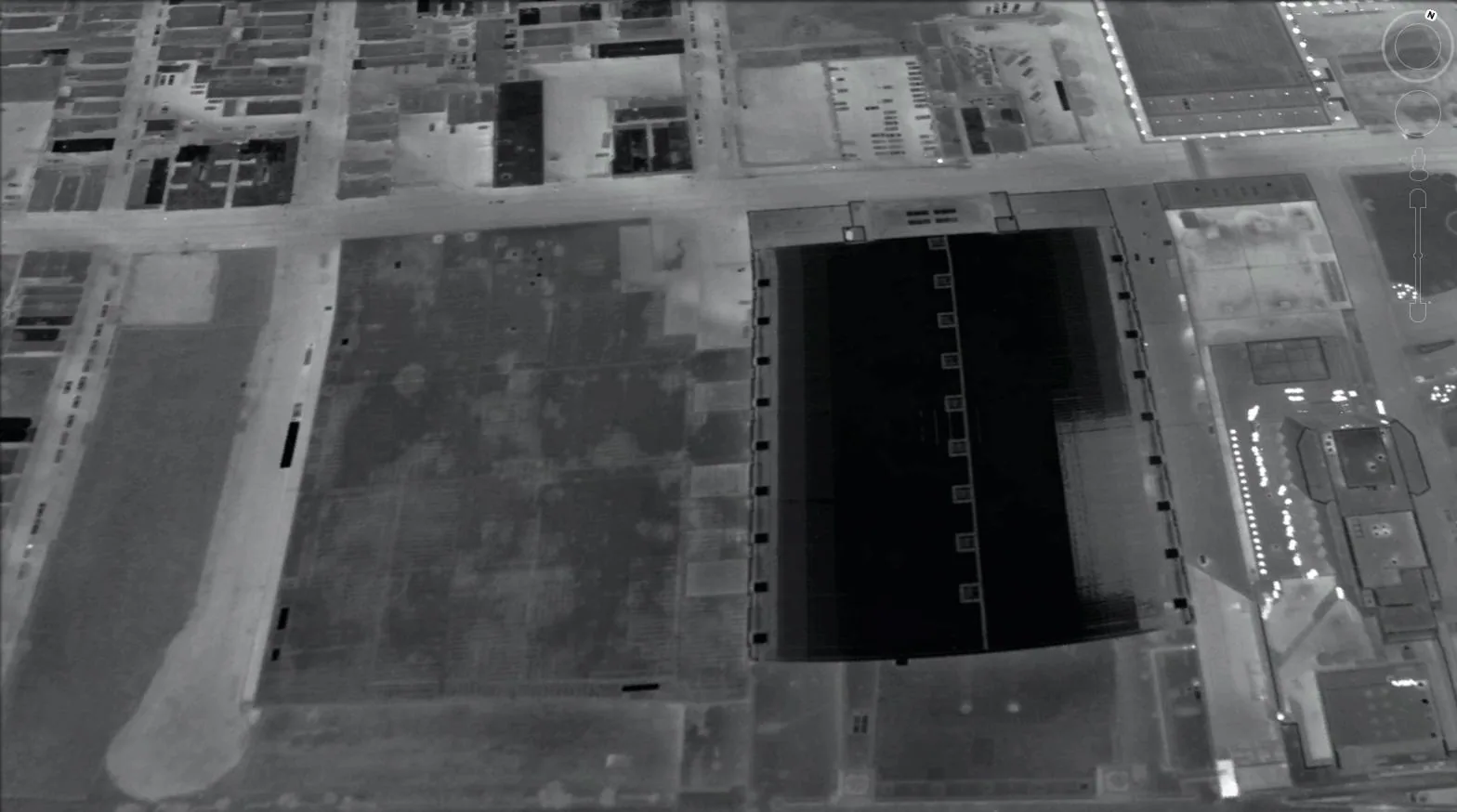
Water that enters runs along the insulation and drops where the ceiling has a gap, often over a case or an aisle. The wet layer adds weight and can drip for days after the rain stops. An infrared moisture survey maps it from above with no cutting, and a few cores confirm the readings. With the map, the repair stays on the wet area and the store does not tear up dry sections.
Hot work is limited in a store. Torches near cases, packaging and ceilings carry fire risk, so we plan with welded, adhered or cold-applied methods where the store requires. Fire watch, extinguishers and permit rules are agreed before the first day. If a torch is allowed, it is used only where it is safe, with a watch that continues after the work ends.
Refrigeration, heat and condensate
Refrigeration lines run hot and cold. Insulation around a cold line can fail and sweat, and the sweat drips like a leak. Condensate drains can back up and spill on the membrane, leaving a ring of wear. Condensers on curbs and supports throw heat at the surface, and a membrane near a heavy unit ages faster.
We check line wraps, boots, supports, drain outlets and the membrane around each unit. A condensate outlet that discharges onto the roof gets rerouted, because a few feet of pipe costs less than a patch every year. We mark each unit's owner on the plan, so the refrigeration contractor and the roofer know who handles what. Food safety adds a quiet constraint to repairs. Debris and dust must stay out of intakes and off the dock, and open materials are covered each shift, so the written plan lists the intakes and the rules that apply to each one before the first section opens.
Heat from the building matters in winter. On winter nights warm, humid air from the sales floor meets a cold deck and condenses, soaking the insulation with no hole in the membrane. The stain looks like a leak. A moisture survey plus a look under the deck tells the two apart, and a maintenance program keeps watching for it, since condensation is cured by ventilation or a vapor retarder rather than a patch.
Franklin weather and corridors
Franklin takes about 54 inches of rain a year; its average July high is near 91 degrees, and the record range runs from minus 22 to 108. Summer heat adds to condenser load and moves membranes. Heavy rain tests drains. The EF0 tornado of August 12, 2023 near Highway 96 and Royal Oaks Boulevard left some businesses with minor roof damage.
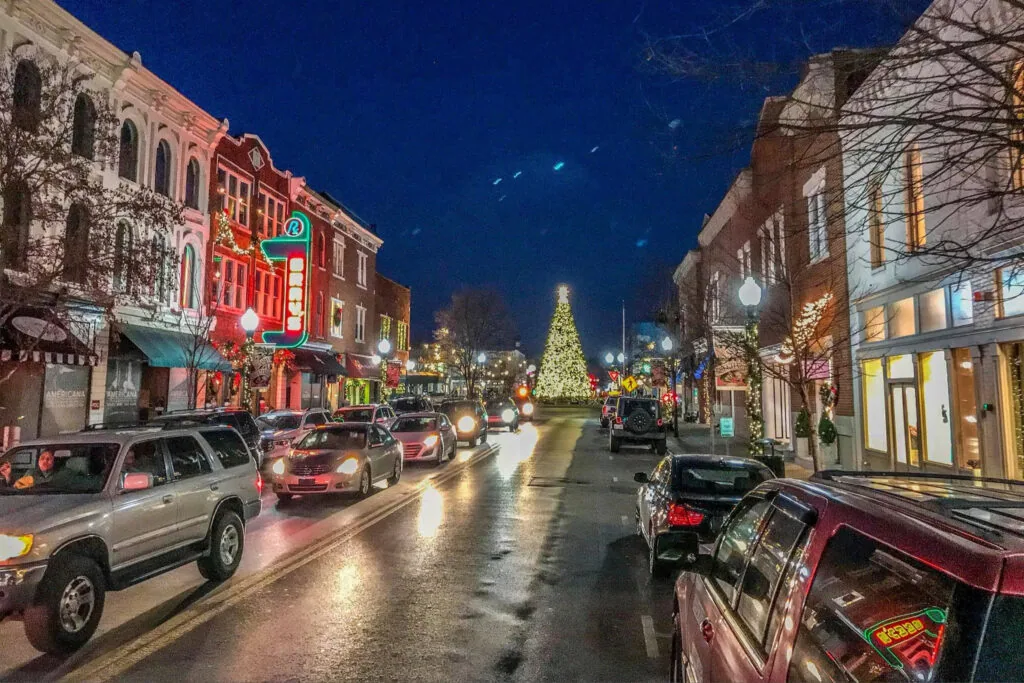
Banks, grocery stores, restaurants and pharmacies line the Murfreesboro Road corridor in developments older than those to the north, and neighborhood commercial uses at Highway 96 and Downs Boulevard include a pharmacy, gas station and offices. Along the Murfreesboro Road corridor, each roof is read on its own record.
Repair or replace
Cause before cure. One isolated failure over dry insulation is a job for commercial roof repair. A sound, dry roof with surface wear may take a coating. Wet insulation across a wide area means replacement, phased so the store keeps trading. Food safety rules shape the plan: debris control, protection of intakes and clean-up each shift. A big-box store shares the wide-roof questions without the refrigeration load.
Timing follows the store calendar. Holiday weeks and weekend peaks are off limits for noisy work. We ask for the busy dates at the first visit and plan around them. Each section is closed in by the end of the shift, and daily photos show the manager what was done and what is next, so staff are never surprised by the crew.
Strip-center grocers share a roof with their neighbors, and the lease sets who maintains what. A shopping center roof may sit under three or four tenants, and a leak from the pharmacy next door can drip into the grocery. Dated photos and a roof plan marked with bay lines settle those questions with facts, and the repair goes to the right owner.
Commercial Roofing Questions
Why does a grocery roof leak near the cases?
Refrigerant lines pass through the roof there, and a failed boot, a sweating line or a backed-up condensate drain can drip like a leak. We check the penetrations and drains before the membrane.
Can a grocery stay open during a roof replacement?
Yes, with phasing. We work in sections, protect entrances and receiving, control dust and debris, close in each section nightly and follow the store's food-safety rules.
What happens to stock if a leak starts?
We stop the water first and protect the area below. Staff move stock as needed, and we record the entry point and the damage with dated photographs for the store's file.
Does storm history like the 2023 EF0 tornado change the plan?
It is context. Your roof is judged on its own edges, attachment and condition. We check parapets, caps and rooftop units after any storm line.
What should the store send ahead?
Share the roof age, the manager's notes on leaks, the refrigeration plan and earlier repair invoices. We follow the failure across the roof and write up a short summary for the store.