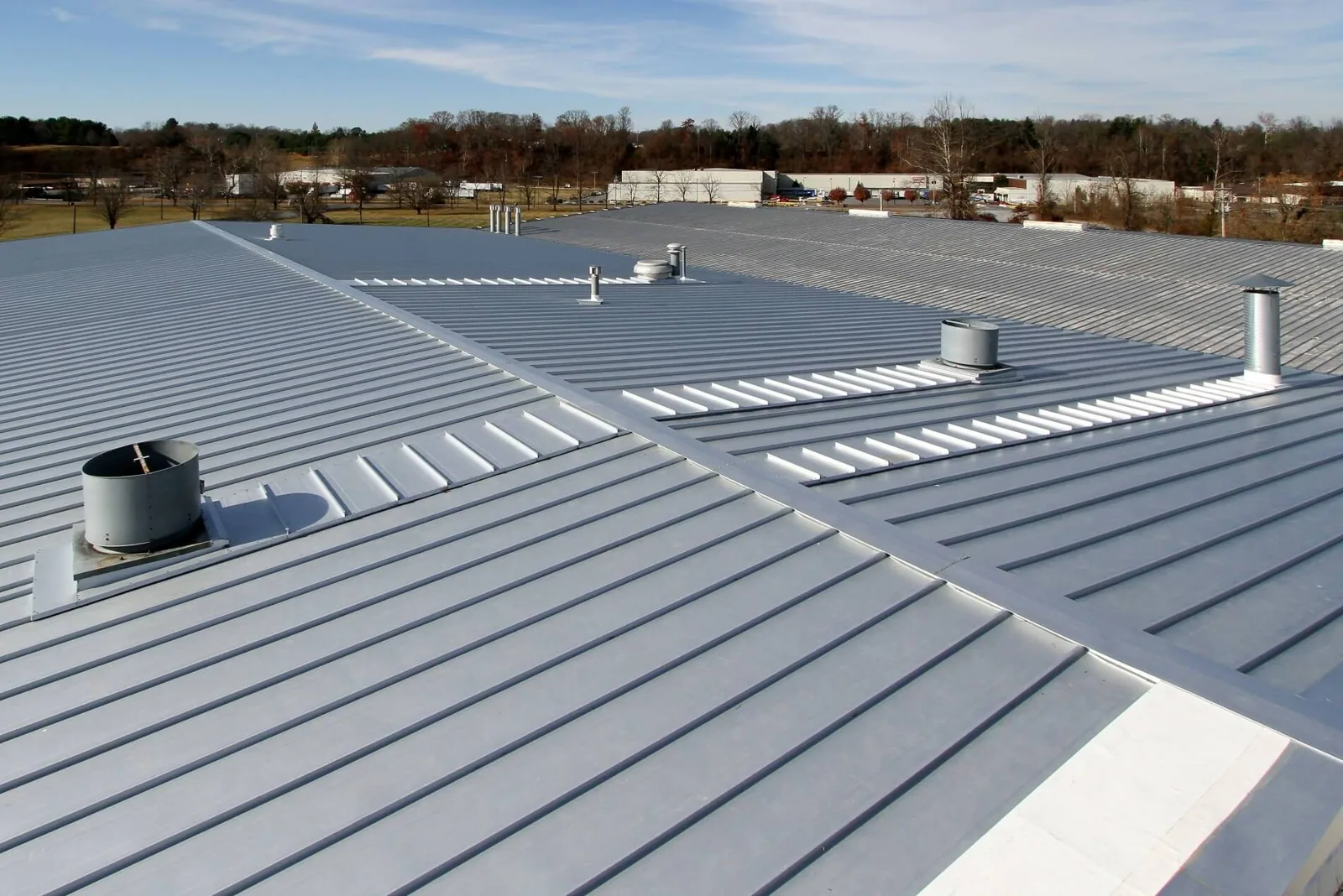
Commercial Roofing on the Carothers Parkway Corridor, Franklin, TN

A new-building roof that leaks in its second spring is the first sign of a construction-phase fault, and on the Carothers Parkway corridor in Franklin, TN, where new office and mixed-use development is planned, it is a failure worth teaching. The roof was installed. It passed inspection. Then a small opening let water in, and the sequence began. We walk it backward from the stain to the opening and show what to check at each step.
The corridor
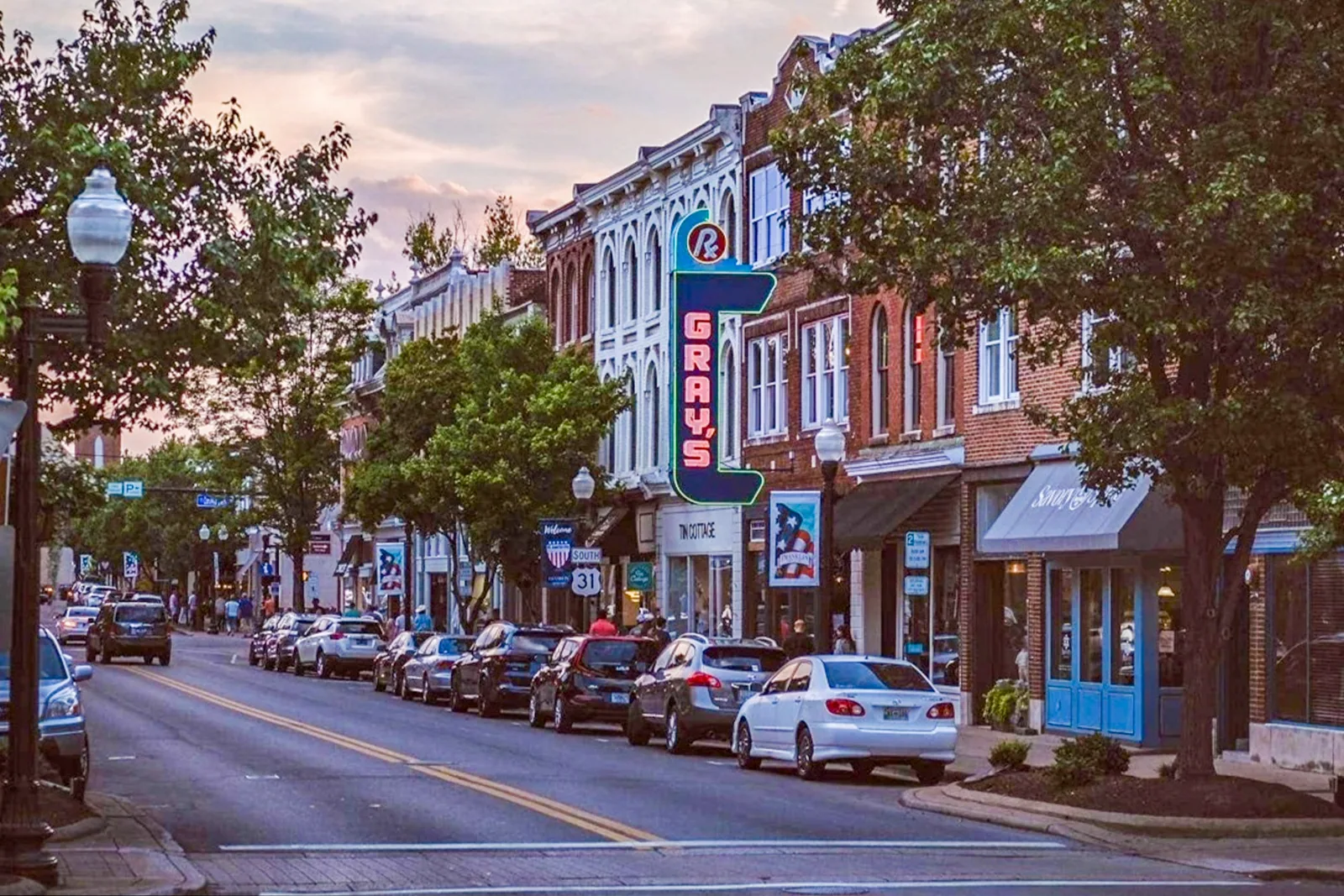
The city plan calls Carothers Parkway the backbone of the McEwen area and a major employment corridor for Franklin. It runs north-south from Moores Lane to Long Lane east of I-65, with a planned extension to Peytonsville Road, and its four-lane divided design gives controlled access to office and commercial developments.
The Ovation development at Carothers Parkway and McEwen Drive is planned as about 1.4 million square feet of mixed space for offices, shops and entertainment, with two hotels and close to 1,000 residences. A corridor with that much planned construction is a corridor of new roofs, and new roofs have their own failure sequence.
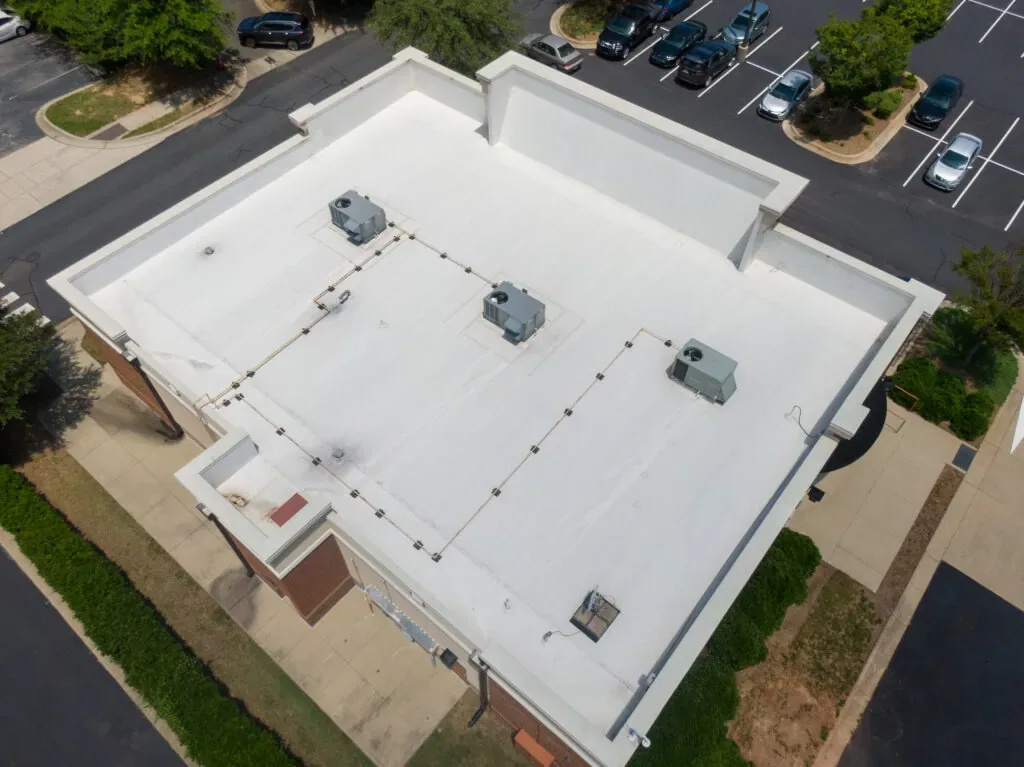
Controlled access on a four-lane divided road helps delivery and crane planning. It does not change what happens on the roof. Many trades work on large developments at once, and roof damage from other trades is a real risk wherever buildings are going up. Rooftop mechanical equipment, set on curbs, adds a cut in the sheet for each unit, and the number of cuts grows with the number of tenants.
The first sign on a newer roof
The first sign is a small stain in a new ceiling. It sits near a wall, a unit or a drain. It appears after a heavy rain. A manager may assume a new roof cannot leak. But a new roof can have an open joint, a missed fastener or a flashing corner folded wrong.
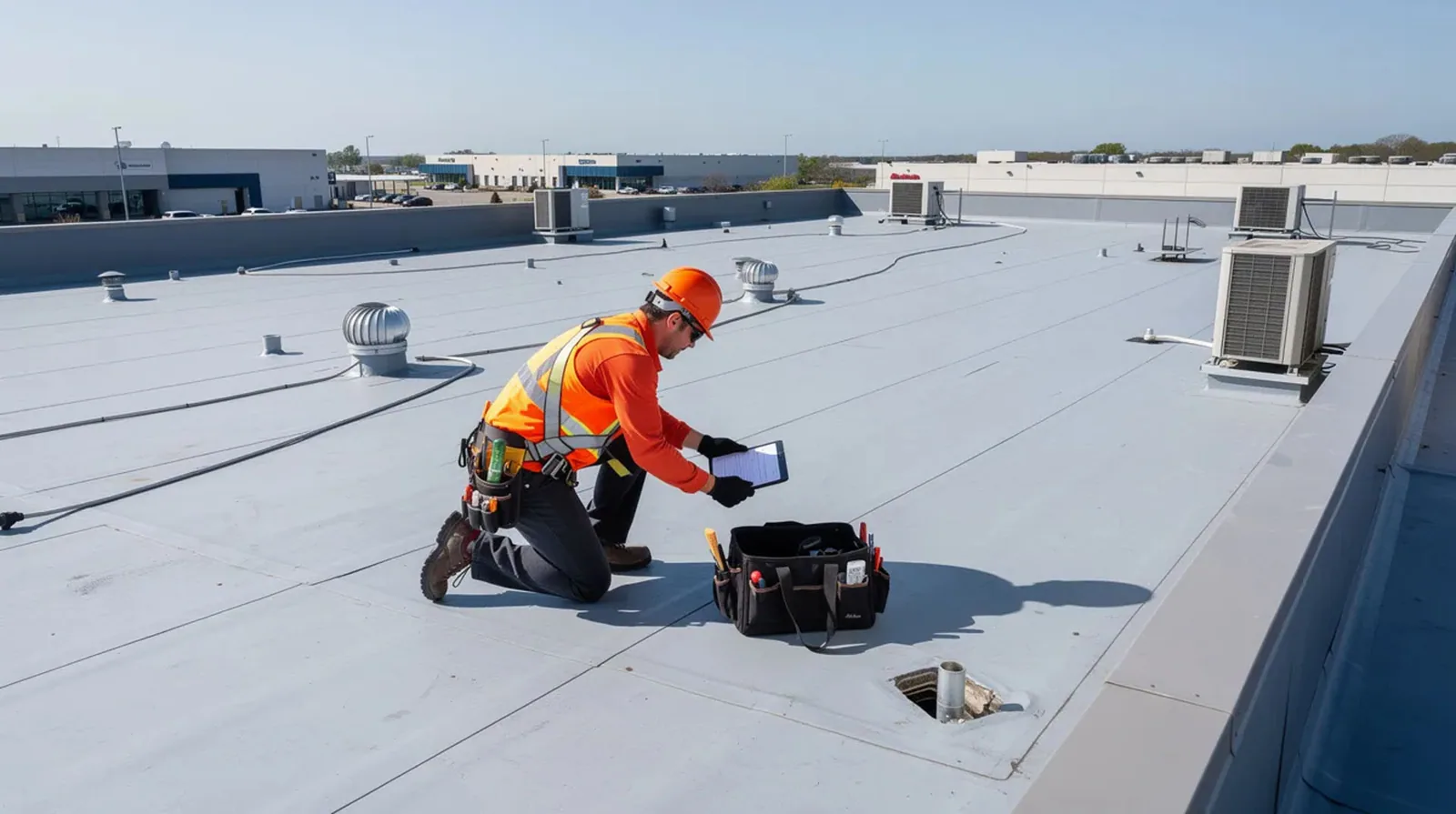
We photograph the stain, note it on the drawing and head up to the roof. Then we check the likely sources. Wall terminations. Curb corners. Pipe boots. Drain bowls. Seams near penetrations. Each check is short, and each is written down.
Dates help here. A roof walk at substantial completion, with photographs, makes a baseline. A walk after the first heavy rain makes a second. A stain between them can be placed against both, and the party responsible for a fault can be found from the record.
What is happening underneath
Construction leaves marks on a roof. Other trades walk across the sheet. Tools are dropped. Mechanical contractors set units and cut penetrations after the roofing is done. Sealant is applied in the cold. Each of these can leave a hidden opening.
Water that enters through such an opening soaks the top of the insulation and spreads. In a new building, the wet layer is a surprise, because nothing about the roof looks old. A moisture survey in the first or second year finds the layer while the repair is still small, and it puts a dated record in the roof file.
We look for specific marks. Scuffs where a ladder foot landed. Dents from dropped tools. Cut or scratched flashing. Sealant smears. Loose fasteners at a rail. Each is easy to repair when found and costly when ignored.
Weather and the new roof
The city sees roughly 54 inches of precipitation a year, with extremes of 108 F and minus 22 F. A new roof meets all of that in its first year. Sealant cures in some conditions and not in others. A flashing installed in cold weather may not bond.
On August 12, 2023, an EF0 tornado touched down in Franklin near Highway 96, a reminder that storms reach this part of the county. We check new roofs for perimeter fastening after any warning, since the first-year edge is the least tested.
Storm warnings matter to new roofs for another reason. A roof with no history has no record of how it behaves in wind, so the first big storm is also the first test. We walk the edges and corners after any warning that names the city, and we photograph the result.
How to confirm it
We water-test the suspected joint, starting low and moving up. We probe seams. We check the drains by running water and timing the flow. A moisture survey maps the wet layer, and a core cut confirms.
On a roof still under warranty, we also check the paperwork. Notice rules, approved repair methods and inspection requirements are read before a repair is scheduled. A repair outside the terms can cost coverage that the owner has paid for. So we send the findings to the right party before a patch goes on.
The standing-water line is part of every first-year walk. A pond that lingers a day after rain marks a low deck or a drain set too high. A new roof with a pond is a design or installation fault, and the report says so with measurements and photographs.
Repair or replace
On a new roof, a repair is nearly always the answer. A joint is resealed, a flashing is rebuilt, a boot is replaced. The cost is small if the fault is found early. If the fault has soaked the insulation, the wet boards are cut out and replaced. Replacement of the whole roof is rarely needed, and the report says so with the evidence.
New permits fall under the state's 2021 codes, in force from August 17, 2025, so a first-year repair is checked against them. The roof warranty management record keeps terms and dates in one place, and due diligence roof surveys cover the first-year check. A commercial roof inspection is the usual starting point.
The cost lines on a new-roof repair are short. A reseal is a few hours. A rebuilt corner is a day. Cutting out wet boards adds time to dry the area and to lay new membrane over it. The estimate shows each line, and the party responsible under the warranty can be asked to cover the ones that belong to the installation.
What to check next
After a repair, watch the ceiling after the next heavy rain. Check the drains. Look at the flashing corners. Write the date in the roof file. Schedule a second walk before the warranty's first anniversary, and a roof recover or other larger step can wait for the findings.
Owners with other property in Cool Springs or on Mallory Lane and Royal Oaks Boulevard can keep the same file format, and the roofs can be ranked together.
The roof file for a new building starts on day one. Keep the as-built drawing, the product data, the warranty and the first walk's photographs in one place. A manager who does that has an answer for every later question about what is on the roof and who is responsible for it.
Keep the habit simple: walk, photograph, test, record. Four verbs, repeated each spring and after each warning, make the sequence of any future failure short and easy to trace.
Commercial Roofing Questions
Can a new roof leak?
Yes. Open joints, missed fasteners and badly folded flashing can leak in the first rain season.
Who should be told about a new-roof leak?
The owner and the party responsible under the warranty. We send the findings before a repair is made.
When should a first-year check happen?
Ideally after the first heavy rain season and before the warranty's first anniversary.
Why do other trades damage roofs?
They walk on the sheet, drop tools and cut new penetrations. We check for those marks.
What goes in the roof file?
Photographs, test results, repairs, dates and the warranty terms.