Roof Insurance Claim Assistance in Franklin, TN

A roof claim stalls when no one can show what the roof looked like before the storm. The first sign is a request for more documents: dated photographs, repair records, the roof age. The cause sits upstream, in a file that was never built. Roof insurance claim assistance walks the claim backward to the evidence, and it works best when the evidence starts before the damage does. In Franklin, TN, with storm lines that cross a city holding about 53.79 inches of rain a year, a claim file is worth building early.
We document the roof, coordinate with the adjuster and write the repair scope in plain terms. Coverage is the insurer's call; our part is the evidence and the scope.
Evidence From Before the Storm
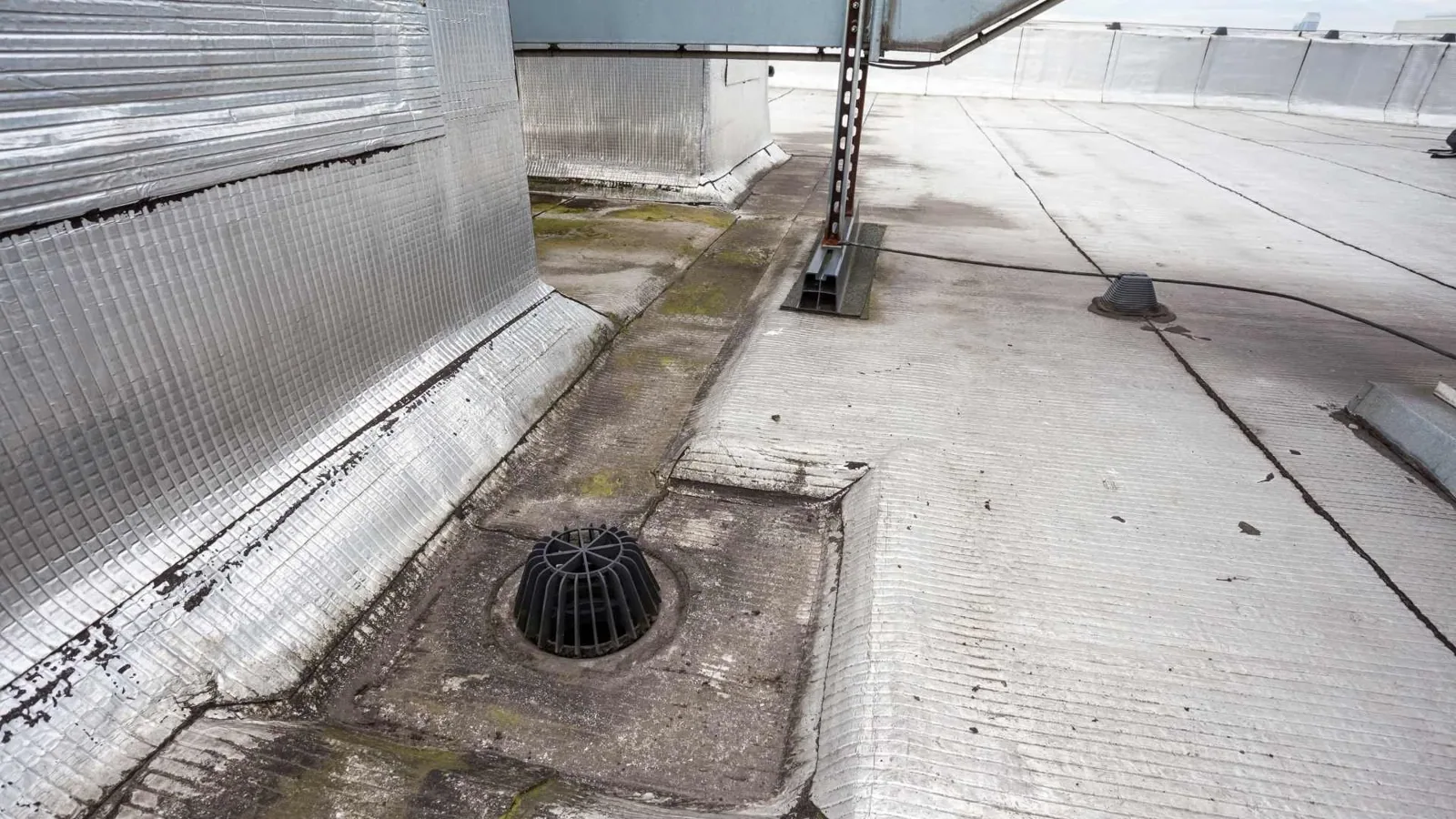
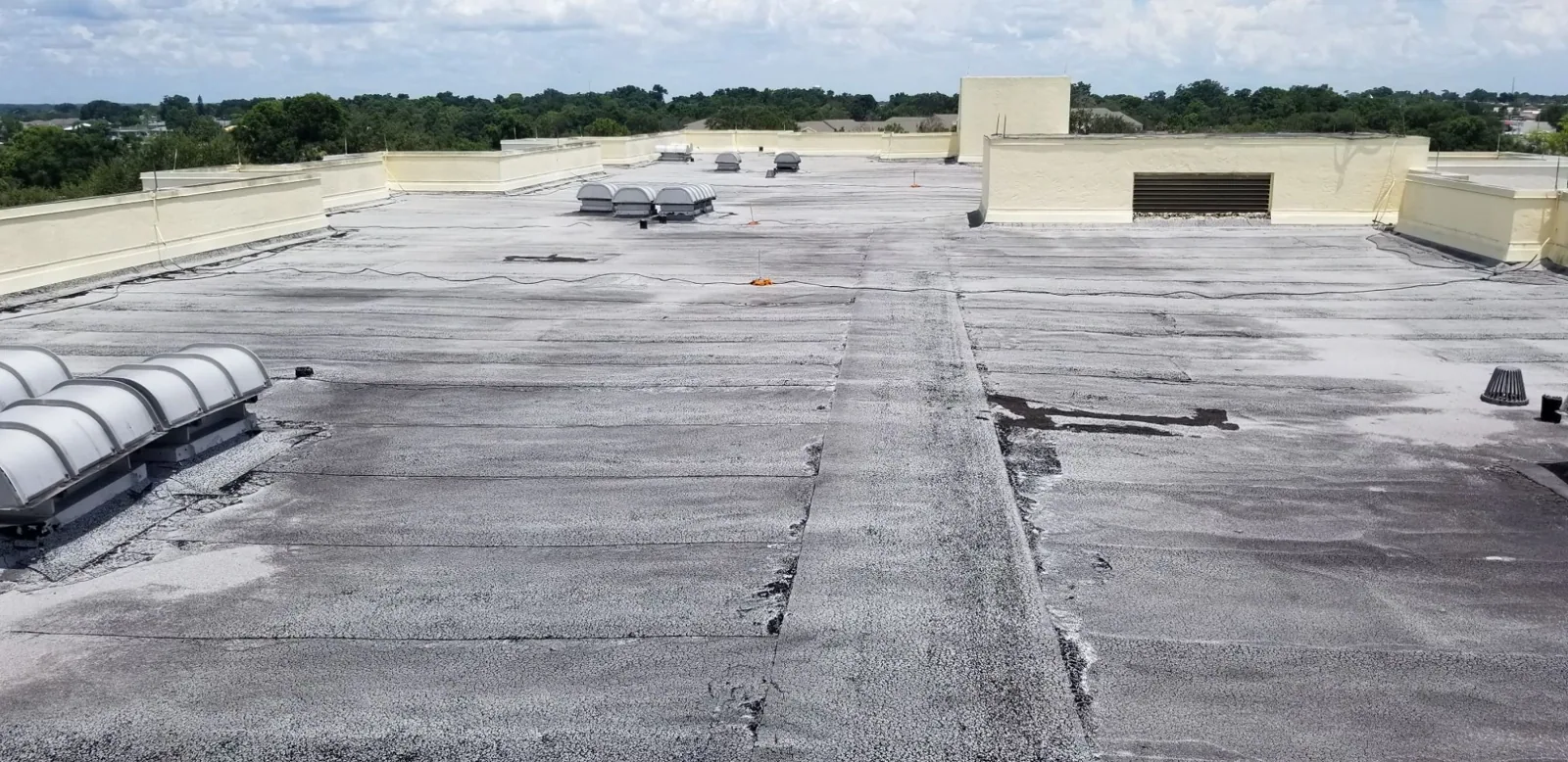
The best claim file starts with a condition record. A dated roof walk, photographs by section and a sketch of drains, curbs and penetrations show the roof as it stood. When a storm follows, the before photographs separate new damage from old wear.
If no record exists, we reconstruct what we can from the roof itself. Age of materials, patterns of rust and chalking and the location of old repairs help show what was already there. The reconstruction is less certain than a record, and the report says so.
A maintenance program builds the record without a claim in sight. Each preventive maintenance visit adds dated photographs and notes, so the roof's history exists when it is needed. Owners who keep the file start a claim with evidence in hand and a list of what was found at the last visit.
Documenting the Damage
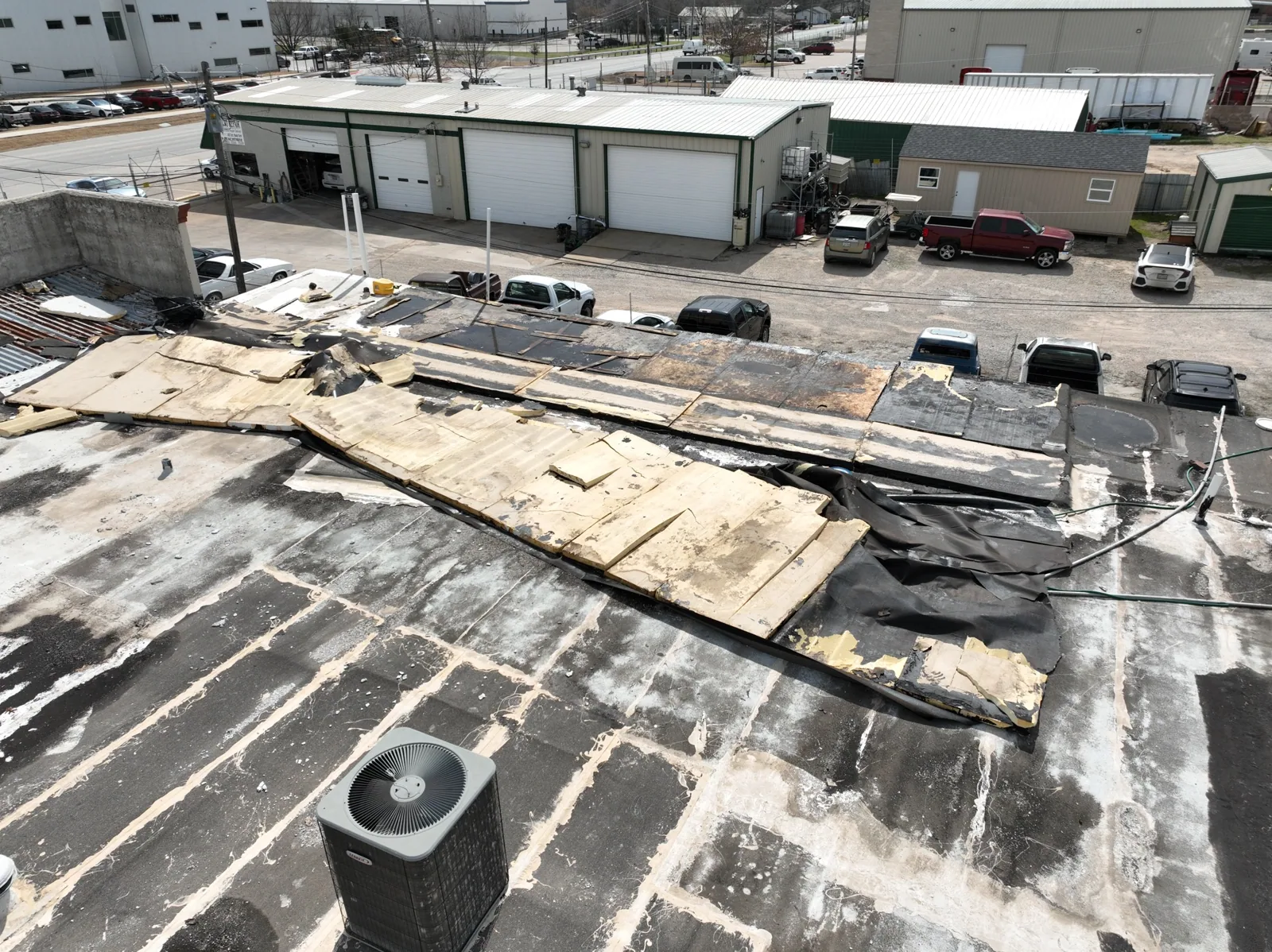
Forecasters reported minor roof and exterior damage at some businesses after an EF0 tornado, estimated at 75 mph, struck at Royal Oaks Boulevard and Highway 96 on August 12, 2023. Minor damage still needs a record. We photograph each opening, each lifted edge and each impact mark with a scale and a location on the sketch.
Hail close to three-quarters of an inch was part of a July 2026 warning for northeastern Williamson County. When hail is the cause, we count marks on test squares by slope. Counts give an adjuster something to check on the roof itself, and they show whether damage is isolated or spread. A dent on metal edge or a bruise on a membrane gets a close photograph and a wide one, so a reader can place it on the roof.
We also document the interior side. A stained tile, a wet wall and a damp insulation sample each get a photograph and a note of the date. Interior damage ties the roof opening to the loss, and it shows the insurer how far the water traveled.
Temporary Protection and Its Records
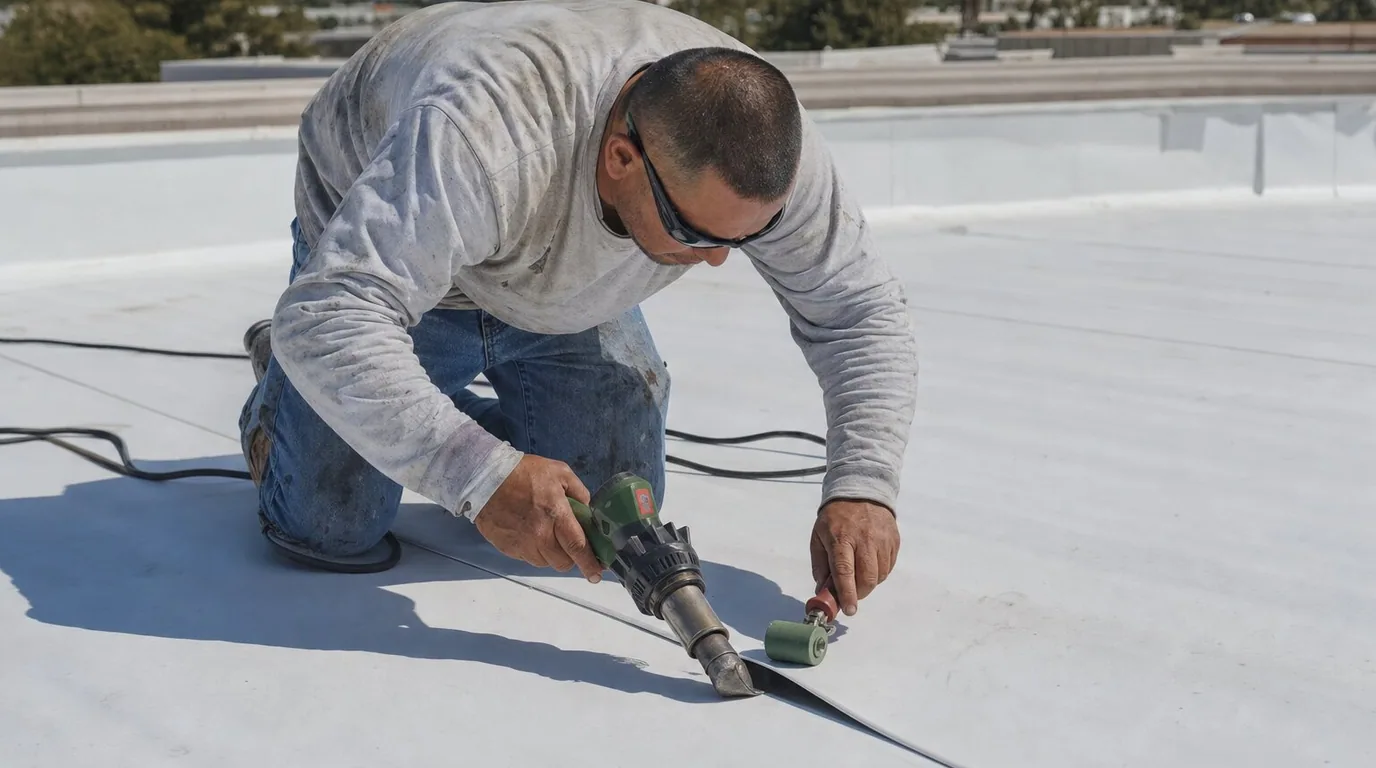
Policies usually expect an owner to protect the property from further damage. A tarp or patch is part of that duty, and its cost is part of the claim. We photograph the opening before and after the cover goes on, record the materials and hours and keep the receipts together.
Covering an opening is not a repair. The file shows both stages: the emergency cover, then the permanent work. Our emergency roof repair response is run to leave that trail.
Temporary work has limits. A tarp holds for days or weeks, not for months, and it should be checked after each rain. The file notes when it was placed, when it was checked and when the permanent repair replaced it.
The Repair Scope in Plain Terms
An adjuster reads a scope line by line. We write each line with the roof section, the condition, the cause, the repair and the quantity. A torn edge strip is a line. Wet insulation is a line. A replaced curb flashing is a line. Nothing is bundled, so a disputed item does not hold up the rest. Each line also notes whether the item is storm-related, age-related or both, and why.
The scope separates storm damage from conditions that predate it. If a roof section was already worn, the report says so and prices the storm-related work apart. That clarity speeds a review and avoids arguments over items no one can verify. A storm damage repair scope follows this layout.
Quantities come from measurement, not guesses. We measure the affected sections, count the penetrations and note the access needed. When the damage is spread across a large roof, we show the area on the sketch with dimensions, so the estimate can be checked.
Meeting the Adjuster on the Roof
We attend the adjuster's roof walk when the owner asks, and we prepare for it with a copy of the sketch, a list of the findings and a clear path to each roof section. We point out each finding, hand over the photographs and the sketch, and answer questions about the roof's construction. The adjuster sees the same evidence we saw.
Where the adjuster's estimate differs from ours, which happens when roof layers are hidden, the core cut results and the photographs show why. We do not argue coverage. We show what the roof is made of, what the storm did and what the repair requires. The owner and the insurer decide the rest. Our role is to make sure both are looking at the same roof.
If the owner disagrees with the insurer's estimate, the same file supports a supplement request. New findings, such as wet insulation discovered at tear-off, are photographed in the open roof and added with a date and a measurement.
Code, Permits and the Final Record
A city may choose a newer code edition than the state's 2021 base, which took effect August 17, 2025, and a repair that triggers permit review follows the local rule, and the scope states the insulation and attachment the code requires. The cost of those items belongs in the estimate from the start.
When the work ends, the closeout record holds the photographs, the products used, the permit and the final inspection. It joins the roof condition report file and answers the next claim before it is asked. For a building with several roofs, one file per roof keeps the history clear. Owners in Cool Springs and Brentwood keep the same file.
Commercial Roofing Questions
Can you file the claim for me?
The policyholder files the claim. We supply the roof documentation, the repair scope and, if asked, attend the adjuster's walk.
What if I have no photographs from before the storm?
We reconstruct what we can from the roof itself and say what is certain and what is not. A record from this point forward protects the next claim.
Does a claim raise the cost of the repair?
No. The repair scope is priced on the work required. The claim affects who pays, not what the roof needs.
How long should I wait before calling?
Call as soon as it is safe. Water in the insulation grows worse each day, and policies expect prompt protection of the roof. A same-week walk also keeps the photographs close in time to the storm.
What happens if wet insulation is found during repair?
We stop, photograph the open roof, take a moisture reading and notify the owner and the adjuster. The added work is documented as a supplement, with measurements and dates.
What should I send to start?
Damage photographs, the roof plan, the roof's age and any earlier inspection notes. The roof walk follows, with a short written summary.