Preventive Roof Maintenance in Franklin, TN

A clogged drain strainer is the first sign of a long failure, and it usually goes unnoticed until a ceiling tile stains. Water stands near the drain for a day, works into a seam that heat has already stiffened and soaks the insulation below. Preventive roof maintenance exists to catch that sequence at its first step. In Franklin, TN, with about 53.79 inches of annual rain, the sequence has plenty of chances to start.
Preventive maintenance is a scheduled program: roof walks on a set calendar, small repairs made on the spot and a photo trail that shows how each roof changes from visit to visit.
Two Visits a Year
A spring visit and a fall visit cover most roofs. Spring catches what winter freezes loosened and what the wet months opened. Fall catches what summer heat movement did and clears the leaves before the next rain.
Franklin's July highs run near 91 degrees, and the record low is minus 22. That spread moves a membrane every year. At each visit we walk the whole roof, not a sample, and record the condition by roof section.
The calendar matters as much as the checklist. A visit booked before the leaves fall clears the strainers for the autumn rain, and a visit after the last hard freeze finds the cracks that cold opened. Property managers who set both dates a year ahead can plan the work around tenants and budgets instead of reacting to a call.
Heat and cold are the two forces we track. Membranes expand in July and contract in January, and the seams and flashings absorb the movement. A visit in each season shows how the roof handled the last swing and what it is likely to face in the next.
What We Check, Step by Step
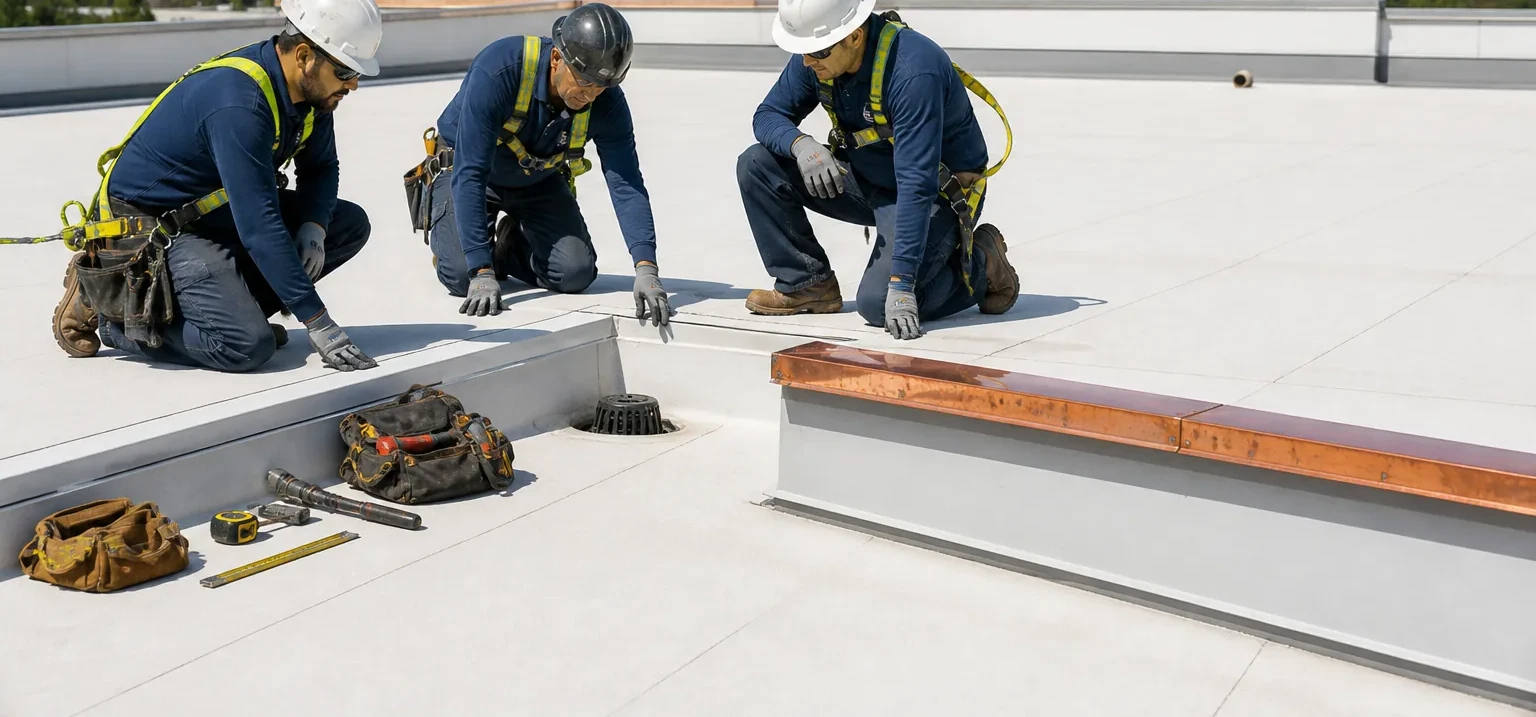
Step one is the drains. We lift strainers, clear debris and run water to confirm flow. Step two is the seams: a probe along each lap tells us whether it is tight or lifting. Step three is the flashing at walls, curbs and pipes, where heat movement pulls the termination.
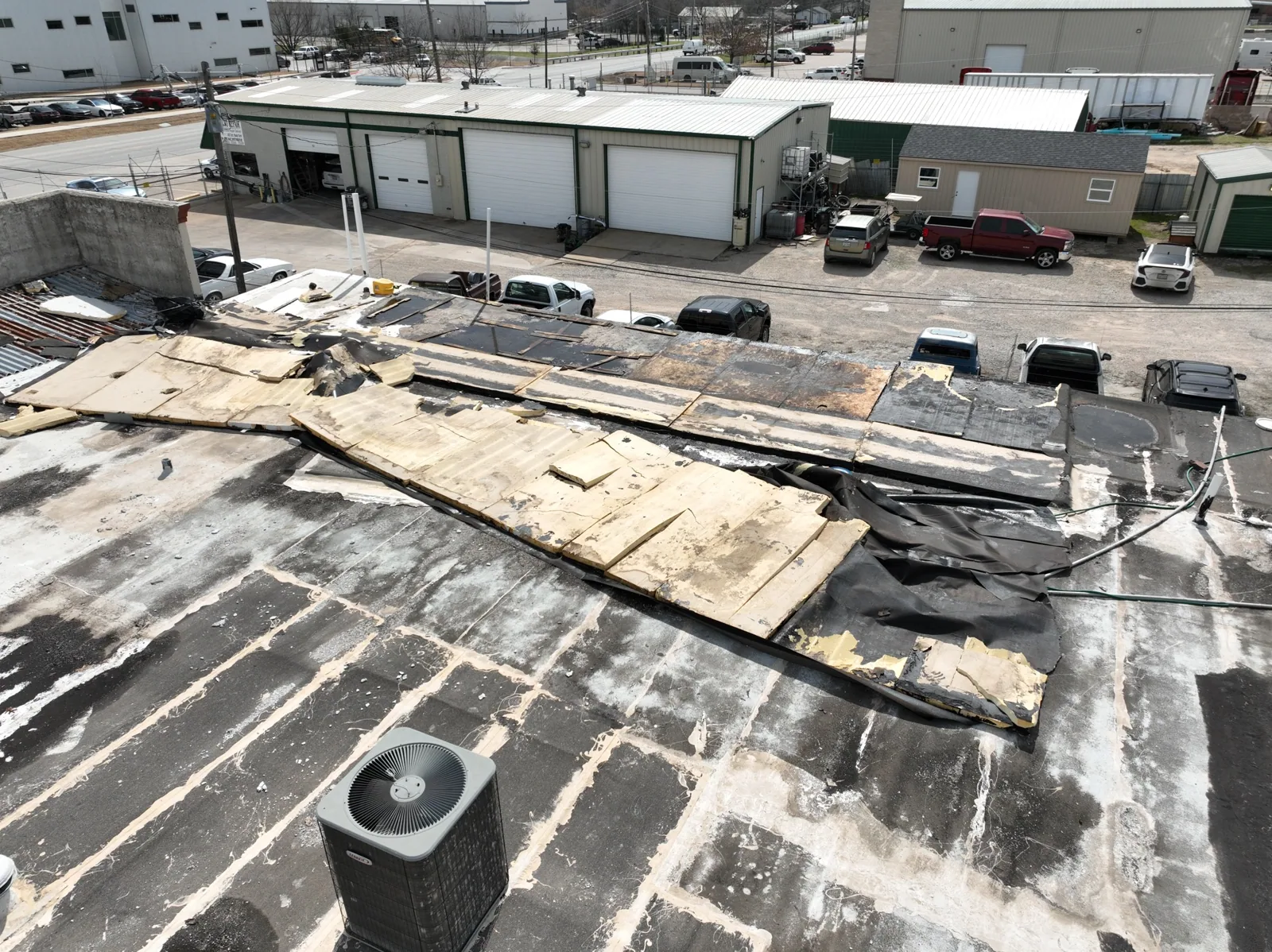
Step four is the surface. We look for blisters, splits, punctures from foot traffic and standing-water lines that show where a puddle lingered. Each finding gets a photograph and a place on the roof sketch.
The sketch is the working tool, and it travels with the file from year to year. It numbers every drain, curb and penetration, so a finding in March can be compared with the same spot in September. When a new unit appears on the roof, it gets a number and a flashing check on the next visit.
Small Repairs Made on the Visit
Many failures start small enough to fix in minutes. A cracked pipe boot, a bead of dried sealant, a loose screw in edge metal or a patch over a puncture all stop a leak before it begins. We carry the materials and make these fixes during the visit. Each one is photographed before and after, so the file shows what was found and what was done.
Anything larger goes on a short list with a cost range and a reason. A commercial roof repair that needs a lift or a crew is scheduled, not rushed, and the property manager decides the order. The cost range comes with the reason, so a manager can explain the spending to an owner or a board without guessing. Items that do not need action yet are listed as watch items, with the date to look again.
Large Office and Retail Roofs
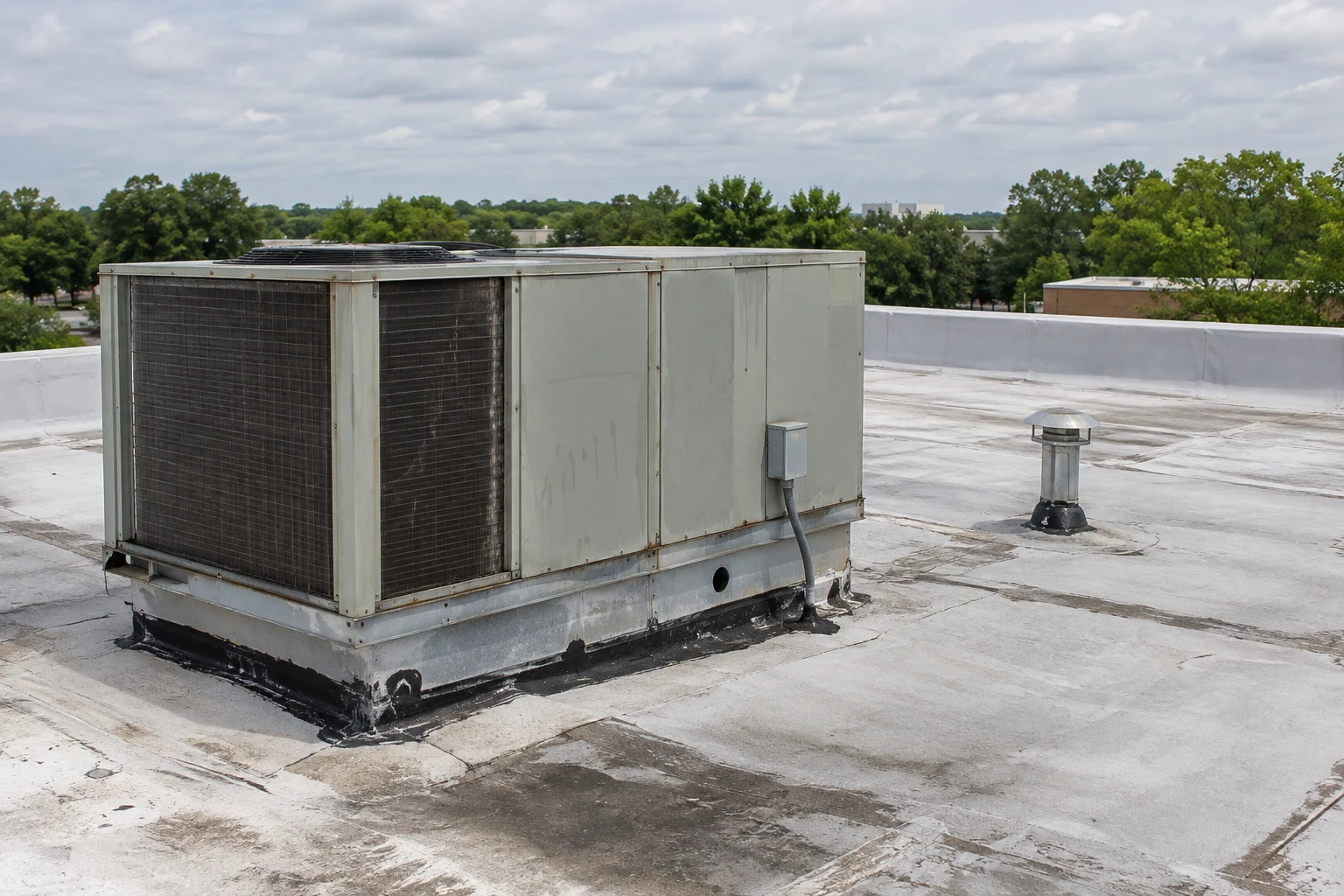
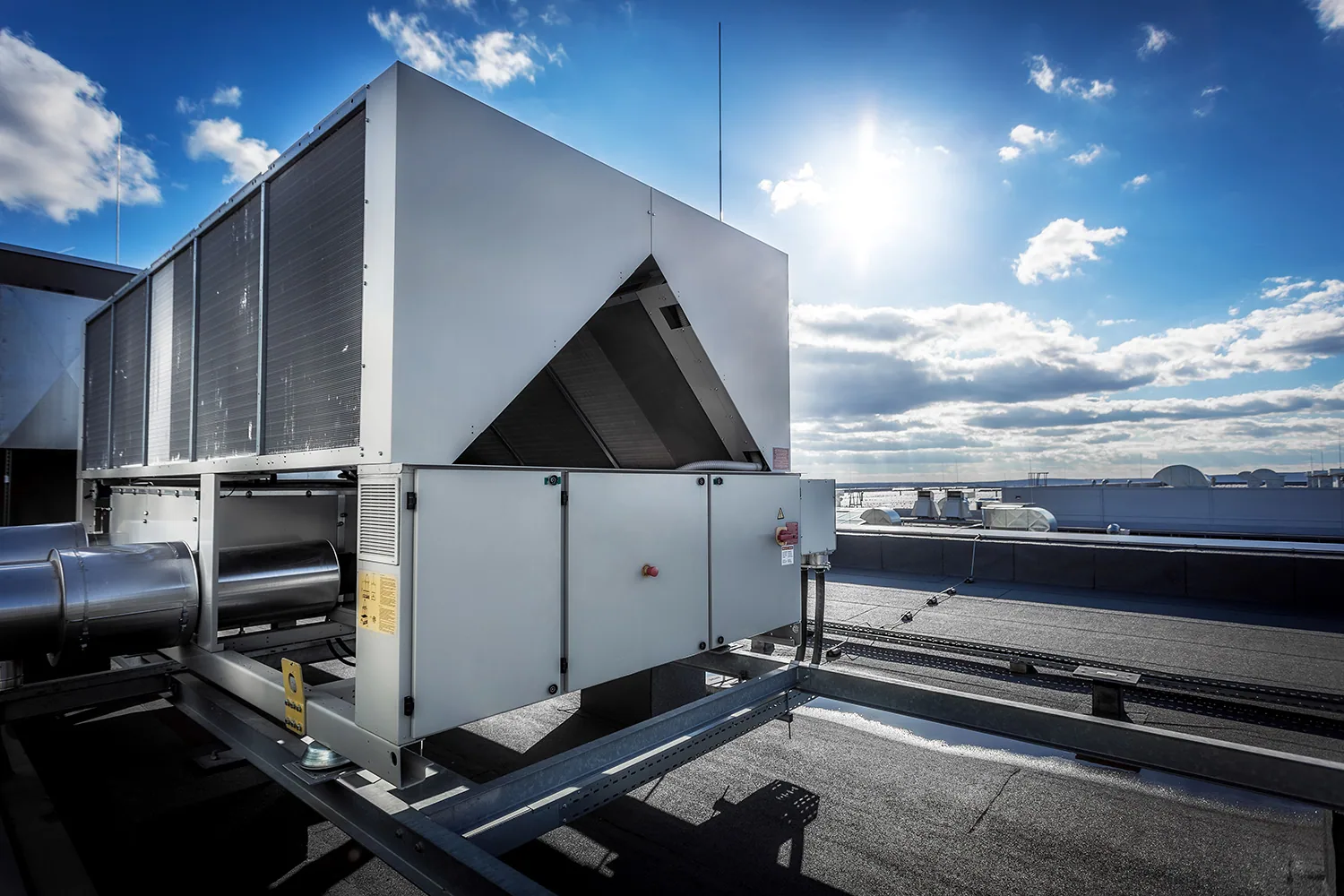
Franklin's McEwen district spreads over 6,680 acres and nearly 12 million square feet of commercial, office and industrial floor area. Roofs on buildings of that kind are large, low-slope and crowded with rooftop equipment. More equipment means more curbs, more penetrations and more foot traffic across the membrane.
We pad the walk paths that technicians use, check the flashing at every curb and note units added since the last visit. Our work on rooftop equipment curbs picks up where the maintenance walk leaves off. Along the Carothers Parkway corridor and in Cool Springs, the same schedule applies. Across the interstate to the east, office buildings of six to eleven stories are rising where surface lots once stood. Roofs on tall buildings take wind harder, and access needs more planning, so we confirm roof hatches and ladders before the first visit.
After a Storm Line
Spring and summer storm lines cross Franklin. In August 2023 a brief EF0 tornado set down at Highway 96 and Royal Oaks Boulevard, and forecasters logged minor roof damage at some businesses on that road. A severe storm warning in July 2026 mentioned 60 mph gusts and hail near three-quarters of an inch.
A maintenance contract includes a check after a storm like that. We look for lifted edges, displaced flashing and impact marks, and we photograph them against the last visit. If damage appears, the file already holds the before pictures, which helps a storm damage repair and any claim that follows. Storm response is faster when the roof is already mapped, since we know where to look first. Hail up to three-quarters of an inch can bruise a thin membrane, so impact marks get probed and photographed on the same visit.
The Record That Builds Over Time
A single inspection is a snapshot. A series of them is a trend. The photo trail shows the standing-water line at the same drain over three years, or the seam that has crept an inch since spring. The pattern tells a manager when a repair will no longer be enough.
The record also feeds planning. A roof capital plan uses it to schedule replacement years ahead, so money is set aside before a roof fails, and the budget line moves from surprise to schedule. A roof condition report turns each visit into a document that lenders and insurers can read.
The record stays with the building. If management changes or the property sells, the next owner inherits the photographs and the history, and the roof does not start over from zero. A clean file also helps when a buyer or lender asks for roof history during due diligence.
Commercial Roofing Questions
How often should a commercial roof be walked?
Twice a year at minimum, plus after any severe storm. Roofs with heavy equipment traffic or older membranes benefit from a third visit in summer.
What does a maintenance visit cost?
The price follows roof area, equipment count and access. We quote the visit after seeing the roof plan, and small repairs are priced separately so the manager sees each cost.
Does maintenance void or help a manufacturer warranty?
Many warranties ask the owner to keep the roof clean and repaired. A manufacturer may also ask that repairs use approved materials, so we log the product used for every patch. A dated record of visits shows that was done. Read the warranty terms, and we can match the schedule to them.
Can the visit happen while tenants are inside?
Yes. A roof walk makes little noise and needs no interior access. Larger repairs are scheduled around tenant hours.
What does a maintenance visit not include?
Replacement work, large repairs that need a crew and lift, and interior repairs. Those are scoped separately after the visit, with a photo trail that shows why.
What should I send to start?
The roof plan, if one exists, plus the roof's age and any leak history. Book the first walk, and a short written summary of what turns up comes afterward.