Roof Condition Reports in Franklin, TN
A one-line note that says the roof is in fair condition is the first sign of a report that will not help anyone. Fair compared with what? Where? Fixed by whom, and by when? We walk that vague note backward to the report a manager can actually use: findings by zone, evidence for each, and a ranked list of what to do next.
A roof condition report in Franklin, TN is a written record of what the roof looks like on the day of the walk. It is the base layer for repairs, budgets, warranty claims and sales, and it is only as good as the care taken in the field.
The walk behind the report
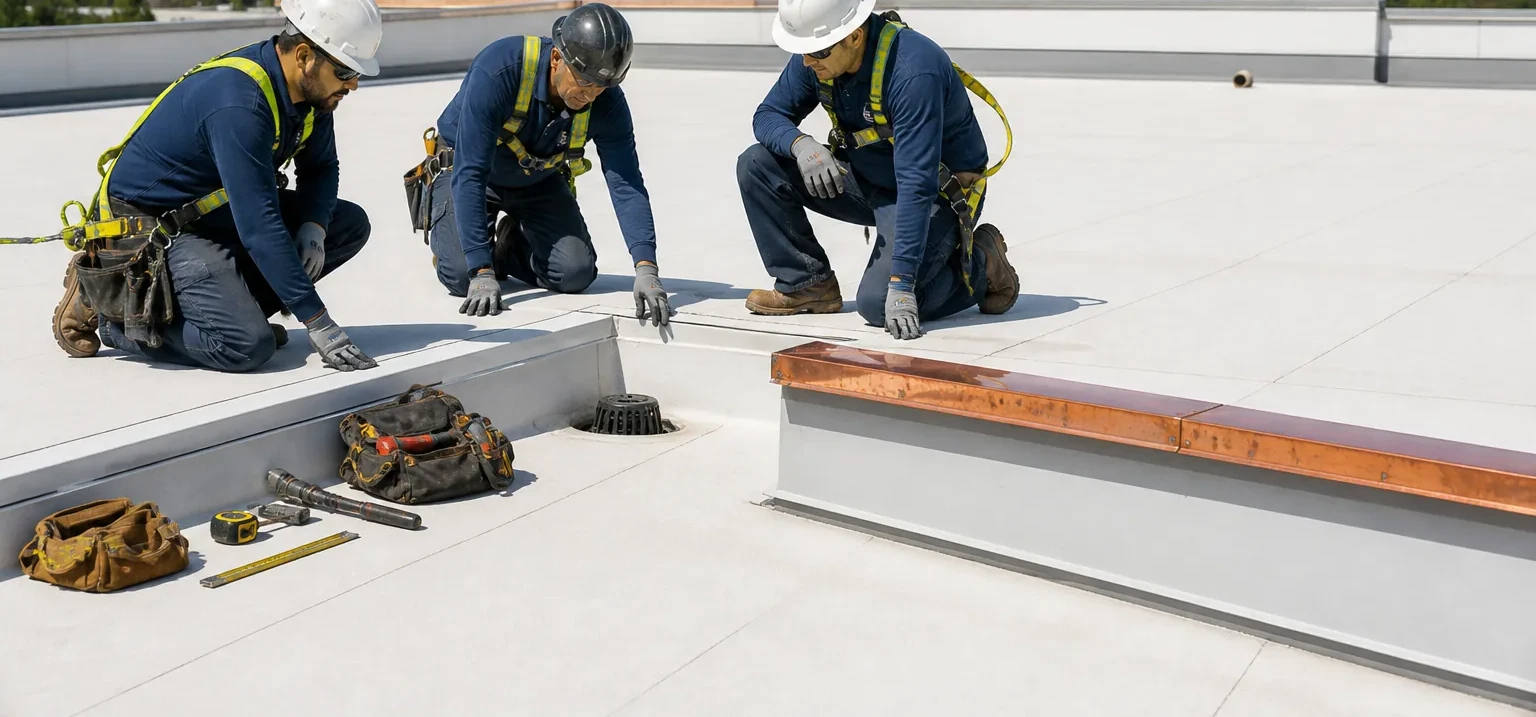
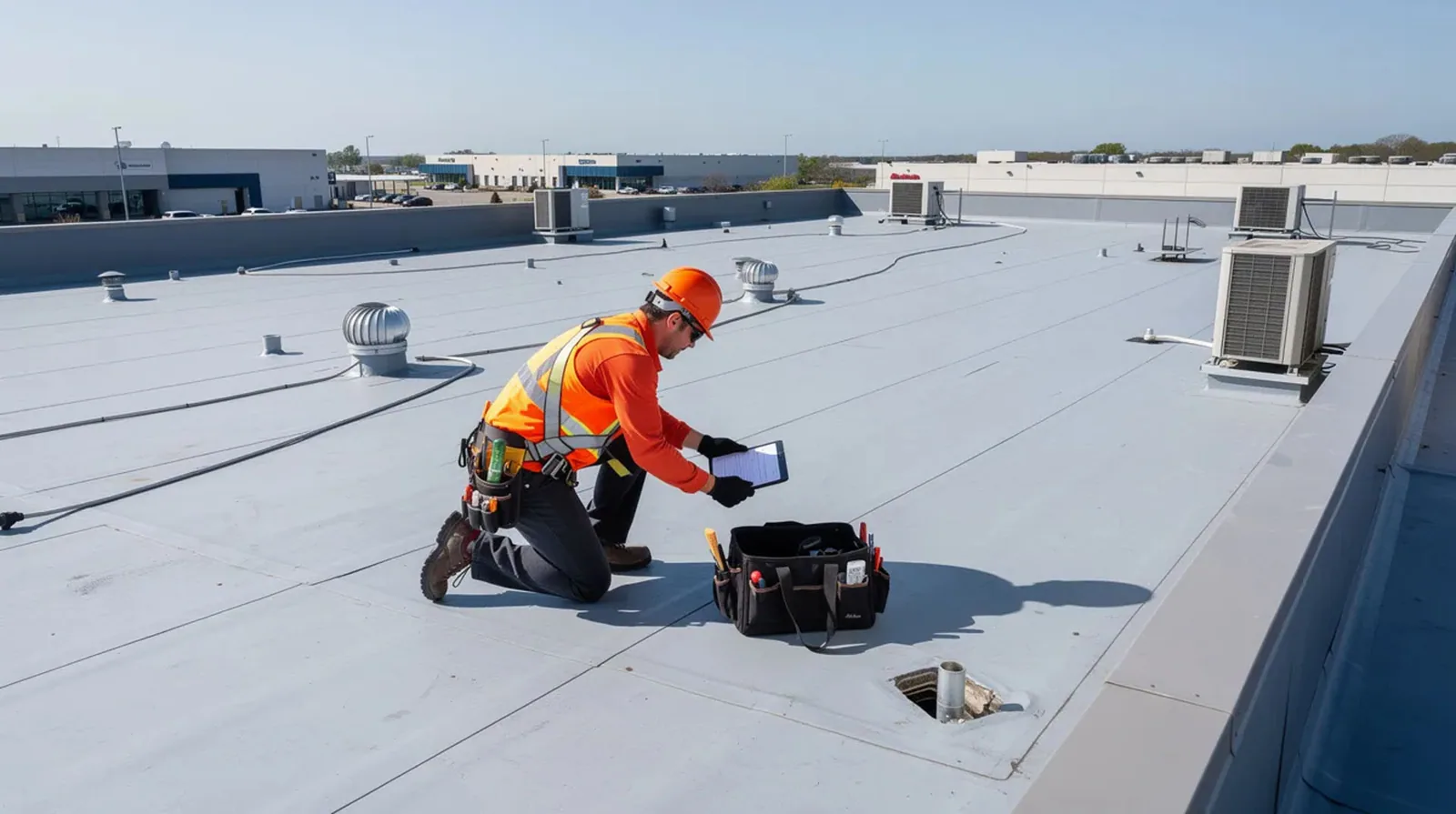
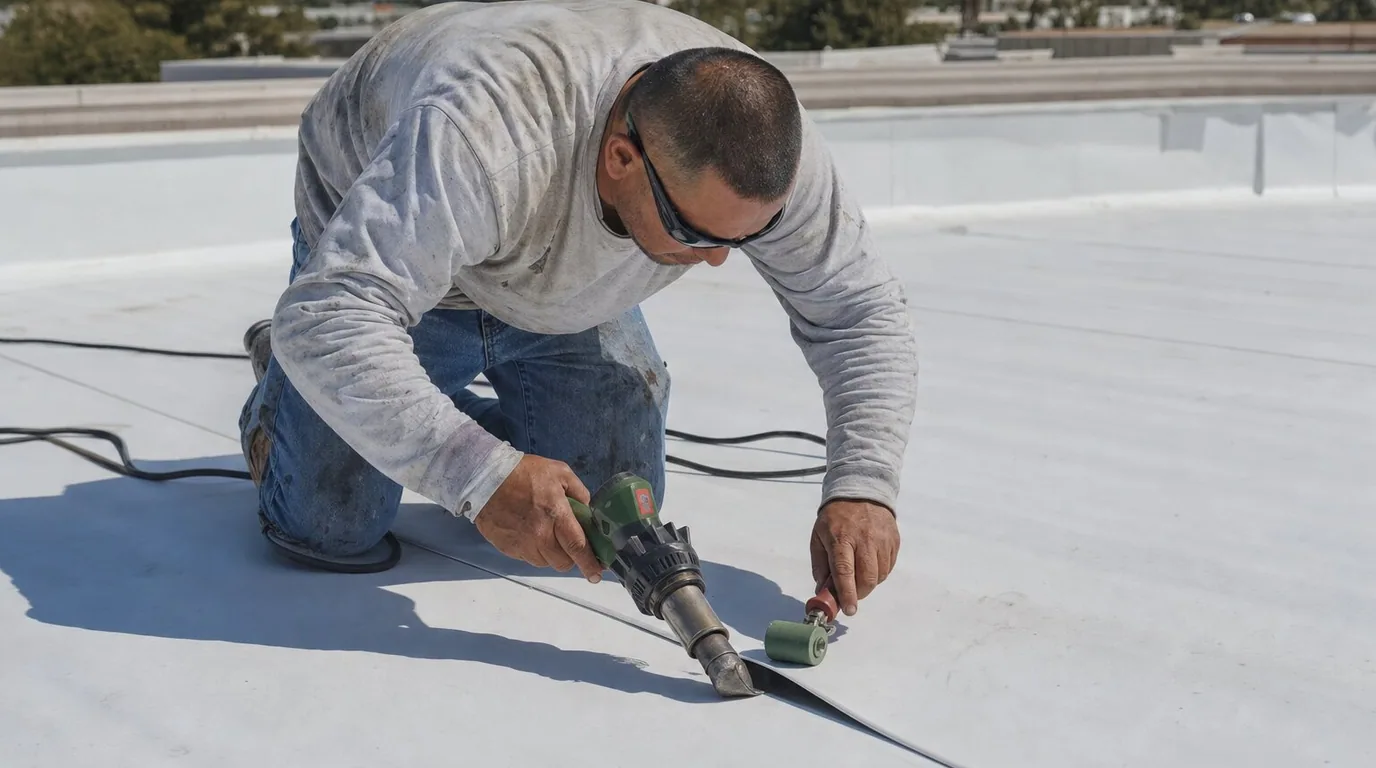
The report starts on the roof. The crew leader walks every zone, with the plan in hand, and checks the surface, the seams, the flashings, the edges, the drains and the equipment. Seams are probed, flashings pressed, drains tested with water and ponding measured with a gauge.
Photographs are taken in pairs: one wide to show where the item sits, and one close to show the detail. Each is numbered and placed on the roof plan. Anything that could not be reached, from a locked hatch to a roof too wet to walk, is recorded as such, so the owner knows exactly what the report does not cover.
Weather and timing are part of the method. A walk the morning after a rain shows ponding and drainage best. A walk on a hot afternoon shows which seams have softened and which flashings have pulled. When access allows, we schedule two short visits instead of one long one, so the report captures both conditions.
What the report contains
The report opens with a summary: the roof's system and age, the overall condition and the three most urgent items. Then come the zone-by-zone findings, each with a rating, a photograph, a location and a short explanation in plain words. Ponding gets a depth and a duration. Seams get a length and a state. Flashing gets a location and a failure type.
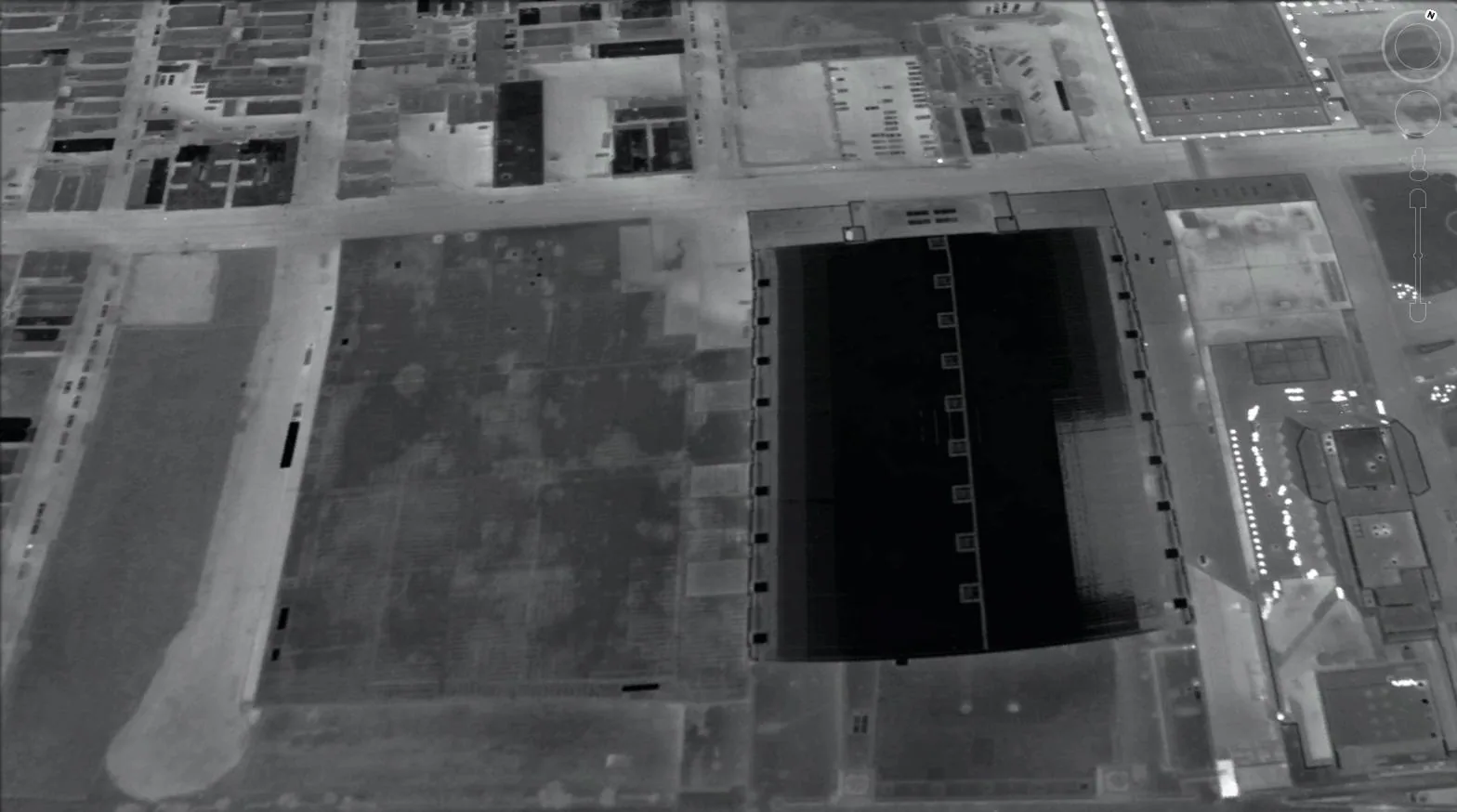
Next is the ranked action list. Items are sorted into act now, schedule soon and watch. Each item names the likely cause, the suggested fix and the cost drivers. A final section lists the tests recommended, such as an infrared moisture survey or core cuts, where the walk alone cannot settle a question.
Appendices hold the supporting material: the roof plan with zone labels, the full photograph set, moisture maps if any were taken and the core logs. A manager who wants only the summary can stop at page one, and an engineer or insurer can go to the appendix for the detail.
How the findings are rated
A rating scale only works if it means the same thing every time. We use four plain levels. Good means no action is needed. Fair means the item is sound but worn and belongs on the watch list. Poor means the item is failing and needs repair within the season. Critical means water is entering or safety is at risk and the item needs action now.
Every rating comes with the reason in one sentence and a photograph. A manager who disagrees can look at the picture and the sentence and see exactly what the rating rested on. Ratings roll up by zone, then by roof, so a portfolio view is just a longer version of the same table.
Trends matter as much as levels. A zone that moved from fair to poor between visits tells more than a zone that has been poor for years, and the report flags the movers at the top.
How findings are backed up
Every finding stands on something. A claim of wet insulation rests on a moisture scan and a core. A claim of a failed seam rests on a probe and a photograph. A claim that damage came from a storm rests on the direction of failure, the debris and the date, and we separate it from wear that was already there.
Where evidence is thin, the report says so. It lists what is suspected, what test would confirm it and what the owner can do in the meantime. That plain labeling is what makes the report useful in a dispute or a sale. The date and weather on the day of the walk are recorded as well, because a dry roof after a week of sun hides things that a wet one shows.
What owners do with it
Reports feed several jobs. They guide commercial roof repair by listing defects in order. They feed roof capital planning by supplying the condition ratings the budget depends on. They support insurance claims by showing the roof's state before a loss, and they back up purchase offers in due diligence roof surveys.
A series of reports is stronger than a single one. Set side by side, they show change: ponding that grows, a seam that opens, a patch that lifts. Change is what a manager needs to see to decide between repair and replacement.
Reports for Franklin roofs
Franklin roofs take heavy annual rain, hot Julys and storm lines with tornado and straight-line wind risk, so reports pay special attention to drainage, thermal movement and edges. For the large low-slope roofs along Carothers Parkway and in Cool Springs, where office buildings run six to eleven stories east of I-65, reports note the rooftop equipment, service paths and access, since all of them affect the repair plan.
Where a walk needs a second test
A walk sees the surface. Wet insulation needs a scan and a corroded deck needs a core, and the report lists those open questions at the start, with the test that would close each one. Repair cost appears as cost drivers and, where the owner wants a number, a priced scope follows once the tests are done.
A report is a snapshot of a day. After a storm, a fire or a change in use, it is out of date, and we recommend a fresh walk. After the August 2023 EF0 near Highway 96, for example, roofs along that stretch were worth walking again, since minor roof damage turned up at some Highway 96 businesses.
Commercial Roofing Questions
How long does a roof walk and report take?
The walk depends on roof area and access. The written report follows the walk with photographs, ratings and the ranked list, and a short phone summary can come the same day for urgent items.
Can we use the report for an insurance claim?
Yes, as a record of prior condition. After a loss, we prepare a separate damage file, and the earlier report helps separate new damage from wear that was already there.
Will the report tell us how many years are left?
It gives condition and likely path: repair, restore or replace. It does not promise a number of years, because weather, use and maintenance change the answer from one year to the next.
Do you need to cut the roof?
Not for a standard report. Cores are recommended when moisture or assembly is in question, and each cut is patched the same day with a compatible repair and recorded in the file.
Who receives the report?
The property manager or owner who requests it. We send a short summary first, then the full file, and we share it with others, such as a lender or buyer, only when the owner asks.