Storm Damage Roof Repair in Franklin, TN
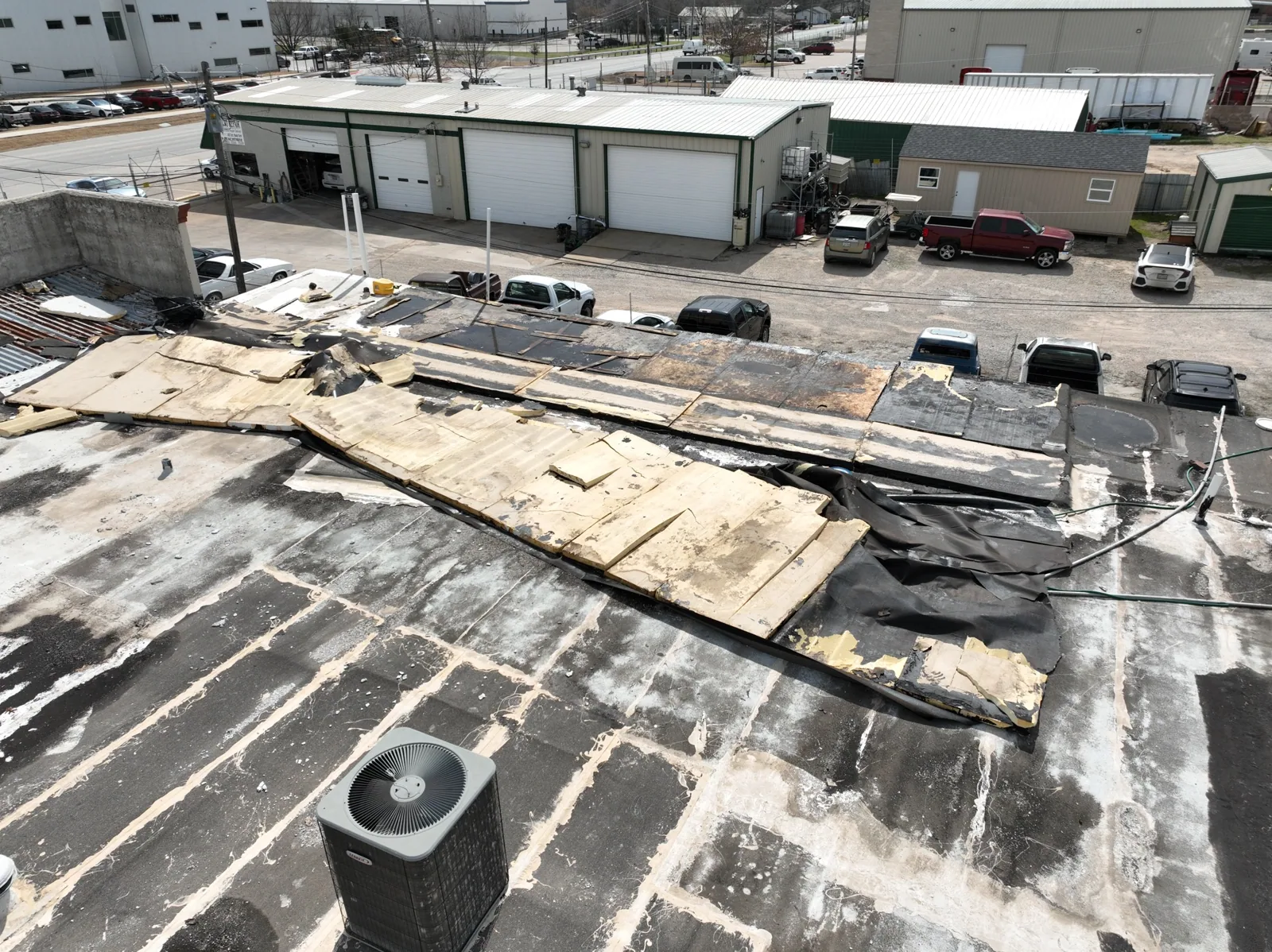
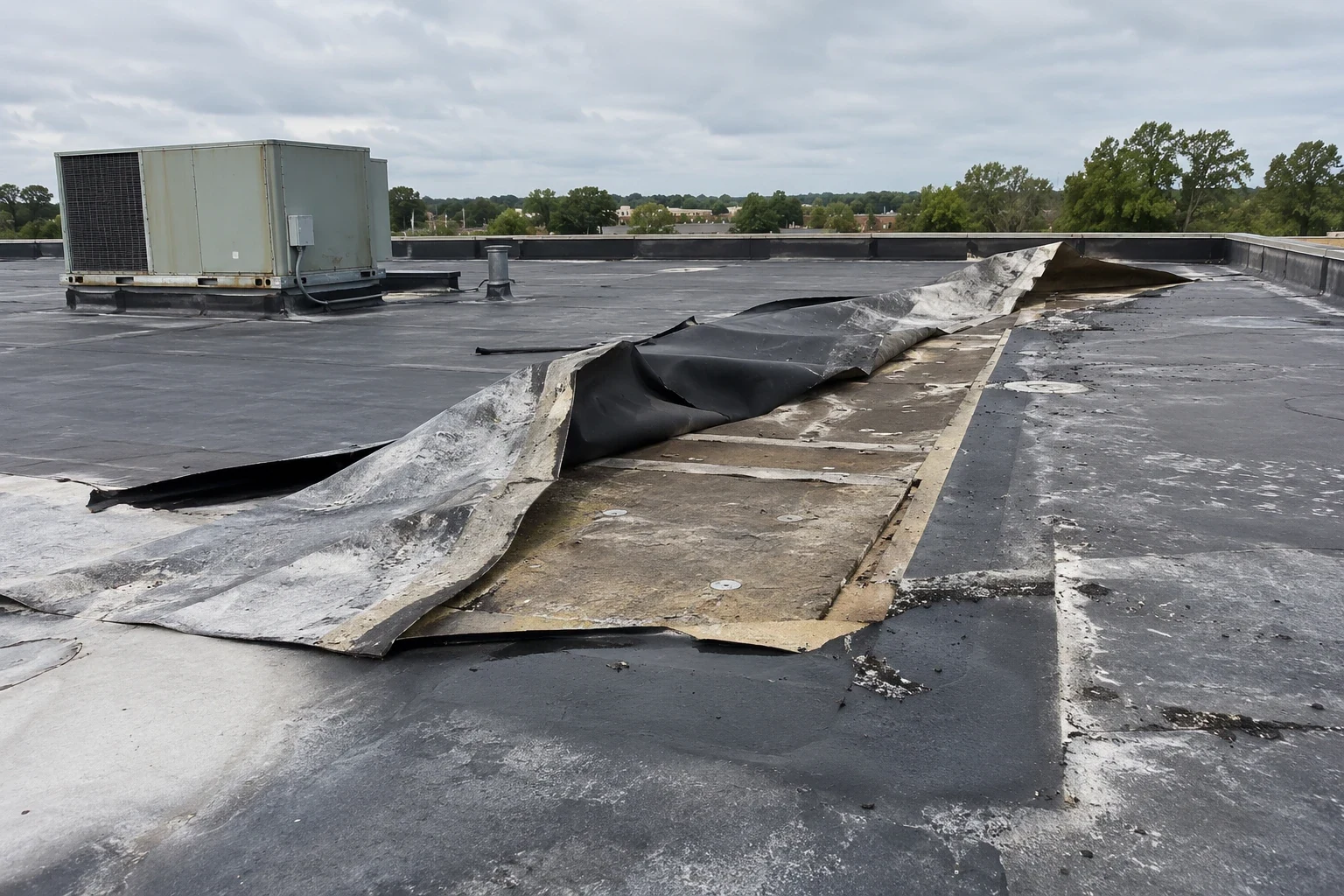
A torn edge strip, a loose sheet flapping at a corner or a wet ceiling tile after a storm line passes is the first sign of storm damage, and it is rarely the whole story. Wind lifts the edge, water enters at the gap and the insulation below takes on moisture before anything shows inside. Storm damage repair walks that sequence backward to the first opening. In Franklin, TN, where spring and summer storm lines cross a city that gets about 53.79 inches of rain a year, the walk starts the day the weather clears.
The order matters: stop the water, document the damage, then repair the cause.
The First Hour After a Storm
The first job is safety. Look from the ground for hanging metal, lifted sheets and standing water on the roof. Do not climb up in wet or windy conditions. Call, and send photographs of any stain, drip or visible damage.
Our crew goes to the roof as soon as conditions allow. Lightning, standing water and high wind keep the crew off the deck, and we say so plainly instead of rushing. We find the opening, cover it with a tarp or a temporary patch and photograph the roof before and after. Containing the water is the priority, because wet insulation costs more to remove than any patch costs to place.
Temporary work has to survive the next storm. Tarps are weighted along the edge and tied to solid points, not to loose metal. Patches are set on a dry, cleaned surface. If more rain is forecast, we return after it to check that the cover held and that no new water has entered.
Wind Damage and How It Starts
An EF0 tornado with estimated 75 mph winds set down at Highway 96 and Royal Oaks Boulevard on August 12, 2023 and ran a path of roughly 1.9 miles; forecasters recorded minor roof and exterior damage at some businesses along Highway 96. Minor damage is still damage, and it often begins at edge metal, coping and the first row of fasteners.
We pull on the edge, check the fasteners behind it and look for lifted membrane at corners and parapets. A wind damage repair starts with the edge, since a loose edge lets the next gust lift more of the roof. Where a funnel cloud or tornado has been reported, a tornado damage review looks for debris impacts, torn flashing and displaced rooftop equipment as well.
The August 2023 touchdown was at Royal Oaks Boulevard, and a post-storm walk on any building near Mallory Lane and Royal Oaks follows the same order: the perimeter first, then the field, then every unit. Each step is photographed so the findings can be compared with the last maintenance visit.
Hail Marks and Thin Membranes
In July 2026 a severe thunderstorm warning covering northeastern Williamson County listed Franklin, Brentwood and Nolensville and described gusts of about 60 mph and hailstones up to three-quarters of an inch. Hail of that size can bruise thinner membranes and dent metal. It does not always leave a mark you can see from the ground.
We probe suspect spots, count impact marks on test squares and photograph dents on metal edges and units. A bruise in a membrane shows as a soft spot or a hairline crack. We mark each one on the sketch, so the repair list matches what the storm did.
Rooftop equipment takes hits too. Fan blades, louvers and condenser fins dent, and a bent unit can sit crooked on its curb and break the flashing. We photograph each unit and check the curb, since the unit's owner and the roof's owner may be different people with different repair paths.
Storm Water and Drainage
Storms bring rain, and rain tests the drains. In the flood of May 1-2, 2010, the Harpeth River rose to 35.32 feet in downtown Franklin, and roughly 1,500 homes and businesses in Williamson County were damaged. A roof does not flood, but a storm shows every weak drain and seam on it.
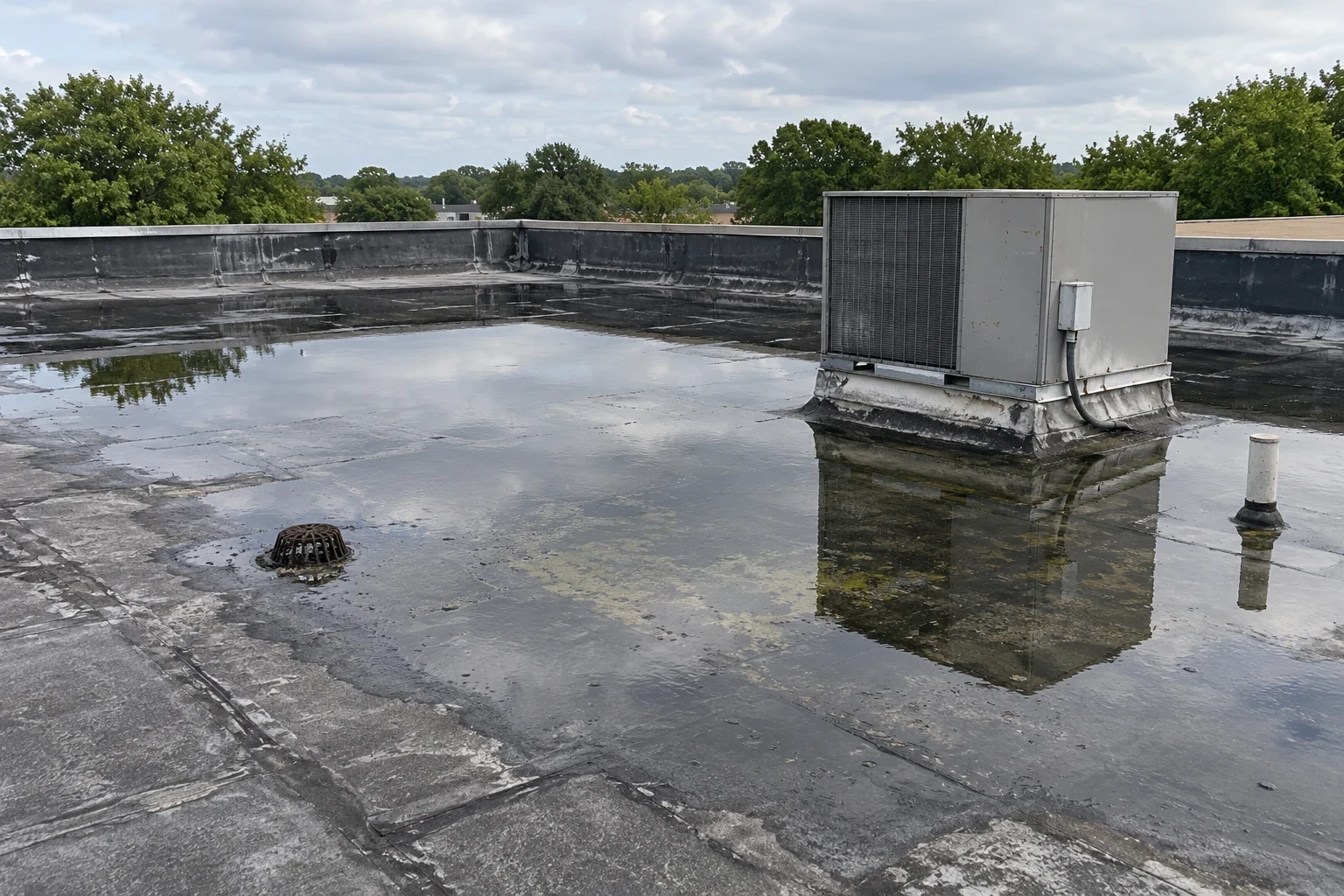
After a heavy rain we check strainers, scuppers and low spots. Debris blown onto the roof clogs outlets, and a clogged outlet turns an ordinary storm into a ponding event. Our roof drain and scupper work clears them and records the standing-water line.
The standing-water line is the dirt ring a puddle leaves. If it sits in a new place after the storm, the roof has moved or a drain has failed. If it sits where it always sat, the storm only tested a known weakness. The difference decides whether the repair is a cleaning or a correction.
Documenting the Damage
The photo trail is the most useful thing a manager can have after a storm. It shows the roof before, the damage after and the temporary work in between. If the roof was walked in a maintenance visit before the storm, the before photographs already exist.
That file supports the insurance claim and separates storm damage from age wear. Tornado risk in Dixie Alley, which includes Brentwood, runs highest from November through May, and the March 3, 2020 outbreak spun up an EF-3 with estimated 165 mph winds that damaged large warehouses in Mount Juliet. Those events show the range of wind the region can produce. A roof condition report after the storm adds the findings to the permanent file.
From Temporary to Permanent
Once the roof is dry, the repair scope is written. It lists each opening, its cause, the repair and a cost driver. A torn edge strip is replaced and refastened. A lifted sheet is reattached or replaced. Wet insulation is cut out and replaced, since it does not dry in place.
Since August 17, 2025 Tennessee has used the 2021 editions of most international codes, and cities may adopt newer ones, so a larger repair is checked against the local permit rules. For widespread damage, a replacement may be the better choice, and the report shows why. In a large office or retail area such as Cool Springs, damage can spread across several buildings in one storm, and the repair order follows the leaks first and cosmetic damage last.
Repairs are photographed in stages, from the stripped deck to the finished edge. A closeout photo trail goes to the property manager and, on request, to the insurer.
Commercial Roofing Questions
What should I do right after a storm?
Look from the ground, photograph any stain or damage and call. Do not climb onto a wet or windy roof. We cover the opening first.
Is minor storm damage worth repairing?
Yes. A loose edge or lifted corner invites more damage in the next wind, and small openings let in water that wets the insulation.
How do I tell storm damage from old wear?
Storm damage is fresh and often on one side: torn sheets, bent metal, missing fasteners. Wear shows as chalking, cracking and rust. Before photographs settle the question.
Does hail always damage a commercial roof?
No. Small hail may leave no mark on a thick membrane, while larger stones bruise thin ones. We probe and count before saying.
Who pays for the temporary cover?
That depends on the policy and the cause. The photo trail helps the insurer see why the cover was needed. We record the materials and hours so the cost can be submitted with the claim.
What should I send to start?
Photographs of the damage, plus the roof plan, the roof's age and any leak history. The roof walk follows, and the failure is traced on the roof itself.