Emergency Roof Repair in Franklin, TN
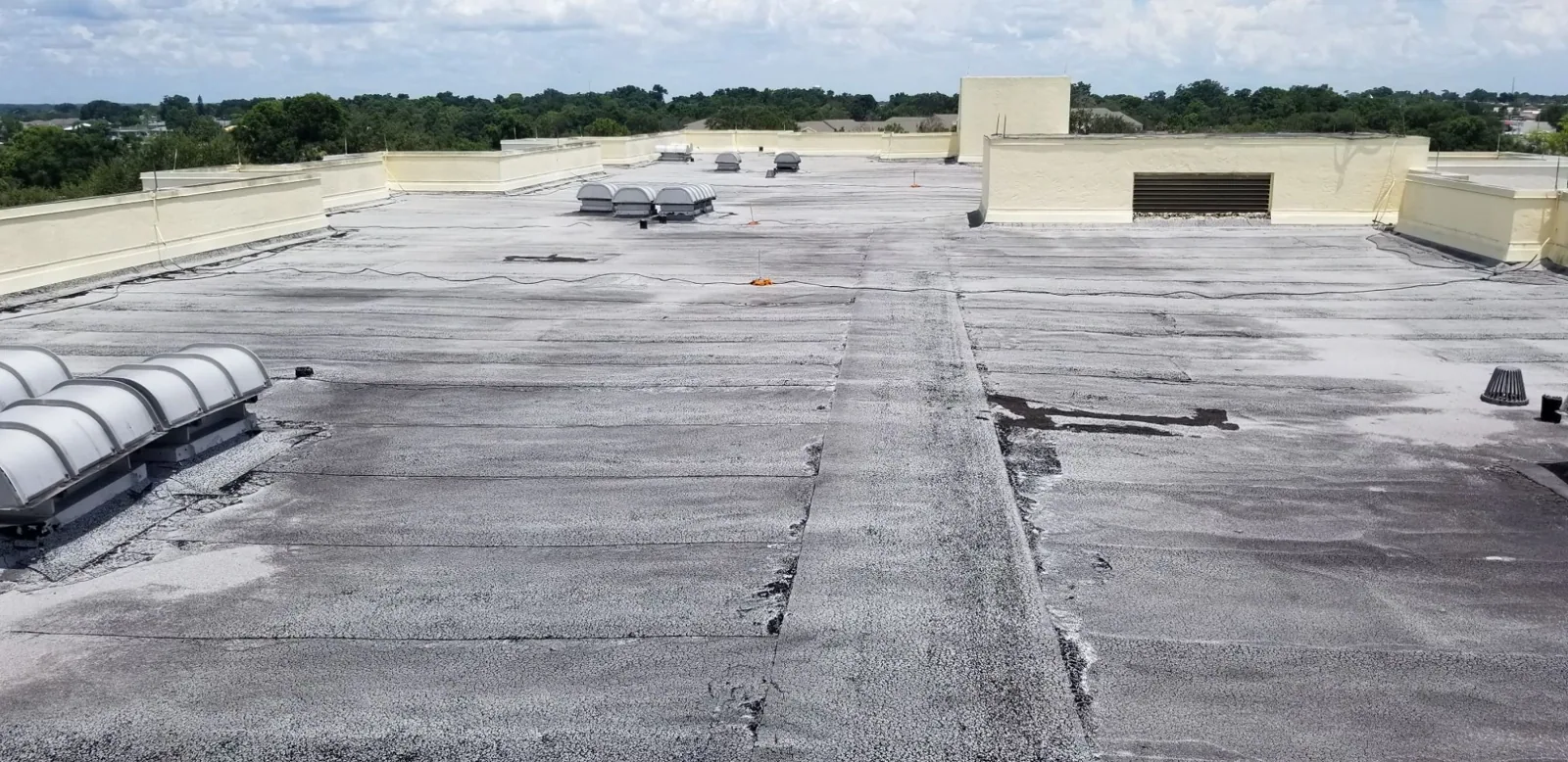
Two in the morning is the wrong time to ask who pays. The first question is where the water is going and what it will reach. Emergency roof repair in Franklin, TN means stopping the loss first and sorting out the rest afterward. Commercial Roofing Franklin answers emergency calls around the clock, every day of the week, holidays included, and our first goal on any call is to make the building safe and dry enough to get through the night.
A storm does not wait for a convenient day, and a roof opening does not stay small. Wind-driven rain follows the first gap and keeps widening it. Here is the job from your call to the dry-in, so you know what to expect and what to do while we are on the way.
What Happens on the Call
We ask a short set of questions. Where is the building, and what type of roof does it have? Is water entering now, and where is it landing? Is anyone hurt, is power affected, and is there debris on the roof? Photos help, even rough ones taken from the parking lot or from a safe indoor spot.
Then we tell you what to do. Move people and stock away from the water. Shut off power to wet circuits if it is safe. Do not climb onto a wet or damaged roof yourself. Damaged decking and loose membrane can hide edges and holes, and a fall is a worse event than a leak. We send a crew with tarps, sheeting, fasteners, sealant and the tools for temporary seals, and we keep you informed on arrival time.
Dry-In Comes First
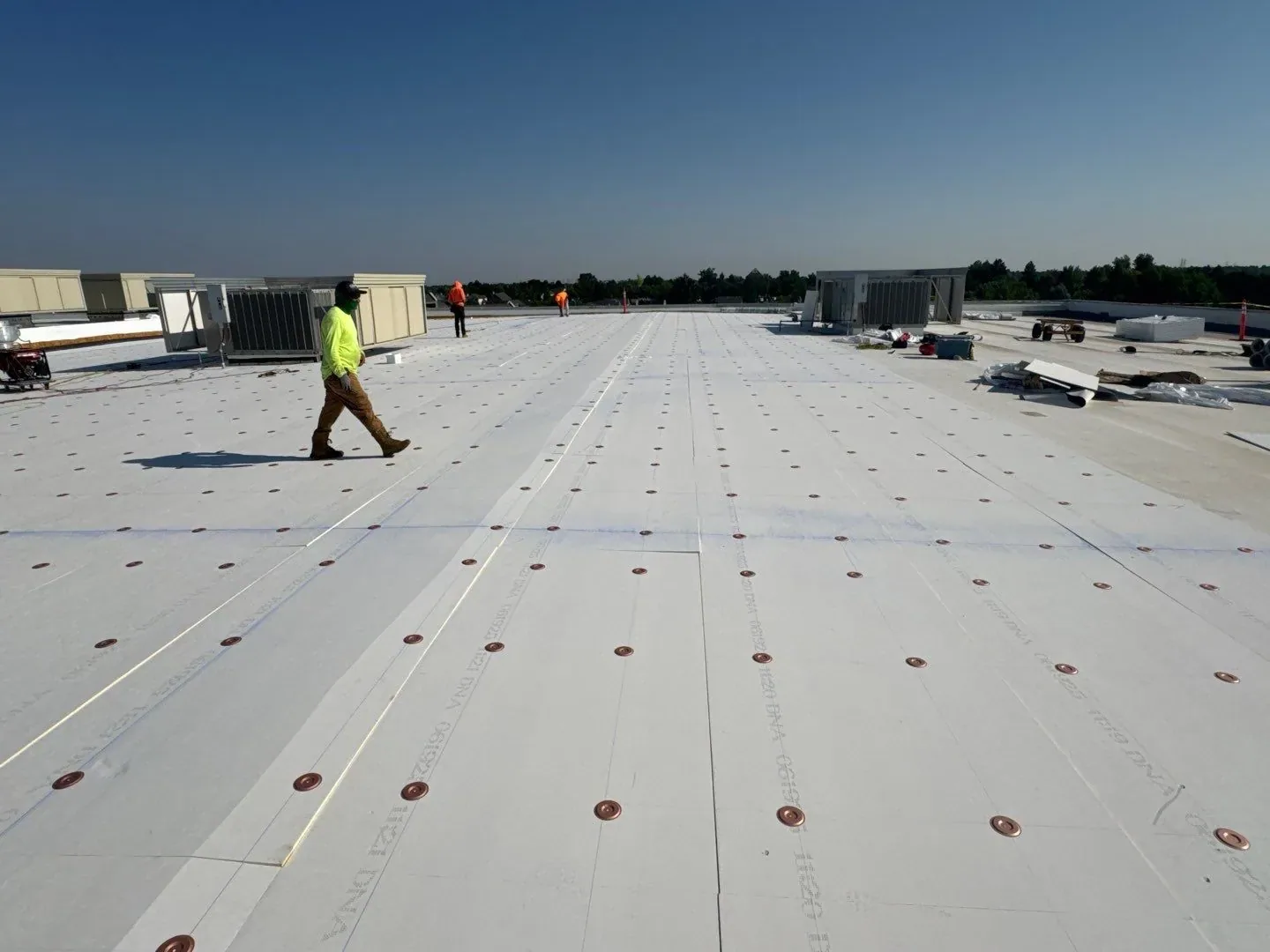
A dry-in is a temporary roof over the problem. On a low-slope building it may be a heavy sheet fastened and sealed over the damaged area, with edges battened so wind cannot get under. On a roof with torn membrane, we may tape or weld a temporary patch. Where a section has blown off, a tarp over the deck holds until a permanent fix can be planned.
The work is safety-driven. We check deck condition before stepping on it, rope off unsafe areas and avoid driving fasteners into wet, weakened material. A good tarp is shaped so water runs off the roof instead of pooling in folds, and it is tied down for the next gust. A bad tarp can add weight, trap water and blow away.
Storms That Make the Call
Emergencies on Franklin roofs follow the weather. The August 12, 2023 storm system produced an EF0 tornado near Highway 96 at Royal Oaks Boulevard and, near Fairview, trees down and scattered power outages. A July 2026 warning for northeastern Williamson County cited gusts near 60 mph, hail up to three-quarters of an inch and flash flooding of 1 to 3 inches of rain in places, and the notice said roofs and siding could be damaged.
Bigger events reach across the metro area. The March 3, 2020 tornado, rated EF-3 with winds of about 165 mph, damaged businesses in Germantown and East Nashville and left damage in Donelson. That path ran through Davidson, Wilson and Smith counties, but the outbreak is a reminder that Middle Tennessee roofs can see sudden, severe loss. A storm with a path through downtown Nashville and beyond can keep every roofer busy for days, which is another reason to call early.
Floods Are Different
Some water emergencies do not start on the roof. The May 2010 flood sent the Harpeth River to 35.32 feet in downtown Franklin, a few inches above the 1948 record, and Williamson County reported about 1,500 damaged residential and commercial structures. Flood damage is mostly below the roof, but heavy rain that comes with it can overwhelm drains and scuppers and find every weak flashing.
When rain is heavy and prolonged, we focus on drains. A blocked drain can load a roof with standing water, and weight on a low-slope deck is a safety issue, not only a leak issue. We clear debris, check overflow openings and look for sagging.
Seals by Roof Type
The temporary seal depends on what is underneath. On a single-ply roof, a torn section can often be sealed with a patch or covered with a membrane sheet and tape. On a built-up or modified bitumen roof, cold-applied mastic and reinforcing fabric make a quick bridge. On a metal roof, a lifted panel needs to be pulled back down, fastened and covered at its seams, because wind-driven water follows panel laps.
Penetrations get their own treatment. A broken skylight needs a rigid cover, not a tarp, and a torn pipe boot gets a temporary collar. If equipment was knocked loose by wind or debris, the curb often needs a cap until the unit is reset. We carry the materials for each case and decide on the roof, not from a script.
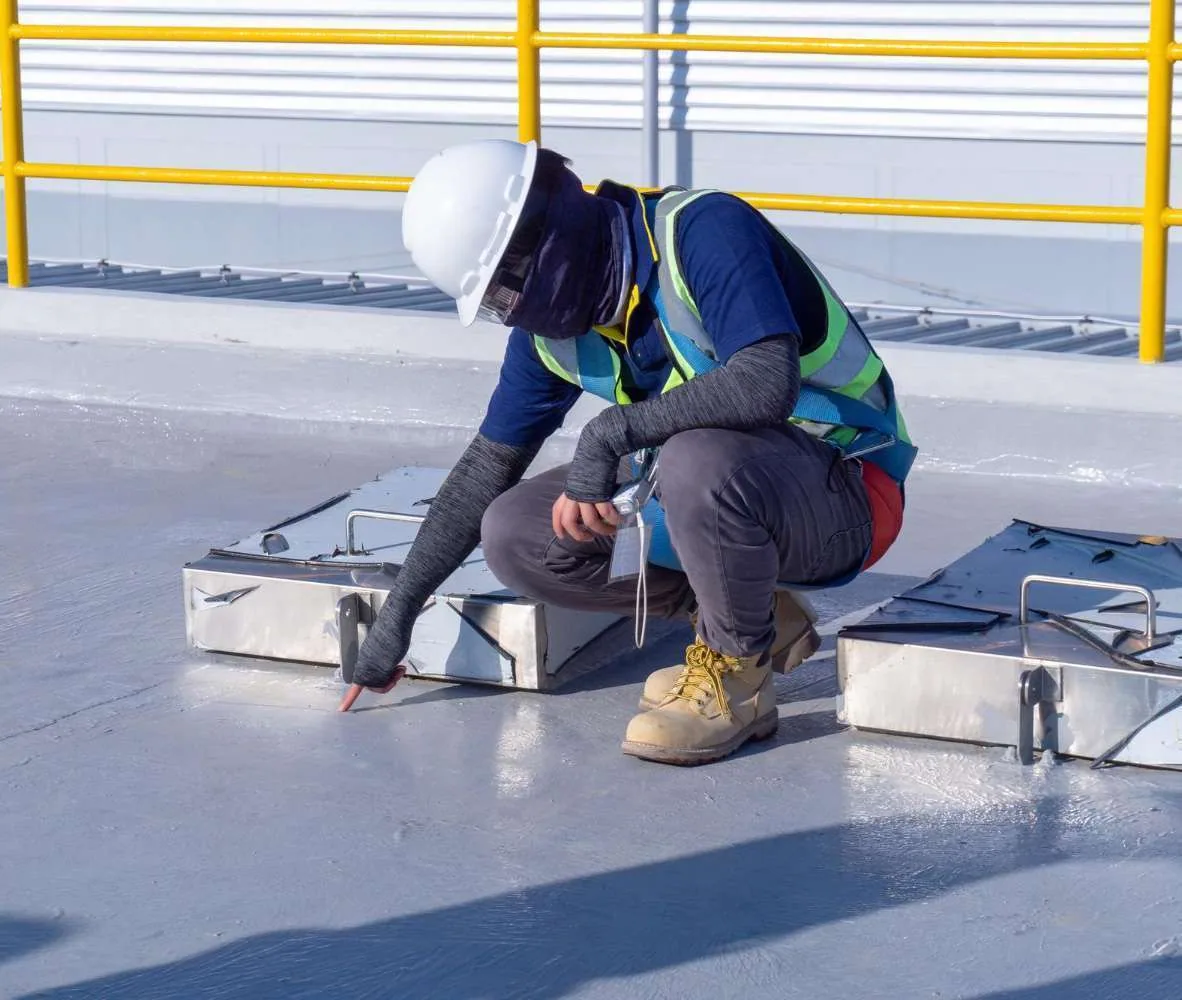
We also look beyond the visible hole. Storm winds often loosen edge metal and flashing a short distance from the damaged spot. Walking the full perimeter during the emergency visit catches those early, so the building does not call us back after the next rain.
Records for Your Carrier
Insurance claims run on documentation. Before and after any temporary repair, we photograph the damage, the cause as best it can be told, and the work we did. We note the date, time and weather. We keep tarp material and receipts as part of the file. That paperwork helps your carrier separate sudden storm loss from long-term wear, and it protects your claim if the adjuster visits days later.
If you plan to file, ask us for our written summary before the temporary repair is removed. Our claim assistance work helps owners organize photos, scopes and timelines so the claim is easier to review.
From Temporary to Permanent
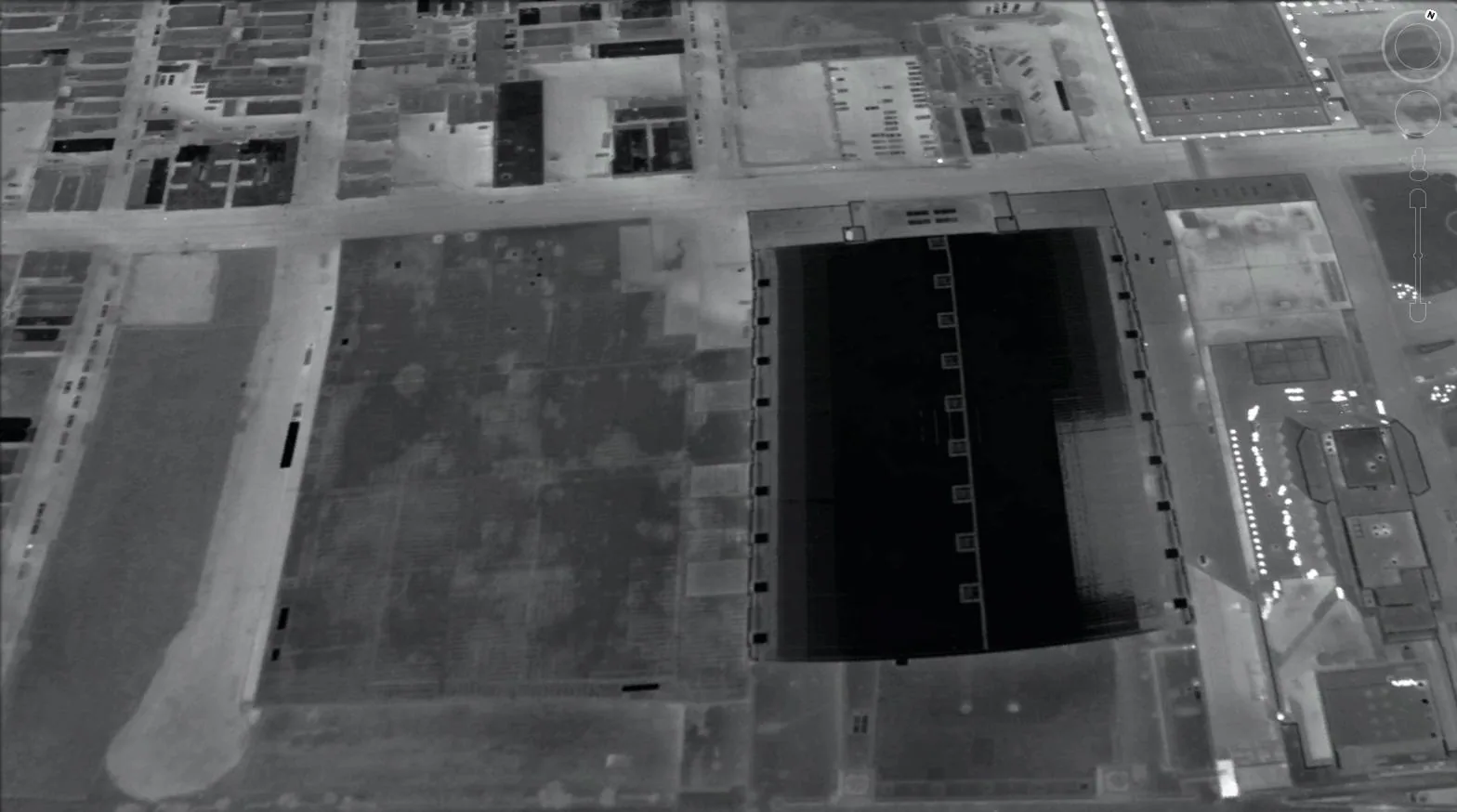
A dry-in is not a repair. After it, we return to inspect the full roof, test for wet insulation with an infrared moisture survey and design a permanent fix. That may be a storm repair, a section replacement or, if the damage is broad, a full replacement.
The permanent plan goes in writing, with photos and a clear line between what the storm caused and what age caused.
Commercial Roofing Questions
Do you really answer at night and on holidays?
Yes. Emergency calls are answered around the clock, every day, including holidays. If a crew cannot reach you right away, we tell you the arrival window and what to protect in the meantime.
Should I tarp the roof myself?
No. Wet, damaged roofs are unsafe, and a poor tarp can make damage worse. Protect the interior and call us. A trained crew will secure the opening.
How long does a temporary repair last?
A well-made dry-in can hold for weeks, but it is a bridge to a permanent repair, not a substitute for one. We plan the permanent work while the temporary seal is in place.
Can the emergency work affect my warranty?
Temporary repairs are usually accepted when documented, but terms vary by manufacturer. We photograph the existing roof and note materials so the warranty file stays clear.
What if the roof is too unsafe to walk?
We assess from the edge or from a lift first, and we use fall protection and boards to spread load. If the deck cannot be made safe, we tell you and limit work to the interior or perimeter.