Commercial Roof Repair in Franklin, TN
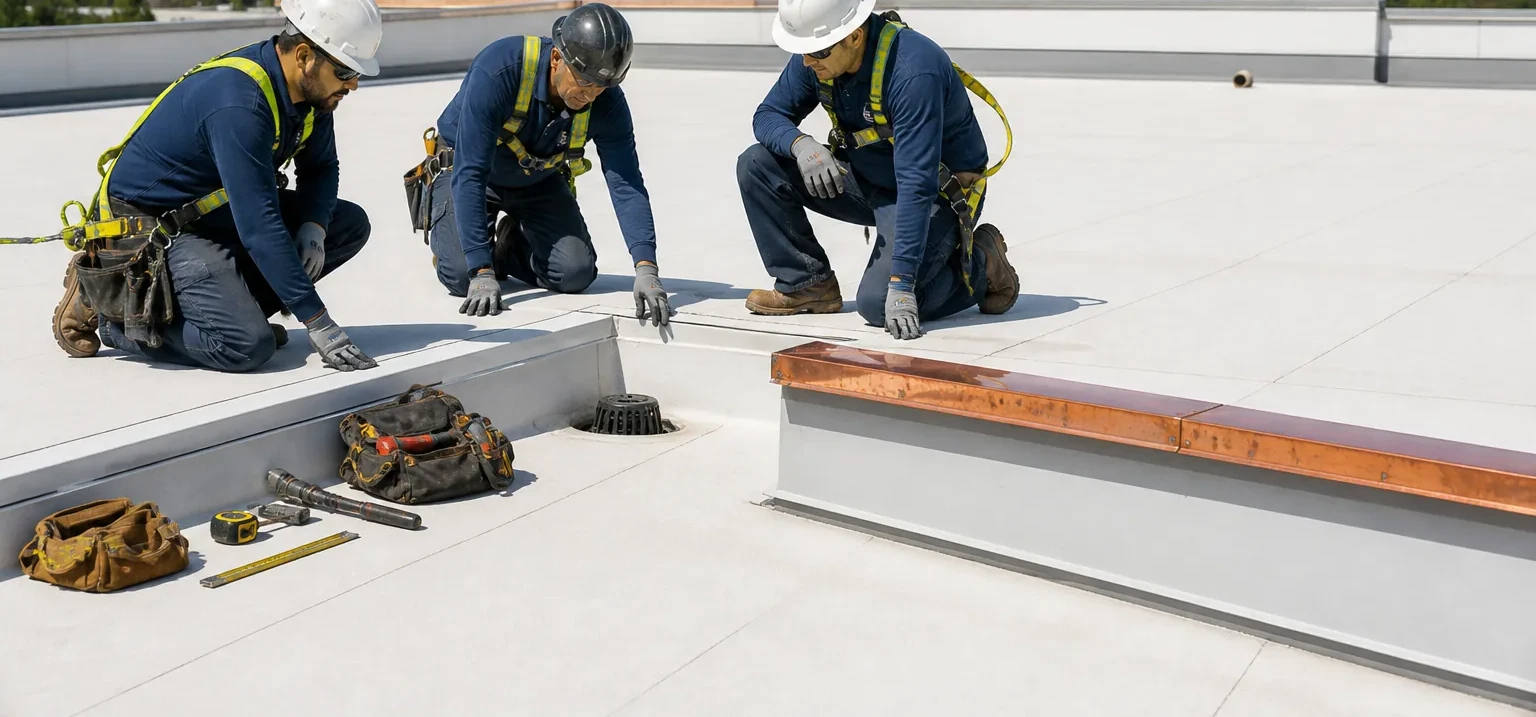
Most membrane failures begin at a detail, not in the open field. A seam stiffens in July heat and lifts at its edge. A flashing pulls loose where a wall meets the deck. A sealant bead cracks around a pipe. In Franklin, TN, with more than fifty inches of rain a year, any of those gaps gets tested often. Commercial Roofing Franklin handles planned repair of membranes, flashings, seams and roof details, and we begin by finding the first failure in the chain rather than the loudest one.
Planned repair differs from a leak call. A leak call stops water today. A planned repair fixes the cause, so the same spot does not fail again next season. The sections that follow show how the work goes and how to judge whether a repair is the right spend.
Find the First Failure
A stain on a ceiling tile rarely sits under the hole. Water travels along the deck, down a fastener or into an insulation joint before it appears indoors. We start on the roof and work backward from the stain, checking the closest penetration, the nearest seam and the low point where water would collect.
Then we look for the cause. A seam that opened because the membrane shrank needs a different fix than a seam that opened because a foot-traffic path wore it thin. A flashing that failed because the wall moved needs a different fix than one that failed because adhesive aged out. Treating the symptom without the cause is how patches stack up on a roof until nobody can tell which one is leaking.
Membranes Repair Differently
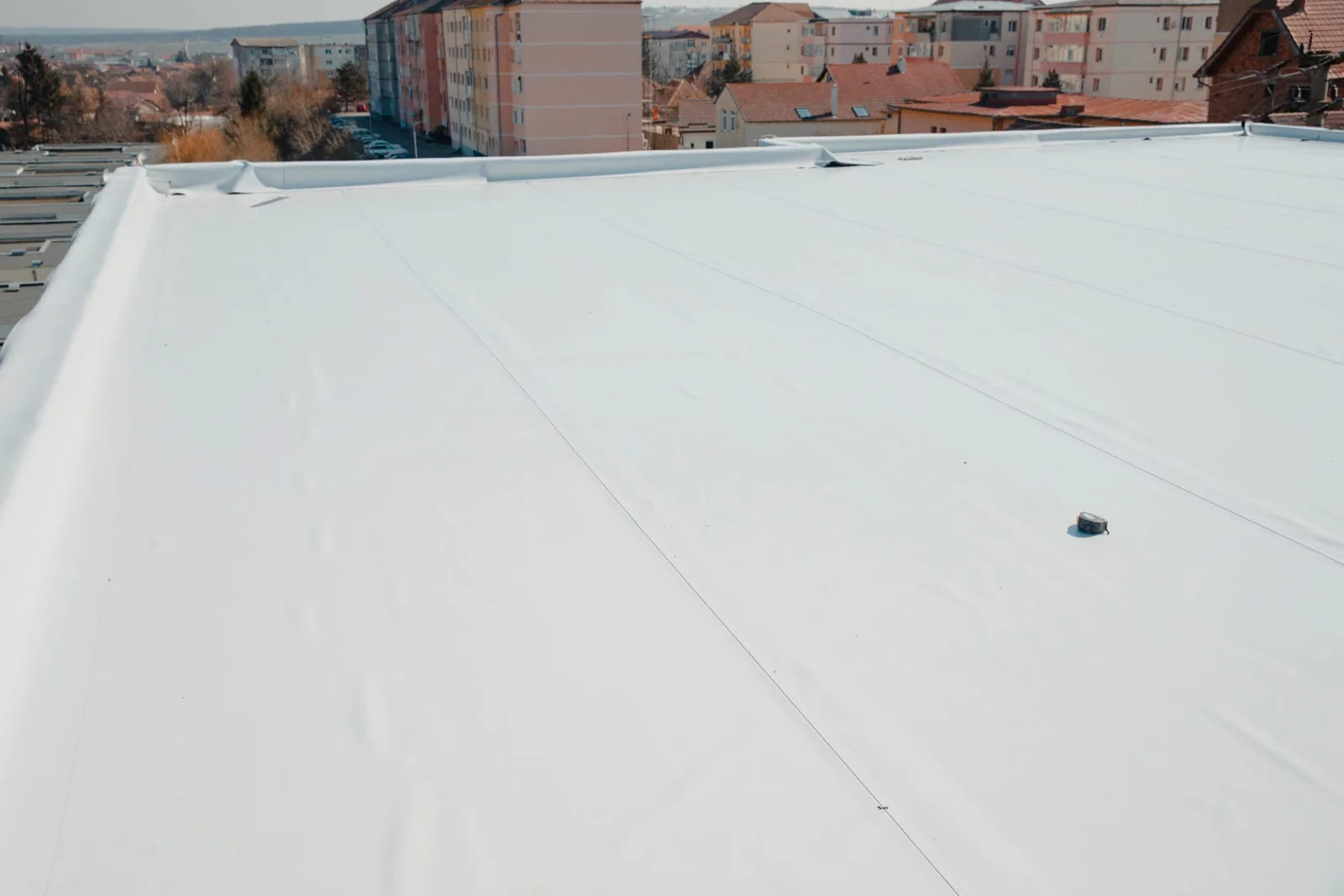
Each roof system has its own repair method. TPO and PVC are thermoplastic, so a patch is heat-welded to clean, dry membrane and becomes part of the sheet. Aged thermoplastic that has lost its plasticizer may not weld well, so we test a small area first. EPDM is a rubber sheet and takes a seam tape or liquid adhesive patch. Modified bitumen takes a torch-applied or cold-applied patch with a granulated cap to match the roof.
Surface prep decides how long a patch lasts. Dirt, oil and old adhesive prevent a bond, so we clean and abrade before every repair and probe the edges after it cools. A good patch should outlast the weakest part of the roof around it.
Heat Moves Everything
Franklin summers average near 91 degrees for a daily high in July, and a dark or aged roof surface runs far hotter than the air. Membranes expand in the day and shrink at night, and the same movement pulls on every seam and every flashing. Repeated cycles loosen adhesive and crack sealant, especially at corners and where a membrane meets a rigid curb.
That movement is why we favor mechanical termination bars and welded corners over sealant alone, and why we replace dried-out caulk instead of smearing new material over old. Winter freezes add a second cycle to the same joints, and Franklin has recorded a low of minus 22 degrees.
Wind Finds the Edges First
The August 2023 EF0 tornado near Highway 96 left minor roof and exterior damage at some businesses along that highway. That kind of damage often starts at an edge, where a loose coping or lifted flashing lets wind get under the membrane. Once air is under the sheet, it can peel back a larger area in the next storm.
After a wind event we check perimeter metal, corner flashings and the first row of seams. We re-fasten, re-seal or replace edge metal as needed. On a building along Highway 96 West, where the 2023 EF0 came down along the highway, we may recommend a stronger edge detail instead of repeating the old one.
Drains and Downtown Water
Water that stays on a roof is a repair problem waiting to happen. Clogged drains and low spots hold water for days, and standing water ages a membrane faster than ordinary weather. The May 2010 flood put the Harpeth at 35.32 feet in downtown Franklin, and about 1,500 residential and commercial structures were damaged countywide. Small businesses along Hillsboro Road were among those hit hardest, a reminder that building owners there deal with water from several directions.
We clear drains, check strainers, test slopes with a level and note any ponding that lasts more than a day after rain. If a roof ponds because of structure, we may suggest tapered insulation. If it ponds because of a blocked drain, a maintenance visit solves it.
Access Shapes the Repair
Many repairs are decided by how the crew reaches the roof. A mid-rise office building near Carothers Parkway may require a lift or a hoist, with the lift staged in a lot that tenants also use. A showroom with a single roof hatch limits what material can go up by hand. A building with rooftop units close to the edge needs fall protection planned before any seam is touched.
We settle these points during the first walk, so the repair day is predictable. We also check what is on the roof that is not ours to move, such as tenant equipment, antennas and conduit, and we ask for a window when the building can shut an air handler without disruption. Repairs near an intake need extra care, since adhesive and torch fumes should never be drawn indoors.
Every repair visit ends with photographs of the problem, the work in progress and the finished detail, plus a simple sketch showing where each repair sits on the roof. That record serves two purposes. It shows your carrier or lender that the roof is being maintained, and it gives the next technician a map of what has already been done. When a patch fails, the photos show whether the original cause was missed or a new one has appeared.
Repair or Replace
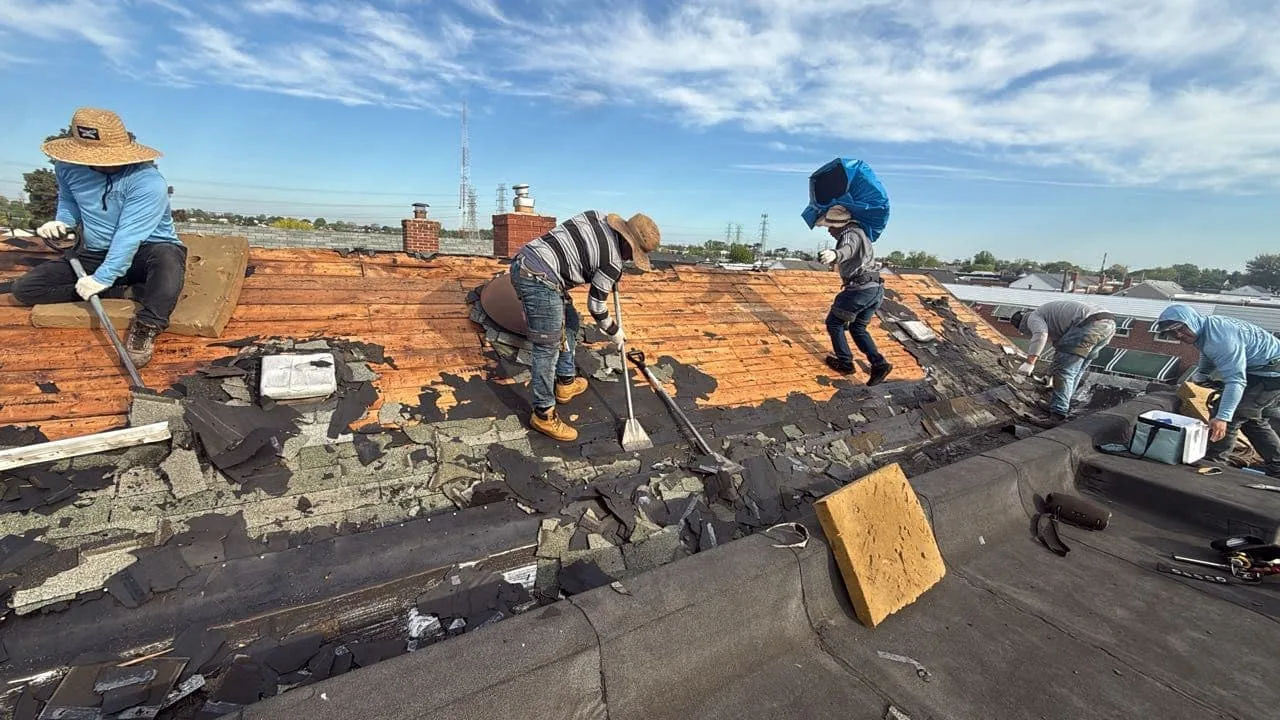
Repair makes sense when the failure is local and the rest of the roof is sound. It stops making sense when you are repairing the same roof several times a year, when insulation is wet across a wide area, or when the membrane is brittle everywhere. We lay those facts out in a short written estimate with photographs, and we are plain about when the next dollar is better spent on a replacement.
A roof inspection before a repair season can reveal which details will fail next, so the work can be grouped into one visit. That saves mobilization and keeps the roof tight across a whole building instead of one spot.
Commercial Roofing Questions
How long does a typical repair last?
A good repair should last as long as the roof around it. A patch on a worn membrane may only buy a season, and we say so when we quote it.
Can you repair a roof that is still under warranty?
Yes, but the manufacturer may require its approved methods and materials to keep coverage. We check the warranty terms before touching a covered roof.
What does a repair cost?
Cost follows the repair area, the membrane type, the access and the surface condition. A single flashing is a small job, and a run of failed seams across a roof is a larger one.
Do you repair roofs that other contractors installed?
We repair low-slope and metal roofs regardless of who installed them. The first step is a walk to learn what system is there and how it has aged.
Should I repair before a storm season?
Edges, flashings and drains are the best places to spend ahead of spring storms. Fixing a loose edge before a wind event costs far less than fixing the damage after.