Roof Capital Planning in Franklin, TN
The first sign of a roof budget in trouble is the same line item showing up twice in one year: an emergency repair in March and another on the same roof in September. Neither was planned, both cost more than a scheduled visit, and neither moved the roof any closer to a lasting fix. We walk that pattern backward to the missing plan.
Roof capital planning sets out, for each roof in Franklin, TN, what work is needed, in what order and in which budget year. It rests on the condition record, not on guesses about age, so a manager can defend the numbers to an owner or a lender.
Start with condition
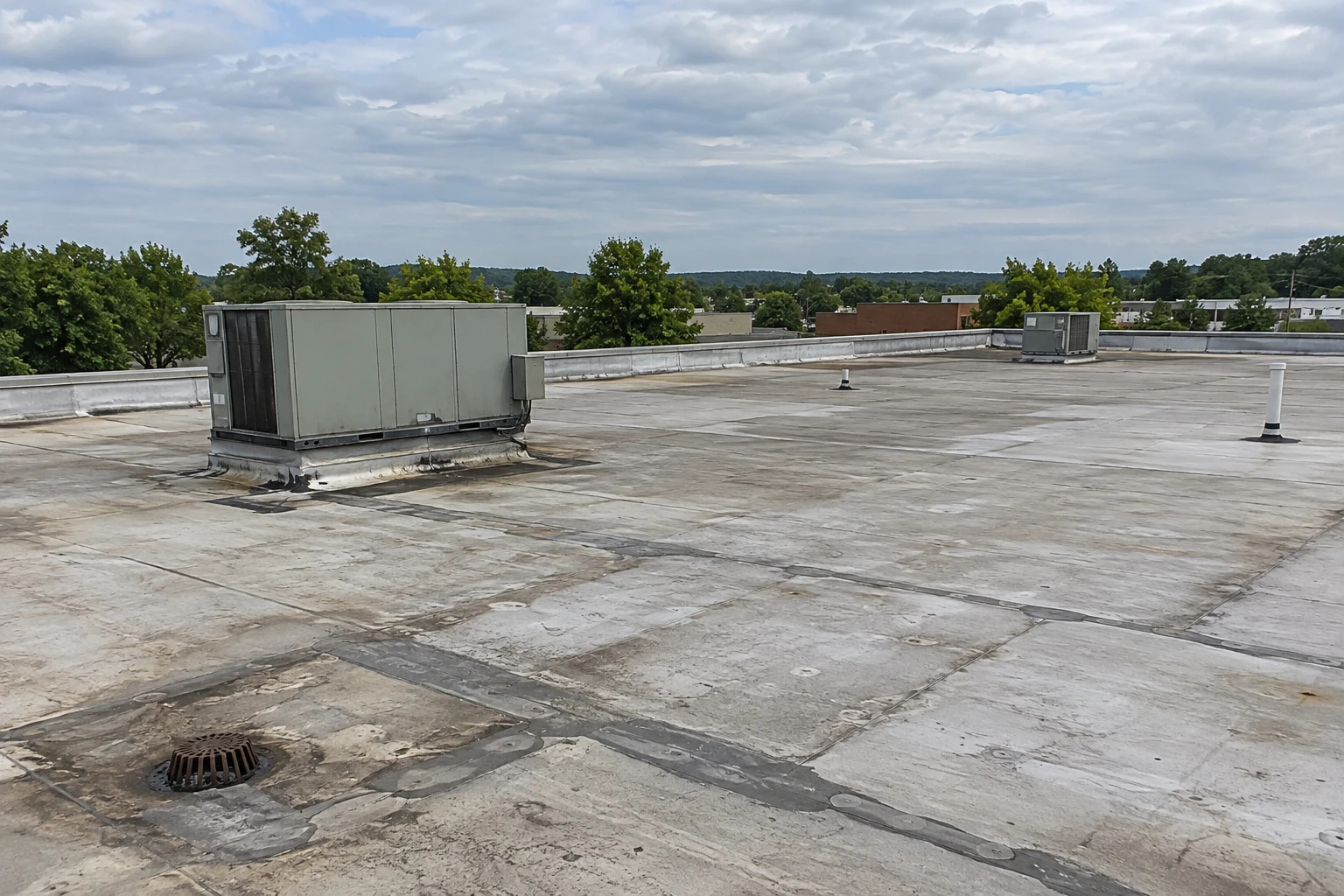
A plan is only as good as the findings behind it. Each roof is walked, photographed and rated by zone. Moisture surveys and core cuts show whether the insulation is dry and whether the deck is sound. Seams, flashings, drains and edges are scored on a simple scale, and open items are ranked by urgency.
Age is a clue and nothing more. Two roofs of the same age can sit at opposite ends of their service lives, depending on drainage, exposure and past maintenance. Franklin roofs see roughly 54 inches of rain in a year and record temperatures from minus 22 to 108 degrees, and those conditions age roofs unevenly. The condition rating, with a roof condition report behind it, does the sorting.
Records from roof asset management feed the ratings directly. The photographs, repair history and ponding notes already on file shorten the first walk, and they show whether a defect is new or long-standing.
Sort each roof into a path
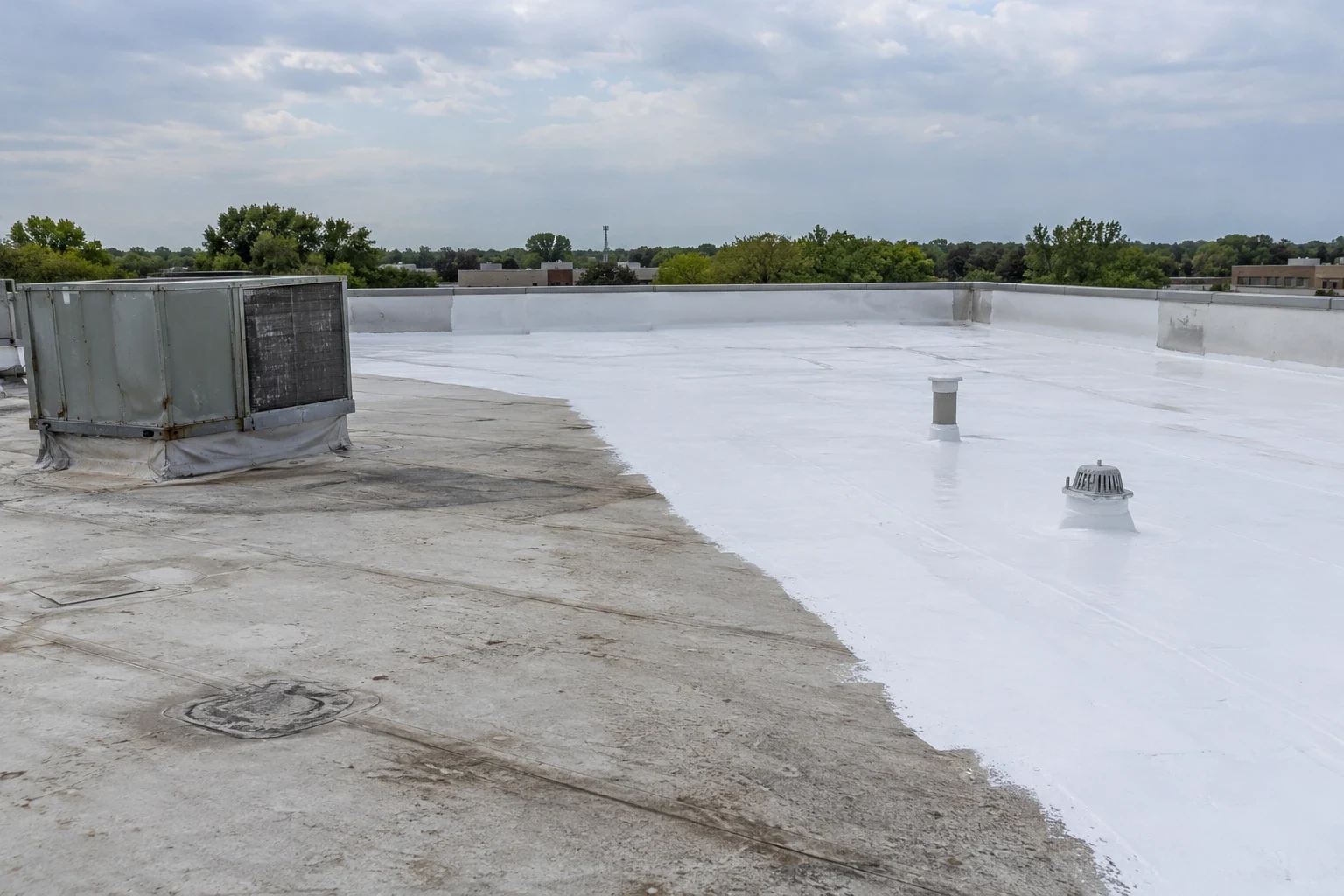
Every roof lands on one of four paths. Monitor: the roof is sound, and visits keep watch. Repair: specific defects are fixed to hold the roof for several more years. Restore: the roof is dry and sound but worn, and a coating or recover extends its life. Replace: the assembly is wet, failed or near the end of its service.
The paths are not permanent. A monitored roof that develops ponding moves to repair, and a repaired roof whose repair list keeps growing moves to replace. The plan states the triggers that cause a move, such as a second leak in the same zone or a moisture reading above a set level, so the decision is made on evidence and not on mood.
Naming the path matters for money. A roof on the repair path gets a repair budget and a review date. A roof on the replace path gets a project date, a design step and a funding line. Roofs near the boundary get a decision date, so the choice does not drift for years.
Lay out the timeline
With every roof on a path, the next step is to put the work in order. Safety and active leaks come first. Roofs with wet insulation come next, because water damage grows. Restorations are scheduled while the roofs are still sound enough to coat, since waiting a year can turn a restoration into a replacement.
Replacements are staggered across budget years so that no single year carries the whole load. Seasonal timing is part of the plan: coatings and adhesives need warm, dry weather, and heavy tear-off is easier outside the stormiest months. A July 2026 flash flood warning for parts of northeastern Williamson County, with 1 to 3 inches of rain in places, is a reminder that summer weather can interrupt work, so the schedule leaves room.
Each project line carries a lead time for design, permits and material delivery, so a replacement planned for a spring window starts its paperwork the autumn before.
Describe the cost drivers
Each line on the plan lists its cost drivers instead of a guessed figure: roof area, access, the amount of wet insulation expected, the number of penetrations and the system chosen. Owners can attach their own unit pricing, or ask us to price a defined scope once the findings are in.
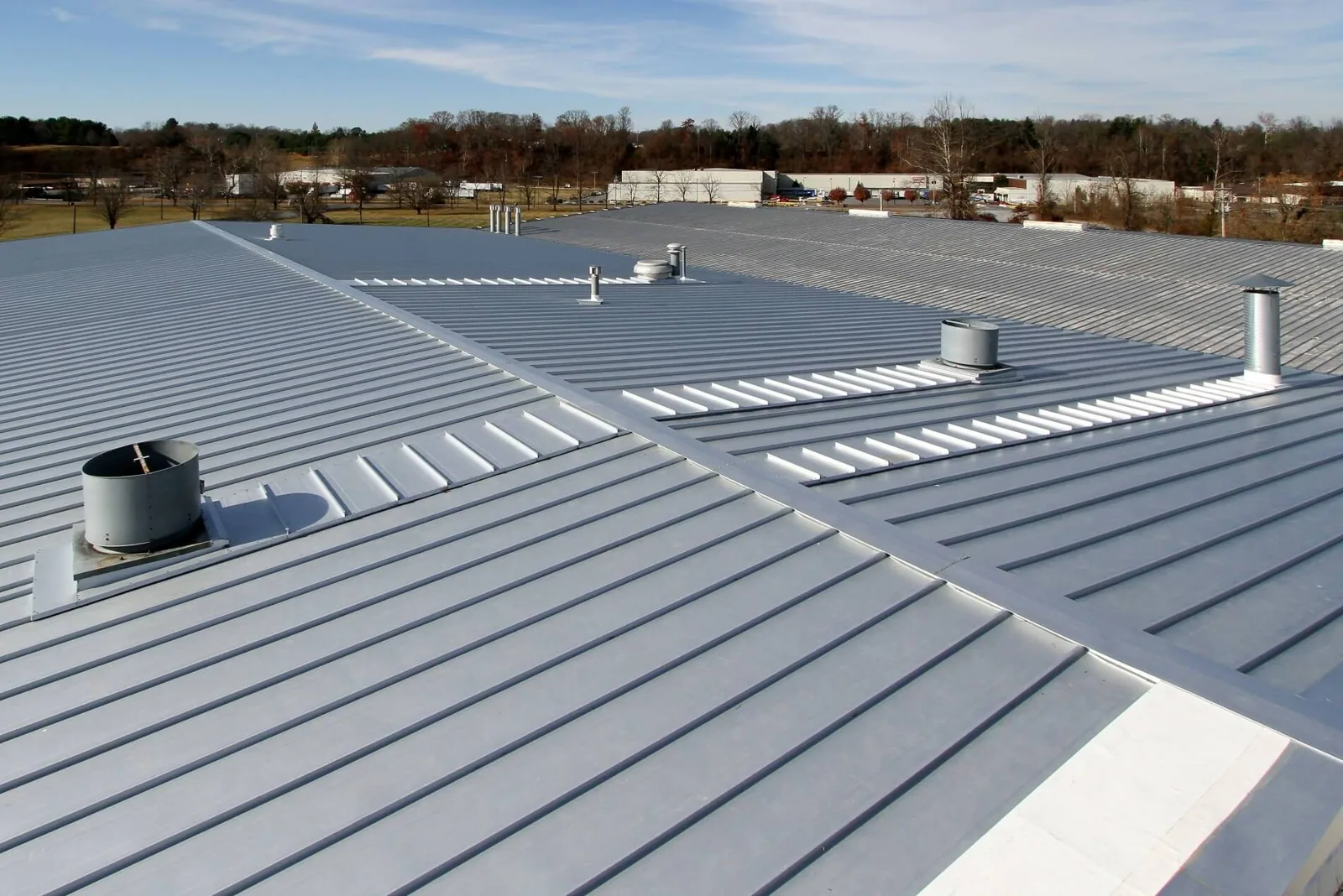
Compare the options side by side. A roof coating restoration, a roof recover and a commercial roof replacement each carry different cost, downtime and warranty consequences. Setting them side by side, with the condition evidence beneath each, lets the owner choose the path with open eyes.
Code and permit steps belong on the cost list as well. In Tennessee each city chooses its own code edition, as long as it sits within seven years of the latest published one, and the state's own default moved to the 2021 set in 2025, so every replacement is checked against the jurisdiction's edition before design begins.
Plan across many buildings
Owners with several buildings need the plan to work as a portfolio. A shared format lets the manager see which roofs need money this year, which can wait and which can be bundled into one project for better scheduling. A multi-site roof program is this same plan run across the whole portfolio.
In the Cool Springs district, where office buildings and hotels are going up on former surface parking, and in the Goose Creek and Berry Farms area, where plans approved so far reach 3 million square feet of office and 1.8 million of retail, newer buildings enter the portfolio as they open. Their first roof reviews set the baseline, and the plan grows with them.
Review it every year
A plan that is written once and filed away goes stale in a season. Each fall, after the wet months have tested the roofs, we walk them again and update the ratings. Roofs that held steady stay on their path. Roofs that slipped move up the list, and the timeline is redrawn.
The review also checks the assumptions. Did the repairs hold? Did a restoration come in on scope? Did a storm leave new damage? Answers go back into the file, and the next year's plan starts from what happened, not from what was expected. After a hard storm, such as the August 2023 EF0 near Highway 96, the review is brought forward, with a post-storm walk of the roofs in its path.
Keeping this rhythm puts the roofs most likely to fail on the list before they do, which is the point of the review. Records of the reviews also help with roof warranty management, since inspection duties are met on schedule.
Commercial Roofing Questions
How far ahead should a roof plan look?
Five to ten years is typical. Near-term years carry detail, and later years carry ranges that tighten as new findings arrive. Review the plan each year after the fall walk so the numbers stay honest.
Can we plan without core cuts?
A rough plan is possible, but cores and moisture surveys make it far more reliable. They show whether a roof is a restoration candidate or a replacement, and that single answer moves the budget the most.
What if the budget does not cover the work?
The plan ranks by risk. Active leaks and wet insulation are funded first, restorations next, and sound roofs wait. A ranked list lets the owner defer work knowingly instead of by accident.
Does the plan help with reserves or lenders?
Yes. A condition-based schedule with documented findings is the kind of record that reserve studies and lenders ask for, and it carries more weight than an age-based estimate.
How do storms change the plan?
Storm damage is logged, repaired and fed back into the ratings. A roof that took a hit may move to a different path, and the post-storm walk supplies the evidence for that move.