EPDM Roofing in Franklin, TN
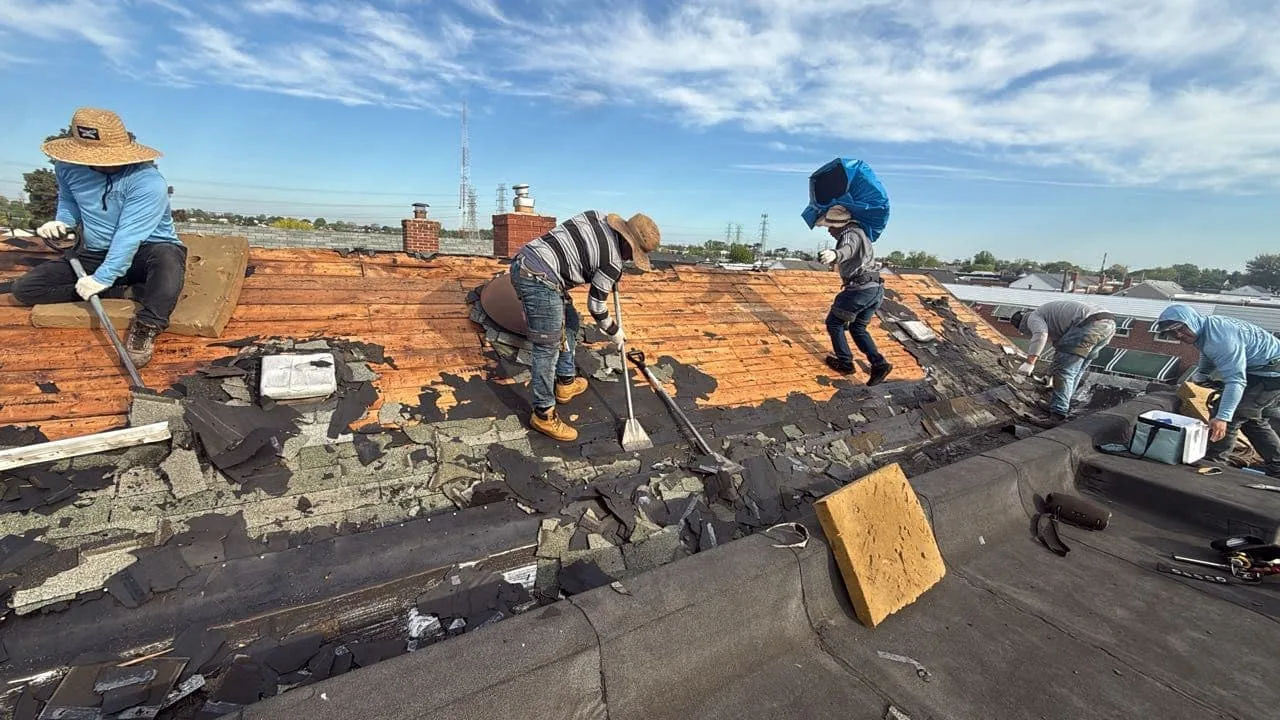
A black rubber roof with a lifted seam strip along one lap is the first sign of an EPDM roof that is starting to let go. The lap is where the water stopped being kept out, and the job is to walk the failure backward: what held the seam together, what changed, and how far the weakness runs. EPDM is a synthetic rubber membrane, usually black, made in very wide sheets so a large roof needs few seams. Those seams are joined with adhesive and tape, not heat, and that is where most of its failures begin.
Rain in Franklin, TN totals about 54 inches a year, and EPDM also takes July afternoons near 91 F and hard freezes that have reached minus 22 F. Commercial Roofing Franklin teaches the failure sequence on the actual roof: seam first, then flashing, then puncture, then ponding, each with a check that confirms it and a photograph for the file.
What EPDM is and how it is laid
The membrane is cured rubber, flexible in cold and stable in sun. It is laid loose and held by ballast stone, glued down in full contact with the insulation, or fastened mechanically at the laps. Seams are made with a primer and a strip of seam tape or with liquid splice adhesive, and the corners and walls are flashed with a more flexible, uncured rubber that is formed by hand. Because that flashing is made on the roof, its quality varies, and it is often the first area to show wear. Uncured flashing rubber is soft by design, so it can creep and stretch over years, thinning at corners and at the top of walls. We press on it with a thumb and a probe, look for splits at inside and outside corners, and check the termination bar at the top edge for gaps and back-out. A termination bar with a missing sealant bead is an open door for rain behind the flashing.
Why seams fail
A rubber seam is only as strong as its bond. If the surface was dusty when the tape went on, if the tape was cold, or if the seam was never rolled firmly, the bond is weak from the first day. Years of heat movement then work it open. We press along every lap with a probe and look for lifted edges, wrinkles at the seam, and dirt tracked into the gap. A seam that is open for a hand's width is a repair. A roof with seams lifting across many bays is telling us the original bond was marginal, and repeated patches will not hold. In that case the cleaner answer is to re-bond the laps with fresh tape and primer along the whole run, or to plan a replacement. We note which laps show dirt tracking, since dirt inside a lap means water has been moving through it, and we photograph each one with a tape beside it for the file.
Shrinkage at walls and corners
EPDM can shrink slowly over its life, especially under heat. The sheet pulls toward the middle of the roof, tightening against walls and curbs and sometimes lifting the flashing away from the wall. The first sign is a bridged corner, where the membrane spans the angle between roof and wall like a drum skin instead of lying in it. We look for tight corners, flashing that has pulled loose, and stretched seam tape. The fix is to cut the membrane free, add slack, and re-adhere the flashing, which is a repair that has to be done before the corner tears. A torn corner lets water behind the flashing and into the insulation along the wall, and a wet edge is slow to dry. Catching the bridge early costs a small patch and an hour on the roof. Catching it late costs a section of wet board and a stained ceiling along an exterior wall.
Punctures, foot traffic, and hail
Rubber is tough but not puncture-proof. Dropped tools, rooftop debris, and repeated foot traffic to rooftop units leave nicks and scuffs. A thunderstorm warning for northeastern Williamson County in July 2026 named Franklin and flagged hail up to about three-quarters of an inch, small by hail standards but worth checking for on an old black sheet. We look for dents, tears, and soft spots after storms, and we add walk pads on the paths to equipment. A small cut is patched with cured rubber and adhesive, but only on a clean, dry surface. Walk pads are cut from the same rubber and glued down on the route to equipment, so footsteps land on a sacrificial layer. Where a roof carries a lot of traffic, we count the scuffs along the path and recommend pads before a scuff becomes a cut. It is a small, cheap step that protects the membrane in the place it is most likely to be hurt.
Ponding and ballast
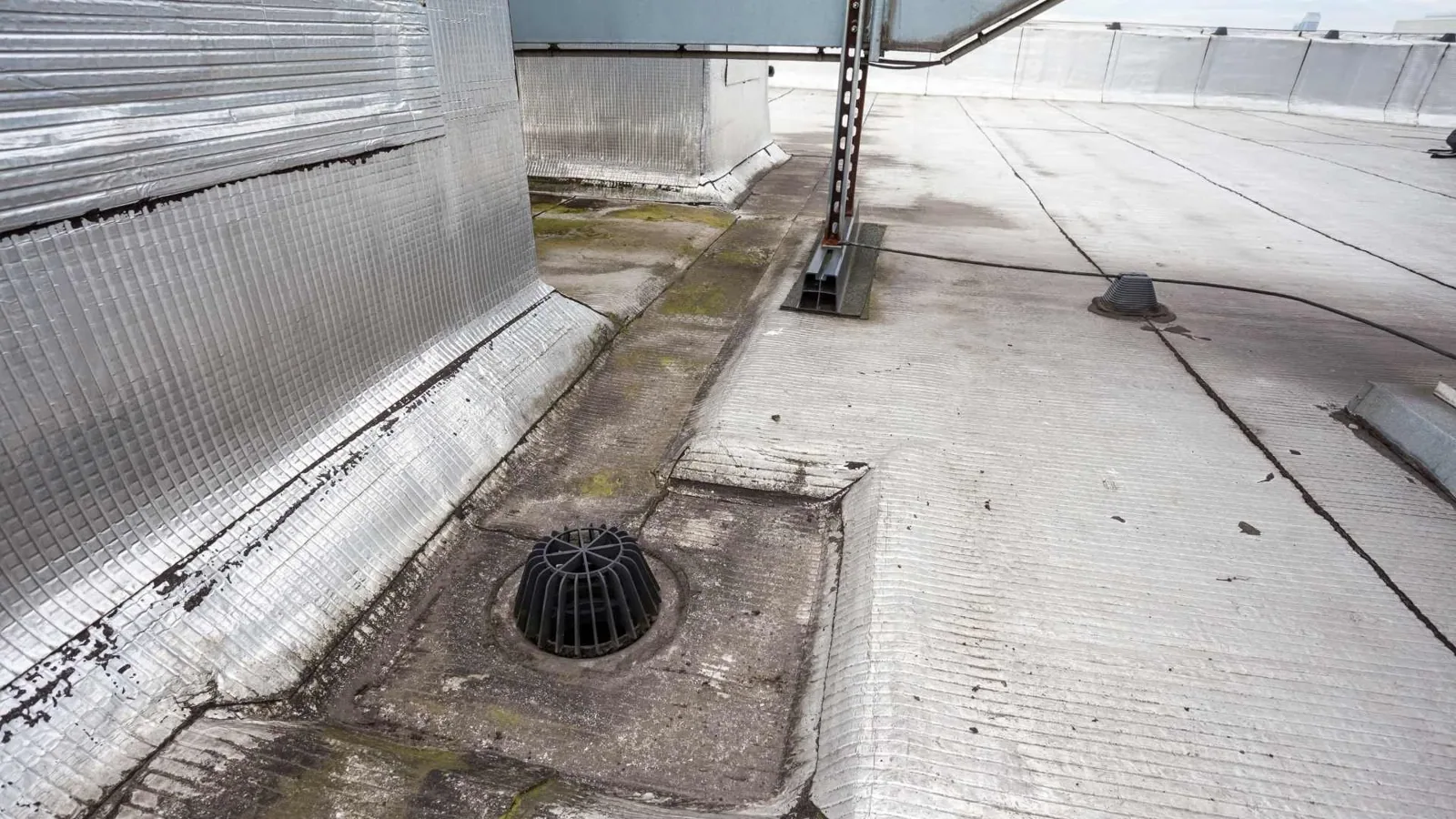
Water that stays on an EPDM roof after rain is a sign that something in the drainage plane has changed: a clogged drain strainer, a settled deck, or a low spot where ballast has been pushed away. In a ballasted roof, stone moves toward the drains and clogs them, and bare areas expose the rubber to sun. We check the stone depth, the clearance around drains, and the standing-water line. The May 2010 flood along the Harpeth is a reminder to watch where water goes. For roofs with persistent ponding, we weigh tapered insulation against a new drain. A drain and scupper check is part of every visit, and the strainers are cleaned before the spring storm season.
Repair, recover, or replace
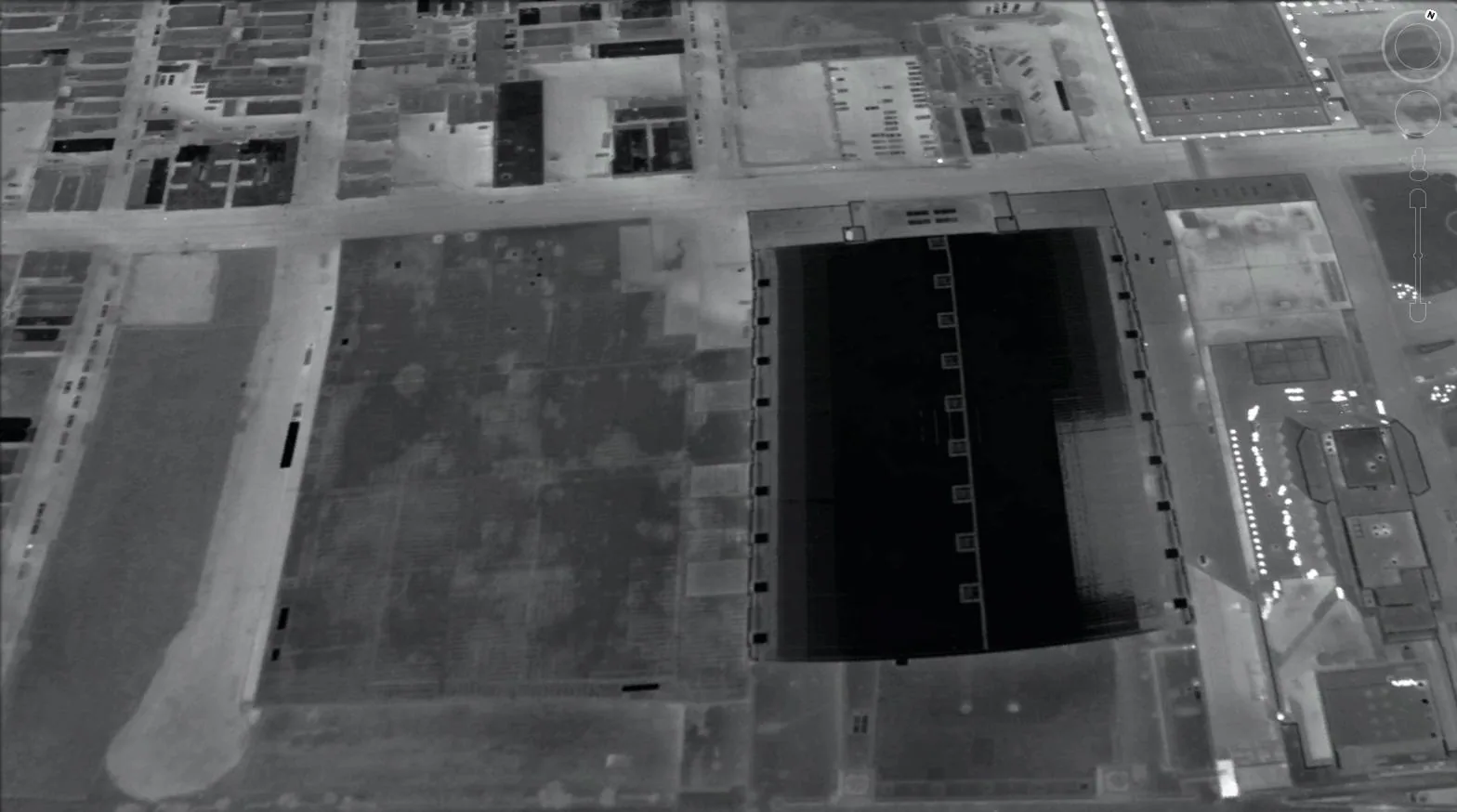
An open seam or a torn flashing is a repair. A roof with sound rubber and dry insulation can take a recover, often with a new, lighter membrane. A roof with wet insulation across a large area points to replacement. We run an infrared moisture survey and cut test samples to know. A replacement scope is checked with the building official, since the state's 2021 code editions took effect in August 2025. A commercial roof repair on EPDM is fastest when the leak is traced to one seam or one corner.
Where EPDM shows up in Franklin
EPDM is found on older low-slope roofs of all sizes, and its long, wide sheets suit large areas with few penetrations. The historic downtown core is a 16-block National Register district, and older buildings there may carry low-slope roofs behind parapets that need careful flashing. Larger commercial properties in historic downtown Franklin and on Carothers Parkway are walked before any scope is set. A TPO or PVC replacement is the usual alternative.
Commercial Roofing Questions
How do I tell if an EPDM seam is failing?
Press along it with a probe. A good seam resists. A failing one lifts, wrinkles, or shows dirt inside. We mark each open section.
Can EPDM be repaired in cold weather?
Adhesives and tape need warm, dry surfaces. In cold or damp conditions we use temporary protection until conditions allow a lasting repair.
Is black EPDM too hot?
A black surface absorbs more heat than a white one. For many owners the cost savings outweigh that, but a white sheet can be chosen where cooling load matters.
What does ballast do?
It holds the sheet down with weight. It also hides the surface, so we pull some stone aside to inspect the rubber.
How long can EPDM last?
Seam quality, shrinkage and traffic set the range, and a yearly check with prompt repairs extends its service.