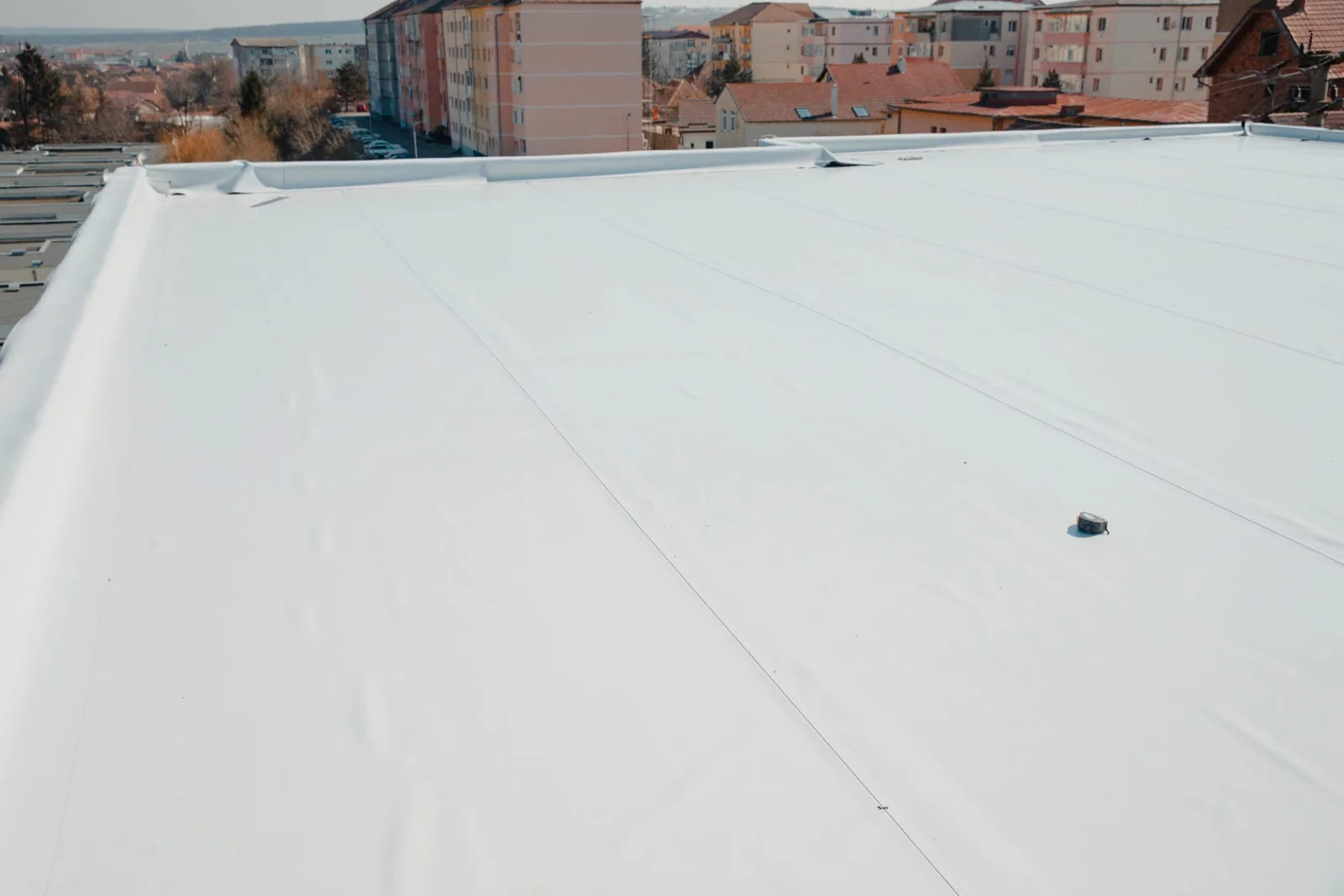
Seam Failure Repair in Franklin, TN
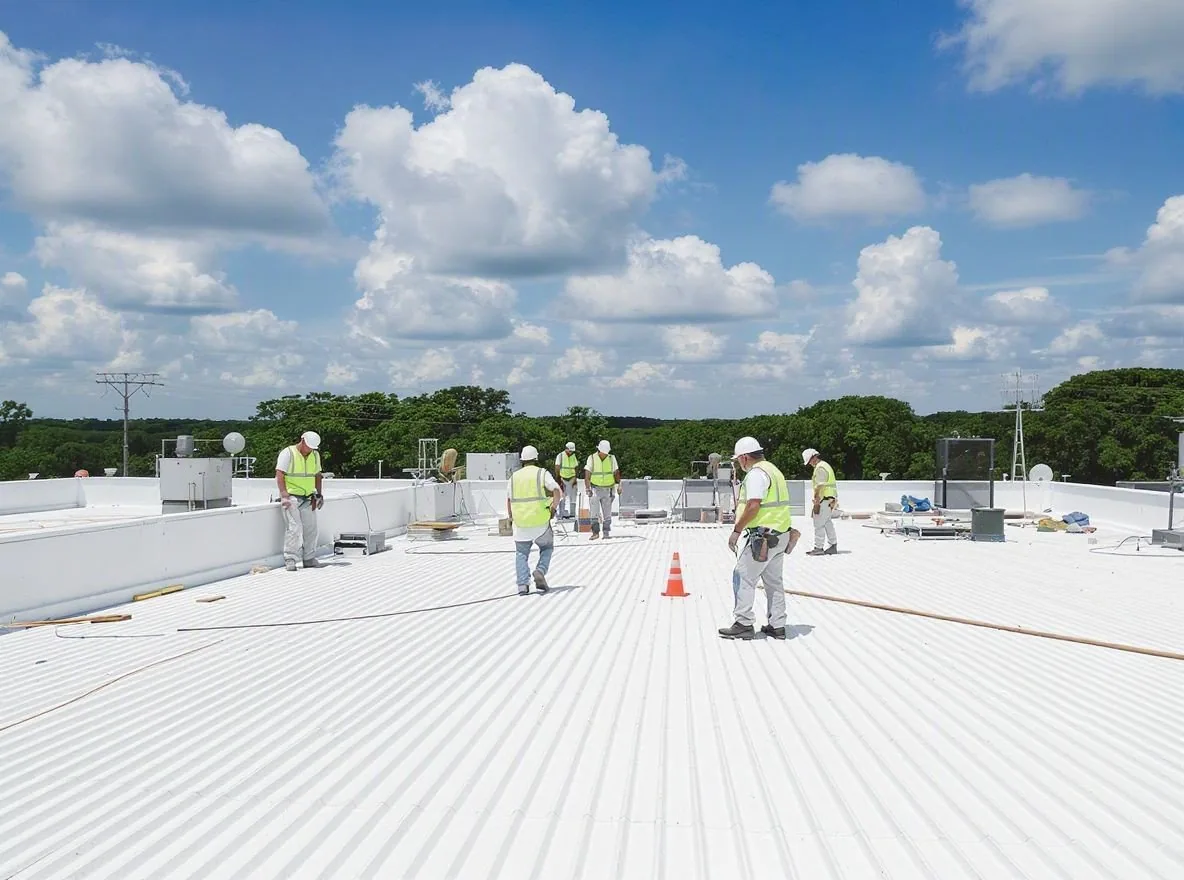
A seam that has opened looks like a thin dark line where two sheets meet, sometimes with a lifted edge you can catch with a fingernail. That line is the first sign, and it is easy to miss from the roof hatch. We walk it backward to the cause, because a seam does not open by itself. Something pulled on it, stressed it or never bonded it in the first place.
On the large, low-slope office and retail roofs of Franklin, TN, seams are the longest joints on the roof. A single-ply roof can have hundreds of feet of them, and every foot depends on a bond that was made on one day, in one set of weather, by one crew.
A thin dark line
Seams show their trouble in four ways. A lap edge lifts and curls. A fishmouth opens, where the edge of the upper sheet flares like a mouth. A seam line collects dirt or standing water along one side. Or the membrane near a seam turns shiny, chalky or discolored in a strip.
Probe the seam with a blunt tool, gently, along its full length. A welded seam resists the probe. A failed one lets the tool slide under the edge. Mark each open section with paint or chalk and photograph it with a ruler for scale. Note the direction the seam runs relative to the slope, because water running across a seam is harder on it than water running along it.
Check the seams around penetrations and at the base of walls with special care. Those are places where the membrane changes direction, and a seam there carries both the shrinkage of the sheet and the movement of the wall. Flashing that was lapped over a seam often fails together with it, and a failed flashing at the same corner is the first thing to check.
What is happening underneath
A seam is a bond between two layers, made with heat, solvent, adhesive or tape. The bond has to carry the stress of the roof moving. In Franklin, July highs near 91 degrees heat the surface well beyond the air temperature, and winters with record lows far below zero shrink the membrane. That swing pulls on every lap.
Other causes stack on top. A weld made on a damp or dirty surface never cured. An adhesive applied too thin or left to dry too long loses its grip. A seam made at a corner or over a fastener plate carries extra stress. Foot traffic across a seam can break a bond that was already marginal. The pattern of failure often tells the story: seams failing in a line suggest a crew or batch problem, while seams failing near equipment suggest traffic.
On the offices east of I-65, where six-to-eleven-story buildings carry heavy rooftop equipment, technicians cross the same paths again and again. A seam that lies on a service path takes far more footsteps than one in the open field. That is why we map walking paths when we map seams.
Where the water stopped
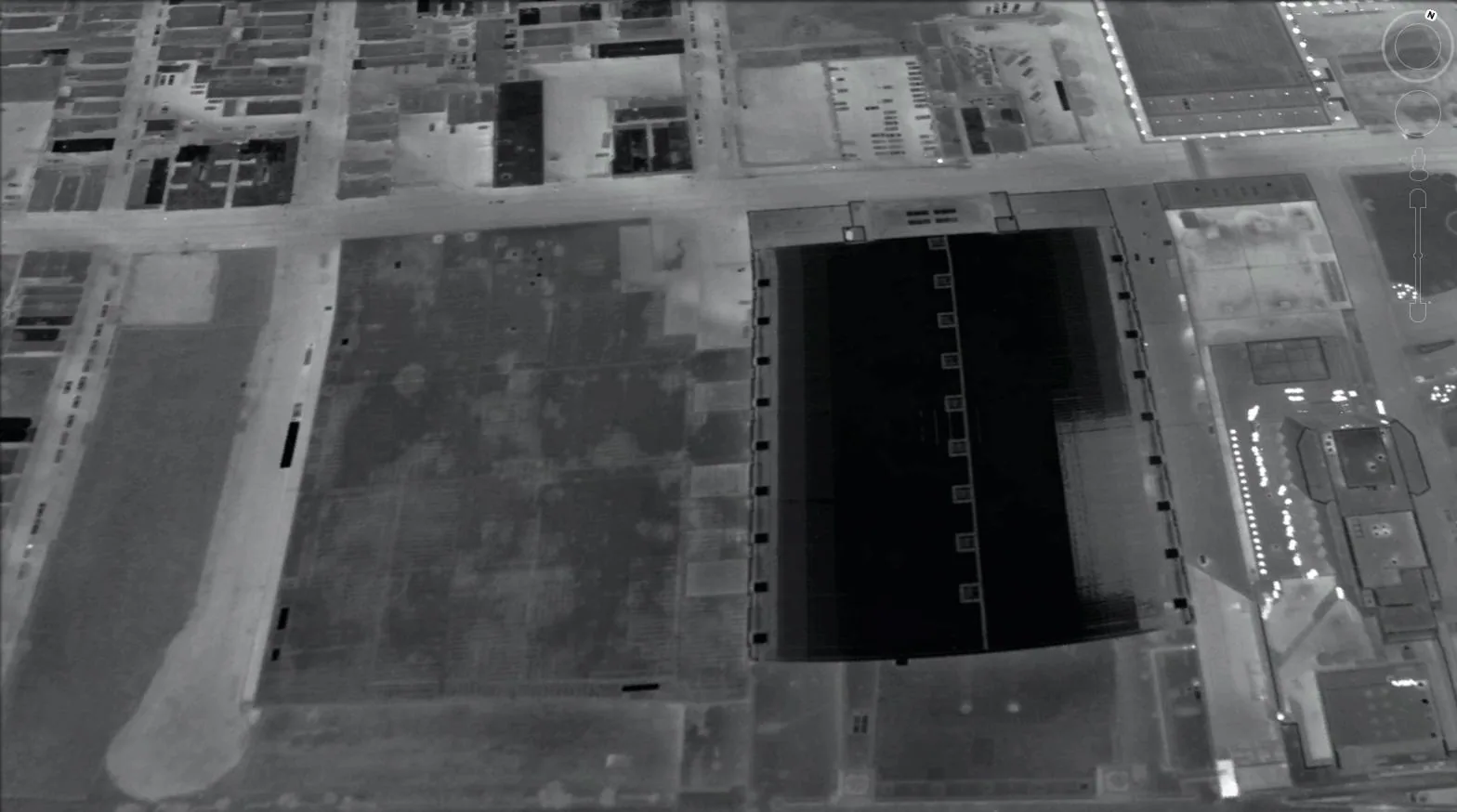
Once a seam opens, water enters and moves under the membrane until it meets a fastener, a deck rib or a wall. It wets the insulation along that path. An infrared moisture survey maps the track, which often runs a long way from the open seam.
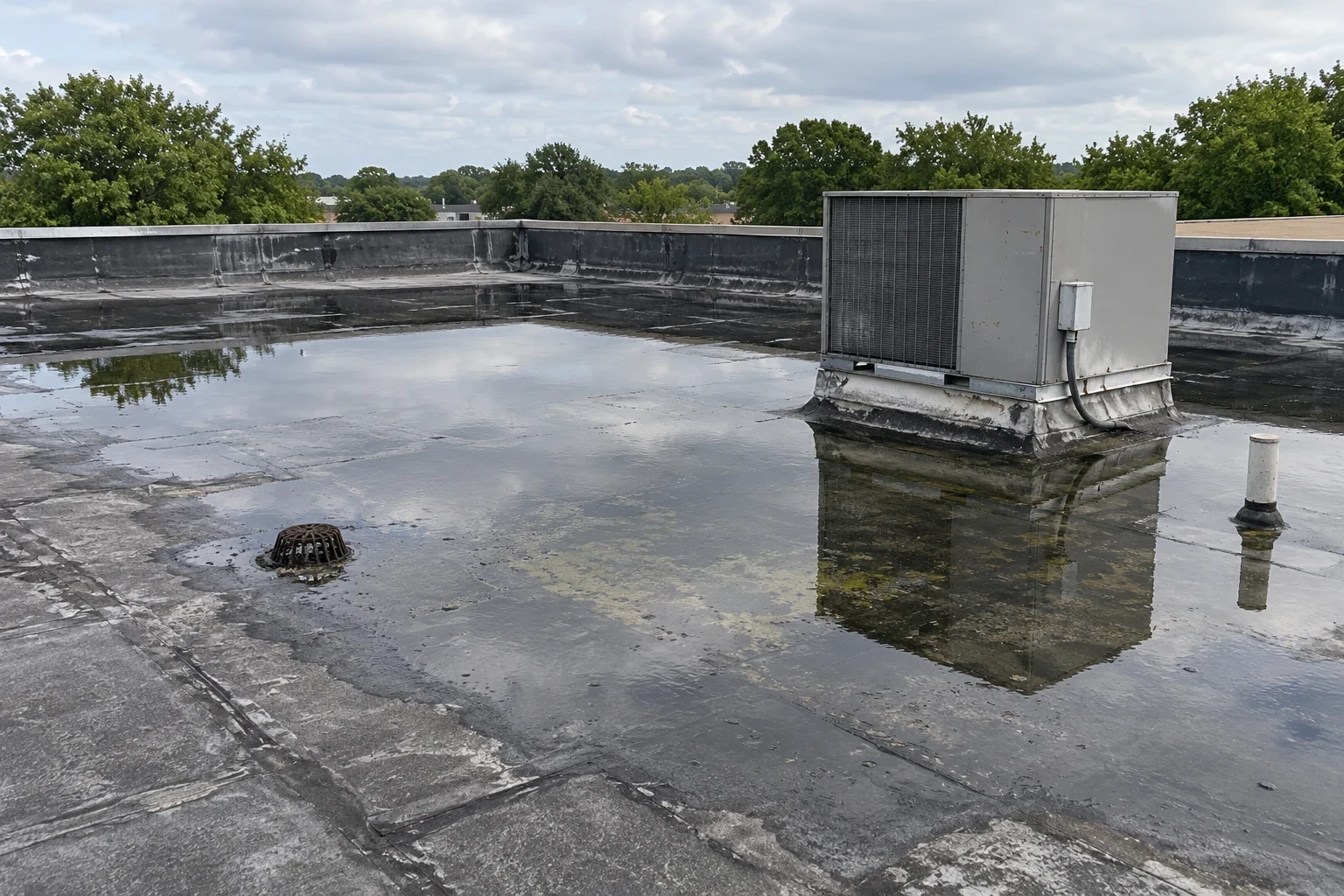
Seams under standing water fail faster, because water softens sealants and adds weight on the lap. If you see an open seam in a pond, start with ponding water roof repair and fix the low spot as well, or the repair will fail again. Rainfall near 54 inches a year means a seam in Franklin that stays open does not stay dry for long.
Probe the whole seam
We probe the full length of each seam, not only the visible failure. A good seam is uniform in width and resists the probe along its whole run. We also check for the cause: cut a small test sample to inspect the bond line, measure the weld width against the manufacturer's requirement and look at whether the membrane around it has shrunk.
On TPO roofing and PVC, heat-welded seams that peel clean with no residue on either face were never fused. Seams that tear the membrane rather than the weld were sound. That simple test tells us whether to expect a crew problem or a stress problem.
The same test applies to repairs made earlier by someone else. A patch that peels cleanly with no residue was never bonded, and a patch of the wrong material, such as asphalt mastic on a thermoplastic sheet, will not hold at all. We list every old repair in the report with a note on whether it is sound, suspect or to be removed.
Repair or replace
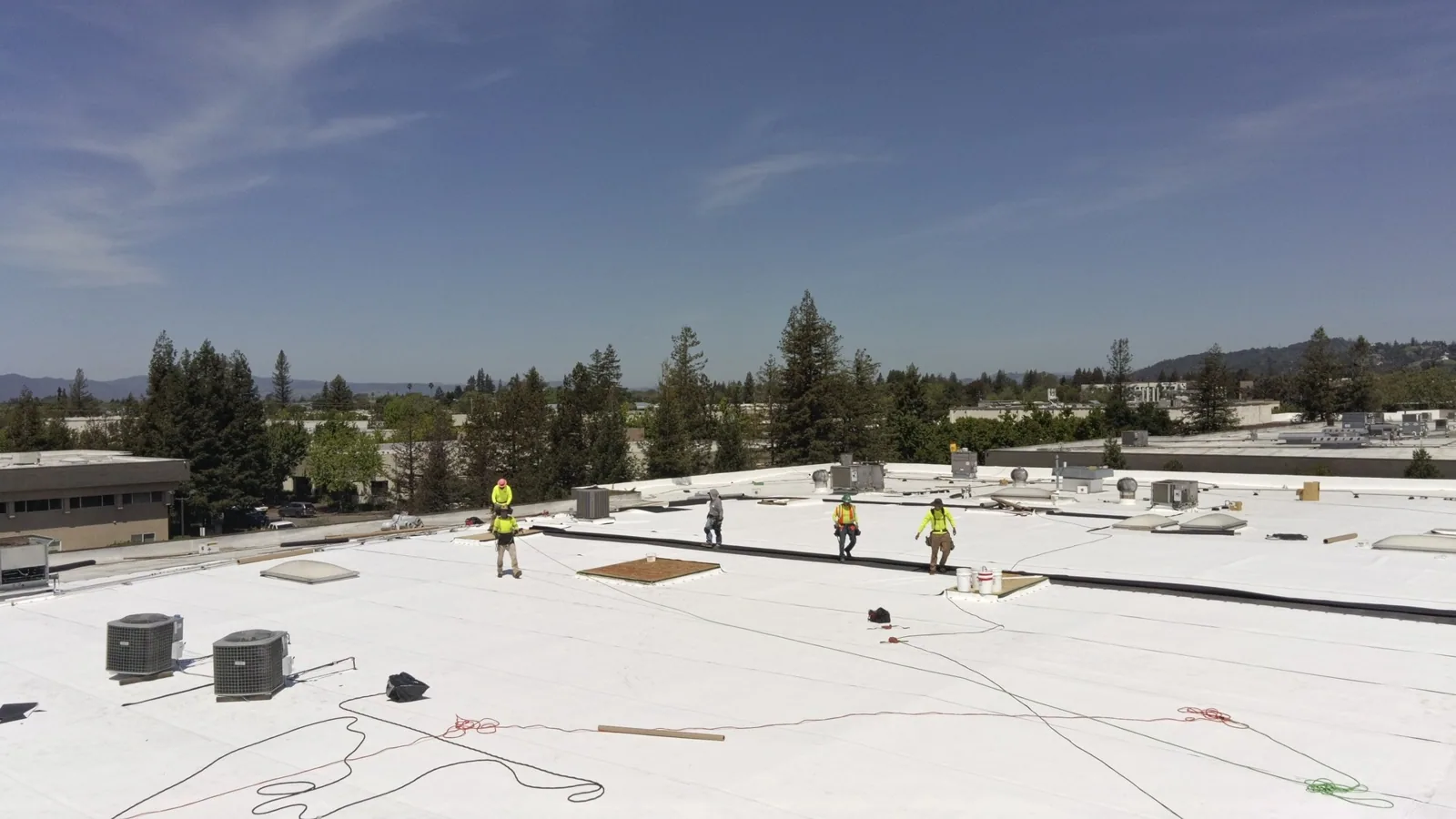
A short open seam on a sound membrane is repaired by cleaning both surfaces, re-welding or re-bonding and covering the edge with a cap strip or a bead of compatible sealant. That is standard commercial roof repair. A seam that opens again after repair is a sign that stress, not workmanship, is the cause.
When seams fail across a large share of the roof, or the membrane has shrunk and stiffened, repairing one lap at a time is a losing game. Then restoration with a coating may extend the roof, and roof coating restoration is worth weighing when the membrane is still dry underneath. If the insulation is wet in many places, replacement is the cleaner path.
What it costs
A seam probe and spot repair is a small job, billed by the length repaired. A full seam program on a large roof costs more, and the price depends on the seam length, the membrane condition, access and the number of details nearby. On the office and commercial developments along Carothers Parkway, a major employment corridor in the McEwen area, a probe of the whole roof, not only the leak area, is the efficient first step, since seams are the longest joints on a low-slope sheet.
Commercial Roofing Questions
How long should a welded seam last?
A properly welded seam should last as long as the membrane itself. Early failures usually trace to dirt or moisture at the time of welding, welding temperatures that were too low or too high, or stress from movement that the seam could not absorb.
Can we fix a seam ourselves with tape?
Not reliably. Tape over a dirty, damp or aged seam lets go quickly, and it can hide the problem from the next inspection. A lasting repair starts with cleaning both surfaces and uses a material that is compatible with the membrane.
Do seams fail more in winter or summer?
Both seasons stress them in different ways. Cold contracts the membrane and pulls on laps, while heat softens adhesives and expands the sheet. A freezing night after a hot day is the hardest on an older seam.
Is a seam failure a warranty claim?
Possibly. Workmanship failures within the warranty term may be covered. Review the terms, keep dated photographs of each open seam and give notice promptly, since late notice can weaken a claim.
How do you test a repaired seam?
We let the repair cool, probe it along its full length, check the weld width and photograph it. In critical areas a water test confirms the repair holds before the crew leaves the roof.