Wind Damage Roof Repair in Franklin, TN
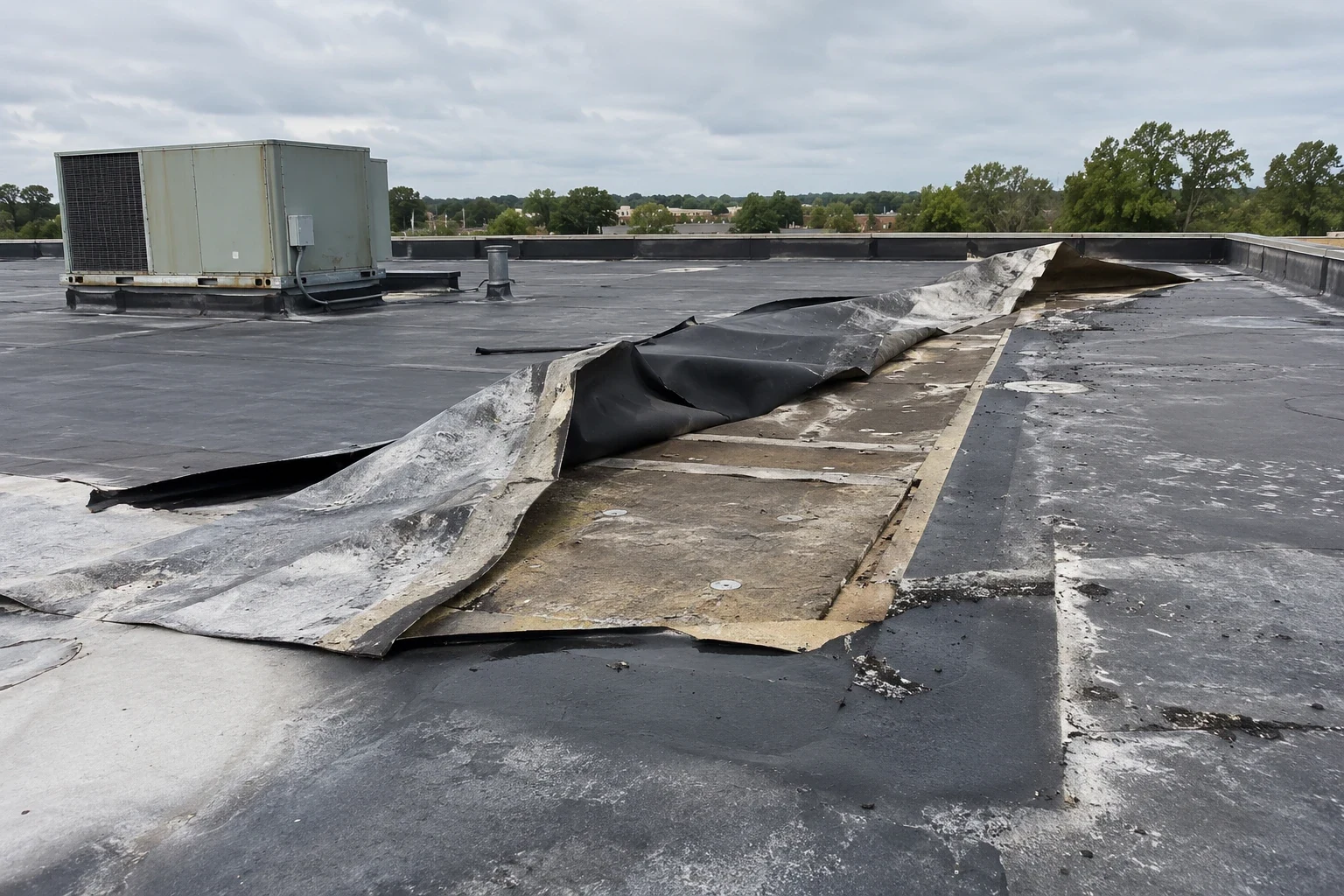
A strip of coping metal lying in the parking lot is the first sign most managers notice after a windstorm. It tells you where the roof edge lost its grip, and that is where we start the walk backward. In Franklin, TN, the pattern runs like this: a storm line crosses the county, the edge lifts, and water follows the gap into the building days later.
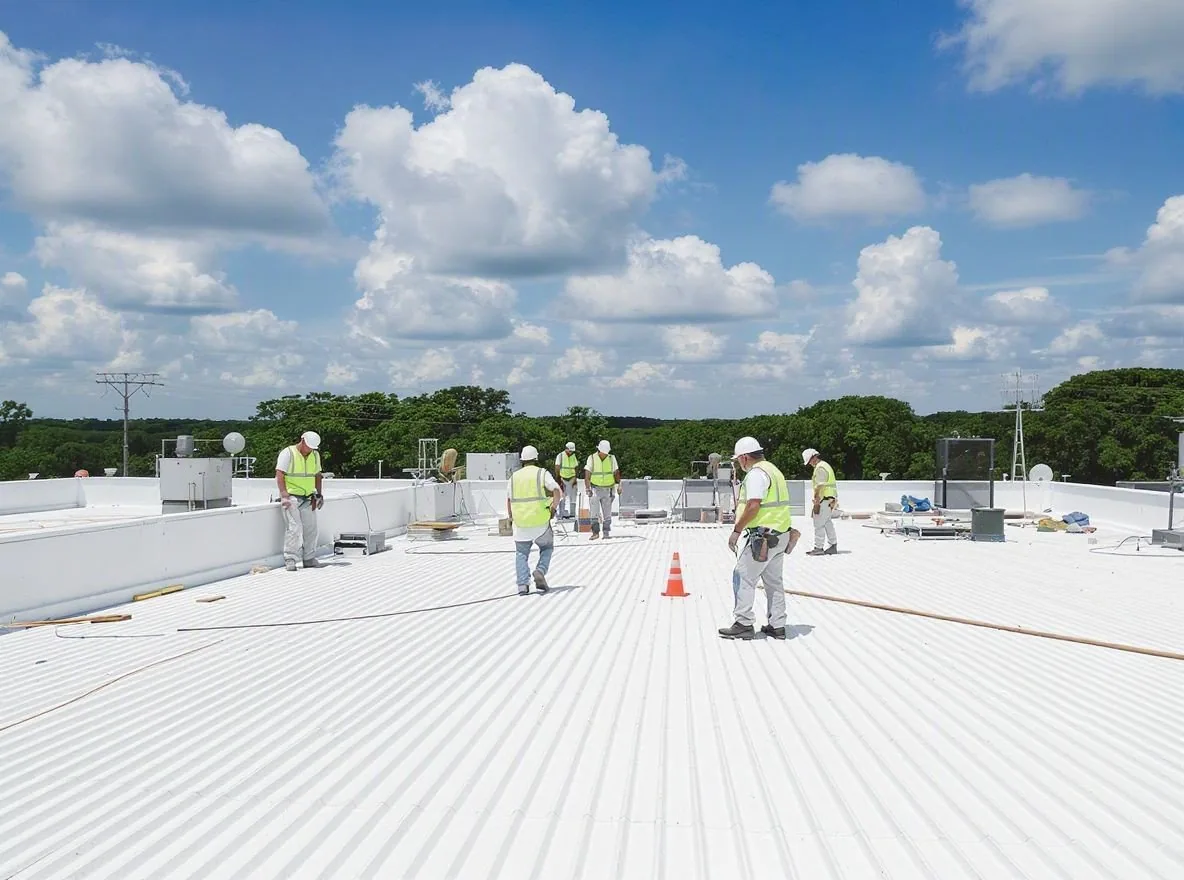
The goal here is cause before cure. We find what the wind moved, how far the damage runs under the surface, and what has to be fixed so the next storm does not repeat it. Each step is photographed, so the owner and the insurer both see the same trail.
Loose edges come first
Look at the perimeter first. Loose or missing coping, a drip edge pulled away from the fascia, a membrane edge that has curled up or a loose flap of sheet at a corner all point to uplift. Next, look at rooftop equipment: displaced unit covers, exhaust caps blown off their bases and disconnected conduit supports are common after a hard gust.
Inside the building, the sign is often late. A ceiling stain may appear after the next rain, not during the storm, and it may sit far from the damaged edge. Photograph the stain, note the date of the storm and mark the location on a plan. That record saves time on the roof.
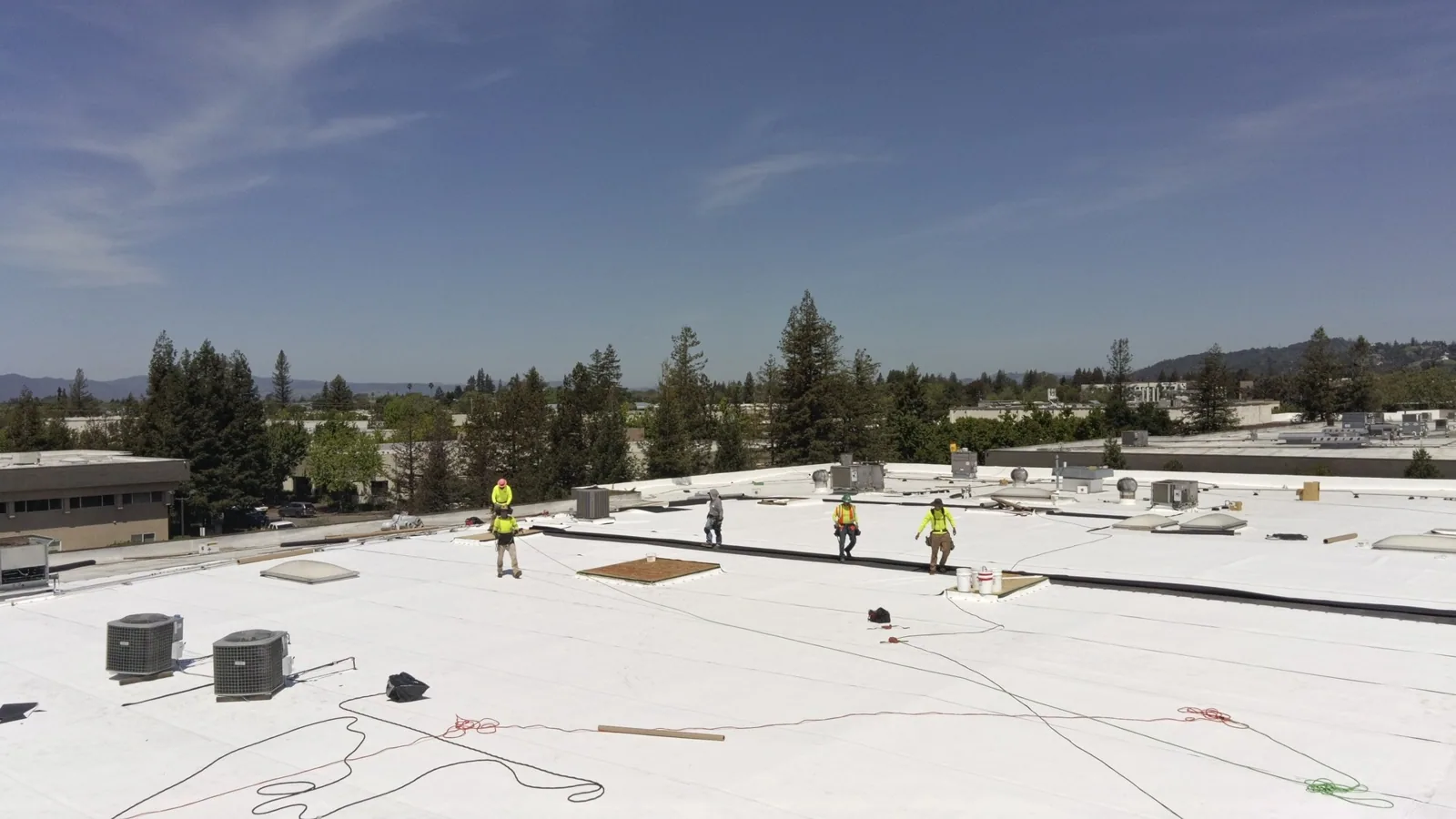
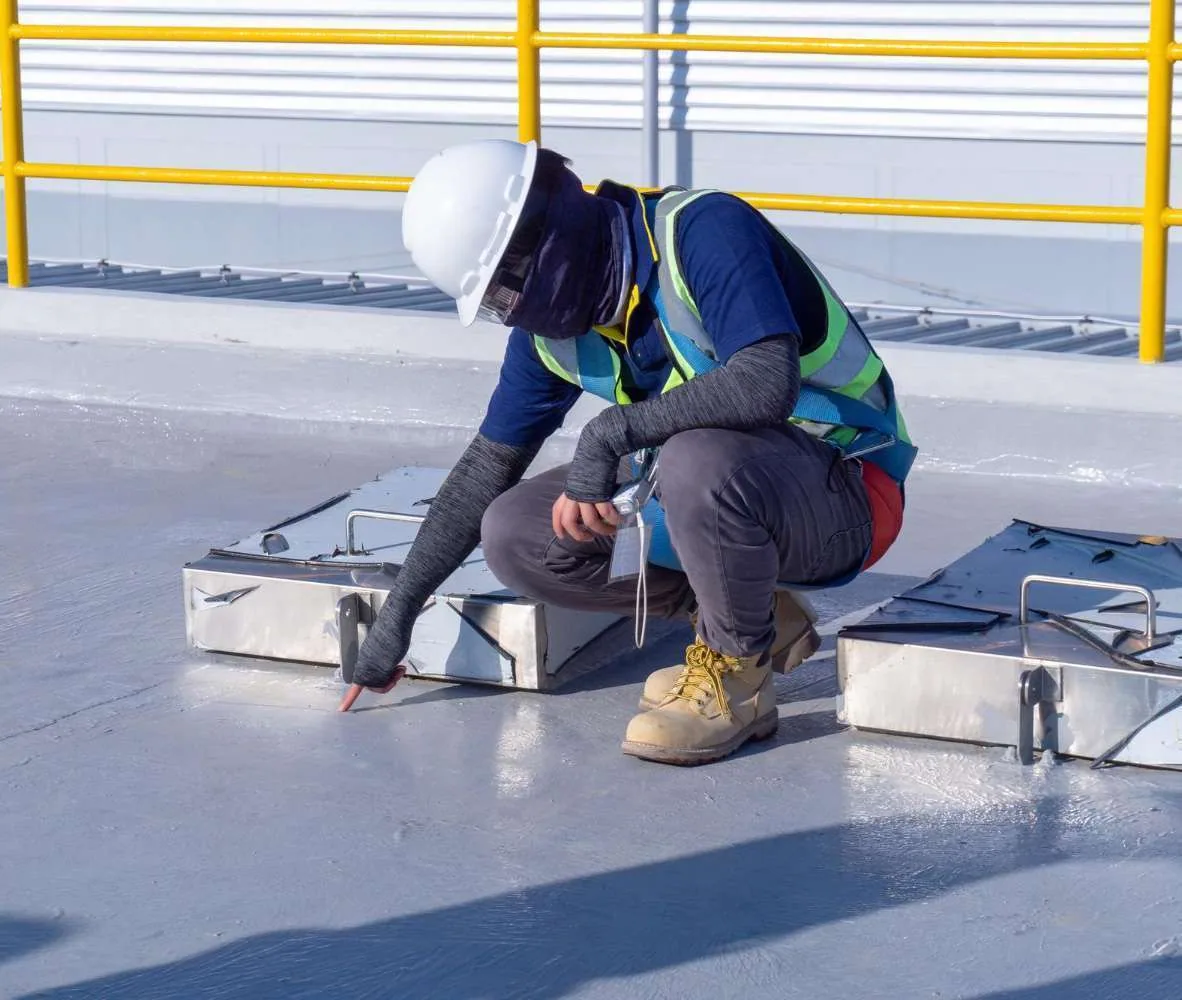
Do not skip the quiet details. A pipe boot that has been tugged sideways, a sealant bead that has split along a curb or a skylight dome that sits a little out of square can all admit water without leaving a visible tear. We mark each one on the roof plan with a number so nothing found on the walk is lost between the roof and the report.
What is happening underneath
Wind does not push a roof down. It flows over the building and creates suction that pulls up, strongest at corners and along edges. If the edge metal, the fasteners or the adhesive bond are weaker than the pull, something gives way. Once an edge opens, wind gets under the membrane and can peel it back across the field like a sheet being lifted from a bed.
On August 12, 2023, a short-lived EF0 tornado with estimated 75 mph winds crossed Franklin, and the weather service logged light damage to roofs and walls at some Highway 96 businesses. That kind of event rarely strips a whole roof. It finds the weakest edge, a loose cap or a poorly fastened panel, and works from there.
Edge details matter more than the field. A coping cap held by a continuous cleat resists suction far better than a cap held by face screws alone, and a membrane terminated under a bar with a sealed top edge stays put where a membrane held only by sealant lets go. When we find a failure, we ask which layer in that chain gave way first. That answer drives the repair.
Where the water stopped
After wind opens a roof, rain does the second round of damage. Water enters at the opening, wets the insulation and then travels along the deck until it finds a seam, a fastener hole or a wall joint. Franklin averages close to 54 inches of rain a year, so the exposed layers do not stay dry for long.
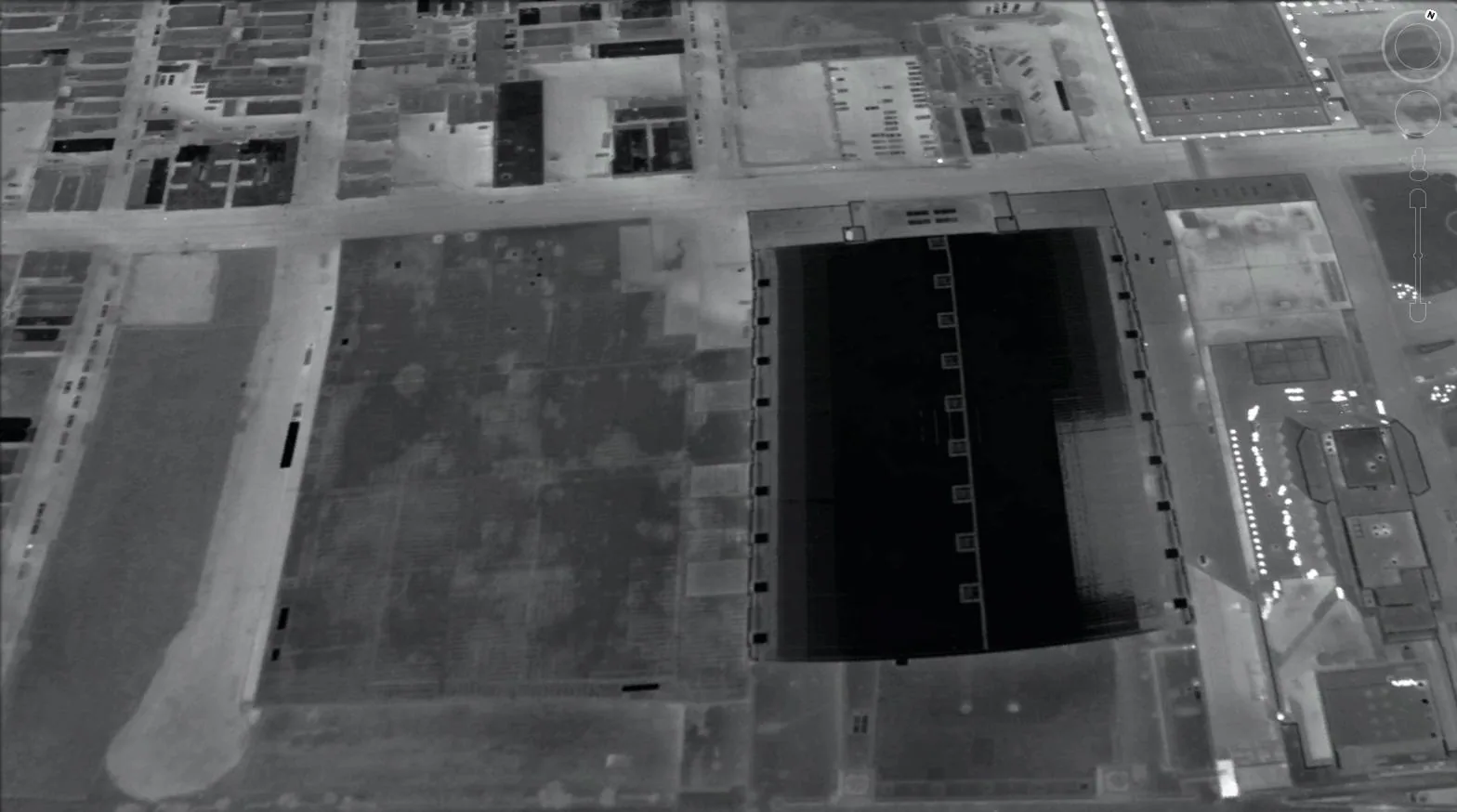
We trace the route in order: the opening, the wet layer below it, the lowest point it reached and the place it finally showed inside. An infrared moisture survey maps the wet insulation, and core cuts confirm what the scan suggests. Without that step, a repair seals the visible tear and leaves a wet layer to rot the deck.
How to confirm it
Confirming wind damage means ruling out other causes. We pull on edge metal to test how it is held, check fastener pull-out where the membrane is mechanically attached, and look at the direction of lifted material. Debris pointing one way, creases in the sheet that line up and clean breaks at the cleat all support a wind cause. Worn sealant, long-term shrinkage and corroded fasteners point to age.
The record separates the two, the same way it does on a flashing failure repair job. If you need to file a claim, our roof insurance claim assistance work packages the photos, measurements and scope. The owner and the carrier decide what to submit; we supply an accurate roof record.
Repair or replace
Most wind losses are repairable. Edge metal is replaced with a continuous cleat and fastened at a tight spacing. Torn membrane is cut back to sound material and patched with a compatible repair. Lifted flashings are reset and terminated. These repairs are quick when the substrate is dry, and they follow the same boundary-marking steps as any commercial roof repair.
Replacement enters when the membrane is peeled across a wide area, when the insulation below is saturated, or when the fastening pattern was never adequate. Then a new system with a rated edge and a proper attachment schedule is the better spend. Large low-slope roofs in the Cool Springs office district, where buildings run six to eleven stories east of I-65, often carry rooftop equipment that needs its own wind check.
Where the storm was a tornado and not a straight-line gust, the damage can run beyond the roof, and the scope follows tornado damage roof repair. Open seams at laps are handled as seam failure repair, since a lifted lap and a lifted edge are cousins.
What it costs
Cost follows scope. A short run of replaced coping is a small job. A peeled membrane with wet insulation under it is a large one. The main drivers are the length of damaged edge, the amount of wet material to replace, the access needed and the weather window. Gusts near 60 mph, the figure in a July 2026 warning for northeastern Williamson County, are enough to loosen weak edges. For crane or lift access on Mallory Lane and Royal Oaks Boulevard, many curb cuts and peak-hour traffic shape delivery times.
Timing also moves the number. Adhesives and sealants need dry surfaces, so a repair done between storms is cheaper than one redone after a second round of rain. We quote the temporary seal and the permanent repair separately, so the owner can approve the first within hours and take time on the second.
Commercial Roofing Questions
Should we tarp a roof after wind damage?
Yes, if water is entering. A temporary seal limits the loss and belongs in the record. Our emergency crew answers around the clock, including holidays. Photograph the damage before and after the seal goes on, and keep every receipt for the file.
Can wind damage show up weeks later?
Yes. Loosened fasteners and lifted laps may hold until the next storm line, then give way. A roof walk after any strong gust catches those early, while the repair is still a patch and the insulation is still dry.
Does wind damage void the roof warranty?
The warranty's own wording governs. Many warranties set a wind speed limit and require the repair to follow the manufacturer's detail. Check the paperwork, and we will make the repair to that detail and log the work with dates and photographs.
How long does a wind repair take?
A short edge repair can finish in a day. Larger membrane repairs depend on materials, access and a dry weather window, and the crew leader gives a schedule after the walk.
What should we photograph first?
Start with the debris, the damaged edge and any interior stain, each with a date. Then take wider shots of the roof from a safe position. Do not climb onto a wet or damaged roof.