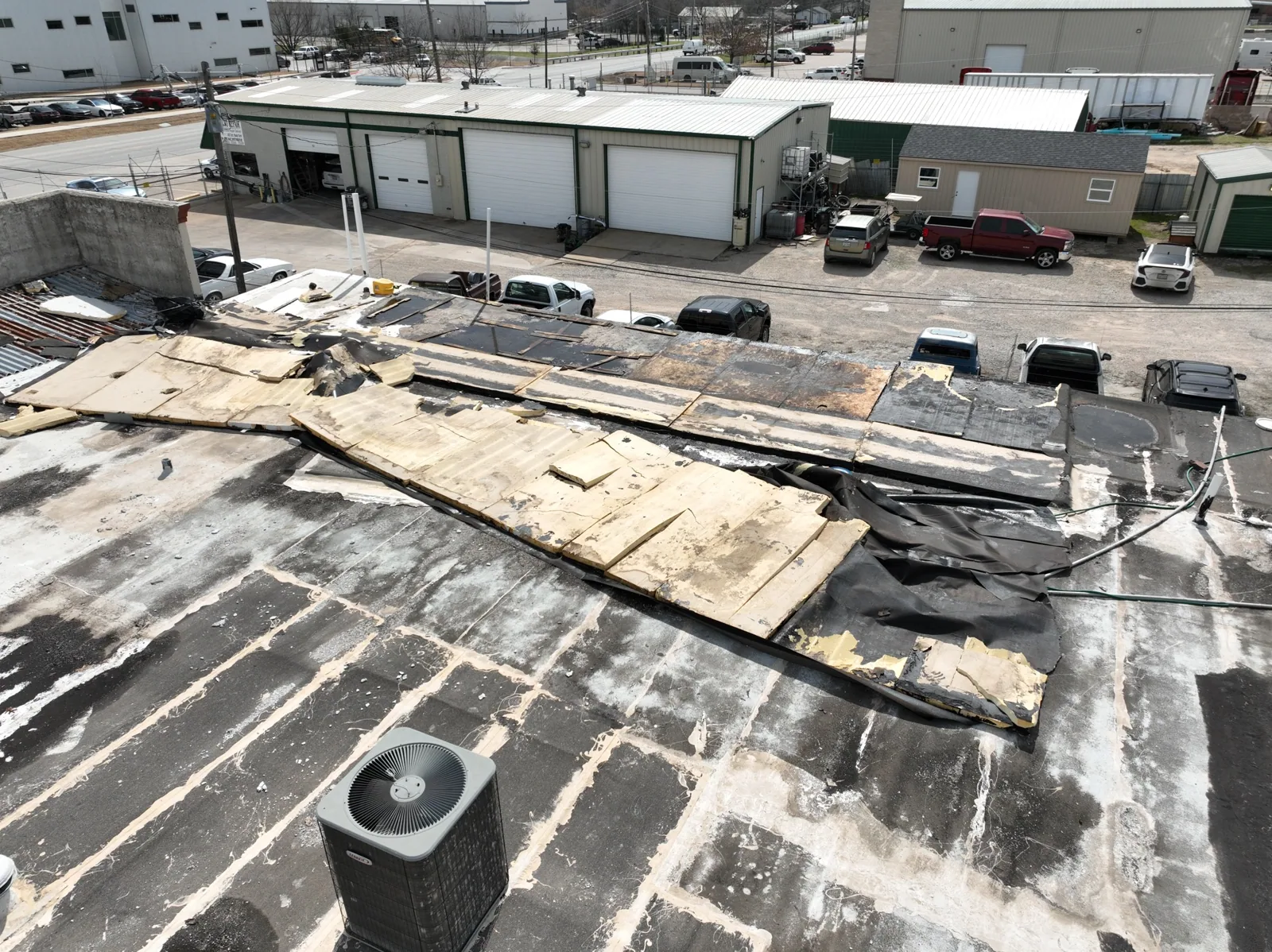
Edge Metal, Coping and Gutters in Franklin, TN
A strip of metal that sits a half inch proud of the wall is the first sign of an edge failure, and the next gust will lift it further. Edge metal, coping, gutters and downspouts form the perimeter of a roof, and the perimeter is where wind and water attack first. In Franklin, TN, where an EF0 tornado of about 75 mph came down at Highway 96 and Royal Oaks Boulevard in August 2023, the perimeter is where a storm line leaves its mark.
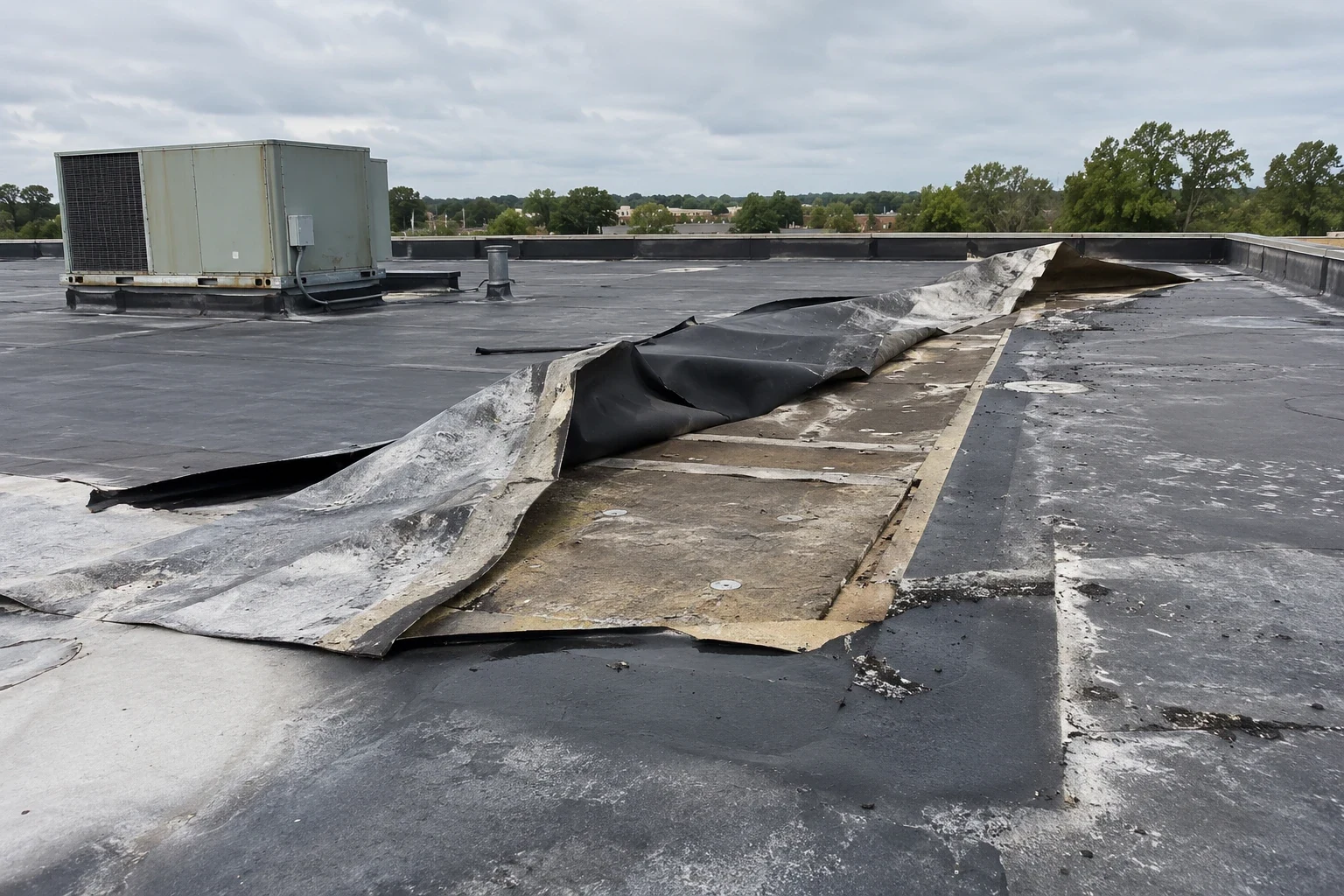
We trace an edge failure backward: loose metal, then a gap, then wind under the membrane, then a torn corner. Stopping the first step prevents the rest.
Edge Metal and the Pull Test
Edge metal, sometimes called a drip edge or gravel stop, caps the roof at its outer edge and holds the membrane in place. It is nailed or screwed through the membrane into the deck, and sealed along its laps. Heat and cold move it a little every day, and fasteners work loose.
We grip each length and pull. Metal that moves, gaps that show daylight and heads that sit proud all mark a length for refastening. We check the sealant at the laps and the membrane edge beneath the flange. A loose edge is the cheapest repair on a roof and the costliest to ignore. Every length we tighten is photographed with the fastener heads in view. We also look at what sits behind the edge: a membrane that has pulled back from the flange, a nailer board that has rotted or a fastener row that skips a section. Fixing the metal over a bad substrate only repeats the failure at the next gust.
Fastener choice matters. Screws grip better than nails in most decks, and stainless or coated fasteners resist rust at the exposed edge. Spacing tightens at corners, where wind suction is highest. We record the spacing we find and the spacing we set, so the next visit can verify it.
Coping Caps on Parapets
Where a roof meets a parapet wall, coping caps the wall and sheds water away from the joint. A good coping is sealed at every joint and clipped to the wall. A failed one lets water into the top of the wall, and the water follows the masonry down.
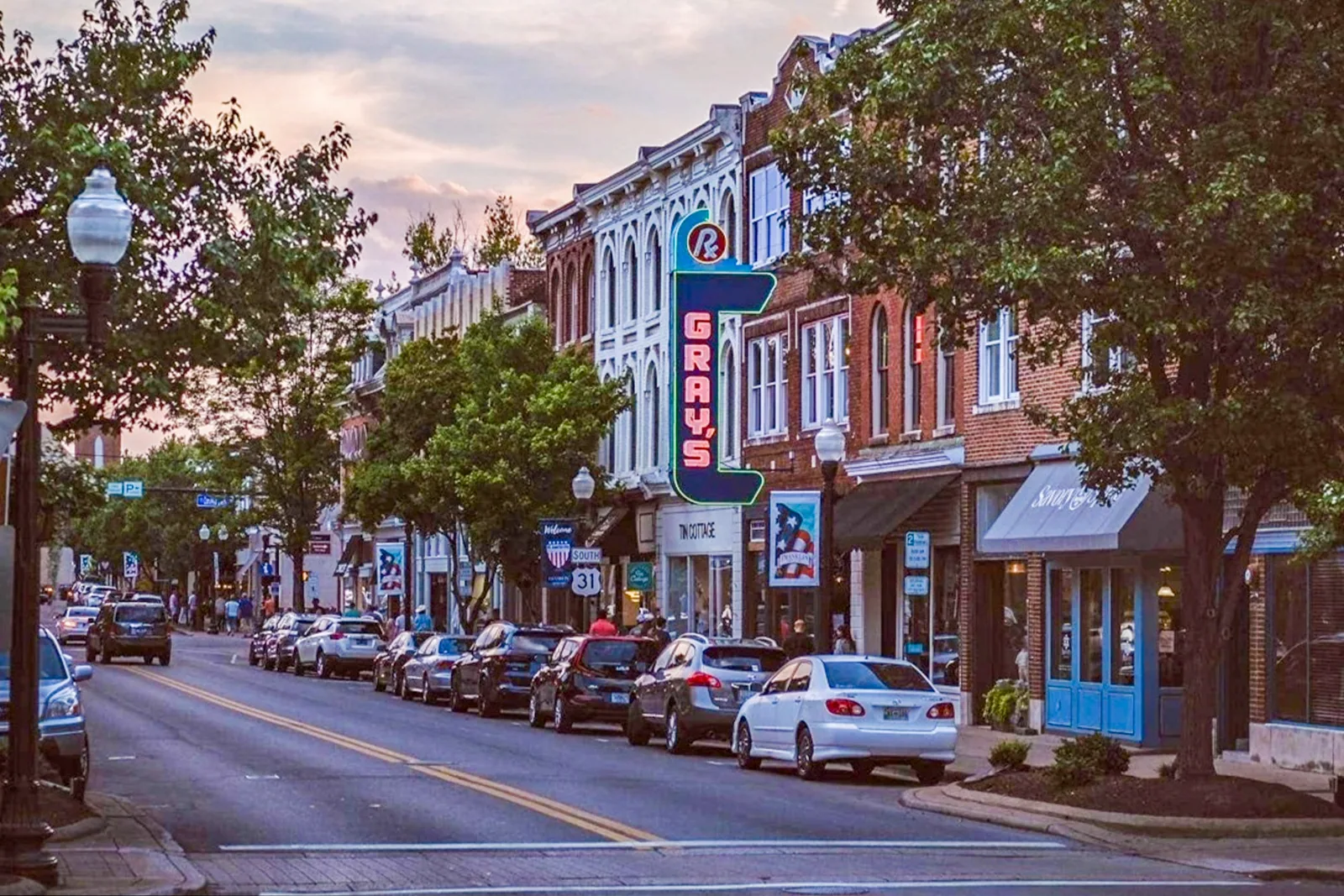
We tap the coping, check the joint sealant and press the cap flashing beneath. Franklin's downtown core is a National Register historic district of 16 blocks, and a masonry building with a parapet there gets a close look at the coping and the through-wall flashing. The historic downtown setting adds care: repairs match the existing wall and avoid damage to the masonry.
Where coping is metal, we check for oil canning, open seams and loose clips. Where it is stone or precast, we look for cracked joints and mortar loss. A cap that has shifted a quarter inch can admit a steady trickle after every rain.
Gutters and Hangers
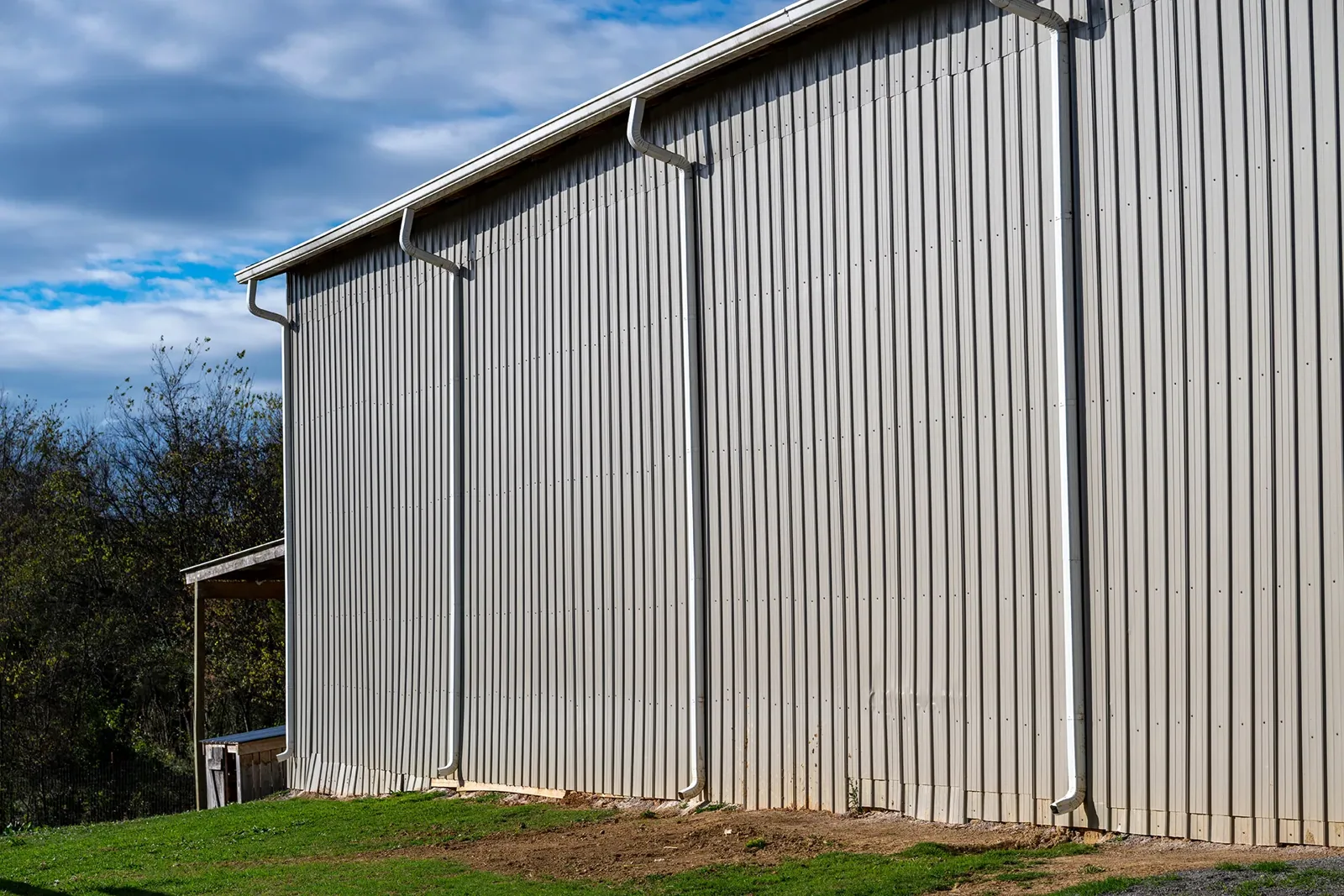
A gutter collects water at the eave and carries it to a downspout. It fails when hangers loosen, joints open or the slope reverses. A sagging gutter holds water, rots the fascia behind it and sends overflow down the wall.
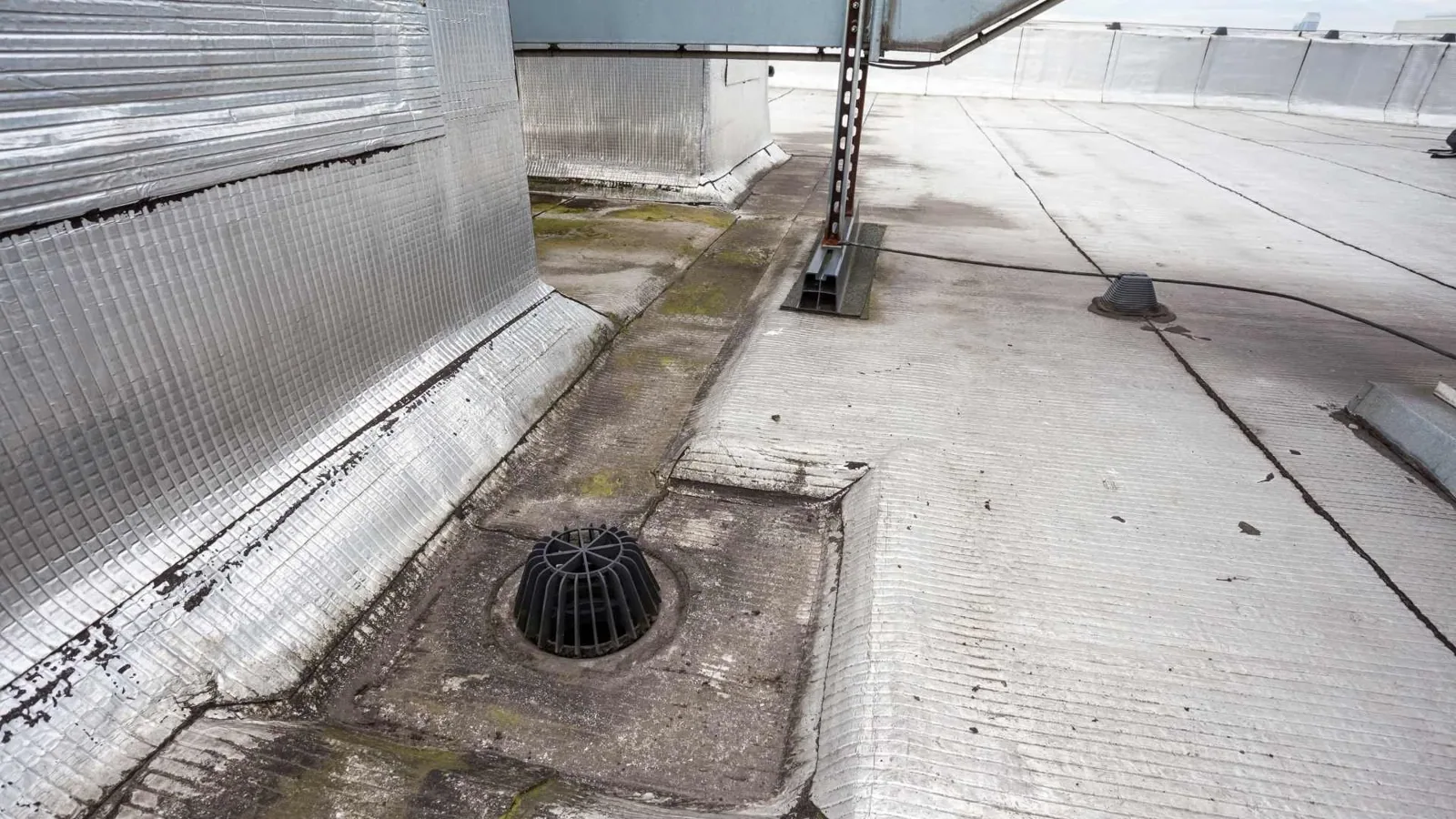
We check hanger spacing, joint seals and slope toward the downspout. A level and a hose show where water stops. Gutters on retail and office buildings gather leaves, grit and roofing granules, and a clogged gutter weighs far more than a clean one once rain soaks the debris. Weight pulls hangers loose. A spring and a fall cleaning keeps them light. The roof side of the same system, the roof drains and scuppers, gets checked on the same visit, so water is followed from the membrane to the ground.
On a flat roof with an interior gutter, a clogged outlet raises water above the membrane edge, and the flashing carries the load. We clear those gutters first, because a failure there is a leak inside the building.
Downspouts and Where the Water Lands
A downspout that ends at the wall sends water back toward the foundation. One that is crushed or clogged sends it over the gutter's edge. We follow each downspout to the ground, check the elbows and the discharge, and note where water lands. A downspout strap that has pulled loose lets the pipe swing in wind and crack its joints, so straps are checked too.
Franklin gets about 53.79 inches of rain a year, so a downspout moves a lot of water. The May 2010 flood, when the Harpeth River climbed to 35.32 feet in downtown Franklin, is context for why discharge matters. Water that lands near a building's base adds to everything else the ground is doing in a heavy rain. Where space allows, we extend the discharge or add a splash block and note it on the sketch.
Wind and the Edge Detail
The region lies in Dixie Alley, where tornado risk peaks between November and May, and gusts near 60 mph showed up in a July 2026 warning for northeastern Williamson County. Wind pulls up on a roof edge hardest at corners and eaves. An edge detail made for the wind zone holds; one that was installed lightly or has loosened does not.
We record the edge type, the fastener spacing and the condition at corners. After a storm, a wind damage check begins at the edge. Our storm damage repair work replaces bent metal and refastens what the wind loosened.
A preventive maintenance visit includes a perimeter walk, so loose metal is found before the next storm line crosses the county.
Cold, Ice and Thermal Movement
Franklin's record low of minus 22 and July highs near 91 move metal. Long runs of edge metal need expansion joints, and a run without them buckles or tears its fasteners. Ice at an eave blocks gutters and forces water under the first course.
We look for buckles, open joints and ice damage each spring. Where metal has been bent, we replace the run, not just the dent, because a patched dent leaves a seam that opens in the next freeze. A new run goes on with fasteners that match the substrate and sealant that stays flexible. Expansion joints are set at the intervals the metal type requires. The standing seam metal trim on a metal roof gets the same check.
Roof edges also hold the membrane termination. If the edge metal lifts, the membrane under it lifts too, and a gap opens that wind-driven rain enters. We reseal the termination bar and renew sealant where it has dried before the cap goes back on.
Commercial Roofing Questions
How do I know if my edge metal is loose?
Grip it at a corner and pull. Movement, daylight at a joint or raised fastener heads all mean it is loose.
Can gutters be repaired or must they be replaced?
Loose hangers, open joints and clogs are repairable. A gutter that has rusted through or lost its slope is replaced.
Why does coping fail?
Joints open, sealant dries and clips loosen. Water then enters the top of the wall and runs down inside it.
Does a storm always damage the edge?
No, but the edge is where damage starts. We check it first after any wind event.
Does edge metal need a permit to replace?
A simple repair usually does not. Replacing long runs or changing the edge detail can fall under local permit rules, which we check ahead of time.
What should I send to start?
Whatever you have on the roof: plan, age, leak history. The roof walk follows, and the short written summary tells you what the edge shows.