Apartment and Multifamily Roofing in Franklin, TN
The first sign on an apartment roof is a maintenance request from a top-floor resident: water coming through a light fixture, a brown ring on the ceiling, a bubble in the paint. By the time it arrives, the water has been moving through the building for some time. The ring is where the water stopped. We start with that unit and walk the failure backward through the ceiling, the insulation and the membrane to where the water crossed the roof.
We repair, recover and replace low-slope and metal roofs on apartment and multifamily buildings in Franklin, TN. Step by step, we trace the water path, mark the cause and send a short written summary with photos. Work is planned around residents, noise and move-in schedules. Emergency response runs around the clock, holidays included.
The first sign
Multifamily roofs report through the work-order system. A resident requests a repair, the maintenance tech looks and writes a note, and the request closes. A month later a neighbor files the same request. The history of closed tickets is the best map of where the roof is failing, and we ask for it before the walk.
We sort the tickets by building and by unit stack. Requests from the same stack point to that part of the roof. Requests in a line along a wall point to flashing or a parapet. Requests under a mechanical area point to a curb. Then we climb and photograph the details above the stacks that match.
Balconies, breezeways and exterior stairs have their own entries. Roofs over walkways and covered entries shed water onto the surfaces below, and a failed drain or gutter there can drip on residents' doors. We check each walkway roof, gutter and downspout, and we photograph the discharge points. Water that lands on a walk and freezes is a slip hazard in a Tennessee winter, so the fix has safety value as well as roofing value.
What is happening underneath
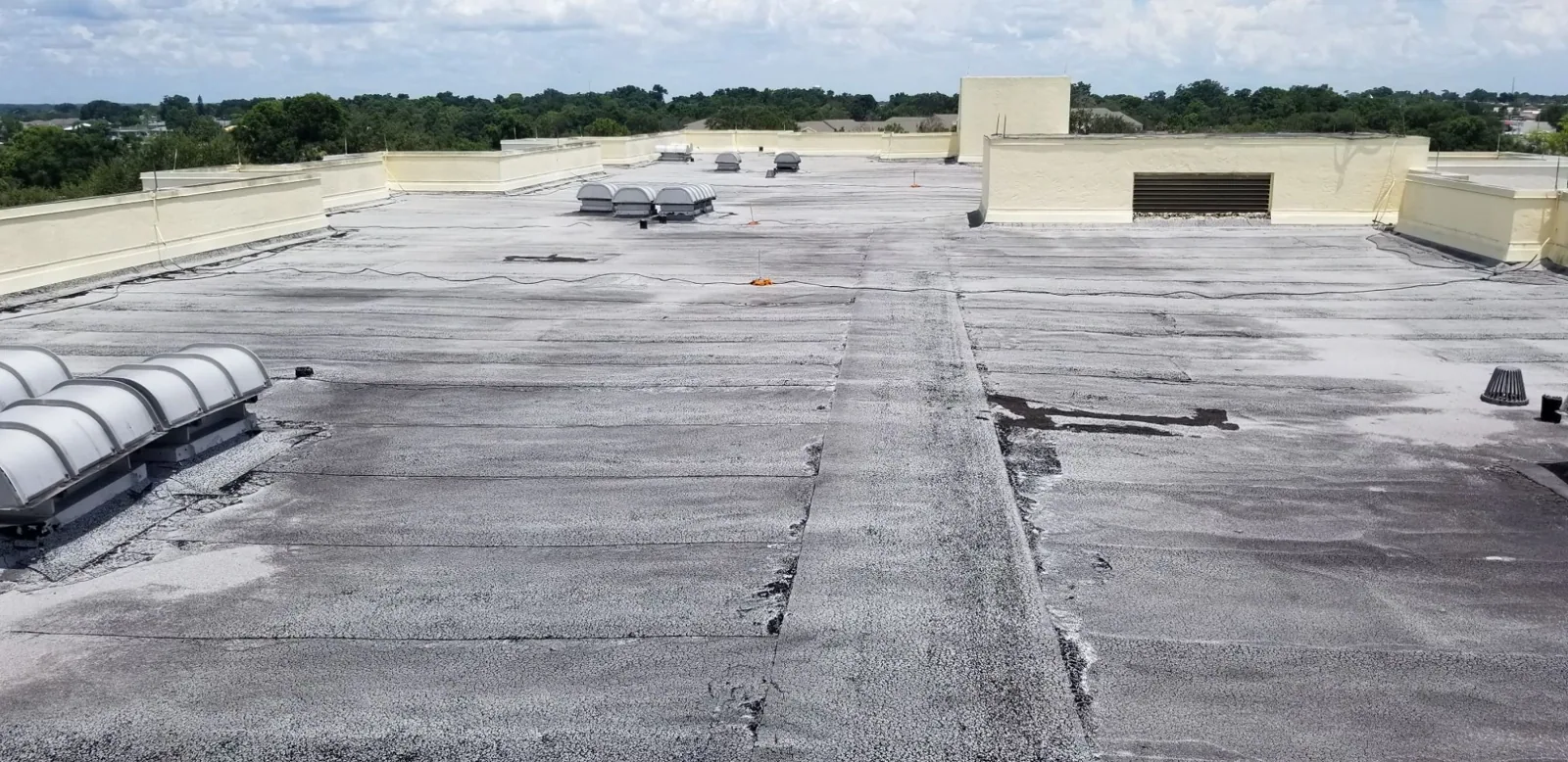
An apartment roof has many penetrations for its size: bath exhaust, plumbing vents, dryer vents, stair and lift penthouses, and rooftop units. Each has a flashing, and each flashing is a place for water to enter. Because the units below are separate homes, a single leak can touch several residents as water travels along the deck.
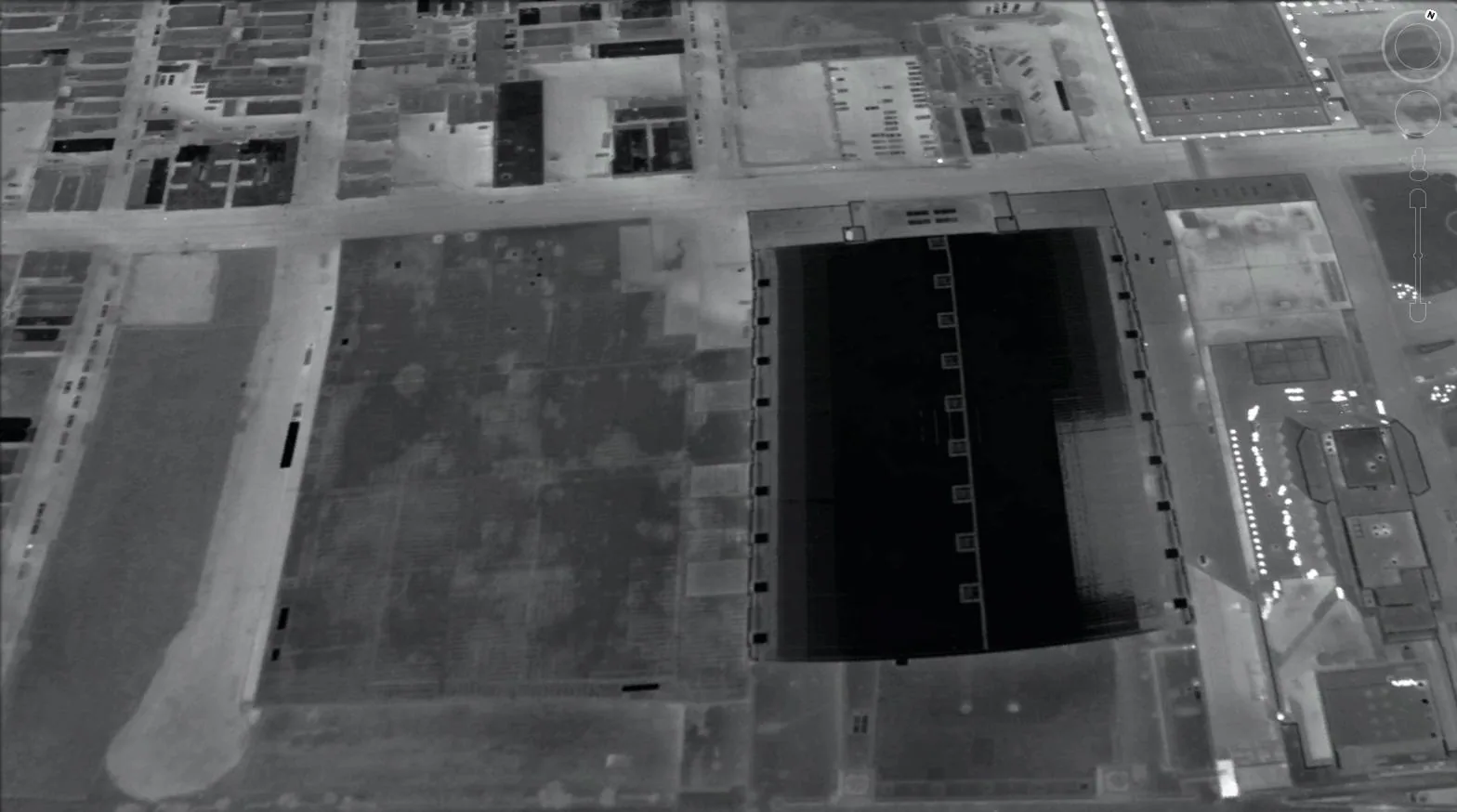
The wet layer is the real damage. It adds weight, loses insulating value and, in a closed ceiling, can grow mold. A moisture survey maps it without cutting the roof, and cores confirm it. With the map, we repair the wet area and tell the manager which units to check, rather than opening ceilings at random.
An infrared moisture survey is especially useful in multifamily, since it avoids opening ceilings in occupied homes. The image shows wet insulation from above, and a few cores confirm it. Residents are not disturbed unless the evidence says a ceiling needs to be opened, and the manager receives a short list of units to check.
Working around residents
Residents live under the work. Noise, dust and access are the three things they notice. We schedule loud steps for weekday daytime, give notice well in advance, protect walkways and entrances and keep parking clear. Where a unit must be entered, the manager sets the window. We also respond to calls from the office quickly, since a resident who sees a crew without notice will call.
Emergency repair does not wait for notice. If a storm opens a seam over an occupied unit, we respond at any hour with emergency roof repair and protect the space. For occupied buildings, occupied building reroofing is phased by building and by section, with each section closed in daily.
Communication is part of the job. We give the office a notice template with dates, hours and what to expect, and we offer a contact name for resident questions. A daily note tells the manager what was done and what comes next. When a plan changes because of weather, the office hears the same day. Clear notice cuts the number of calls and keeps the work moving.
Growth and weather in Franklin
Residential growth is built into the city plan. The Goose Creek area covers about 5,820 acres in south-central Franklin, with approved plans for 3 million square feet of office, 1.8 million square feet of retail and more than 1,100 new dwellings, and the Ovation development at Carothers Parkway and McEwen Drive is planned to include nearly 1,000 residential units. The Carnton area is about half residential.
Franklin gets about 54 inches of rain a year, with a mean July high near 91 degrees, a record high of 108 and a record low of minus 22. Near Highway 96 and Royal Oaks Boulevard, an EF0 tornado touched down on August 12, 2023, and some businesses reported minor roof damage. After a storm line, we walk each building. Where new construction is planned, as in the Goose Creek and Berry Farms area, the first-year walk is the first record in the roof file.
New roofs and warranty files
A newer building still has roof details to prove. Penetrations cut after the membrane was laid, mechanical units set by other trades and flashings sealed by caulk instead of a mechanical termination are all common. We walk new roofs in the first year, photograph every penetration, note the warranty terms and keep a baseline in the file. If a leak comes later, the baseline shows whether the roof or a later trade is the cause.
A senior living community adds care schedules to the same questions, and the roof plan notes which wings house residents who cannot move easily.
Repair or replace
Cause before cure. If the insulation is dry and the failures are isolated, commercial roof repair is enough. If the membrane has aged and the insulation is wet across a building, plan a replacement in phases by building. Cost depends on wet insulation, access, penetration count and the system chosen. Quantities are written so an owner can compare bids line by line.
Timing follows leases and weather. Move-in weeks are busy, and tearing off a roof then creates avoidable friction. A hotel has similar occupancy limits, with a front desk in place of a leasing office. We schedule around the leasing calendar, order materials early and size each day's work so every section is closed before dark.
Commercial Roofing Questions
How do you find which unit leaks come from the same roof spot?
We sort the work-order history by building and unit stack, then walk the roof above the matching stacks. A moisture survey confirms the wet layer and shows how far the water traveled.
Can residents stay home during a roof replacement?
Yes, in most cases. We phase the work, give notice, protect walkways and parking and close in each section daily. Unit entry, where needed, is set by the manager.
Why do top-floor units get stains first?
They sit directly under the roof. Water enters the roof, runs along the deck and drops through the first gap in the ceiling. Lower units show damage only when the leak is large or has traveled.
Should new buildings be inspected?
Yes. A first-year walk records penetrations, flashings and drains while warranty terms still apply. It gives the owner a baseline if a leak appears later.
What should I send to schedule a roof walk?
Send the roof age by building, closed work orders for roof-related leaks, a site plan and past repair invoices. We trace the failure on the roof and send a short written summary.