Senior Living Roofing in Franklin, TN
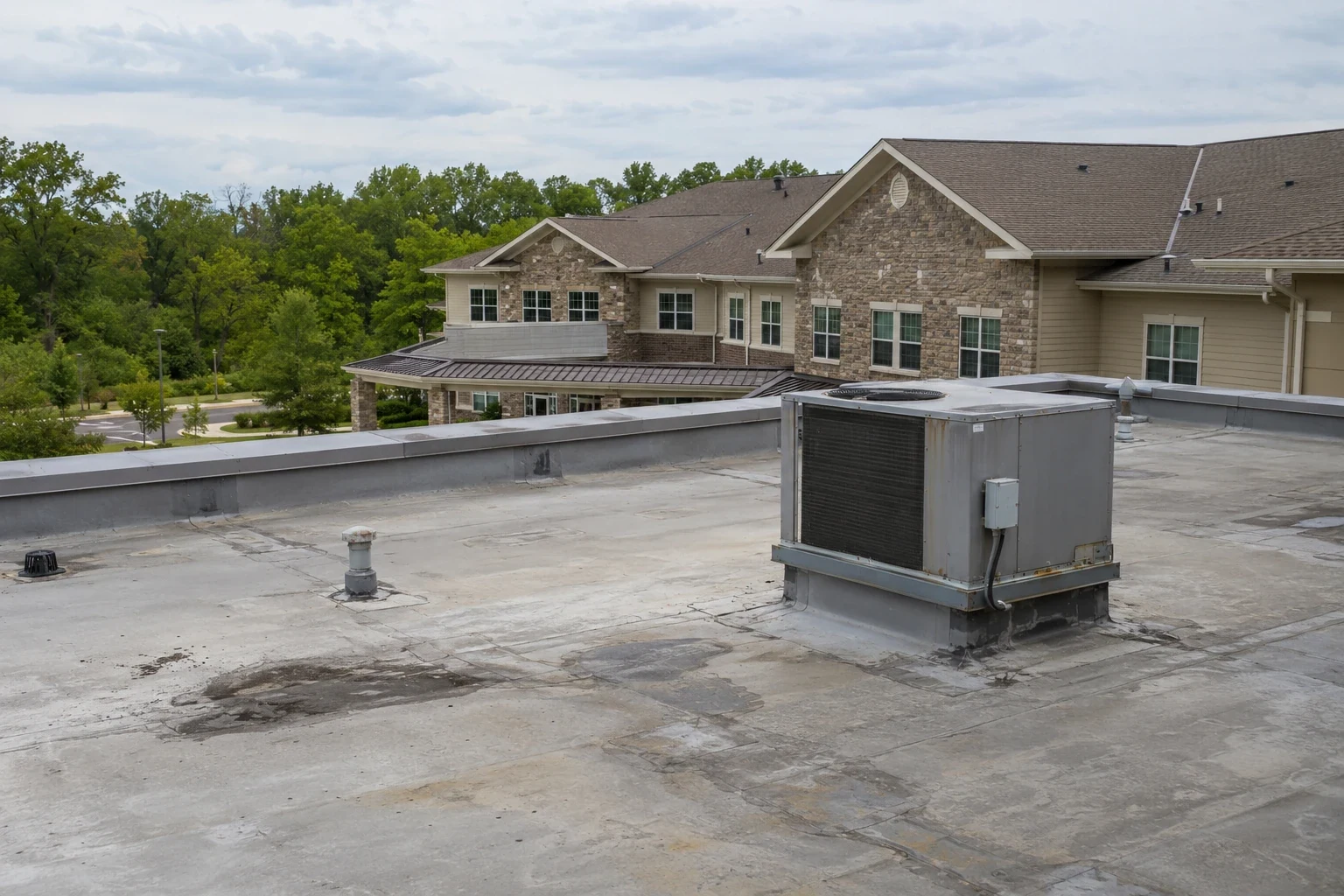
A damp ceiling tile in a corridor outside a resident's room is the first sign, and it carries more weight in a senior living community than in most buildings. The stain shows where the water landed. Tracing it upward through the insulation, the deck and the membrane to the opening is the work. In Franklin, TN, that opening is usually made by the same few causes: a clogged drain, a stiffened seam, a lifted edge. A community that cares for residents around the clock cannot treat a roof leak as a routine repair, so the work starts with the failure sequence and ends with a plan that respects the people living below it.
What fails first
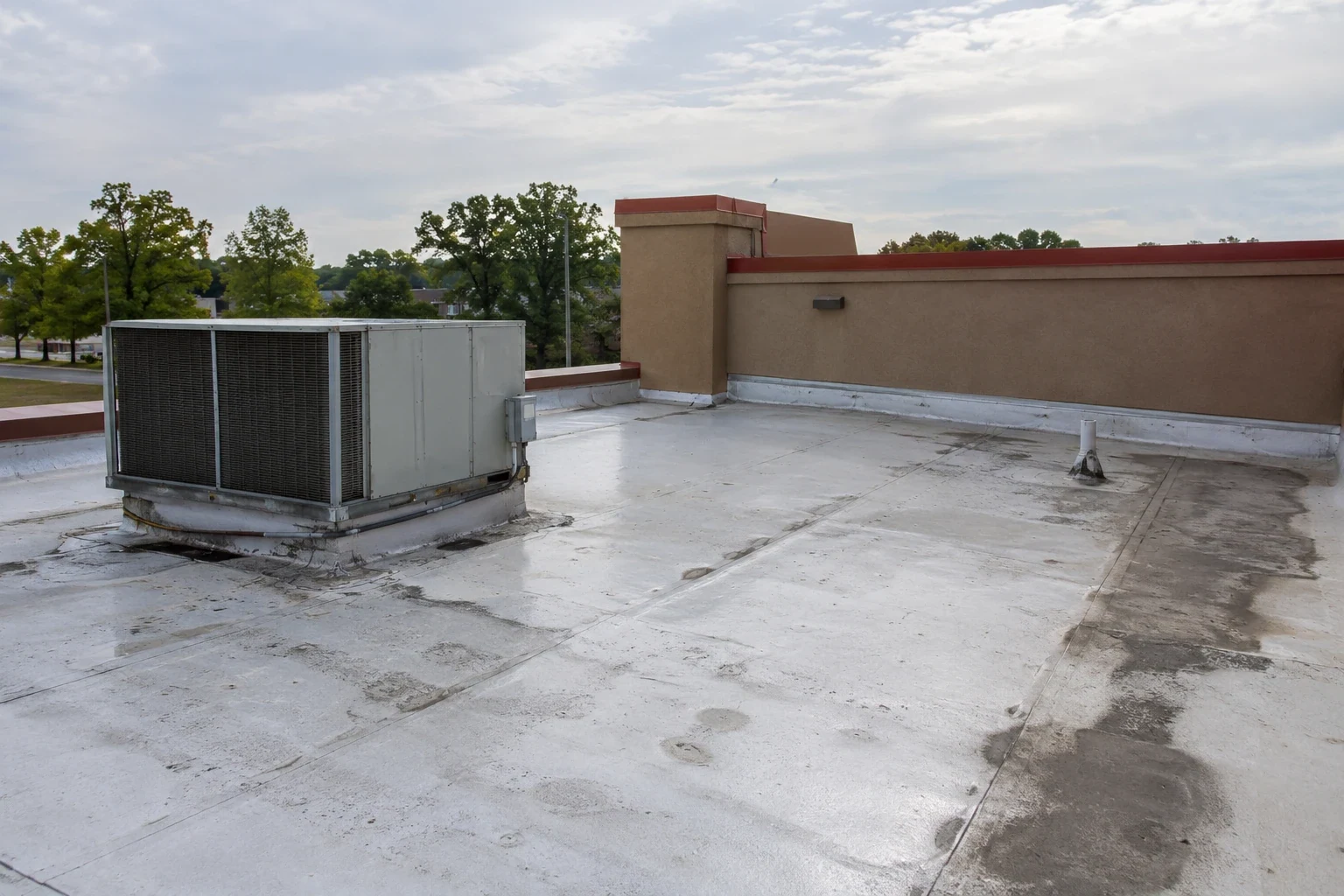
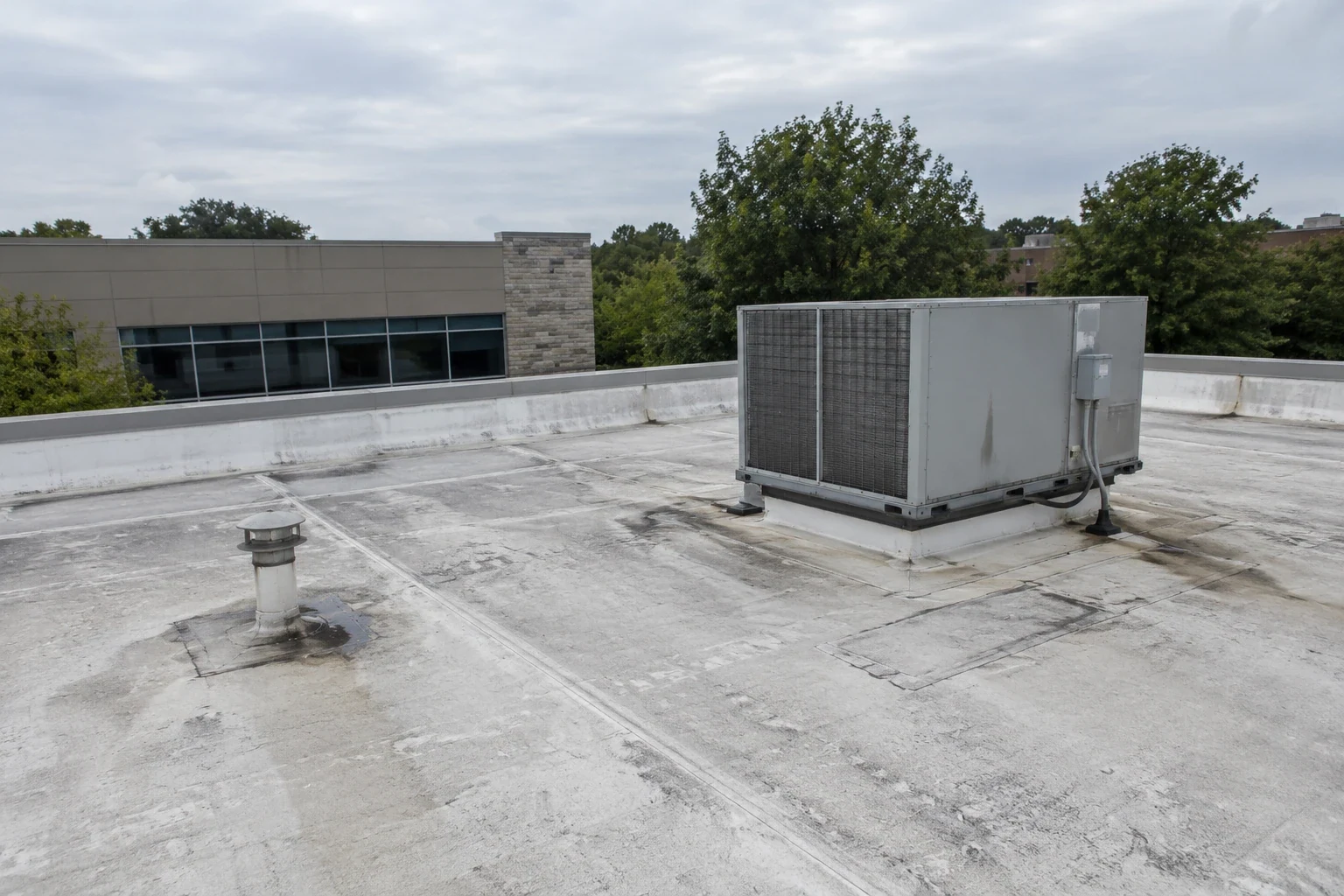
Water enters at the details, not in the middle of the field. Pipe boots, vent stacks, kitchen exhaust curbs, skylights and the flashing where a low roof meets a taller wall all carry water-sealing work done by hand. Heat movement stresses each of them every day, and summer afternoons near 91 F, with a record high of 108 F, give that stress plenty of room to work.
The pattern repeats. A seal stiffens, a hairline opens, a heavy rain finds it, and the insulation under the membrane takes up water. The ceiling shows it days later, often several feet from the real opening, because water travels along the deck before it finds a way down.
Where the water stopped
With roughly 54 inches of rain a year, a small opening has many chances to leak. The roof walk starts at the stain and works outward: the room is marked on a roof plan, and the drains, penetrations, seams and wall joints nearby get checked. A moisture scan shows the wet layer, and a few small cores confirm what it suggests.
What comes back is a short written trail: the room, the entry point on the roof and the path between them. That trail is the basis for a repair that fixes the cause. Without it, a patch above the stain often fails the next time it rains, because the patch was in the wrong place.
One more check belongs in the trail: the drains. Leaves in a strainer let water stand for a day or two, and that pond finds any seam stiffened by summer. If the water line on the membrane is dirty and dry, the roof has ponded recently. We photograph it, then clear the drain and watch it empty.
What the file should hold
A senior living roof file is short and useful. It carries the roof plan, with each drain, curb and penetration marked, the install year of each section, the warranty papers, the repair history and a dated photo set. Each entry says what was found, where and what was done. A new manager can read it in an afternoon and know the state of the roof.
Care buildings share design problems with other occupied buildings, such as medical offices and hospitals: interior spaces that cannot be closed, air handling on the roof and strict rules about noise and dust. The file records those constraints once, so every later repair starts with them already in hand and no one has to rediscover them in the middle of a leak.
Working around residents
Roof work above a care setting is planned in sections. Noise from tear-off and fastening is scheduled around meal times, rest periods and therapy. Interior protection goes up before the roof is opened, and the crew works in areas that can be closed the same day. We agree on a contact who can approve a change if the crew finds hidden damage, and we keep that person informed through each day.
Odors matter too. Adhesives and hot work can reach air intakes, so we identify intake locations at the roof walk and choose low-odor materials where the building calls for them. On a larger project the phasing mirrors an occupied building reroofing job, adapted to the rules of each community.
Storm seasons and wind-lifted edges
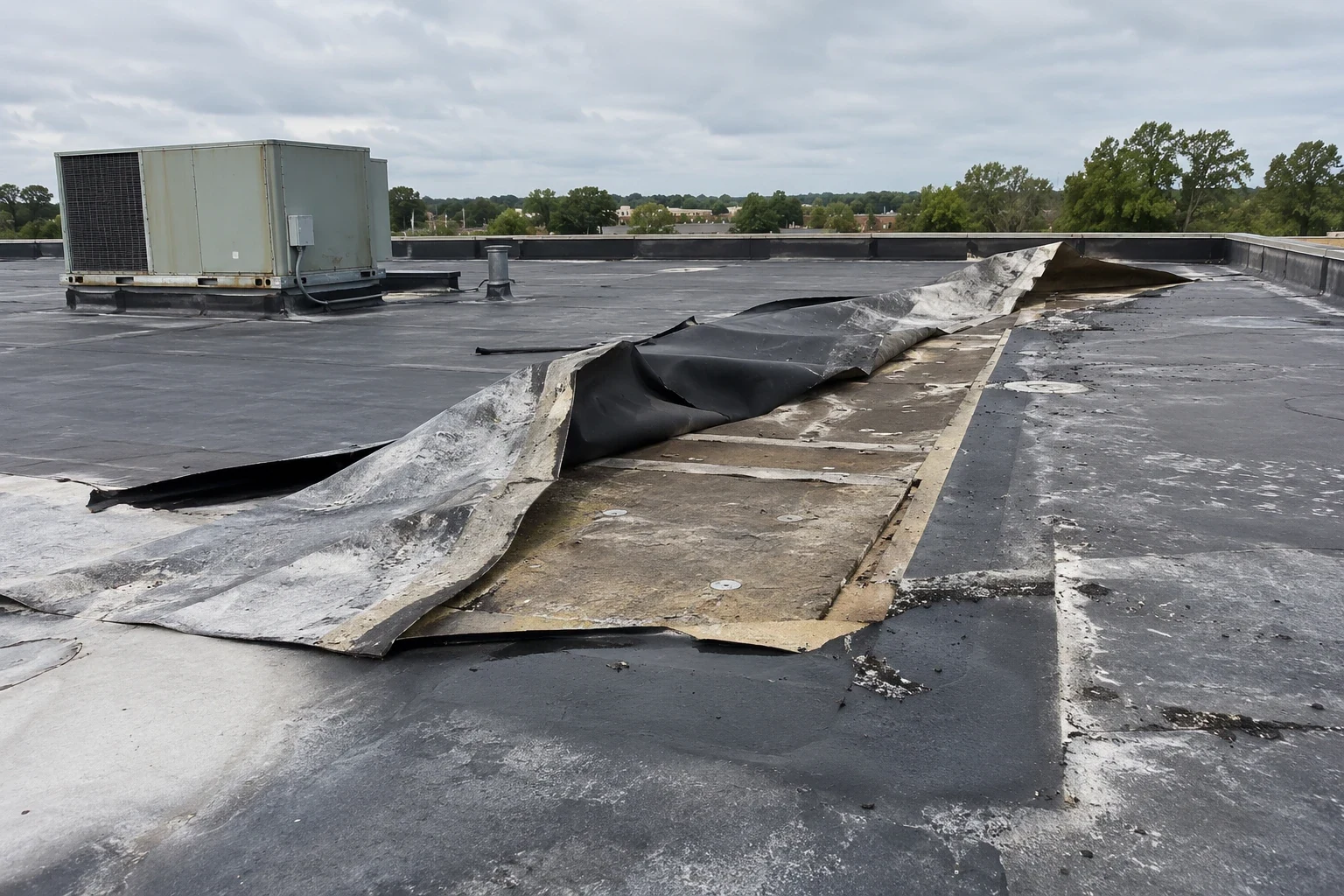
The Dixie Alley tornado zone includes Brentwood next door, and tornado risk there is highest from November through May. Franklin's EF0 in August 2023 had estimated winds of 75 mph and left minor roof and exterior damage at some businesses on Highway 96. The first sign after such a storm is usually an edge: coping that has lifted, a drip edge bent upward, membrane peeled back at a corner.
After any severe storm, a walk of the perimeter and rooftop equipment is worth doing even if nothing leaks. Wind damage that is found early is cheap to repair, and a photo trail made right after the storm helps if an insurance claim follows. A wind damage repair scope begins with those photographs.
Cost follows a few drivers. Roof area, access, the number of phases, the interior protection required and the condition of the deck beneath the membrane matter more than the choice of membrane. We list those drivers in the written summary, so a budget is built from the actual building and not from a rule of thumb.
Repair or replace
Repair makes sense when the failure is local and the surrounding roof is sound. Replacement makes sense when leaks keep appearing in new places, when the insulation is wet over a wide area or when the membrane has hardened and split along many seams. We lay out both choices with the evidence: scan results, core photographs and a count of repairs over time.
For a senior living community, timing carries weight. A planned replacement in a mild season, with phasing and interior protection, is far easier on residents than an emergency repair after a ceiling gives way. A commercial roof inspection sets the baseline, and the repair history then shows when a replacement is cheaper than the next repair.
Communities across Franklin and Brentwood
Next door, Brentwood's 2024 report lists Brookdale Senior Living among its largest employers, with 1,101 employees. A manager with communities in Brentwood and in the Cool Springs area can use one inspection format for every property. Each roof's age, repair history and condition sit in the same file, so decisions come from the same facts.
That consistency helps with budgeting. A roof that needs attention in two years is planned for now, and one with a clean record can wait. The photo trail, kept at each visit, lets the next inspector start from what was found last time. The same records serve healthcare systems with campuses and clinics.
Commercial Roofing Questions
Can roof work happen while residents are in the building?
Yes, with phasing and interior protection. We schedule noisy work away from rest and meal times and keep a named contact informed each day.
How do we find the source of a ceiling stain?
Mark where it shows, then trace the water path on the roof. A moisture scan and a few core cuts show the wet layer and lead back to the opening.
What if a leak happens after hours?
Call right away. We can dry in the area at any hour, then plan the permanent repair once the damage is mapped.
How often should the roof be inspected?
One walk in spring and one in autumn, with an extra visit after any severe storm. Roofs with a repair history earn more.
Does roof work disturb air quality inside?
It can if intakes are near the work. We locate intakes first, use low-odor materials where needed and keep the work area away from them.