Commercial Roofing in Goose Creek and Berry Farms, Franklin, TN
Newer roofs seldom announce a failure with a stain. It is a flashing bead that has pulled a fraction of an inch from a curb, or a seam that shows a faint shadow where two sheets meet. In the Goose Creek area of Franklin, TN, about 5,820 acres in the south-central part of the city, much of it near I-65, new construction is part of the picture, and a roof only a few seasons old can still have a failure sequence that has already begun. We walk each one backward from the first sign to the cause.
Newer does not mean finished. It means the record is short, and the record is what we build first.
A district still being built
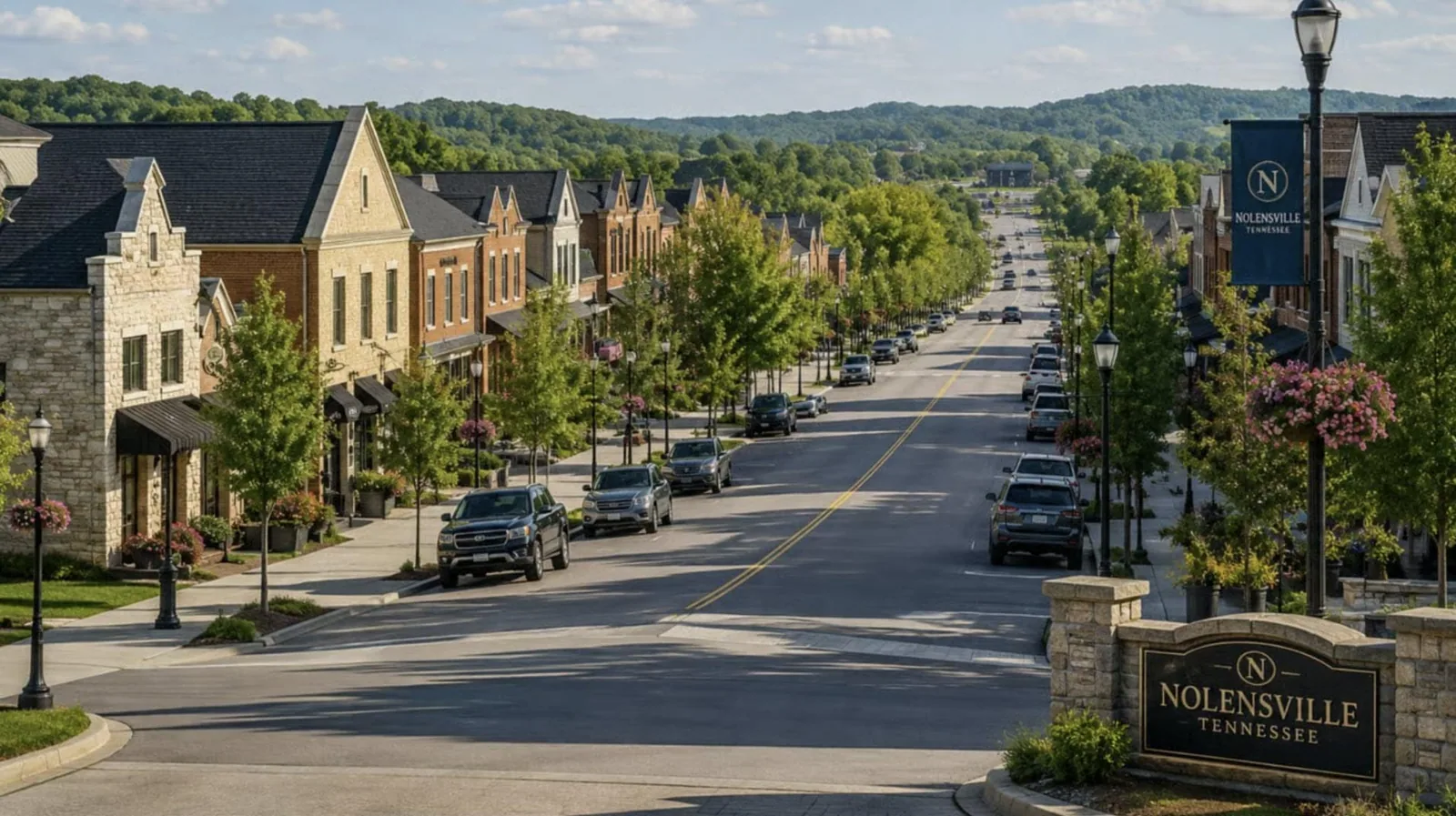
Approvals in the Goose Creek area cover 3 million square feet of office space, 1.8 million square feet of retail and over 1,100 homes. Berry Farms, a mixed-use development, is planned at the northwest, southwest and southeast corners of the I-65 and Goose Creek Bypass interchange, so what stands on any one corner depends on how far the phases have come.
What they do tell a property manager is that roofs here are being added in phases, by different contractors, in different years. Each phase brings a roof with its own warranty paperwork, its own details and its own punch list, and the first inspection is a chance to catch what the handover missed.
Phasing also affects access. While one building is finished and another is under construction, the roof of the finished one is visited by many people: other trades, signage crews, mechanical contractors and inspectors. The more people visit a roof, the more punctures, scuffs and dropped fasteners it collects. We look for them early and log them, because they are the cheapest repairs the roof will ever need.
What fails first on a new roof
New roofs fail at the places where trades meet. A rooftop unit set on a curb after the membrane was finished, a plumbing vent cut through later, a parapet cap fastened by a different crew: each is a seam in the work, and each can open before the first warranty inspection.
We check every penetration and every curb, probe seams, look for scuffing along walk paths and photograph the first set of conditions as a baseline. If a defect is installation-related, the dated photographs help the owner raise it with the installer while the warranty is fresh. A written condition report collects the findings in one place.
The handover set matters too. Owners should receive the roof plan, the product data, the warranty and the installer's close-out photographs. When any of those is missing, we say so in the report and build the missing record from what is on the roof. That record is the thing a later buyer or lender will ask to see, and it is easier to build while the roof is young.
Walk paths deserve a note. Technicians servicing rooftop units wear a route across the membrane, and the wear shows as scuffing or thin spots. We recommend walk pads along the route and mark the location on the plan, a small change that protects the sheet from the most common cause of punctures.
Where the water stopped
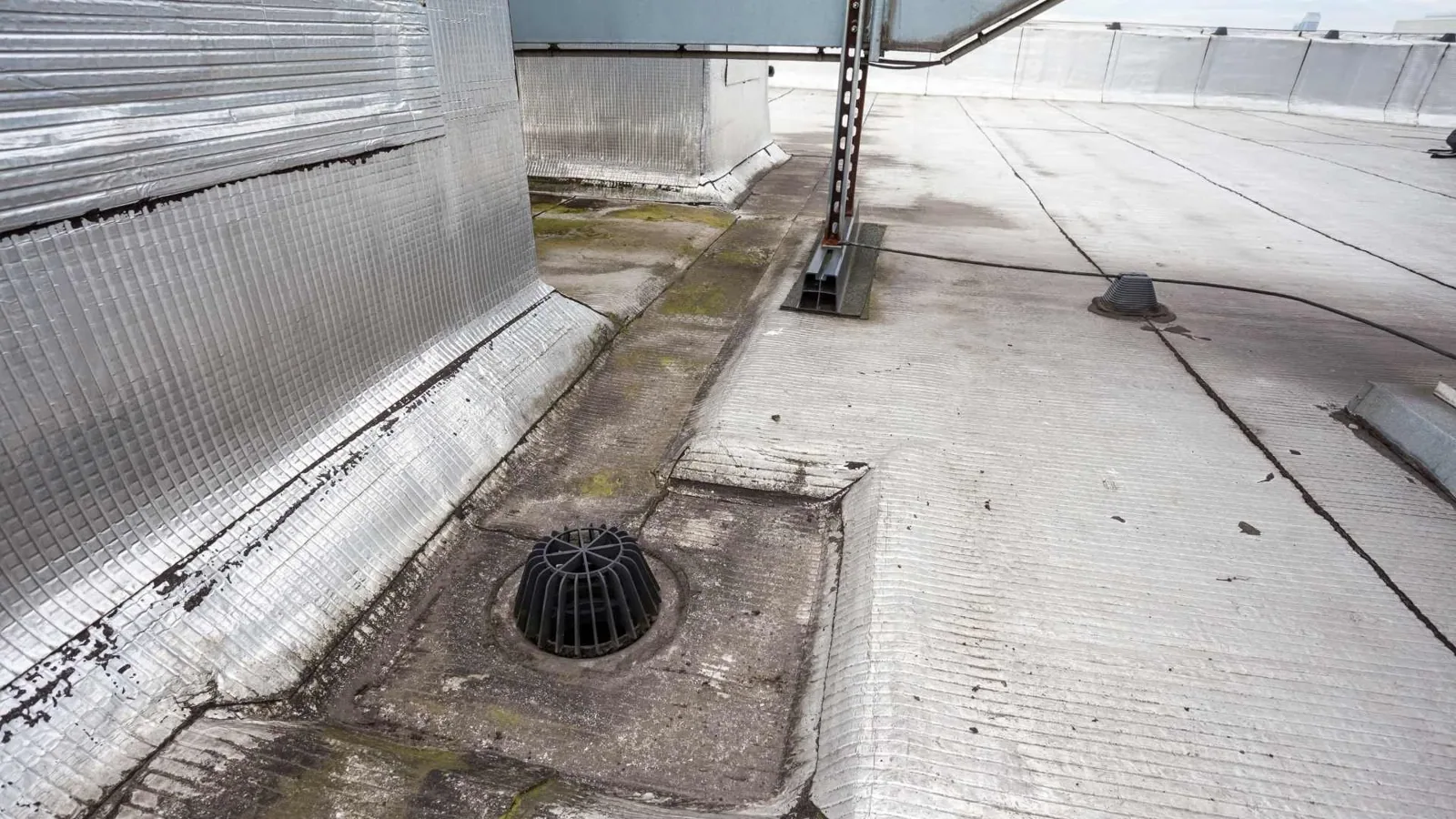
With roughly 53.79 inches of precipitation falling on Franklin in a year, a new roof meets heavy rain within its first season. Large roofs shed that water to a few drains, and a strainer left unclean by the last trade can hold a pond within the first month.
The first walk counts the drains, lifts the strainers and photographs each sump. We note any outlet that sits above the surrounding membrane. That detail is easy to fix on a roof that is a year old and expensive to fix after the pond has weakened a seam. Our work on roof drains and scuppers starts with this count.
Access shapes how crews reach a roof. Properties near an interstate interchange can see heavy peak traffic, so deliveries and hoisting are scheduled outside those hours. We confirm the access route before the first visit and plan around business hours at each building.
Heat, hail and straight-line wind
July highs in Franklin average near 90.8 degrees, and the record is 108. Heat expands membranes against their fasteners and flashings, and the first summer shows which details were installed with room to move. Storms add wind and hail. In July 2026 a severe thunderstorm warning covering northeastern Williamson County, including Franklin, Brentwood and Nolensville, called out gusts near 60 mph and hail reaching roughly three-quarters of an inch, with a caution about roof damage.
After a storm line, we check edge metal, coping and the field for impact marks, and we photograph what we find. Damage found early belongs in a storm damage repair scope, and the photographs support any insurance conversation.
Hail leaves small, round marks that a quick look from a ladder can miss. We scan the field at a low angle in morning light, photograph every mark with a scale reference and probe the sheet at each one. A roof only a few seasons old also gets its drain count checked against the as-built drawing, since a drain moved during construction is easy to miss. If a mark is cosmetic, we say so. If the sheet has fractured, the repair is small and immediate, and the photograph goes into the claim record.
Repair or replace
On a young roof the answer is almost always repair. A failed flashing bead is resealed, a loose seam is rewelded and a drain is corrected. Replacement enters the conversation only when moisture has reached the insulation across a section or when the original installation was wrong in a way a patch cannot correct.
An infrared moisture survey can scan a large, newer roof quickly and show whether any wet layer has begun to form. If it has not, the report says so, and the roof goes onto a preventive maintenance schedule with a first visit before the first warranty anniversary, if the roof carries one.
Old uses next to new ones
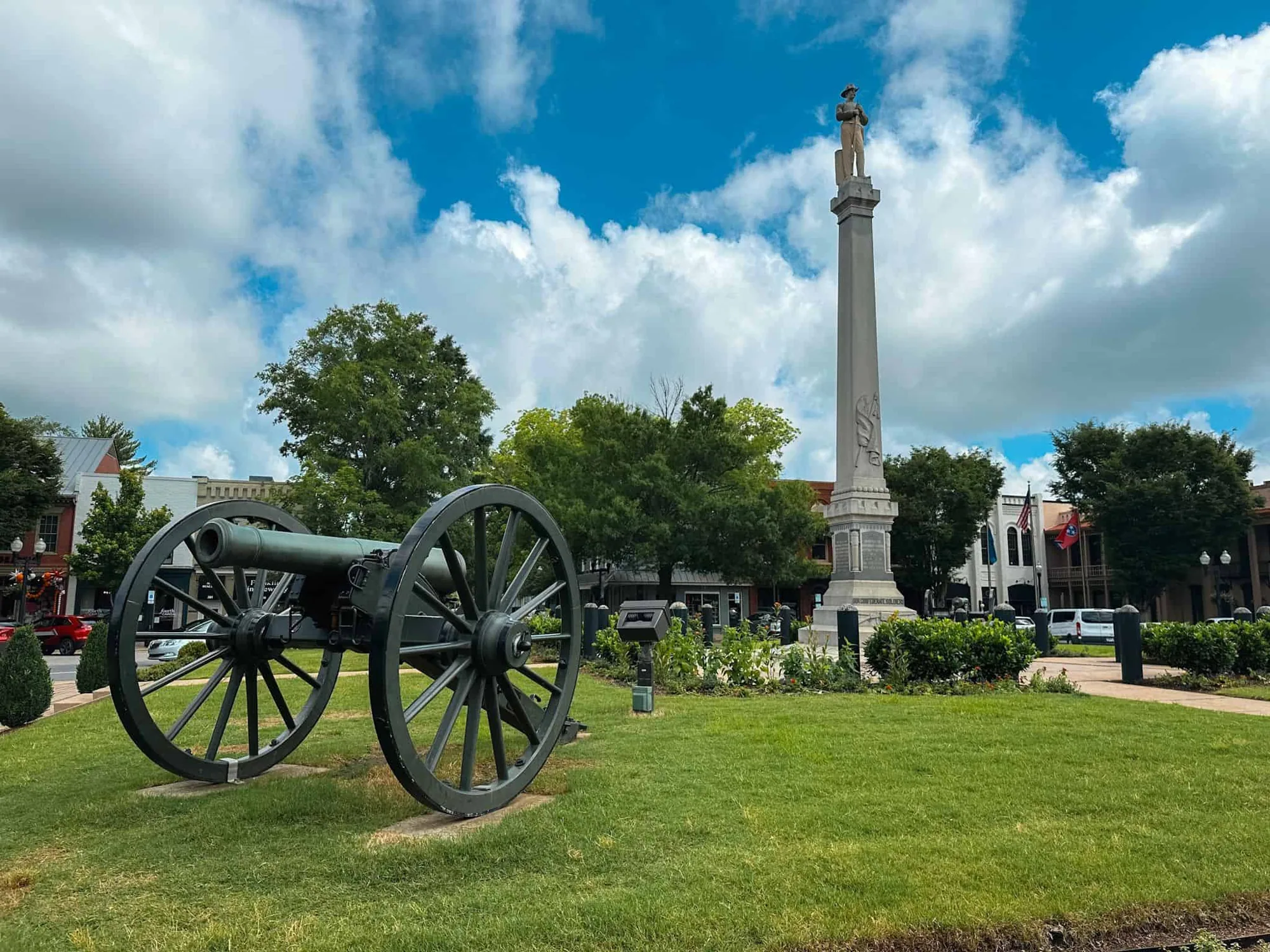
The Williamson County Agricultural Center, which hosts the county fair, sits in the northwest quadrant of the interchange and may relocate, which would free land for redevelopment. If that land is redeveloped, new roofs will rise beside older ones.
Where an older building sits beside newer ones, we check the shared edges: roof-to-wall flashing, gutters that carry water onto a neighbor's roof and walls that now serve as parapets. It is the same failure sequence, with an older starting point.
Commercial Roofing Questions
Why inspect a roof that is only a year or two old?
Early defects are cheaper to fix and easier to document while the warranty is active. The first inspection sets a baseline for every later one.
Who is responsible if the installer's work fails early?
The contract and warranty answer that. Our dated photographs and written findings give the owner what is needed to raise the issue.
Can a new roof be scanned for moisture?
Yes. A thermal scan on a clear evening can show wet insulation even when the surface looks perfect.
What if different phases have different roof types?
We log each section separately with its own membrane type, age and warranty, and repair each by its own method.
How quickly can you respond after a storm?
Emergency response runs around the clock. The crew secures any opening and photographs the damage for the record.