Cold Storage and Freezer Building Roofing in Franklin, TN
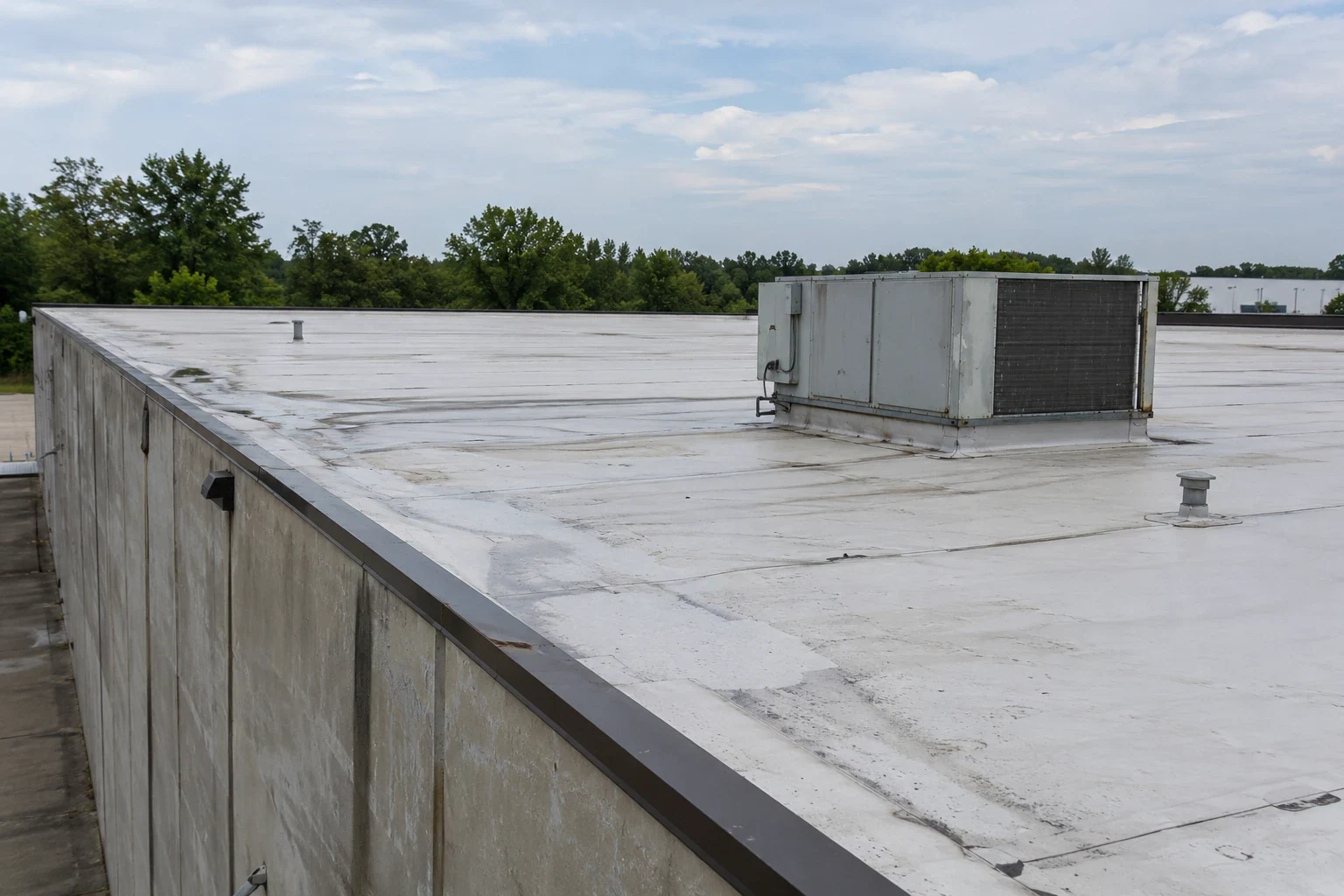
A patch of frost on a freezer ceiling, with a dry roof above it, is the first sign of the most common cold storage failure. The roof is not leaking. Moisture is moving the wrong way, from the warm, humid air outside toward the cold room inside, and it is freezing in the insulation on the way. We start with the frost and walk it backward to the vapor path that let it in.
Cold storage and freezer buildings in Franklin, TN get repair, recovery and replacement work on their low-slope and metal roofs from us. Step by step, we trace the moisture, mark the seam, penetration or vapor breach that let it in and send a short written summary with photos. Night and holiday emergencies are answered too.
The first sign
Cold storage roofs fail quietly. Frost on the underside of the deck, ice at a ceiling seam, drips at a light fixture or damp insulation visible at a penetration all point to moisture in the assembly. A floor that stays wet under a dripping point causes safety problems, and a ceiling that sheds ice can damage stock.
We log each sign with a date and a location. Then we compare the locations to the roof plan. Signs clustered near a penetration point to an air leak through that penetration. Signs along a wall point to the wall-to-roof joint. Signs in broad patches point to a failed vapor retarder or wet insulation. The pattern tells us where to look first.
Door and dock zones deserve a separate line. Where trucks back to a cold dock, warm air meets cold surfaces at the door frame and the canopy, and ice builds on the roof edge. A canopy that drips onto a dock apron creates a slip hazard. We log the zones, note the heat sources and rate the canopy flashing and drainage, because ice on a roof edge can pull flashing loose in one thaw.
What is happening underneath
In a cold room, the vapor drive points up. Warm, moist air outside pushes through the roof toward the cold interior, and any gap lets it in. When it reaches a cold surface, it condenses or freezes. Over seasons, the insulation fills with ice and water, loses its value and pulls on the cold room's refrigeration load.
A roof over a freezer is therefore as much a vapor barrier as a rain barrier. The membrane keeps water out, and the vapor retarder inside the assembly keeps humid air from moving in. Any cut, puncture or loose seam in either layer starts a failure sequence. A surface patch alone will not stop moisture that is entering through an interior gap.
Heat from refrigeration equipment matters too. Condensers and compressors on the roof throw heat at the membrane and carry refrigerant lines through it. Each line is a penetration, and the insulation around a cold line can fail and sweat. We check the line wrap, the penetration boot and the support, and we note the equipment owner on the plan so the right party is called.
How to confirm it
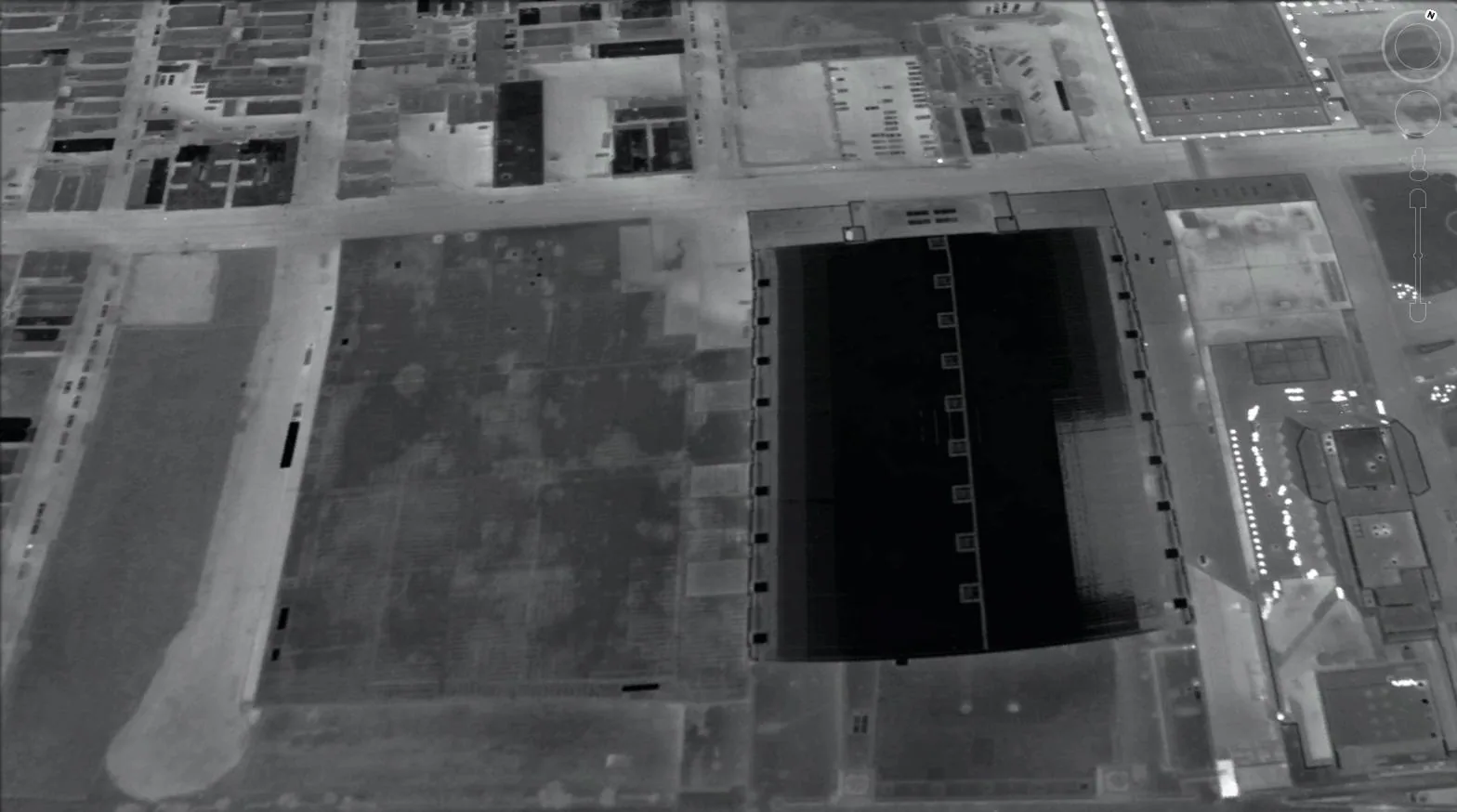
We confirm before we repair. An infrared survey maps temperature differences that suggest wet insulation, and cores show the layers, the moisture and the condition of the vapor retarder. We photograph each core and patch it the same day. If the vapor retarder is intact and the insulation is wet from above, the entry is the membrane. If the retarder is breached, the entry is from below.
Penetrations get special attention. Every conduit, refrigerant line and support through a cold roof is a possible air path. We inspect the seals and the flashing, note their condition and recommend sealing or replacement in the right order. A moisture survey before the work narrows the area and avoids tearing up dry sections.
Fasteners are part of the story in a mechanically attached system. A fastener that passes through the vapor retarder and the cold insulation becomes a cold bridge, and frost can form around its head. We look at fastener patterns where cores show frost and recommend an adhered or ballasted system when the pattern repeats across the roof.
Franklin's climate and a cold roof
Franklin collects roughly 54 inches of rain a year, its July highs average near 91 degrees and it has touched 108. A freezer roof sits between those summers and the cold inside, so the vapor drive in July can be strong. Winter lows have reached minus 22 degrees. The assembly sees a wide range of temperature from top to bottom.
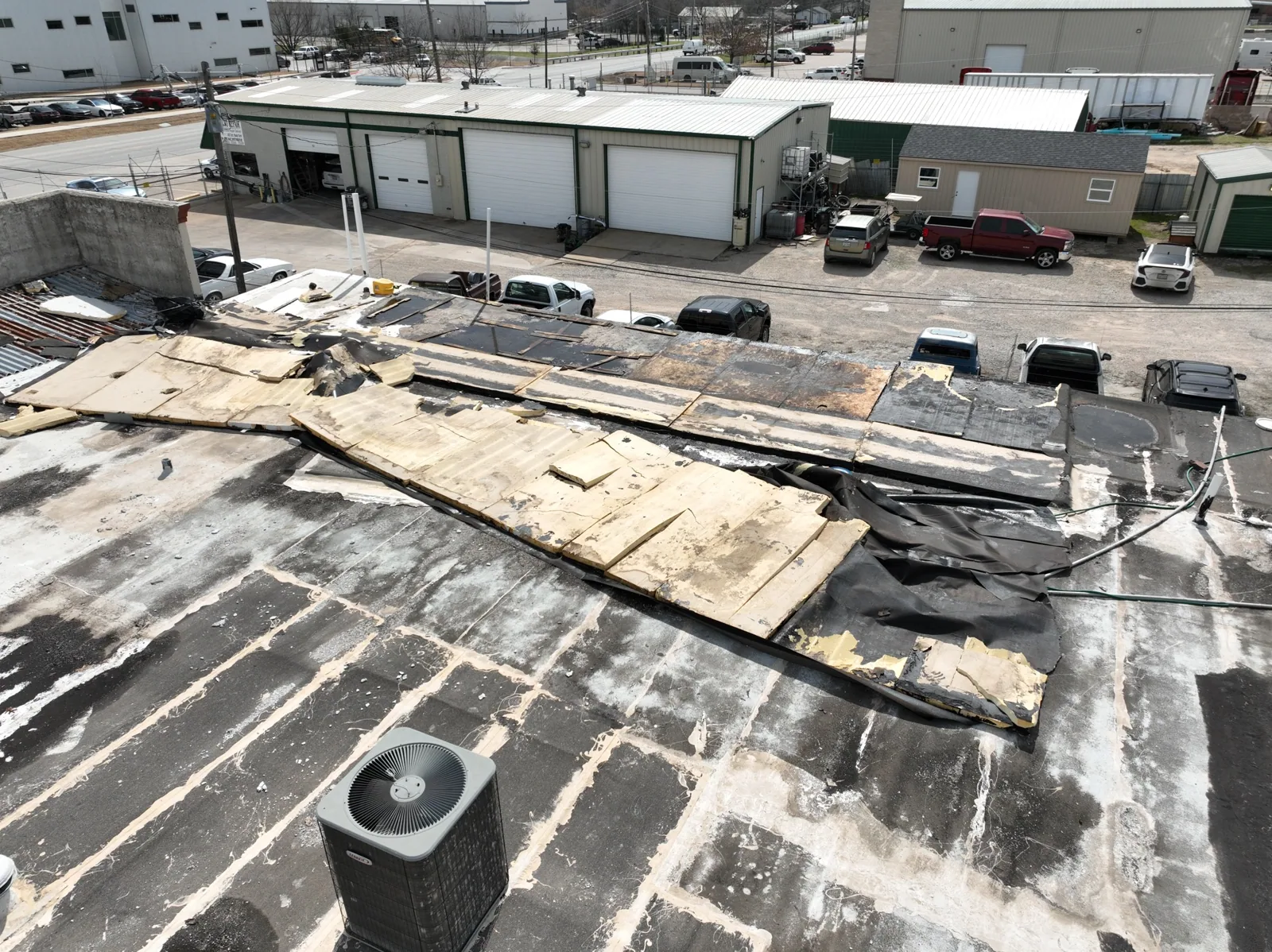
Storms matter too. On August 12, 2023 an EF0 tornado came down by Highway 96 and Royal Oaks Boulevard, doing minor roof damage to some businesses, and a July 2026 thunderstorm warning for northeastern Williamson County cited gusts near 60 mph. Any hole opened in a cold roof by storm damage lets humid air in fast, so a prompt storm damage repair matters more here than on a dry building.
Where cold storage fits in the market
Franklin's Southall area is primarily industrial, with commercial and office space in larger warehouse-style buildings along Columbia Avenue, and a new distribution hub has been announced for the city. A cold section may sit inside a larger distribution building, so the roof plan marks each conditioned zone.
I-65 passes through the eastern part of the city with four exits, and U.S. 31 and 431 run together through Franklin to Nashville. Delivery and crane access on Columbia Avenue is affected by curb cuts and congestion, so we plan lifts and deliveries before the first day.
Repair or replace
Cause before cure. If the entry is a small penetration, reseal it and replace the wet insulation around it. If the vapor retarder is breached over a wide area, plan a section replacement. If the insulation is wet across the roof, replace in phases so the cold rooms stay in service. Cost depends on wet insulation volume, access, refrigeration constraints, penetrations and the system chosen, such as PVC or TPO. Cold rooms often sit inside a distribution center, so dock and canopy details are checked in the same walk.
Timing is shaped by operations, and a cold section differs from the dry warehouse roof beside it. Peak shipping seasons, product loads and defrost cycles all limit when a section can be opened. We ask for the facility calendar and place work in quiet windows. A section is opened only when it can be closed the same day, and the vapor retarder is restored before the membrane goes back on.
Commercial Roofing Questions
Why does a freezer ceiling frost over if the roof is dry?
Humid air is moving through a gap in the vapor retarder or a penetration and freezing in the insulation. The membrane may be fine. We trace the air path and seal it.
Can a cold storage roof be replaced while the building runs?
Often. We replace in sections, keep the cold rooms closed, and seal each section as it is finished. Refrigeration loads and door traffic are checked with the facility team beforehand.
What is a vapor retarder and why does it matter?
It is a layer that keeps humid air from moving into the insulation. In a cold room it is as important as the membrane. A cut or gap lets moisture freeze inside the roof.
Does storm damage matter more on a cold roof?
Yes. An opening lets humid air in quickly and fills the insulation. We repair storm damage promptly and check for wet insulation around it before closing the roof.
What helps before the first freezer-roof visit?
Share the roof age, how the cold and dry zones are laid out, what frost or leaks you have seen and earlier repair invoices. We follow the failure on the roof itself and send a brief written summary afterward.