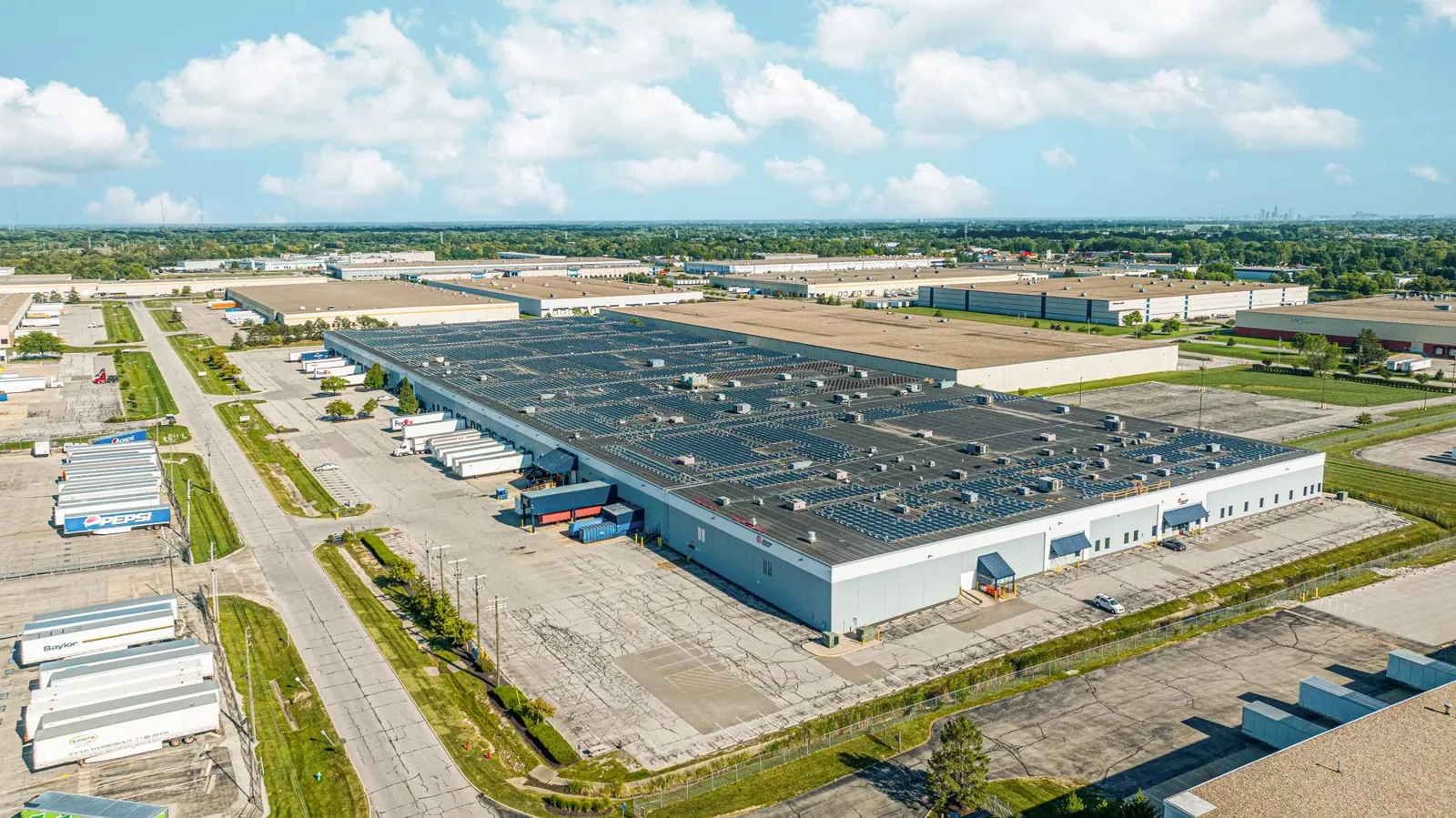
Warehouse Roofing in Franklin, TN
A stain on a ceiling tile near a dock door is usually the first sign on a warehouse roof. It looks like a small problem. The cause is rarely small, and it is rarely above the stain. Water travels along the deck and the insulation joints before it drips, so the stain is only where the water stopped, not where it came in. We start there and walk the failure backward.
We repair, recover and replace low-slope and metal warehouse roofs in Franklin, TN. Step by step, we trace the path: the stain, the wet layer, the standing-water line, the seam or strainer that let it in. Emergencies are answered at any hour, holidays included, and each roof walk ends with a brief written summary and a photo trail.
The first sign
Look at what the building tells you before you climb. A stain that grows after rain points to a leak. A stain that appears on humid mornings with no rain points to condensation. A stain in a line along a wall points to flashing. A stain under a drain points to the drain. Each pattern has a different cause and a different cure.
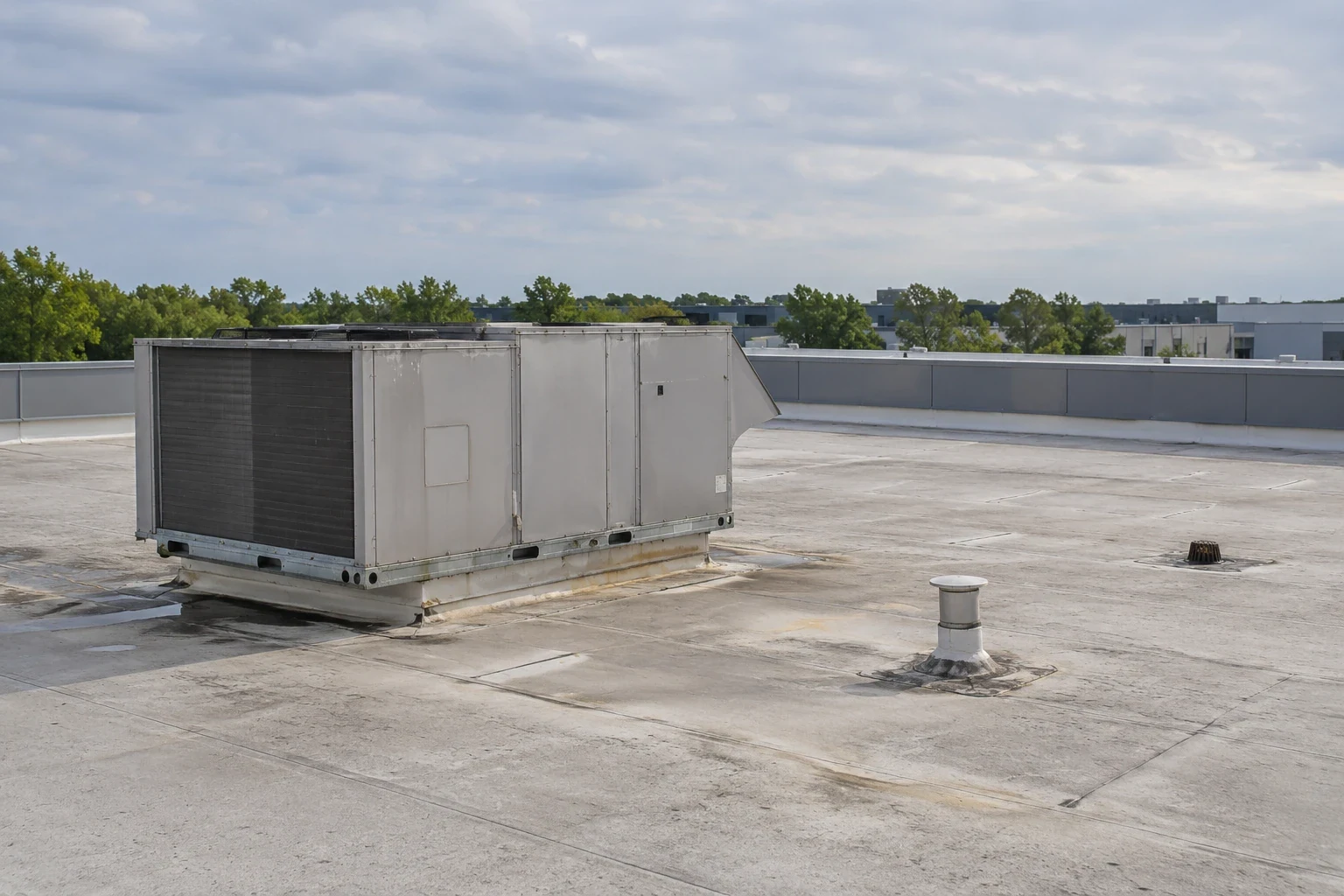
Then climb. A large warehouse roof can have few penetrations, which narrows the leak sources. The usual suspects are the drains, the seams, the edges and the few penetrations that exist. We mark each with a photo and a plan location, so the cause can be named before a repair is priced.
Drains deserve the next look. Leaves, plastic and construction scraps packed into a drain strainer hold water on the membrane, and the standing-water line left behind shows how long it sat. Water at that line adds weight and speeds wear at the seams nearby. We clear the strainer, photograph the line and note whether the roof drains in a day or lingers, because a slow drain is a failure in progress.
What is happening underneath
A warehouse roof is a sandwich. A deck, usually steel, carries insulation, and a membrane sits over the insulation. When water enters, it soaks the insulation, and wet insulation loses its value. It also adds weight and can corrode the deck from above. The wet layer is the real damage, not the drip.
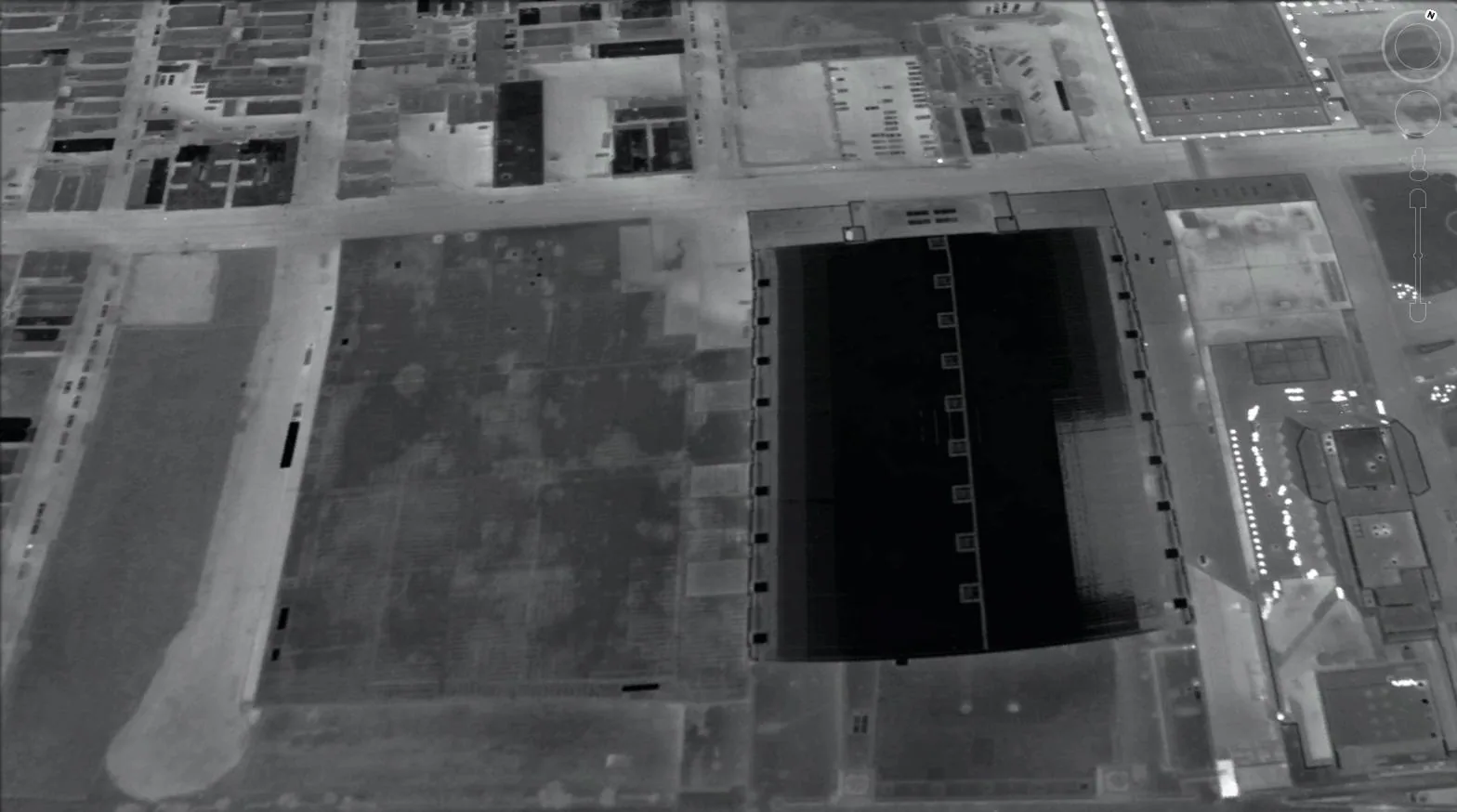
We therefore verify the wet layer before any repair is priced. An infrared moisture survey finds wet insulation without a cut, and a few cores prove what it shows. If the wet area is small, a section is cut out and replaced. If it is wide, the roof is nearing replacement. Patching over a wet layer only moves the leak.
Fasteners are the other hidden player. Over time, some fasteners back out of the deck and push a small bump up under the membrane. The bump rubs through the surface in the next season. A roof walk with a probe finds these bumps early, and a quick reseat or patch prevents a leak that would be expensive to trace later. The pattern of bumps also tells us whether the attachment is failing across the roof.
What Franklin does to a flat roof
Franklin gets about 54 inches of rain a year. July highs average near 91 degrees here, with recorded extremes of 108 and minus 22. That range, repeated every year, works a membrane and its seams like a hinge. Heat movement opens laps in summer, and cold stiffens sealants in winter.
Storms add wind. Estimated 75 mph winds accompanied the August 12, 2023 EF0 tornado that struck near Highway 96 and Royal Oaks Boulevard, leaving minor roof and exterior damage at some businesses. That storm is the reason edge metal and perimeter attachment get checked on every roof walk. The May 2010 Harpeth flood is the reminder that water paths matter, from the roof drain to the parking lot.
Where warehouse roofs sit in the city
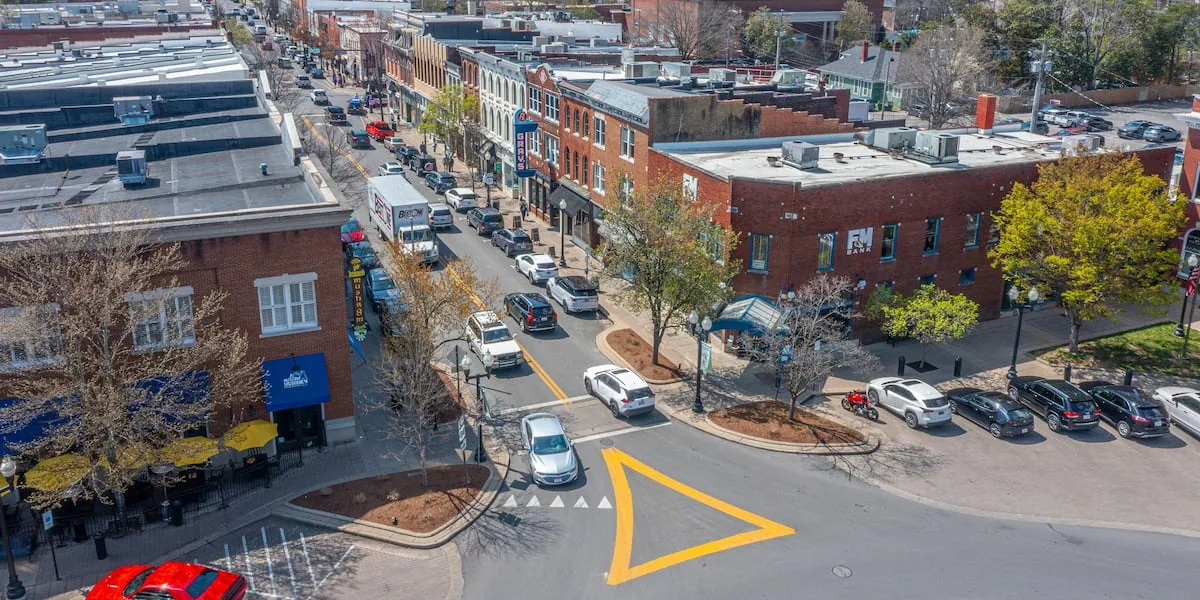
The Southall area along Columbia Avenue, south of Downs Boulevard, is mainly industrial and holds nearly half of Franklin's industrial development, with commercial and office space there housed in larger warehouse-style buildings. A pocket west of CoolSprings Galleria holds offices, showrooms and institutional uses in similar warehouse-style buildings.
Access matters in both places. Numerous curb cuts and driveways on Columbia Avenue north of Mack Hatcher Boulevard create congestion that affects truck and crew access, and Mallory Lane and Royal Oaks Boulevard have peak-hour congestion that affects delivery and crane planning. We plan lift position, deliveries and staging with those limits in mind. That planning applies on Columbia Avenue in Southall and on Mallory Lane and Royal Oaks Boulevard alike.
The Carnton area of Franklin mixes industrial, office and recreation uses and has room for more light industrial, warehouse or office space. Where a warehouse sits beside office space, roof water can end up on shared pavement. Flex industrial buildings can carry both office finishes and storage under one roof, which raises the stakes for any leak.
Repair or replace
One clean rule: cause before cure. If the cause is a clogged drain, clear it. If it is a split seam, rebuild it. If the insulation is dry, commercial roof repair is enough. A membrane that has aged out above widely wet insulation calls for replacement. A recover over a dry, sound roof may sit between the two.
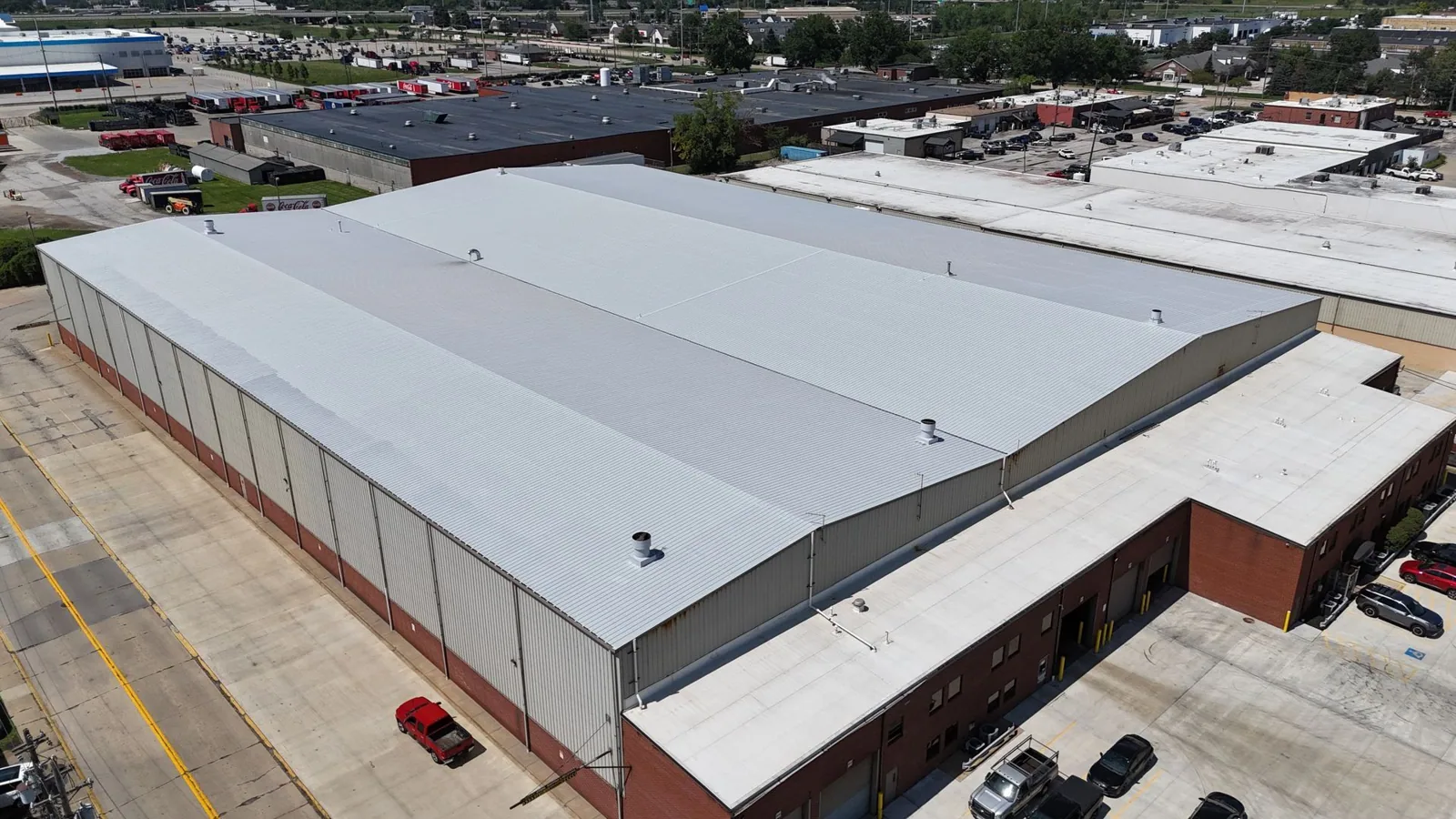
Systems such as TPO and metal retrofit are common for warehouses. Price follows wet insulation volume, roof area, access, penetrations and deck repair. We state each driver, so the owner can compare options. Timing follows weather: adhesives and welds need workable temperatures, and Tennessee spring storms can interrupt open roofs.
Keep it working
A warehouse roof lasts longer on a schedule. Two roof walks a year clear drain strainers, check seams, tighten edge metal and photograph changes. A preventive maintenance visit also catches damage from tradespeople who use the roof, such as HVAC technicians. A distribution center with heavy traffic needs the same routine, only more often. A warehouse that changes tenants earns a fresh walk, because new racking, new rooftop units and a new use change where the water goes.
Commercial Roofing Questions
How do I tell a roof leak from condensation?
Leaks follow rain. Condensation follows humid mornings and cold surfaces. A moisture survey plus a look under the deck shows which one you have, and the cure differs.
Why does a warehouse roof leak near the docks?
Dock walls and canopies add flashing, and doors and equipment add penetrations. The edges also take wind and traffic. We check the wall terminations, canopy tie-ins and drains nearest the docks first.
Can a warehouse stay in use during a roof replacement?
Usually yes. Work proceeds in sections that are closed in nightly, with dock lanes kept clear. Racking and sprinklers are protected, and noisy steps are planned around shifts.
Does the 2023 tornado near Highway 96 mean my roof is damaged?
No. It shows that wind events reach Franklin. Your roof is judged by its own edges, attachment and condition, which we check directly after a storm.
What helps before a roof walk?
Share the roof age, the building use, leak history and any repair invoices. A roof plan helps. We trace the failure on the roof and report what we found in a short written summary.
How often should drain strainers be cleaned?
Before spring storms and again after leaf fall, at minimum. A strainer that looks clear from the ground may be packed on the roof. We clear and photograph each one on every walk.