Distribution and Fulfillment Center Roofing in Franklin, TN
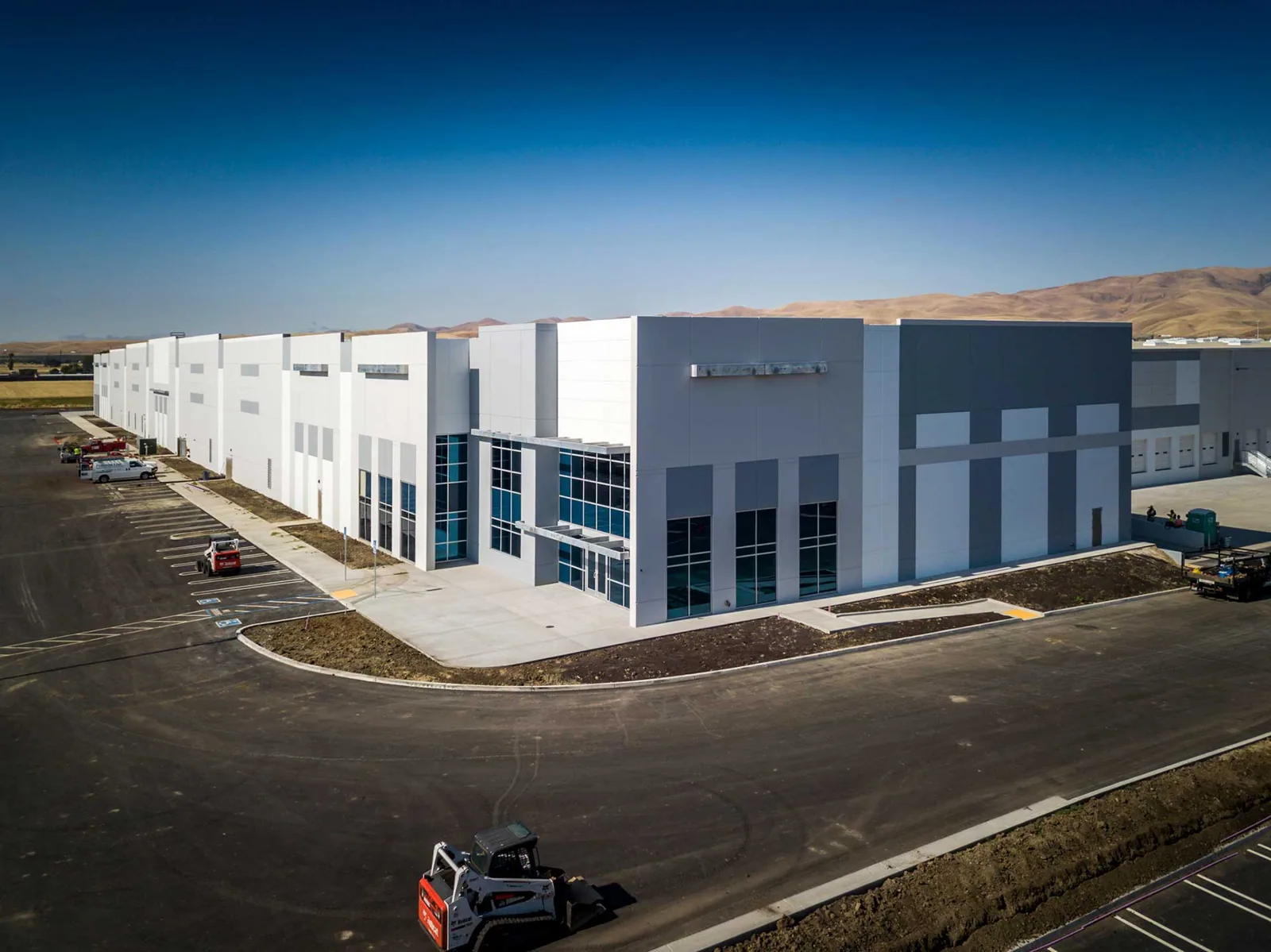
A wet patch on a distribution floor, just inside a dock door, is a failure with a first sign that managers notice quickly, because it stops a forklift lane. The patch is not always a door problem. Water often enters at the canopy tie-in above the door, runs down the wall flashing and drips inside. We start with the patch and walk it back to where the water crossed the roof edge.
For distribution and fulfillment centers in Franklin, TN we handle repair, recovery and replacement of low-slope and metal roofs. We trace each failure on the actual roof, mark the seam, flashing or drain that let the water in and send a short written summary with photos. Emergencies at any hour, holidays too, get a response.
The first sign
On a fulfillment building, the signs show up in operations before they show up in the roof file. A wet floor stops a pick path. A stained ceiling tile in the office mezzanine draws a complaint. A rusting rack leg near the wall shows slow, repeated moisture. Each sign goes into the log with a date and a place, since a run of entries over weeks says more than one drip.
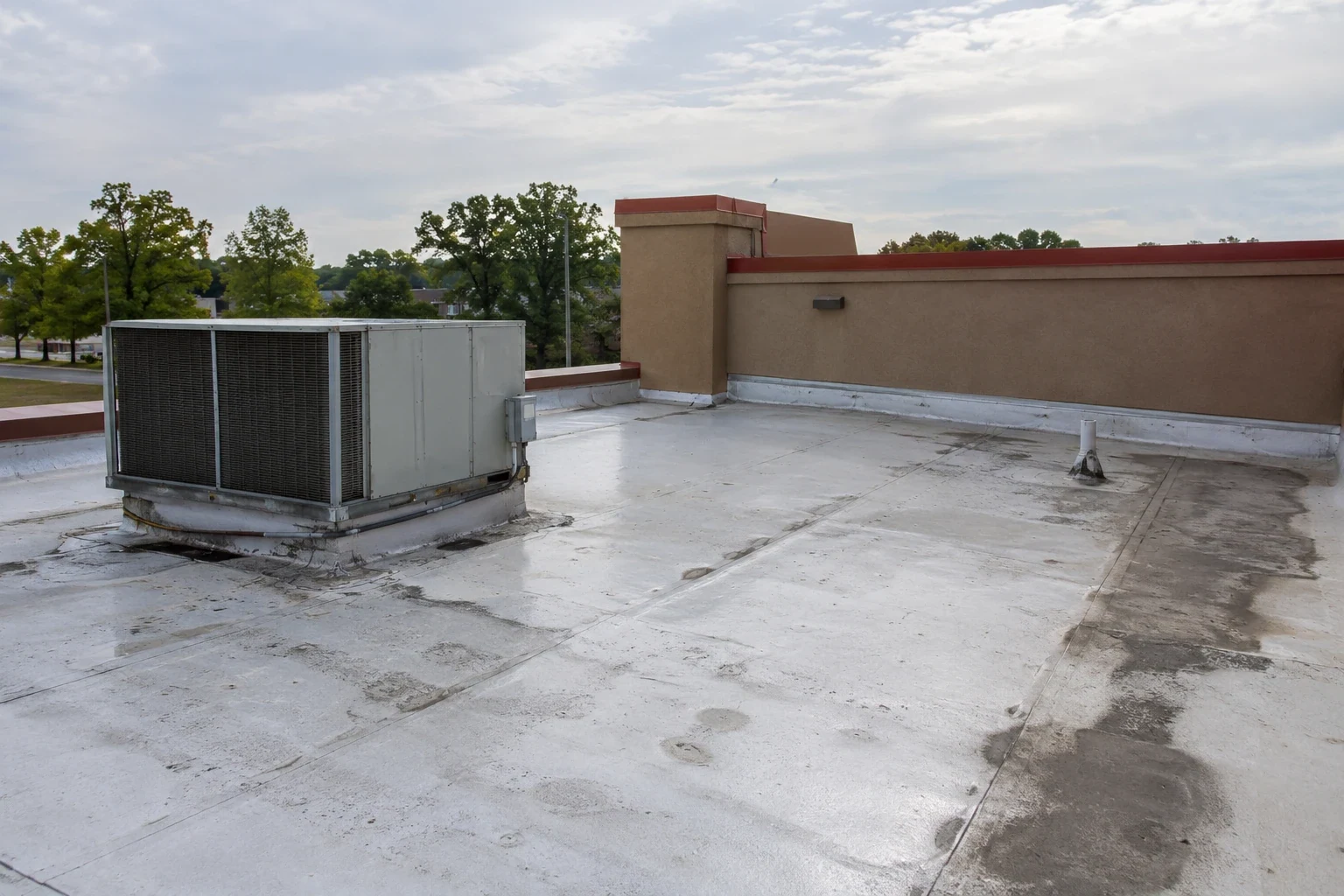
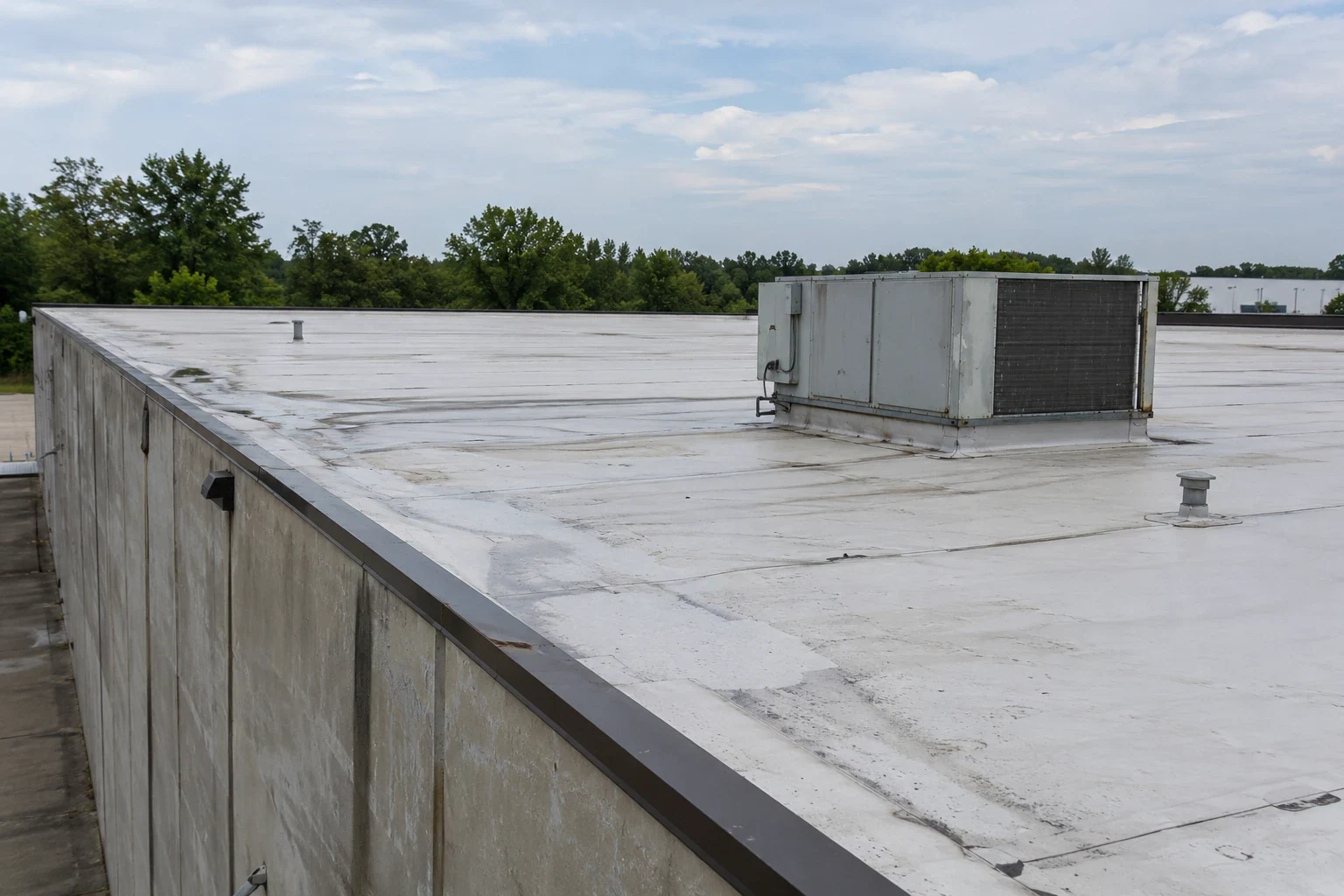
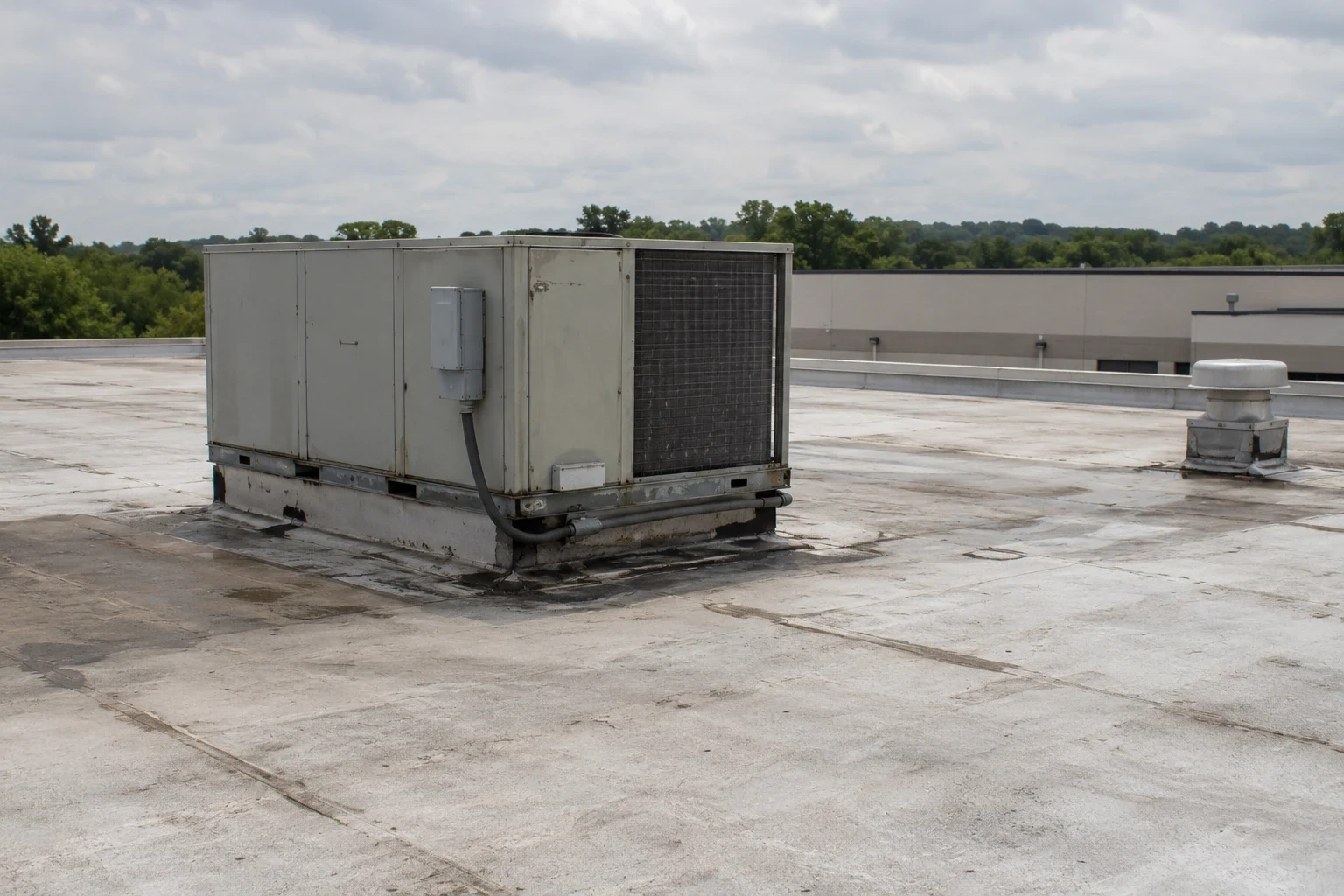
Then we climb. Distribution roofs are often large and plain, with a few big penetrations: rooftop units, smoke vents, skylights and exhaust. Most failures concentrate at those details, at the dock canopies and at the edges. We walk each, probe the seams between them and photograph anything that moves.
Smoke vents and skylights deserve their own entries. Each has a curb, a frame and a seal, and the frame can crack with heat movement. A smoke vent that does not seat tightly lets water in around its hinge. We open each one, check the gasket and the curb flashing, and note whether the vent moves freely. A vent that sticks may not work in a fire, which makes the check a safety item as well as a roofing one.
What is happening underneath
Water that gets in at a canopy or a curb does not stay there. It runs along the top of the insulation, finds a joint and drops into a wet layer that can spread many feet from the entry. The roof still looks fine at that spot, and the wet insulation quietly adds weight and loses its value. The deck below can start to rust.
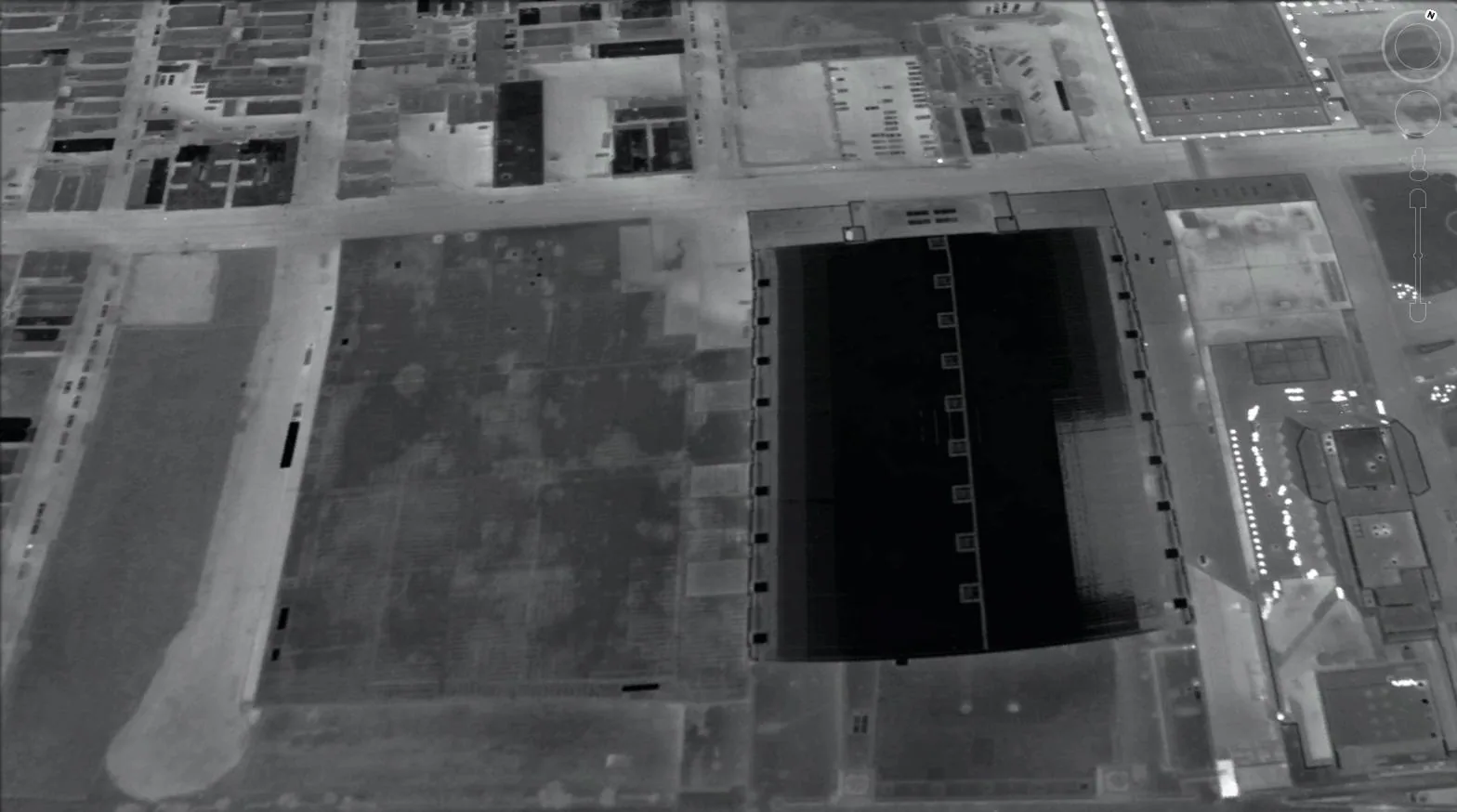
That is why the entry point and the stain are rarely the same place. Roof surveys use infrared imaging to map the wet layer, and cores confirm it. Once we know where the wet layer begins and ends, the repair can be cut to the wet area instead of guessed. For a building that cannot close, a smaller, correct repair is worth a great deal.
Heat from the building plays a part too. Warm, humid air from inside meets a cold deck on winter nights and condenses, wetting the insulation from below. This looks exactly like a leak. A moisture survey and a careful look at the underside of the deck separate the two, because the cure for condensation is ventilation or a vapor retarder, not a patch on top.
An infrared moisture survey does the mapping, and a yearly maintenance walk keeps it current. A building with a refrigerated section shares some details with cold storage roofs, where moisture moves the other way, and a building with production lines has the exposure of a manufacturing plant roof. We check which of these applies before the first repair is priced.
Weather in Franklin
Rain here totals about 54 inches a year, July highs run near 91 degrees, and the record book shows 108 degrees at the top and minus 22 at the bottom. The heat and the freezes move membranes and flashings through a wide cycle. Spring and summer storm lines add wind. Minor roof damage at some businesses followed an EF0 tornado on August 12, 2023, near Highway 96 at Royal Oaks Boulevard.
A July 2026 severe thunderstorm warning covered Franklin, Brentwood and Nolensville, expecting 60 mph gusts and hail of up to about three-quarters of an inch. After a storm line, a roof walk is the way to find out what moved, and it is worth doing before the next rain.
Where the buildings are
Four I-65 exits serve Franklin, and U.S. 31 and 431 share a route through the city toward Nashville. Corporate or regional headquarters for Nissan and Mitsubishi Motors are in Franklin, and In-N-Out Burger plans a $125.5 million hub and distribution center here by 2026. Logistics and corporate users share the market, so dock and canopy details are part of the local building mix.
Access is a real design factor. West of I-65, Mallory Lane and Royal Oaks Boulevard have numerous curb cuts, four-lane divided roadways and rush-hour congestion, all of which shape delivery and crane access planning. In the Southall area, Columbia Avenue north of Mack Hatcher Boulevard has similar congestion that affects truck and crew access. We schedule deliveries and lifts around those limits, and we tell the site team the plan in advance.
Repair or replace
Cause before cure. A clogged drain is cleared. A split seam is rebuilt. A failed canopy flashing is rebuilt in layers. Where the insulation is dry, commercial roof repair may be all the building needs. A membrane at the end of its life over broadly wet insulation means replacement, phased so the docks stay in use.
Common systems are TPO, PVC and metal retrofit. Cost depends on wet insulation volume, roof area, access, penetrations and deck repair. We write each driver into the scope. Many distribution buildings share their details with a plain warehouse roof, so the same drain and seam checks apply.
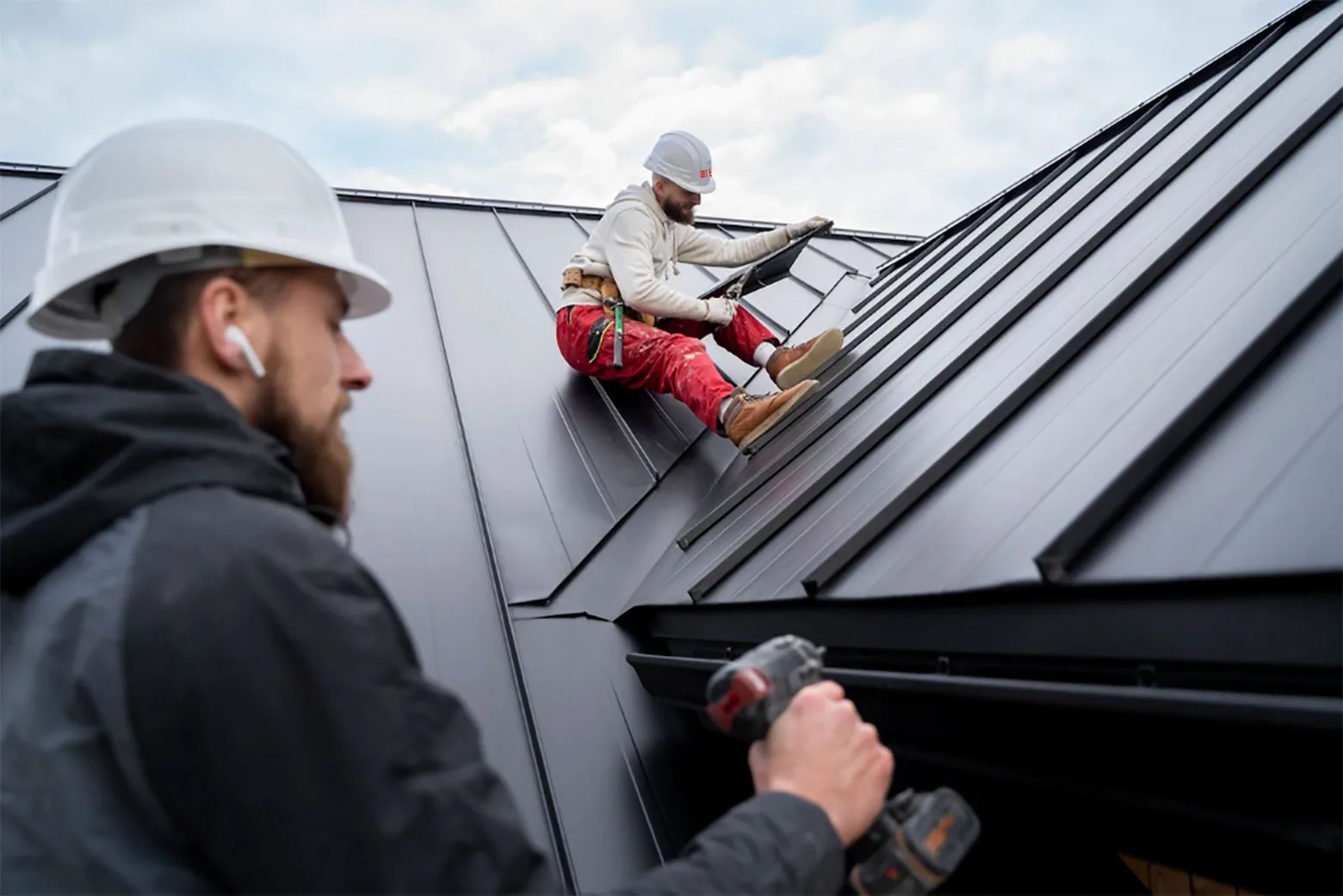
Work can be phased by bay. We replace or repair one section at a time, with the dock doors beneath it scheduled out of the busiest hours. A temporary closure at the end of each shift keeps the building dry. Daily photos show the owner what was done, and the final close-out record lists the repaired details so the next inspection has something to compare against.
Commercial Roofing Questions
Why do dock areas leak so often?
Canopies, wall terminations, door frames and drains all meet there. Each adds a joint. We check the canopy tie-in and wall flashing first, since water at those points can run inside without a visible hole.
Can a fulfillment center stay open during roof work?
Yes, in most layouts. We work in sections, close in each section nightly, keep dock lanes clear and protect racking and sprinklers. The plan is shared with the site team before work starts.
How do you find a leak that shows up far from the entry?
We map the wet layer with infrared imaging, confirm with cores and trace the water path on the roof. The entry point is usually a seam, flashing or drain upstream of the stain.
Do hailstorms like the 2026 warning cause damage?
They can, but only a walk shows it. That warning put hail at up to about three-quarters of an inch, which is small. We look for bruises, cracked seams and dented metal after any storm line.
What helps before we walk the roof?
Share the roof age, the building layout, how many docks there are, leak history and earlier repair invoices. Once on the roof we trace the failure and return a written summary that is short and clear.