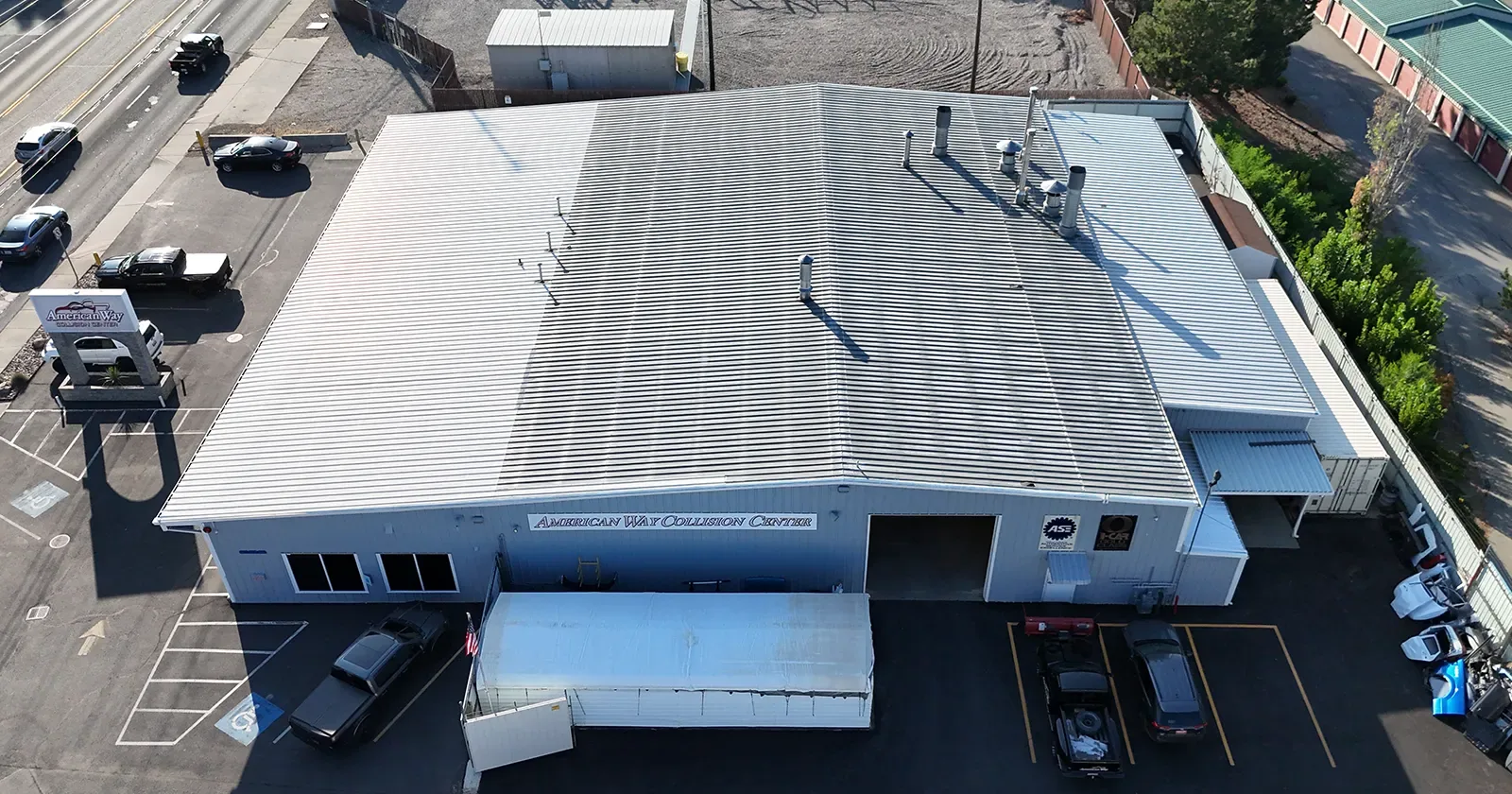
Fitness Center Roofing in Franklin, TN
A wet patch on the floor of the free-weight area, with a member stepping around it, is the first sign, and the club has to decide fast whether to close the zone. The patch only shows where the water landed. The task is to trace it up through the ceiling, the insulation and the roof to the opening, and to decide whether the water came from rain or from the building's own air. A gym or rec center in Franklin, TN is a large, humid, heavily conditioned space under a roof that carries a lot of rooftop equipment. Each of those facts changes how the failure shows up and how it is fixed.
Rain or inside air?
Fitness buildings generate moisture. Members breathe hard, showers run and pools or saunas, where they exist, put water vapor into the air. If the roof assembly does not manage that vapor, it condenses on cold surfaces and drips. A drip can look exactly like a leak.
We separate the two with timing and readings. A drip that begins hours after rain, with a wet layer in the insulation, is a leak. A drip on a cold, dry morning over dry insulation suggests condensation. A scan across the roof and a few core cuts settle it. Condensation is cured with insulation, vapor control and air balance, a leak with a closed opening, and the wrong repair wastes a season.
Air balance matters as much as insulation. A building held at negative pressure pulls humid air into the roof assembly through every gap, and a building held at positive pressure pushes it out. The mechanical contractor and the roofer should compare readings when condensation shows up, because the air handling, not the roof, may be to blame. We record the readings and share them.
Rooftop units and curbs
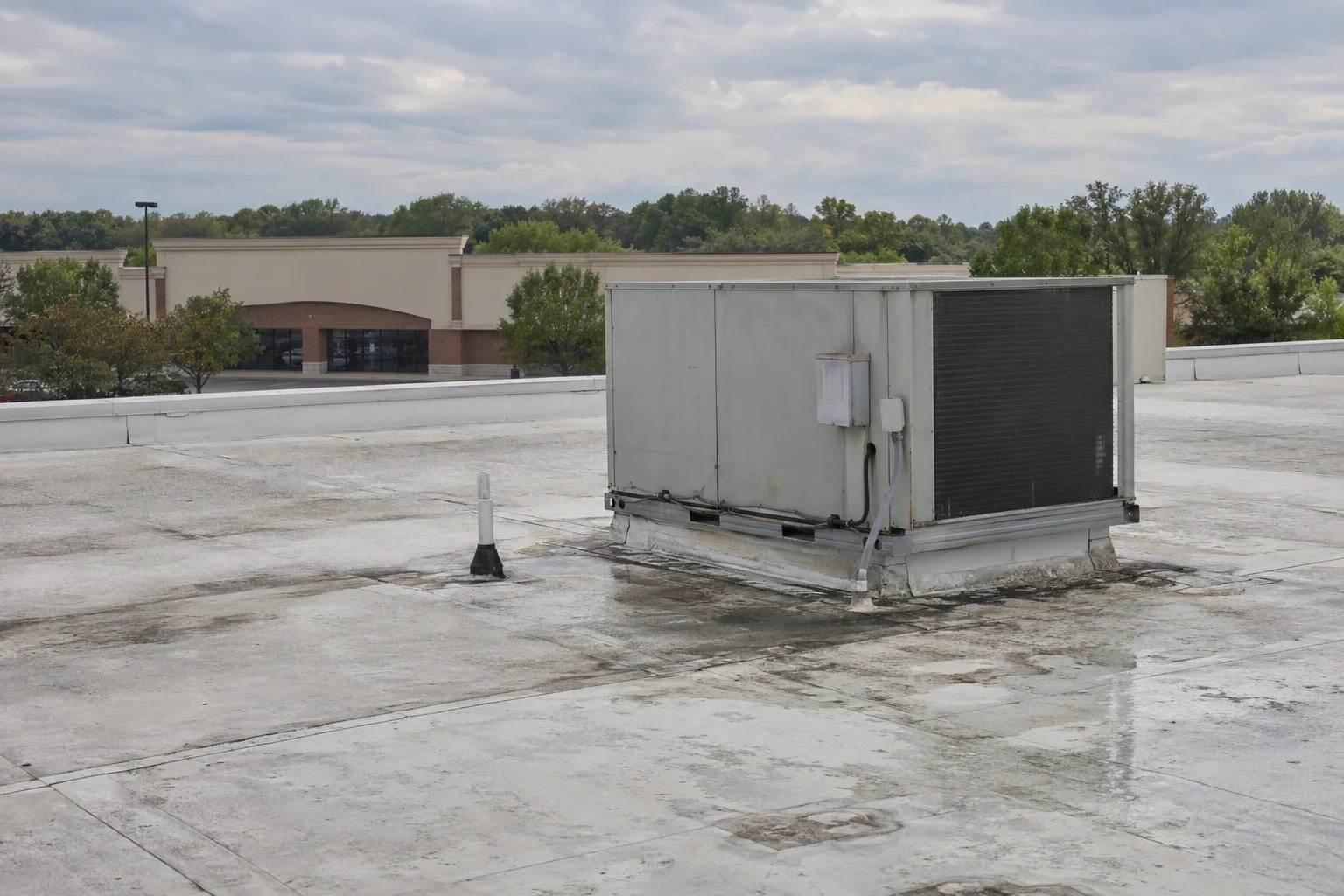
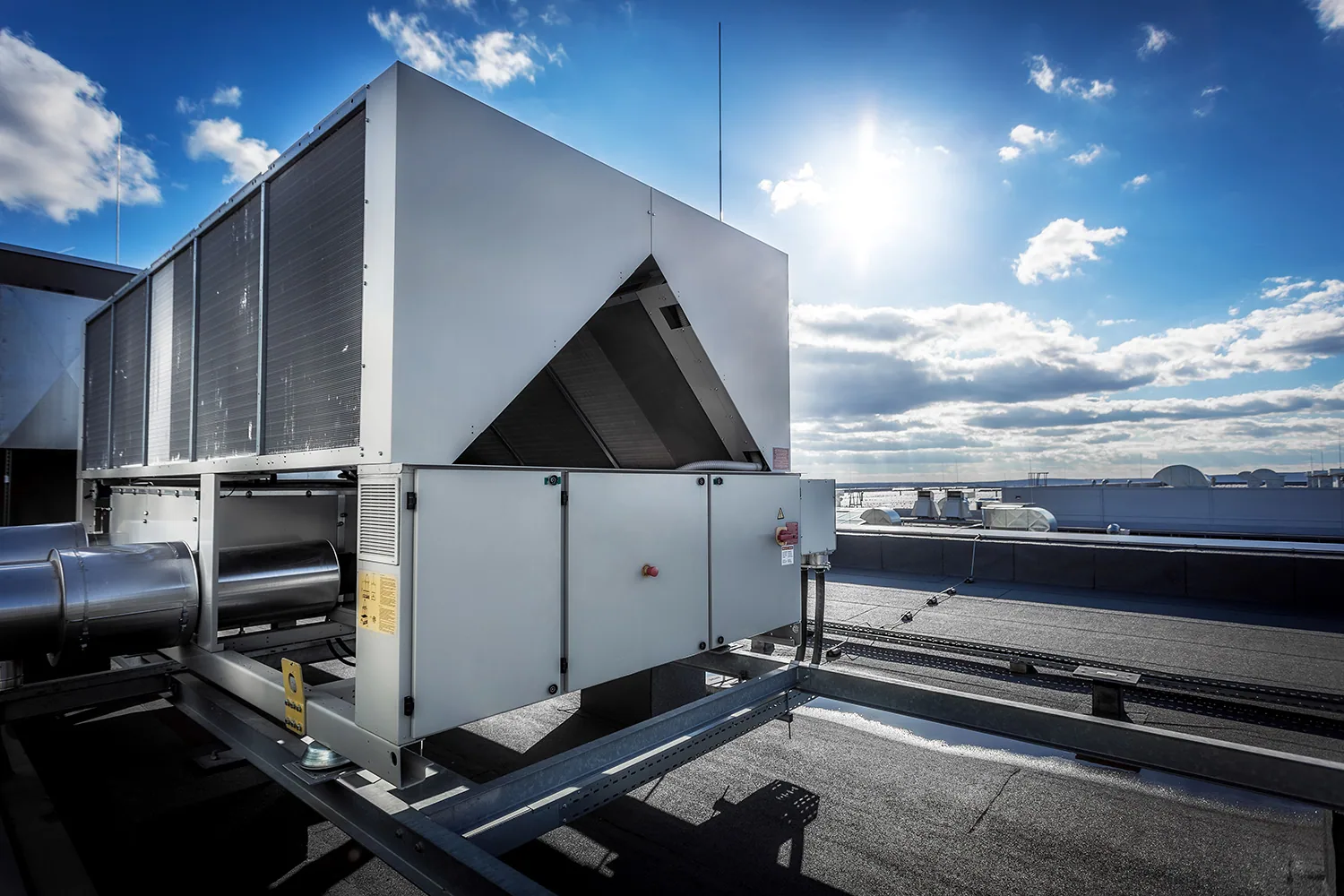
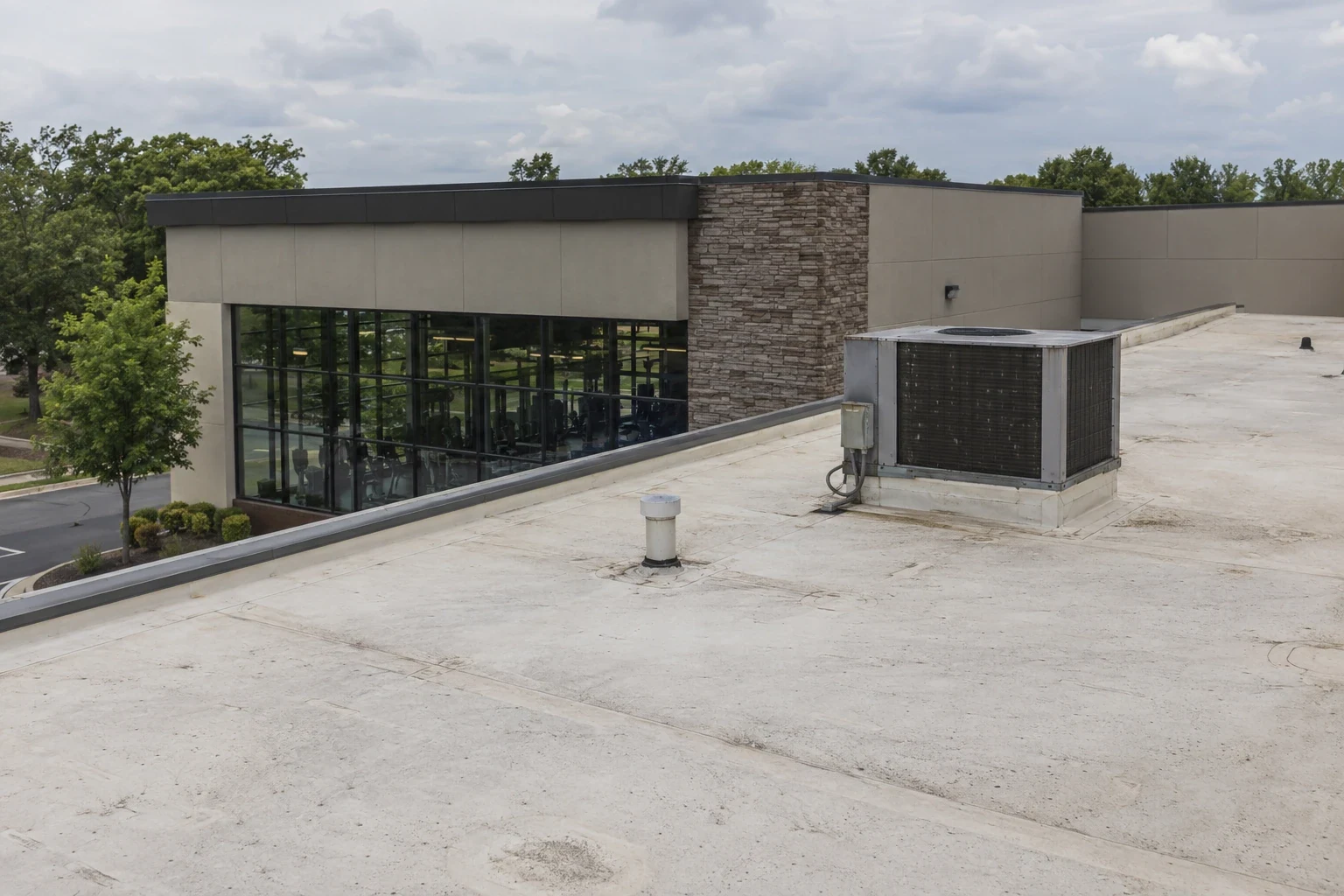
A gym needs strong ventilation and cooling, so its roof carries large rooftop units, exhaust fans and make-up air. Each sits on a curb, and each curb is a cut in the membrane that was sealed by hand. Heat movement works on those details every day. Franklin's July highs average near 91 F and have reached 108 F, so metal curbs and flashing expand in the afternoon and shrink at night.
We check the curb corners, the counterflashing and the base seal on every unit. A hairline in the sealant, a lifted corner or a curb that has shifted with vibration lets rain in. The equipment curb record lists the unit, the curb height and the flashing condition, and the next visit compares against it.
Gas and exhaust equipment adds one more detail. Vent pipes pass through the roof in boots that crack with age, and exhaust hoods sit on small curbs of their own. Each is rated on the roof walk and photographed, so a manager can see how many small openings the roof has and how many have been repaired.
Where the water stopped
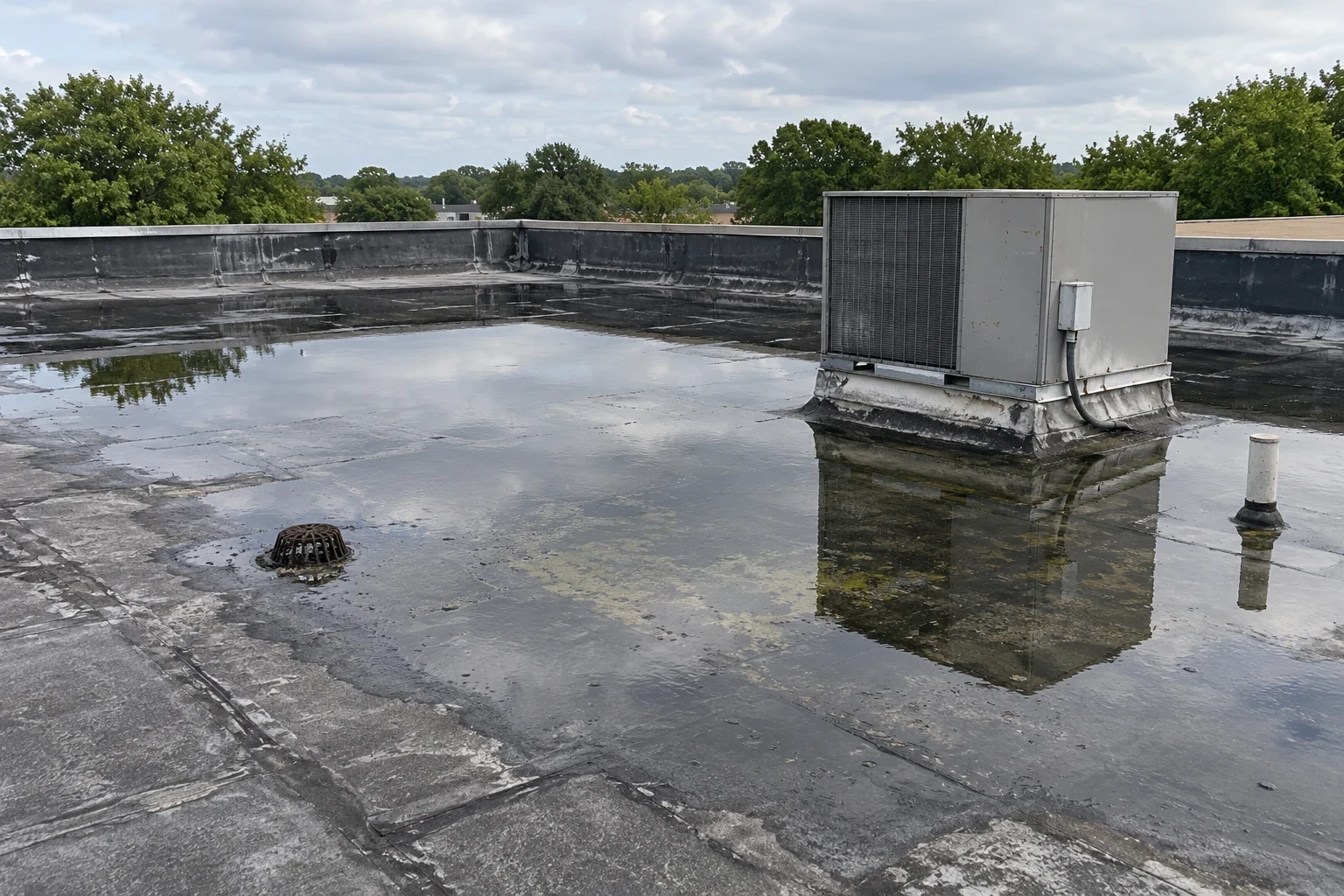
A large flat roof sheds Franklin's roughly 54 inches of rain a year to a few drains, and if one strainer clogs, water stands. That water finds any seam stiffened by summer. A ponding water repair starts by clearing the drain and watching how fast it empties.
The trace begins at the interior stain, marked on a roof plan, and widens to the drains, curbs, seams and wall joints around it. A scan outlines the wet layer and cores verify it, and the written trail that results tells the manager whether a local repair will hold.
Drains and scuppers on a large club roof see leaf litter, windblown trash and, in some seasons, ice. We lift strainers, flush lines where we can and photograph the water line afterward. If the drain is clear and the pond remains, the problem is slope or a dropped sump, and the written trail says so.
Storm lines and tall walls
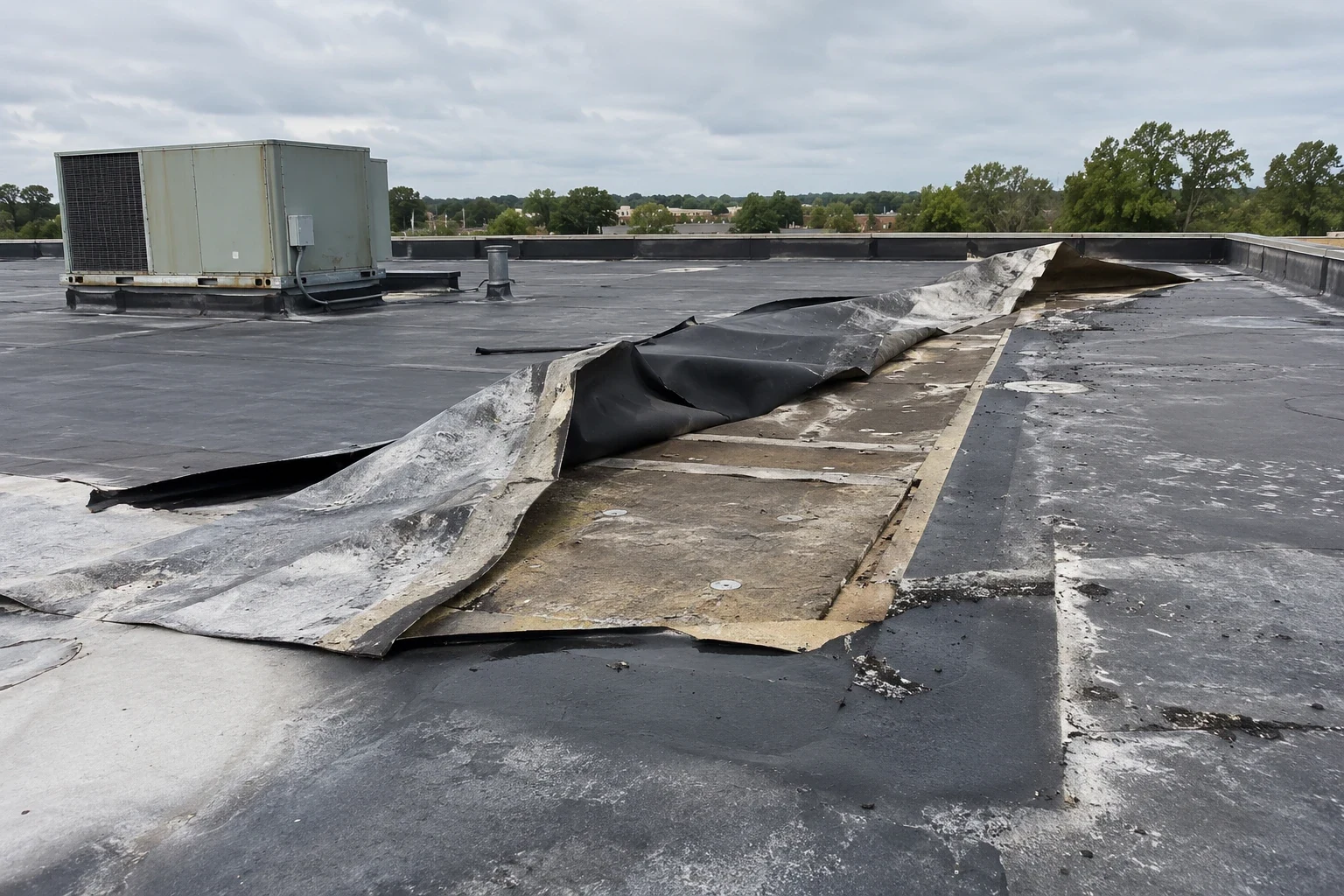
Tall, simple volumes catch wind, and a fitness building is often one. The EF0 that crossed Franklin in August 2023 carried estimated 75 mph winds and caused only minor roof and wall damage at some businesses, while a July 2026 warning covering northeastern Williamson County called out gusts near 60 mph.
After a storm we check the edges, the rooftop equipment covers and the flashing at tall walls. Wind finds a loose edge first and then works along the membrane. A walk right after the storm, with dated photographs, is the record that supports a wind damage repair and any insurance claim that follows.
Hail is the other storm item: the same warning put stones up to about three-quarters of an inch in the forecast, enough to leave bruises on a thin membrane. Suspect spots get pressed and marked on the plan, since an unrepaired bruise can crack after a few freeze and heat cycles.
Working around members
A club cannot close for a week, and most members notice noise. We plan roof work in sections, with interior protection under the work area and quiet hours respected. Early-morning and late-evening windows are common for noisy tasks. We agree on the schedule with the general manager, keep entrances and parking clear and stop if weather threatens.
Equipment shutdowns need coordination. Shutting a rooftop unit for a curb repair changes the air in a zone, so we schedule it for low-use hours and tell staff. A larger project runs like an occupied building reroofing job, logging each area as it opens and closes.
Safety planning covers members and staff. Barriers go up under ladders and hoists, delivery routes avoid the front entrance and the crew keeps tools and debris out of public areas. A named contact on site can halt the crew when a class or event needs the space, and a short written log of every hatch opening lets staff see when the crew is on the roof.
Fitness sites around Cool Springs and Brentwood
The McEwen area around CoolSprings Galleria, at the I-65 and Moores Lane interchange, holds close to 12 million square feet of commercial, office and industrial buildings. Gyms and rec centers share that environment with shopping centers and big-box retail, and the roofing questions overlap: large flat roofs, many rooftop units and tenant schedules.
An operator with locations in Cool Springs, Brentwood and Nolensville can have every roof walked the same way, with age, repair history and next step noted for each. That keeps decisions consistent across sites and gives the board or owner a clear basis for the budget.
Commercial Roofing Questions
How do we tell condensation from a roof leak?
Look at when it drips. Water that follows rain and sits over wet insulation is a leak, while a drip on a dry winter morning more likely comes from the building's own air.
Can roof work happen while the club is open?
Yes, in sections with interior protection and quiet hours. We agree on the schedule with your manager.
What if water appears over the pool or locker rooms?
Phone as soon as it appears. The area is dried in before the source is traced, and humid zones are checked for both leaks and condensation.
Do rooftop units affect the roof warranty?
They can. Curbs and flashing must follow the manufacturer's details, and new units may need notice.
How often does a gym roof need a walk?
Twice a year, in spring and autumn, plus once after severe storms. A roof with repeat repairs may need more, and the rated baseline shows how often.