Ponding Water Roof Repair in Franklin, TN
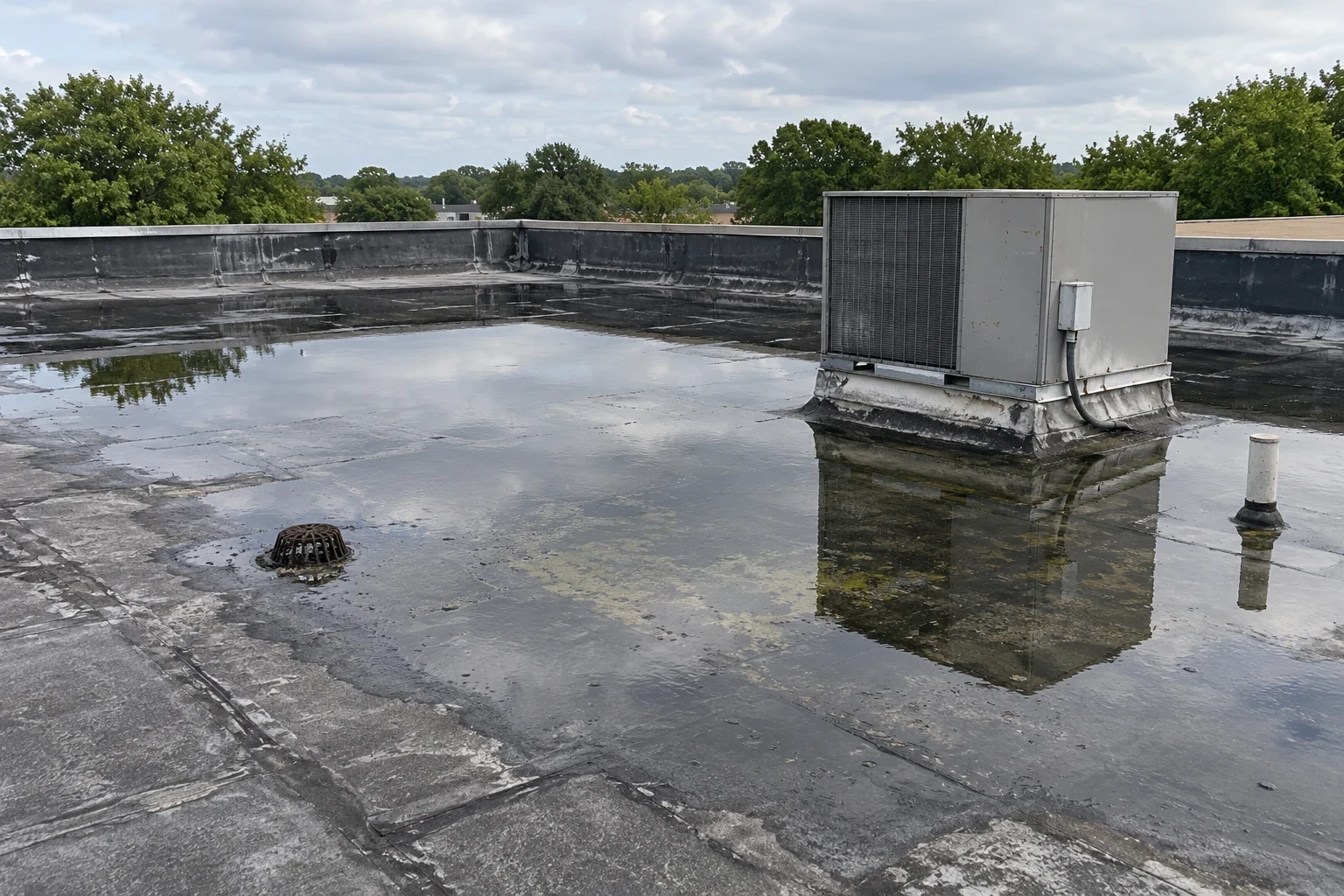
A pale ring on the membrane, a line of dried dirt, marks where yesterday's puddle stopped. It looks like a stain, but it is a measurement. The ring shows how deep the water stood and how far it spread, and we walk it backward to find why the roof held that water at all.
Ponding is a failure sequence, not a single defect. In Franklin, TN, with rainfall near 54 inches a year, a low spot that never dries gives algae, seam stress and slow deck movement plenty of time to start working on the roof.
The pale ring
Walk the roof the morning after a rain and again two days later. Water that is gone in a few hours is normal. Water that stays beyond a couple of dry days is ponding. Note where it sits, how deep it is at the center, and whether it grows with each storm.
Look for companion signs: a ring of dirt, green or black growth, shiny membrane that looks scrubbed, or a soft feel underfoot. Inside, check for stains on the ceiling directly below the pond. Mark each pond on a roof plan and photograph it with a tape measure in the frame, so depth is on the record and not a memory.
One more habit helps: take the same photograph from the same spot after each storm. Three photos over a season show whether a pond is shrinking, holding steady or growing, and that trend decides how urgent the work is.
What the weight does
Water is heavy, and a pond adds load to a deck that was designed to shed it. A pond that is a few inches deep across a large area weighs a lot, and the deck sags a little more each season, which deepens the pond. That loop is how a minor low spot becomes a structural question.
The membrane suffers too. Standing water holds heat against the surface in summer, where July highs near 91 degrees bake the sheet, and it freezes and thaws in winter. Seams under water are stressed from both sides. Sealants soften, laps relax and a hairline gap can open over a season. The result is a pond that sits directly above the first leak.
Insulation below the pond tells the next part of the story. If the membrane has a pinhole or an open seam, the water drains slowly into the insulation and stays there, because the layer cannot dry upward through a wet roof. A wet layer loses its insulating value, adds weight and can corrode the steel deck above the rib. That is why the repair always looks under the pond before it looks at the pond.
Where the water should go
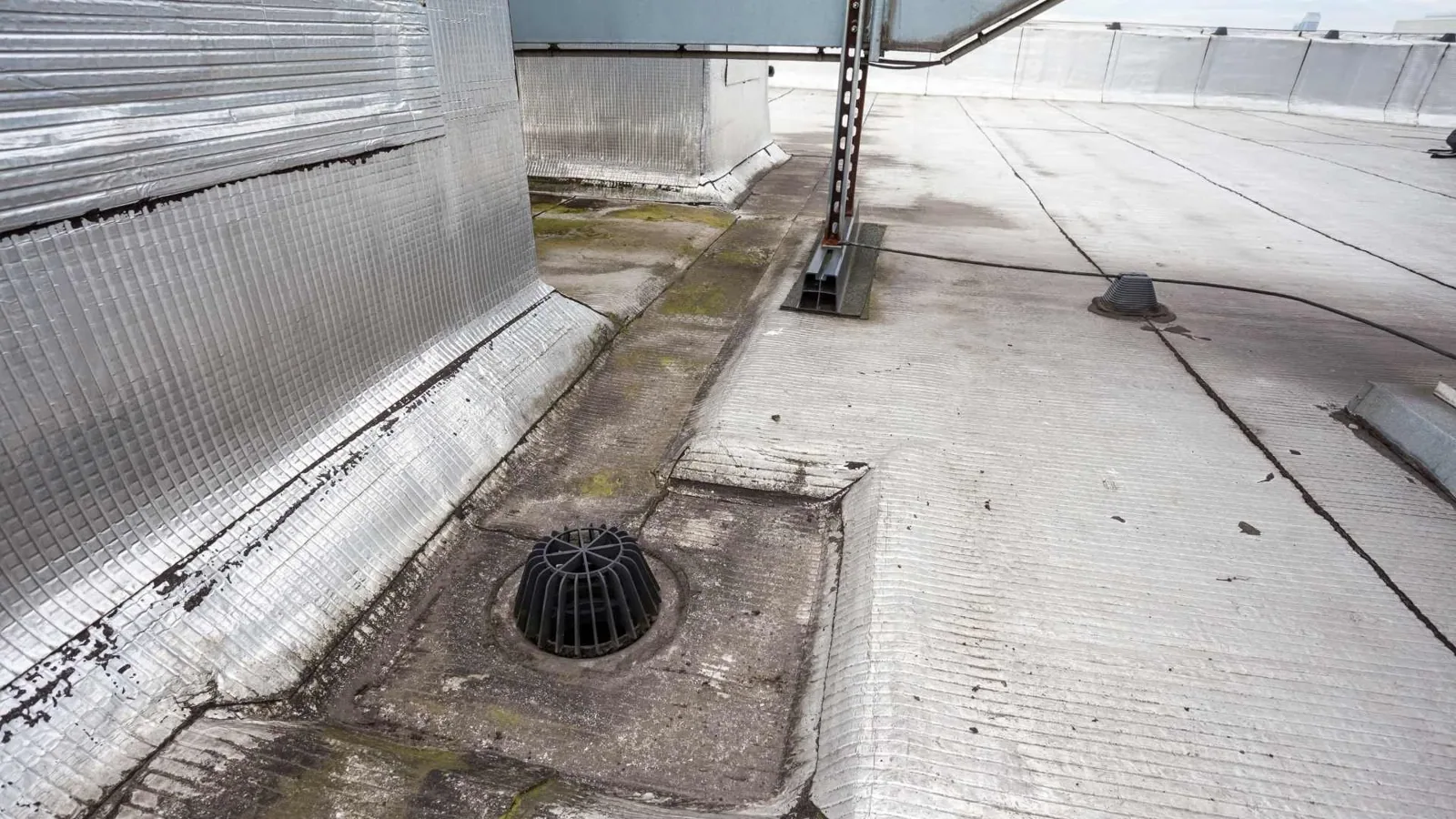
Ask where the water should have gone. Is there a drain nearby? Is the strainer clogged with leaves, grit or a plastic bag? Is the drain bowl set above the low point, so water cannot reach it? On many low-slope roofs, the drains sit at columns, where the deck is stiffest, and the deck between columns sags away from them.
Sometimes the cause is added weight: a new rooftop unit, a stack of pavers or a platform that blocks flow. A cricket or tapered insulation can correct the flow, while the outlets themselves are handled through roof drains and scuppers. Rain intensity matters as well. A July 2026 flash flood warning for northeastern Williamson County cited one to three inches of rain in places, enough to overwhelm a partly blocked drain.
Measure it
We measure. A string line or a laser level across the roof shows the low points, and a depth gauge in each pond gives the standing-water line. A hose test at the nearest drain shows whether it flows freely. Then we check the layers below: an infrared moisture survey maps wet insulation, and a core cut tells us whether the deck has deflected.
The pattern matters. Ponds in a line suggest a sagging beam. A pond beside a curb suggests missing slope behind the unit. A pond at a wall suggests a drain set too high. Each pattern points to a different cure.
Photograph each measurement with the tool in the frame. A measured depth, a dated photo and a sketch of the pond outline become a baseline. When the same pond is measured again after a repair, the owner can see the change without relying on memory or opinion.
Repair or replace
If the cause is a blocked drain, cleaning solves it. If the low spot is shallow and the membrane is sound, a tapered insulation overlay can add slope, planned together with the insulation and cover board layers. A new drain or a scupper can be added where the pond is far from an outlet.
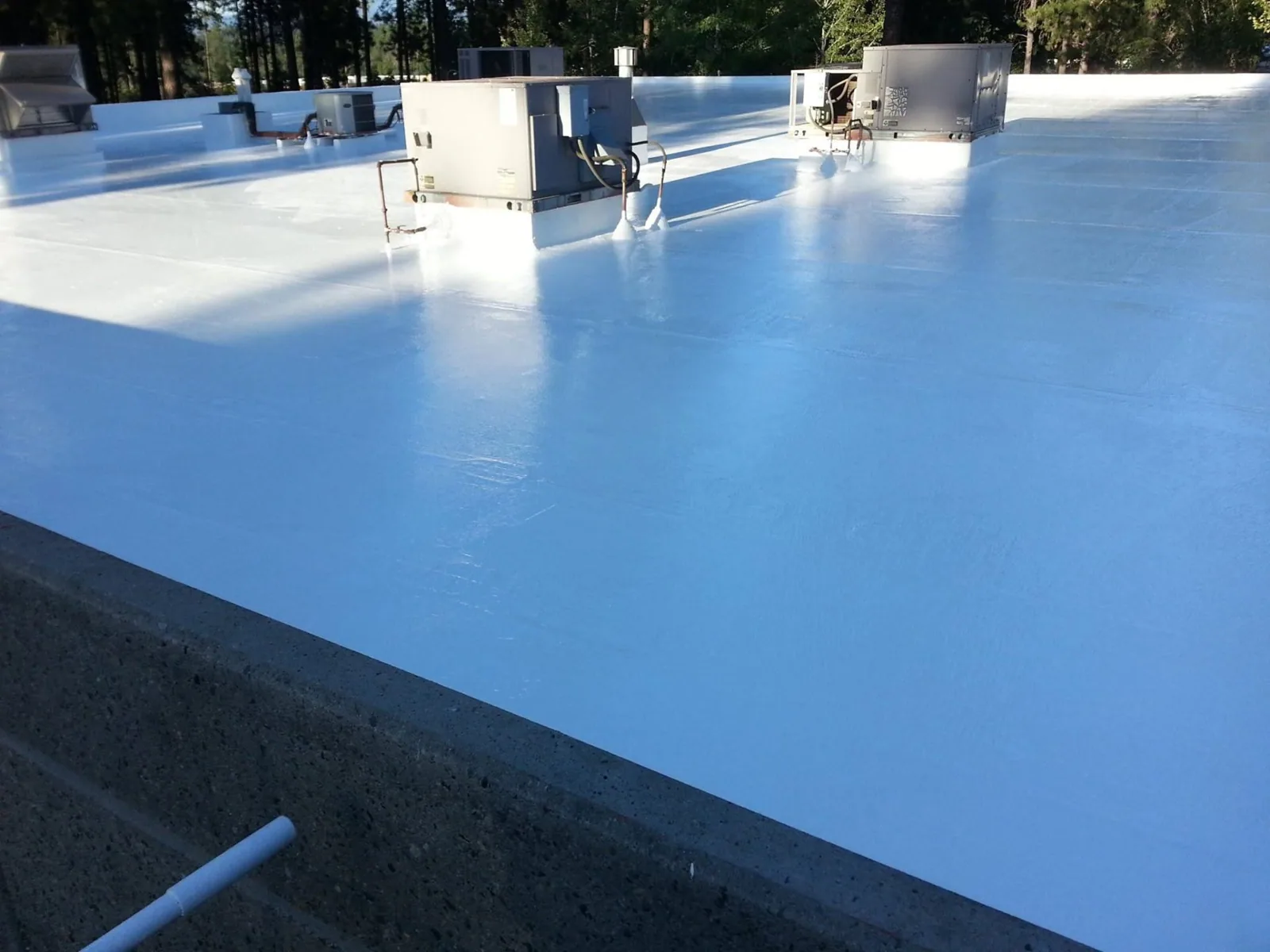
If the deck has deflected badly, or the insulation under the pond is saturated, replacement of that section is cleaner than patching. A silicone coating tolerates standing water better than most surfaces, so silicone roof coatings can restore a sound roof that cannot be fully re-sloped. Seams that opened under the pond are fixed as seam failure repair.
Membrane punctures found under the pond are handled as membrane puncture repair, and the repair is done before any slope work so the new layer sits on dry material.
What it costs
The range is wide because the causes are wide. Clearing a drain is a small visit. Adding a drain or building crickets is a larger job. Re-sloping a whole roof with tapered insulation is a project. Cost drivers are the pond area, the depth of correction, the condition of the insulation below and the access to the roof.
For older downtown buildings in Historic Downtown Franklin, where the Harpeth River crested at 35.32 feet in the May 2010 flood, drainage thinking starts at the roof and runs to the street. A roof that sheds water cleanly takes load off the storm system around it.
Along Hillsboro Road in the Berry's Chapel area, small businesses were among those most affected when the river crested about 33 feet above flood stage in 2010. Where several tenants sit under one roof, splitting the cost is easier when the pond map shows exactly whose bay the water sits over.
Commercial Roofing Questions
How long can water sit before it is a problem?
Many manufacturers treat water that remains after about two dry days as ponding, and some warranties exclude damage from it. Depth and duration both matter, so measure them after rain and keep the numbers in the roof file for comparison.
Will a coating fix a ponding roof?
A silicone coating can protect a sound roof that holds some water, but it does not correct the cause. If the pond is deep or the deck is sagging, fix the slope or the drain first, then coat.
Can ponding cause a leak with no visible hole?
Yes. Water finds seams, laps and flashing edges, and a pond may sit over a hairline gap that only shows under a hose test or a moisture scan. The ceiling stain can be many feet from the actual opening.
Do clogged drains void a warranty?
Some warranties make the owner responsible for keeping drains clear. Document each cleaning with a dated photo, and a maintenance visit before and after the wet months keeps that record current.
Who should check a sagging deck?
A structural engineer reviews any deck that has visibly deflected. We supply the elevation readings, photographs and core results they need, and we do not guess at structural capacity.