Metal Roof Retrofit and Restoration in Franklin, TN
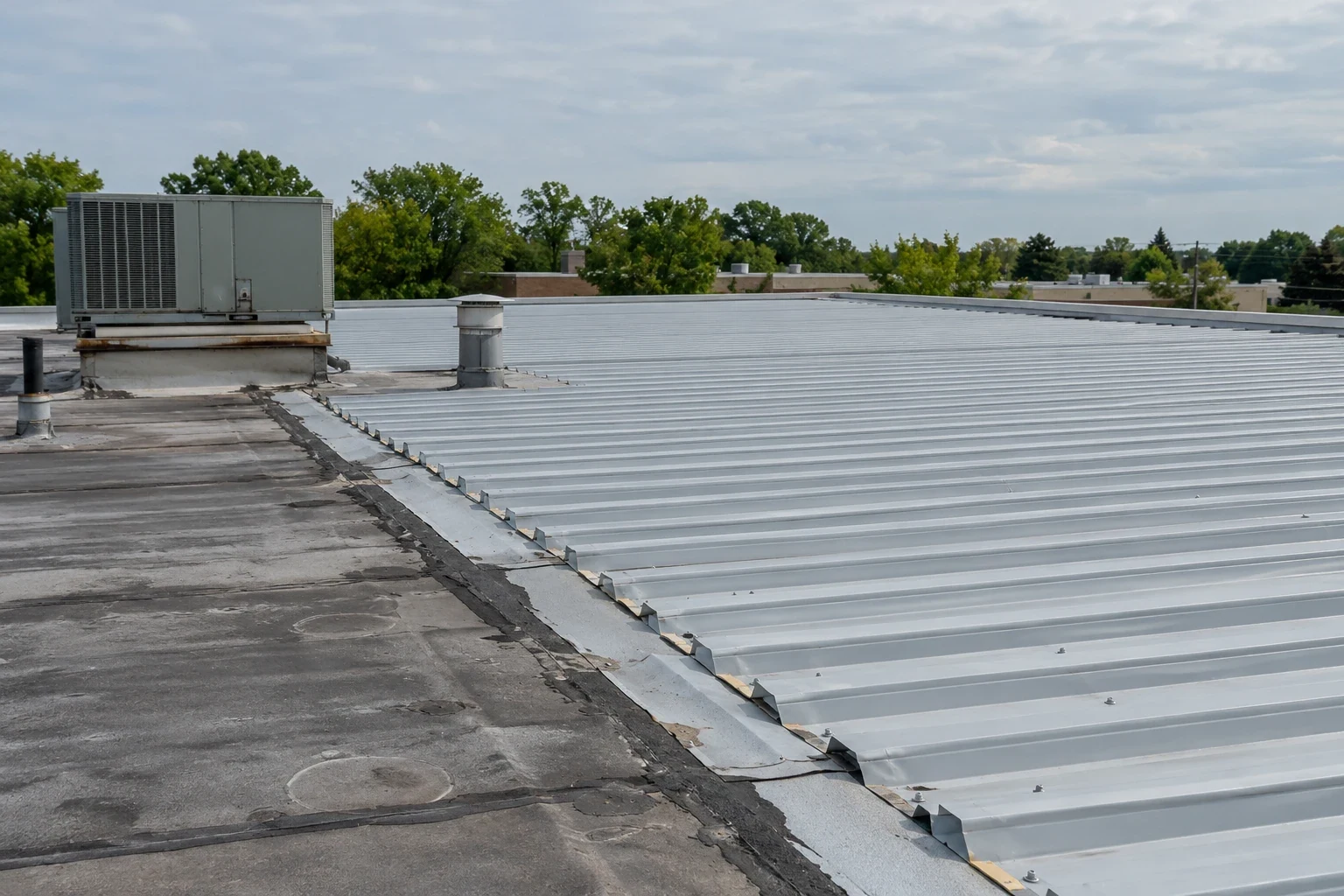
A drip that appears only after a heavy rain, directly under a row of screws, is the first sign of an exposed-fastener metal roof that is wearing out. The drip is where the water stopped, and the job is to walk it backward to a screw whose washer has failed, a lap whose sealant has dried, or a panel whose edge has rusted thin. An exposed-fastener roof is made of corrugated or ribbed metal panels screwed directly through the metal into purlins, so every screw is a small hole sealed by a rubber washer.
Those washers sit under about 54 inches of rain a year in Franklin, TN, with July afternoons near 91 F and hard freezes on record down to minus 22 F. Commercial Roofing Franklin traces the failure sequence step by step: screw, lap, panel, purlin, then explains what a restoration or a retrofit can do about each.
How screws and washers fail
Metal expands in sun and shrinks at night. The panel drags against its screws every day, and over the years the screw holes elongate and the washers harden and split. Screws begin to back out of the purlin, lifting the head and breaking the seal. We pull a sample across the roof, check each for tightness, and look at the washer. A cracked washer is the most common cause of a screw-line leak. A loose screw with a sound washer may only need tightening. A stripped hole needs a larger fastener or a new location. We also look at where the screw sits on the panel. Screws set in the valley of a rib seal better than screws set on the crown, where water can run under the washer, and a roof with screws in the wrong place may leak even when every washer is new. Where a pattern shows, we note the fastener positions on the roof plan so the repair crew follows the same layout.
Laps and sealant
Where panels overlap, the joint is sealed with butyl tape or sealant. It dries, shrinks, and pulls away over time. We look for dirt tracking inside a lap, a sign that water has been moving through it, and for sealant that has cracked or peeled. At ridge caps, eave closures, and end laps, the same check applies. Resealing is a repair that lasts only on a clean, dry joint, so the work starts by cutting out old sealant, wire-brushing the metal, and re-bedding the lap with compatible tape. A coating can bridge a hairline gap but not an open lap. Lap direction matters as well. Water should run over the edge of the upper panel, not into the lap, and a lap installed against the prevailing storm direction takes rain sideways. In Franklin, spring storm lines can push rain horizontally, which is the kind of weather that exposes a bad lap.
Rust: surface or through
A brown film at a scratch is a coating problem. A hole through the panel is a metal problem. We tap the panel with a hammer to hear the difference between sound metal and thin metal, and we look at the low edges of ribs, the valleys, and the areas around fasteners, where water lingers. Rust that has not yet opened the metal can be wire-brushed, treated, and coated. Panels with pinholes or flaking metal are listed for replacement, with the count and the locations on the roof plan so the owner can price the work by the sheet. Gutters and valleys rust first because they hold water longest, so a building with an old gutter often has thin metal beside it. The inside of the roof matters too: purlins are checked from below for rust that would affect how well screws hold.
Condensation that looks like a leak
Warm, humid air inside a building meets a cold metal panel and forms water on the underside. The water runs to a seam or a screw and drips, and a manager sees a leak on a dry day. The clue is timing: condensation appears on cold mornings and humid days, not after rain. Fixing it means insulation, a vapor barrier, or ventilation, not a new sealant. From inside the building we check the underside of the roof when we can, look for stains that follow the purlins, and compare drips with the weather record before recommending a repair.
Wind and hail on an older metal roof
Franklin's EF0 tornado of August 2023 left minor roof and exterior damage at some businesses along Highway 96. Loose fasteners make an older metal roof vulnerable, since wind lifts panels where screws have backed out. After a storm line, we check the eaves, rakes, and ridge first. A wind-damaged roof is secured with new fasteners and, where needed, new panels. Fastener size matters. A bigger screw or a longer one with a new washer grips a purlin that an old fastener has loosened, but only if the purlin itself is sound enough to hold it, so we probe the purlin before choosing the fastener. Panels that have been bent at an edge by wind are straightened or replaced, not forced back down.
Restore, retrofit, or replace
A restoration keeps the existing panels. Screws are replaced, laps are resealed, rust is treated, and a coating, such as silicone or acrylic, protects the metal. A retrofit adds a new roof over the old: a new standing seam system on new framing, or insulation and a membrane over the panels. A retrofit avoids tear-off and keeps the building working, but the old panels and purlins must carry the new load. Cost drivers are the number of panels to replace, the condition of the purlins, the access around the building, and how much of the interior must be protected. The building official sets the permit path under the 2021 code editions the state adopted in August 2025.
Where it fits in Franklin
Older metal roofs appear on industrial and storage buildings. Metal roofs on warehouse-style buildings tend to have long panel runs, so a few backed-out screws near the eave can repeat down the whole slope. Industrial use is concentrated in Southall along Columbia Avenue. Owners in Southall weigh a retrofit against a tear-off when the interior is full of equipment or inventory. A commercial roof repair is the first step for any active leak. Where a building has already been recovered once, we ask what sits between the old panels and the new ones. Trapped moisture or old insulation under a retrofit hides the same failures the new roof was meant to end, so the first pass records the purlin spacing, the old panel profile and any wet insulation before a retrofit is priced.
Commercial Roofing Questions
Can I just replace the screws?
If the panels and purlins are sound, yes. If the holes are stripped or the metal is thin, the fix goes further.
Is a retrofit cheaper than a tear-off?
Often, since it avoids removing and disposing of the old roof. The comparison depends on structure, access, and insulation.
Will coating stop my metal roof from leaking?
It stops small leaks and protects sound metal. Failed fasteners, open laps, and rusted-through panels are repaired first.
What if my building drips on cold mornings?
That points to condensation. Insulation and ventilation address it. A new sealant will not.
How long does a restoration last?
The metal, the coating and upkeep set the range, and a yearly walk catches loose fasteners and open laps early.