Silicone Roof Coatings in Franklin, TN
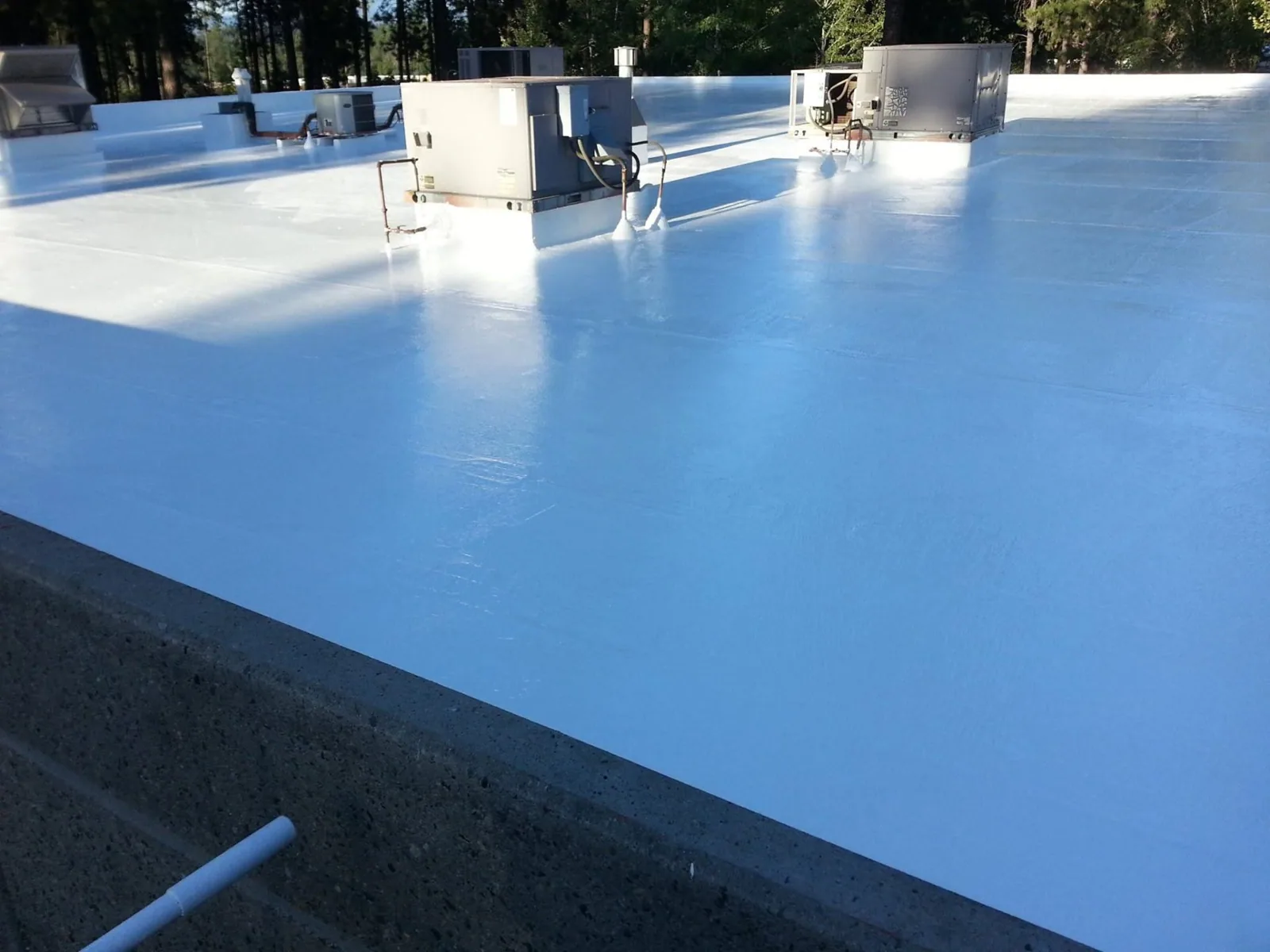
A roof that holds a shallow pond for two days after every storm, with a gray ring of algae at the edge of the water, is the first sign that a coating question is really a drainage question. The ring is the standing-water line, and the job is to walk it backward: why the water stays, what it has done to the surface under it, and whether a coating can protect what is left. Silicone is a liquid coating that cures into a flexible, waterproof film, and it is the coating most often chosen when water cannot be moved off the roof quickly.
Silicone on a Franklin, TN roof meets about 54 inches of annual rain, July afternoons near 91 F and hard freezes down to minus 22 F. Commercial Roofing Franklin explains what silicone can and cannot do, tests the roof before recommending it, and puts the findings in a short written summary.
What silicone does
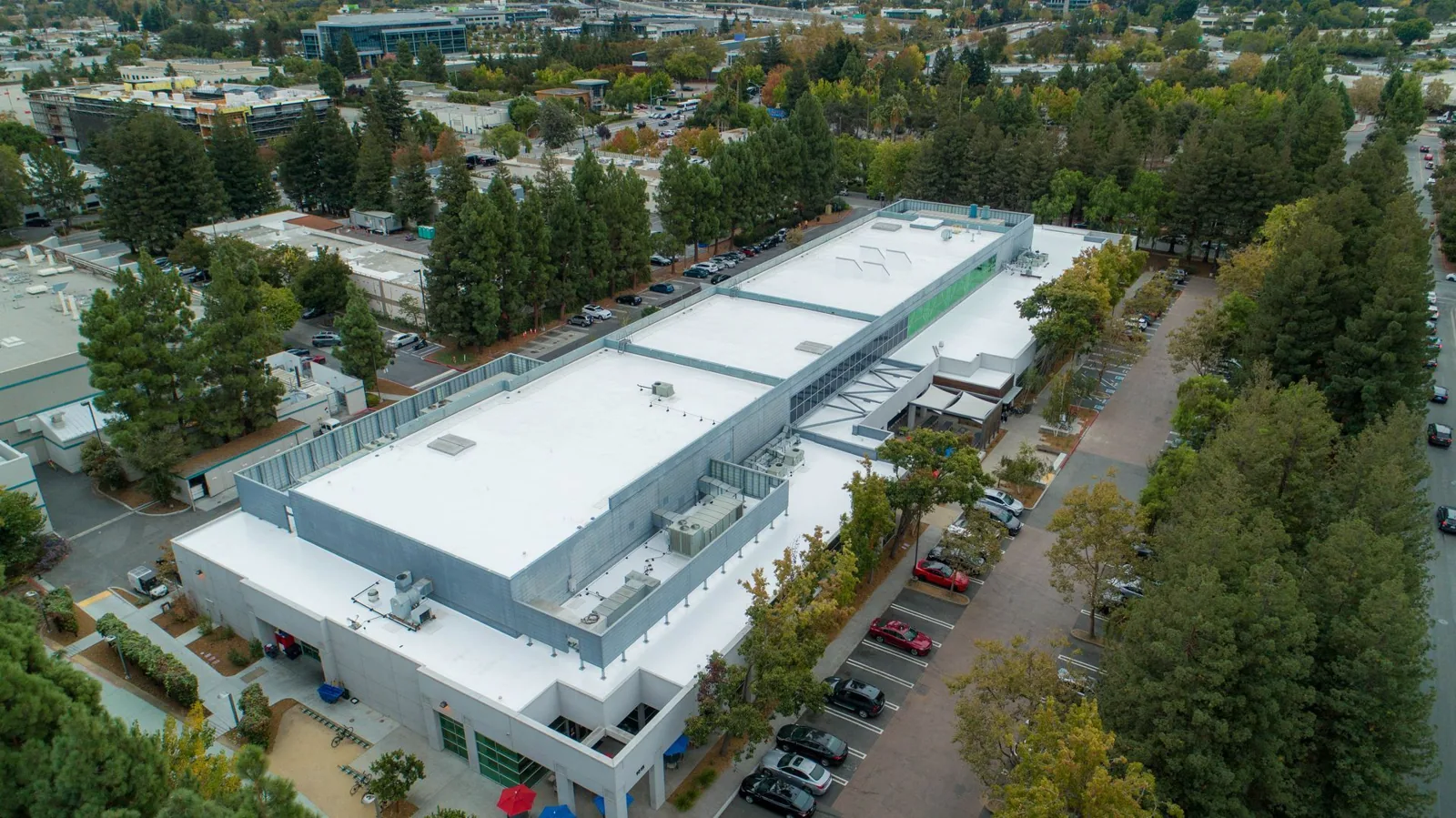
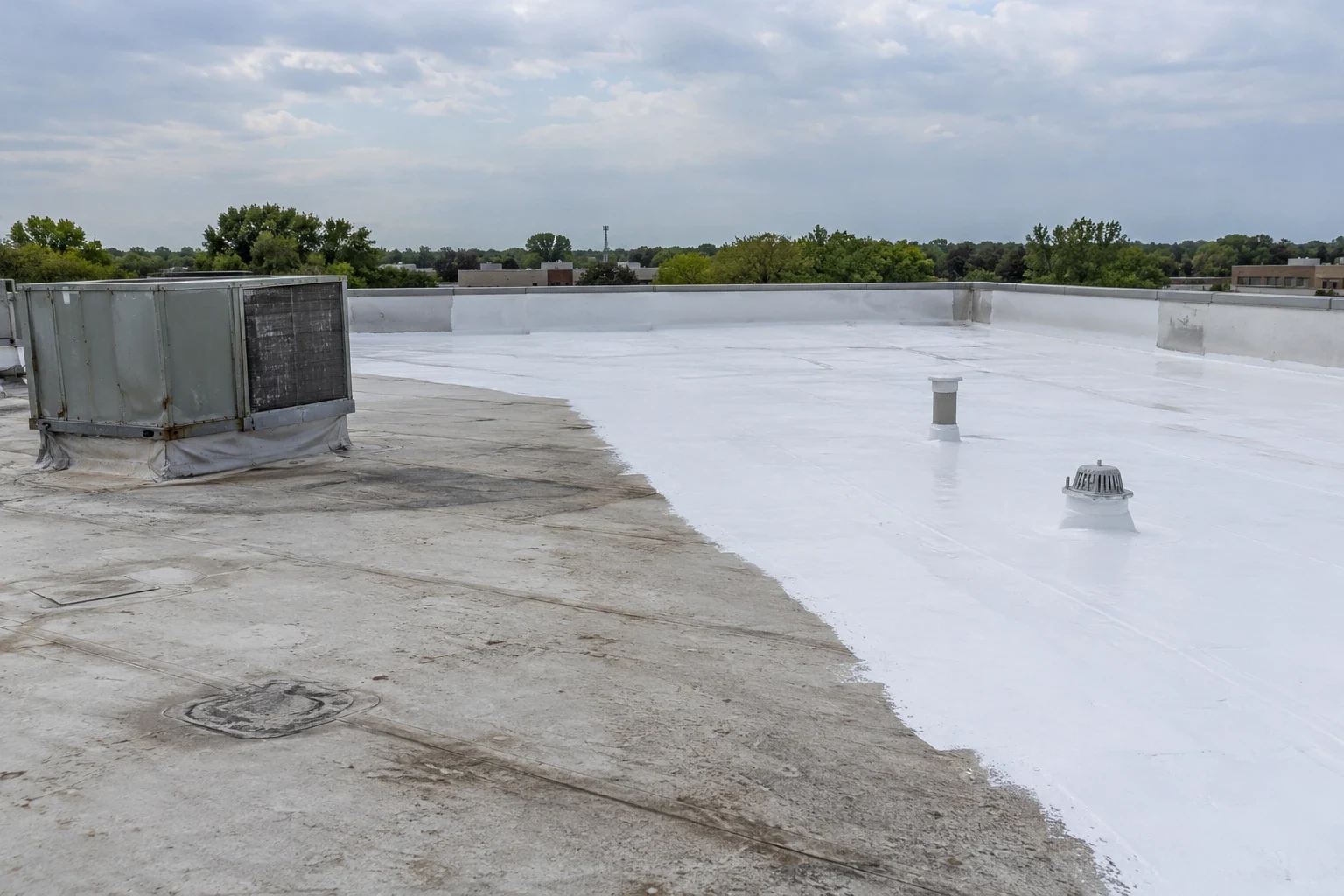
The coating goes on as a liquid and cures into a continuous film that bridges small cracks, seals fastener heads and lap edges, and reflects sunlight. Because it is a liquid, it also follows the shape of the roof, wrapping around curbs, pipes, and corners where a sheet would need a cut and a patch. It stays flexible through temperature swings and tolerates standing water far better than acrylic, because it does not soften when wet. It does not add strength, close open seams, or dry a wet roof. It is a skin, and a skin protects only what is underneath, which makes the substrate the first thing we examine. A coating applied to a failing roof usually looks good for one season and then fails along the same lines the roof was already failing on. The test is simple: if the roof would leak without the coating, the coating is not the repair. We say that in writing, and we say it before the quote.
Is the roof ready for a coating?
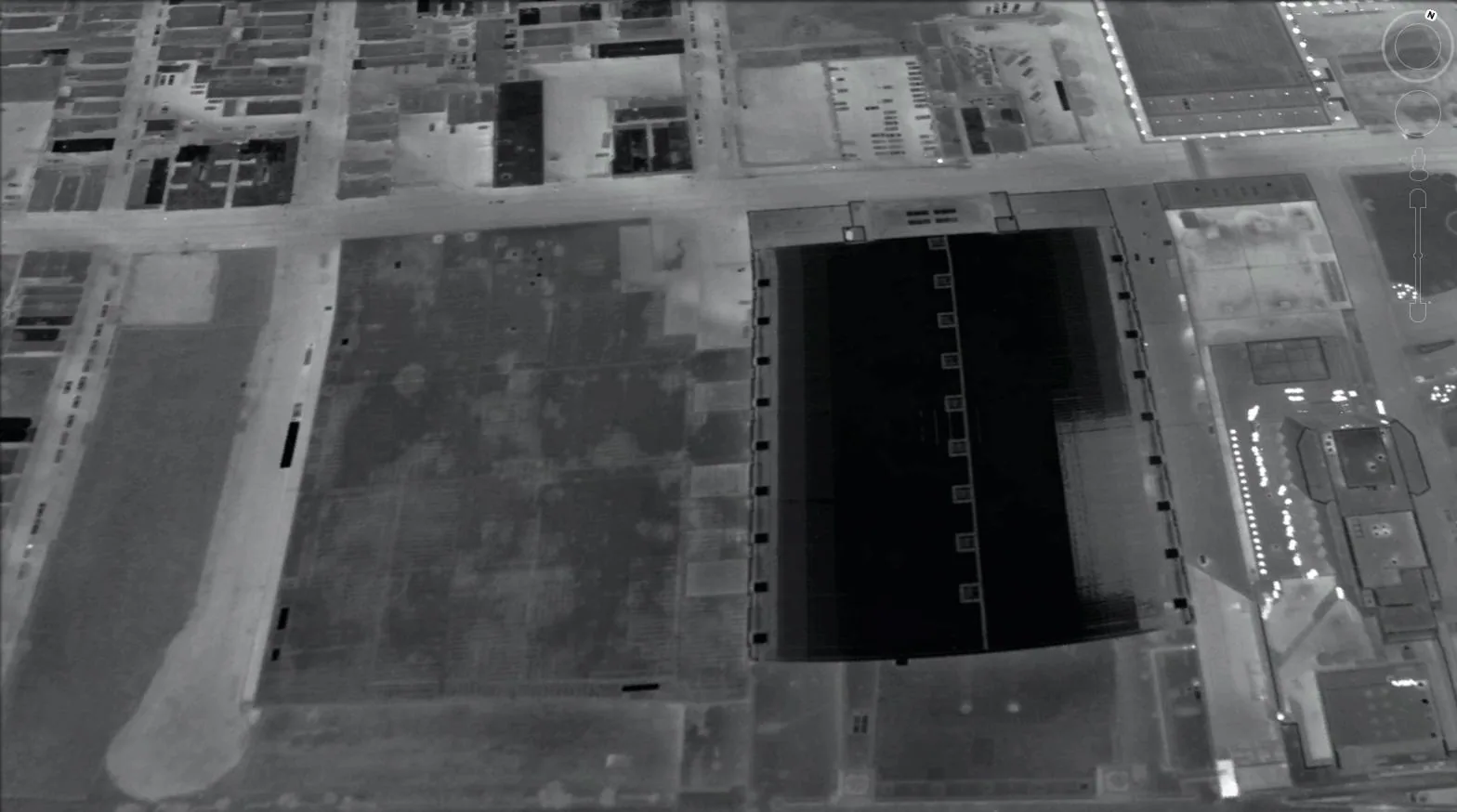
We cut test samples, run an infrared moisture survey, and probe seams. A bay with wet insulation is not ready, because the coating would trap the water. A roof with dry insulation, sound seams, and a stable surface is. We also run a small adhesion test, since silicone sticks well to some surfaces and needs primer on others. Aged modified bitumen, metal, single-ply, and foam each respond differently, and the roof plan records the substrate and the preparation it needs. For the adhesion test, we clean a small square, apply the coating, let it cure, and try to peel it with a blade. A film that lifts in a sheet means the bond is poor and a primer or a different system is needed. A film that tears before it releases means the bond is good, and the test is repeated in more than one part of a large roof because different areas may have different surfaces. The test patch is photographed and left on the roof as a record.
Prep is most of the job
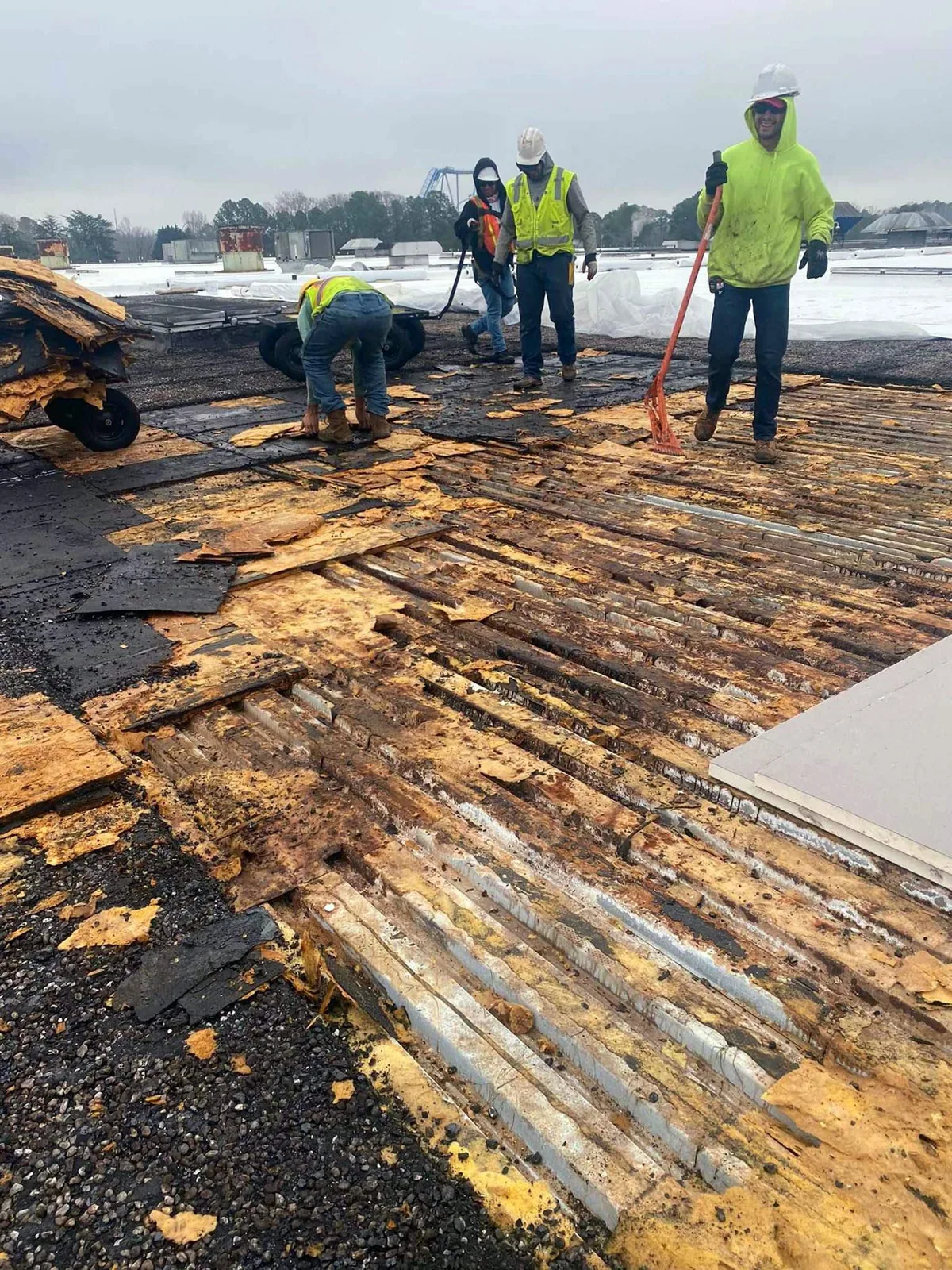
Coatings fail at the bond. The roof is power washed to remove dirt and algae, loose coating is stripped back to a firm edge, and rust on metal is treated. Seams are reinforced with fabric and sealant. Fasteners are sealed. Flashings at walls, curbs, and penetrations are rebuilt before any coating goes down. Open laps and cracks are repaired, not covered. The roof must be dry, and the surface temperature and humidity must be right, so a crew leader checks the weather and records the readings each morning. Temperature has a lower limit, and so does the dew point margin; a cold, damp morning can push the start of a coating day back by hours. The roof is coated in sections that can be finished and cured before conditions change, and a section is never left half-done overnight if rain is in the forecast. The photographs from each section show the surface before and after.
Storms and hail
Hail up to about three-quarters of an inch was named in the severe thunderstorm warning for northeastern Williamson County in July 2026, and Franklin's EF0 tornado of August 2023 touched down near Highway 96 at Royal Oaks Boulevard. A coating does not hold a roof down, so after a storm line we check the attachment of the roof beneath and the edge metal. Small hail can leave marks in a coated surface; we look for cracks in the film over dents and repair them with local coating and reinforcement. Hail is also a reason to measure film thickness afterward, since an impact can thin the coating at the point of contact even where the surface looks intact. A thickness gauge reading at the dent, compared with the reading beside it, shows whether the film is still doing its job. Those numbers go in the roof file with the date of the storm and the location of each dent.
Limits and upkeep
Silicone is slippery when wet, so walkways get a traction surface. It collects dirt, which dulls its reflectivity until it is washed. Once a roof is coated with silicone, most other coatings will not bond to it, so future recoats are usually silicone as well. The film thins over time, and we measure it at marked spots each year. A roof coating restoration is usually less disruptive than a tear-off, but a roof with wet insulation, failed seams, or heavy damage should be repaired or replaced first. Drains and scuppers need to be clear before and after coating, and a preventive maintenance visit each spring and fall keeps them that way. Debris against a coated surface holds moisture, and a coated roof that is cleaned twice a year keeps its reflectivity and its bond longer than one left alone.
Coat, repair, or replace
A sound roof with wear and ponding is a good candidate. A roof with isolated wet areas can have those areas cut out and rebuilt before coating. A roof with wet insulation across several bays points to a replacement. Since Tennessee's 2021 code editions took effect in August 2025, a scope that changes the roof assembly is reviewed with the building official. The cost drivers are the area, the substrate condition, the amount of seam and flashing work, and the number of coats.
Where it fits in Franklin
Low-slope roofs that pond, on sound membranes or old metal, are the clearest fit. The low-slope buildings of the McEwen area near Cool Springs are the kind of roofs where drainage is a constant question. An acrylic coating is cheaper where water drains well, and a metal roof retrofit suits corroded panels.
Commercial Roofing Questions
Can I coat over a leaking roof?
Only after the leak is traced and wet insulation is removed or dried. A coating over trapped water blisters and fails.
Why is silicone better for ponding?
It does not soften or wash out in standing water the way acrylic can. It is the coating of choice where water lingers.
How many coats are used?
A base coat, reinforcement at seams and flashings, and a top coat, with film thickness measured as work proceeds.
Will it cool the building?
A reflective surface lowers roof temperature in summer, though dirt reduces the effect until it is washed.
Can I walk on it?
Lightly, once it cures. It is slick when wet, so walkways get a traction surface.