Standing Seam Metal Roofing in Franklin, TN
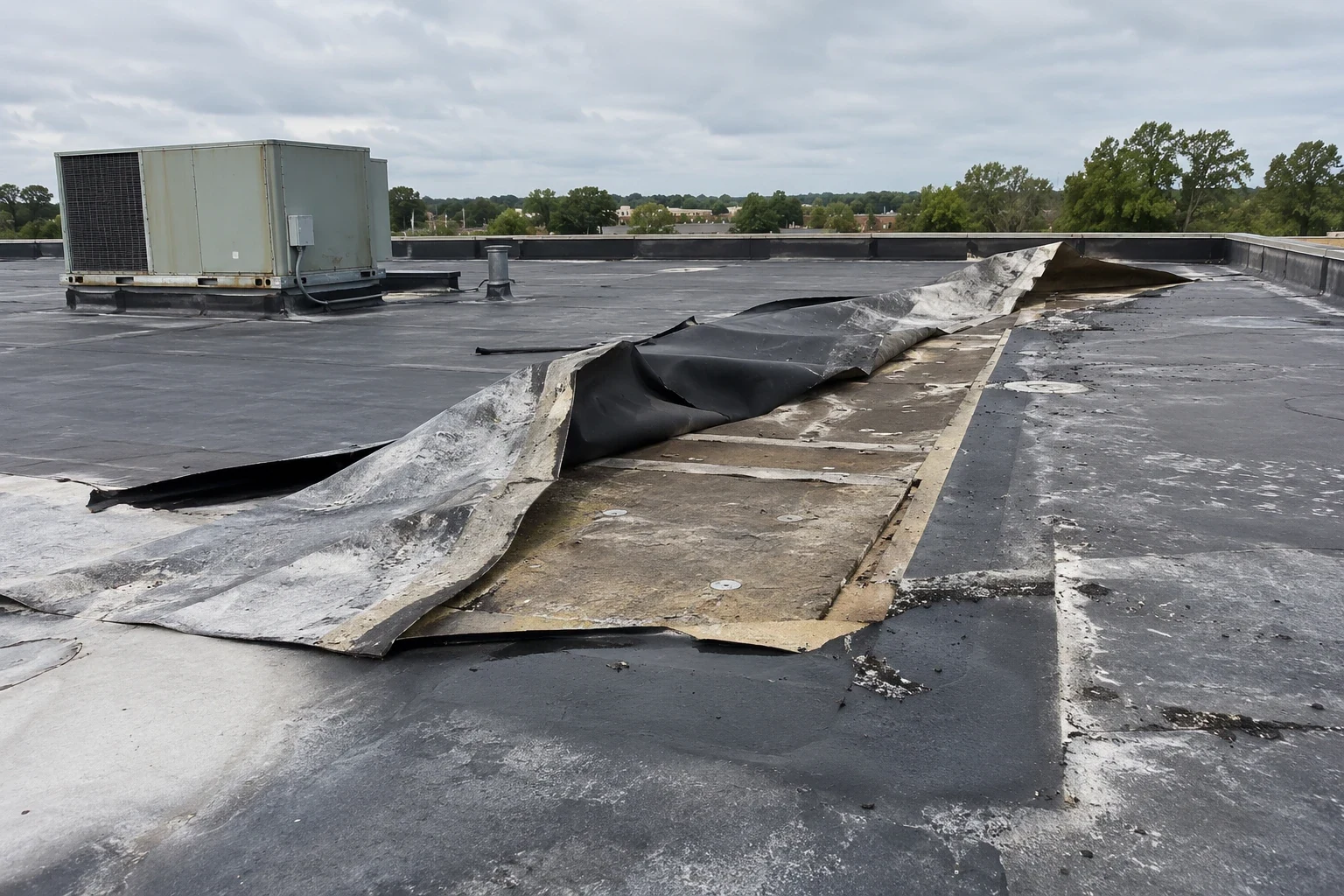
A rust streak running down the wall from a trim piece, or a drip beneath a rooftop vent on an otherwise tight metal roof, is the first sign most managers see. The streak shows where water ended up, and the job is to trace it back to a fastener, a sealant joint, or a flashing, because the panels themselves rarely leak. A standing seam roof is made of long metal panels with raised seams that lock together, held to the deck by concealed clips so the panels can slide as they heat and cool.
Those panels face about 54 inches of rain a year in Franklin, TN, a record spread from minus 22 F to 108 F, and storm lines with wind and hail. Commercial Roofing Franklin walks the failure sequence on the roof itself, from the seam to the clip to the trim, and puts what we find in a short written summary.
How the system is built
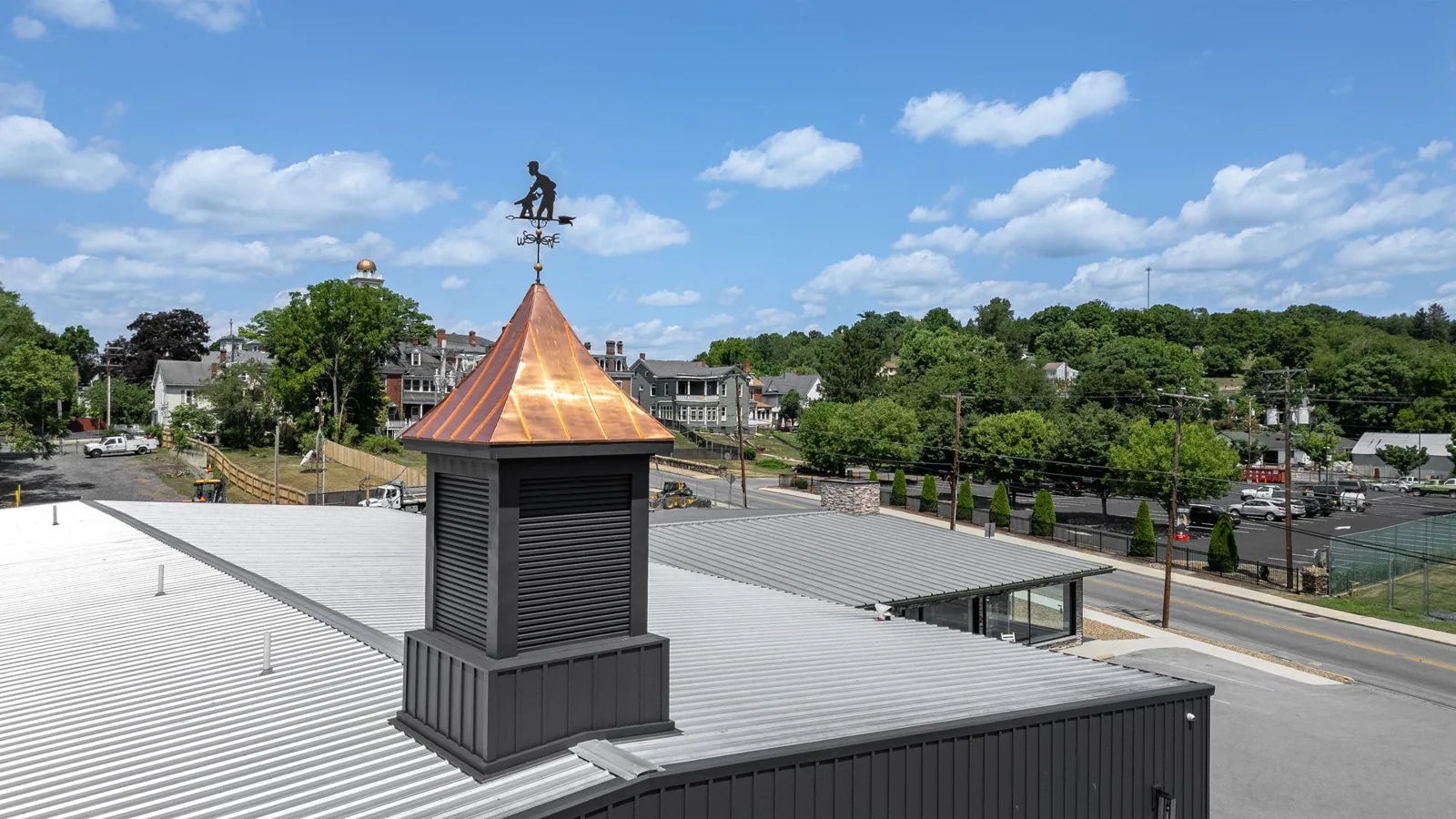
Each panel runs from the eave toward the ridge. Its edges turn up into ribs, and the rib of one panel locks over the rib of the next. Clips fastened to the deck grip the rib but let the panel move. Under the metal there is usually an underlayment, and the deck below is steel or plywood. Because no screws go through the face of the panel, the field of the roof has few holes. The weak points are where the pattern is interrupted: ridges, eaves, valleys, vents, curbs, and the ends of panels. The metal and its finish matter too. Painted steel, coated steel, and aluminum age differently, and a scratch that exposes bare steel becomes a rust spot in a wet season. We record the panel type and finish, the rib height, and the seam style, because a replacement panel has to match the profile on the roof or it will not lock into its neighbor.
Thermal movement
A long steel panel expands in July sun and shrinks in a January freeze. Franklin's swing from minus 22 F to 108 F on record is wide, and the panel moves a little every day. The clips are designed to allow it. Trim, flashing, and fastened items that cross a panel are not, and those are the ones that tear or open. We look for sealant that has cracked along a trim line, for fasteners that have backed out where movement worked them loose, and for dents or scuffs where a panel rubbed against something fixed. Daily sliding can wear through a finish at a clip or at a trim piece, and the bare spot rusts. A panel that is pinned by a screw through its face, put in by someone who wanted to stop a rattle, cannot slide, and the stress goes to the nearest seam. We find those screws and note them, since removing one without understanding why it was added can open a leak.
Checking the seams and clips
A snap-lock seam is pressed together and relies on the clips beneath it. A mechanically seamed rib is rolled shut with a tool and is stronger. We walk the roof and run a gloved hand along seams to feel for any that have opened, and we look at panel ends for gaps. Clips are hard to see, but a panel that rattles or sits unevenly is a sign that something below has loosened. Where we can reach the underside, we check clip spacing and fasteners. An open seam is photographed, measured, and marked for repair. Repair of a snap-lock seam can mean re-crimping it, adding sealant inside the lap, and replacing a clip. A roof with seams opening in one direction across a slope tells us a clip line has failed, and we follow it to find where the fastening starts. Panel ends and splices get a close look, since a splice is a seam that crosses the flow of water and relies on sealant to do its work. A modified bitumen or TPO roof on the same building would put its weak points in different places.
Vents, curbs, and trim
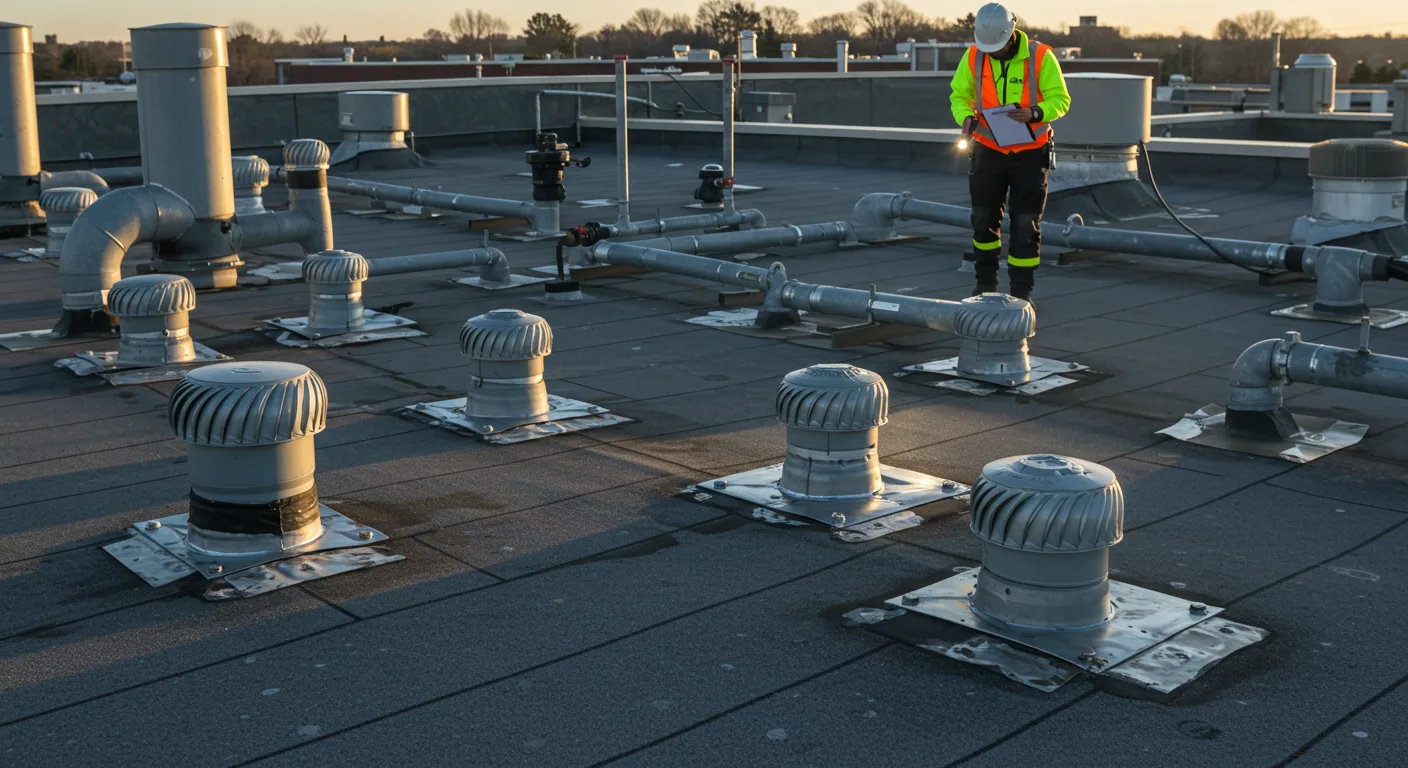
Every pipe, vent, and rooftop unit interrupts the panels, and each interruption is flashed by hand. Rubber boots crack in sun. Sealant dries and shrinks. A curb that crosses several ribs needs flashing that allows the panels to move. These details cause most standing seam leaks, so we check them first. A skylight or penetration flashing repair means cleaning back the old sealant, replacing the boot or flashing, and sealing the joint with material rated for movement. Trim at the ridge and eave gets the same attention. Ridge caps and rake trim are fastened through the metal, so each fastener is a hole that depends on its washer or sealant. A row of fasteners along a ridge is checked for back-out, and any that are loose or missing are replaced with a fastener sized for the substrate.
Hail, wind, and tornado lines
Estimated winds of 75 mph came with Franklin's EF0 tornado of August 2023, which left minor roof damage along Highway 96, and the July 2026 warning for northeastern Williamson County called out hail up to about three-quarters of an inch. Small hail often leaves cosmetic dents in metal that do not affect watertightness. Wind is the more serious concern: edges, ridge caps, and corner trim take the most uplift. A wind-damaged roof shows lifted trim or open seams first.
Water at the eave
Water from a large metal slope arrives at the gutter all at once. Gutters and downspouts clog with leaves and overflow behind the fascia. Valleys, where two slopes meet, carry heavy flow and collect debris. We clear and check gutters, valleys, and outlets, and we look for staining that shows where overflow has been running. Because snow slides off metal in sheets, we also check snow guards, where they are installed, for loose fasteners. Snow guards and gutters work as a pair. If the guards are loose, sliding snow and ice can shear a gutter bracket and bend the eave trim, so we check both together and photograph the eave line from the ground and from the roof. A plain edge metal and gutter check often finds the cheapest repair on the roof.
Where it fits in Franklin
Standing seam suits roofs with enough slope to shed water and owners who want a long service period. Large warehouse-style buildings west of CoolSprings Galleria and the industrial area along Columbia Avenue in Southall are two places where metal roofing comes up. Owners in Southall and near Cool Springs compare it with a membrane. Older exposed-fastener metal can move up with a metal roof retrofit.
Commercial Roofing Questions
Do standing seam roofs leak?
At the details, yes. Seams, clips, and panels rarely fail. Vents, curbs, trim, and sealant do. We check those first.
Does hail ruin a metal roof?
Small hail often dents metal without breaking the seal. We check for cracks in the finish and for dents at seams, then record the rest.
Can panels be replaced one at a time?
Sometimes. The profile must match, and neighbors must be undamaged. We check the profile and availability first.
What are snow guards for?
They hold snow and ice on the roof so it melts gradually instead of sliding onto walkways. We check that they are fastened to the seams as designed.
Why do metal roofs make noise?
Thermal movement. Panels ticking or popping on hot afternoons usually just slide on clips. Rattling suggests something is loose.