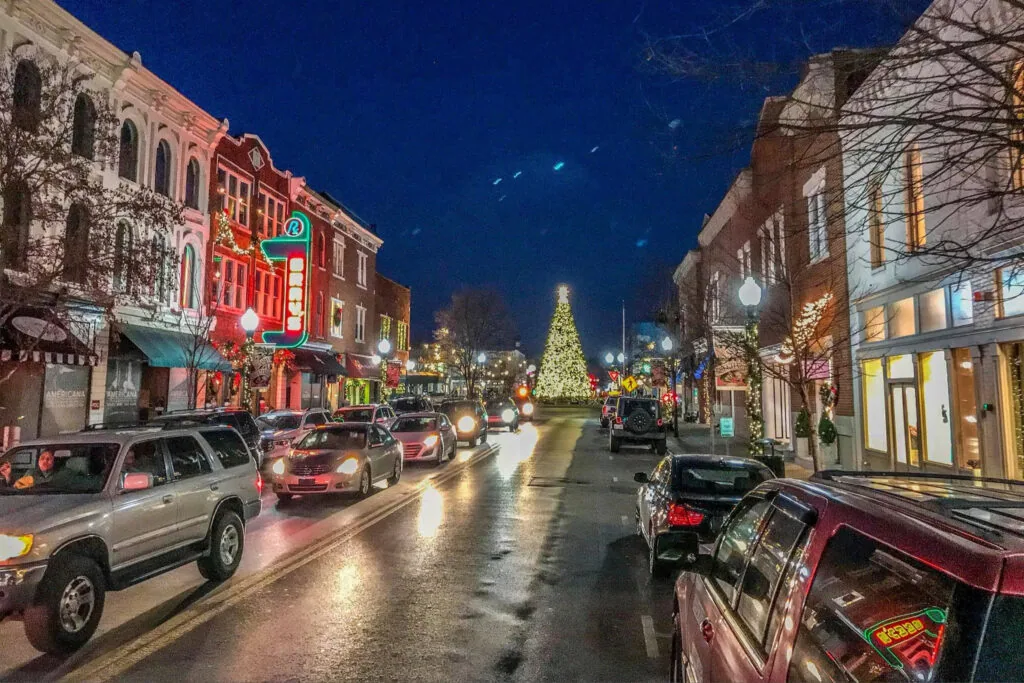
Commercial Roofing in Historic Downtown Franklin, TN
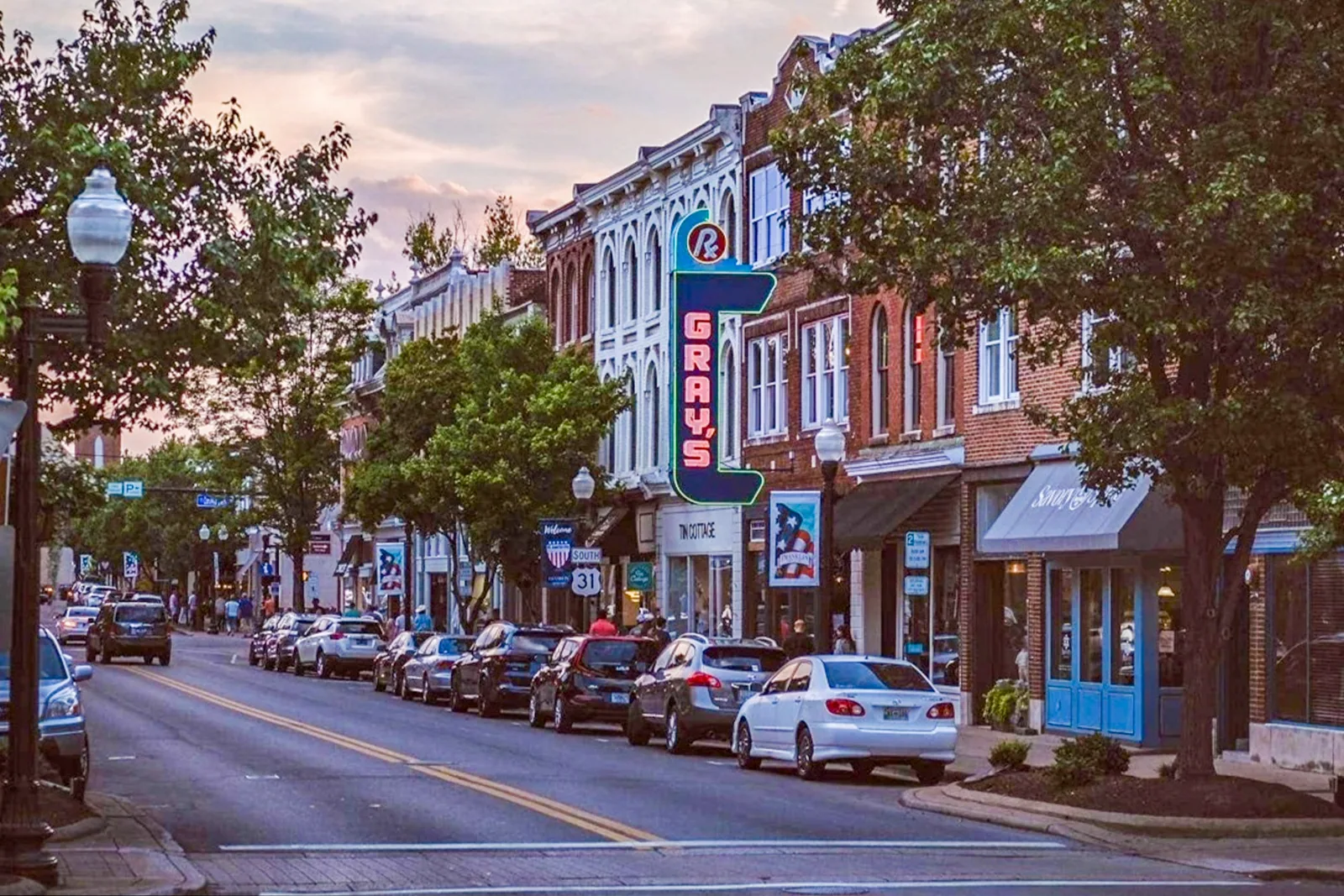
Water running down the inside of a masonry wall is the first sign of a parapet failure, and in Historic Downtown Franklin, TN, where older masonry buildings stand shoulder to shoulder, it is a lesson that needs walking backward carefully. The water did not come through the brick. It came over the top, through a failed coping joint or a gap in the flashing where the roof meets the wall. We trace the sequence from the damp plaster to the open joint.
The district
Central Franklin covers about 4,000 acres, and its 16-block National Register historic district is the area with the widest range of uses. Offices, restaurants, retail and event space now fill the old Dortch Stove Works and Magic Chef factory, which was restored in the late 1990s.
The roofs here sit on older masonry and flat or low-pitched commercial buildings, and they are asked to do more than most. Parapets are tall. Walls are shared. Access is tight. Hot work needs a fire plan, and a new roof has to respect the building it covers.
The mix of uses matters too. Offices, restaurants, retail and event space under adjacent roofs means different equipment, different hours and different needs. A restaurant's exhaust, an office's air handlers and an event venue's evening crowds all shape the plan. We ask who is below before we choose the method.
What fails first
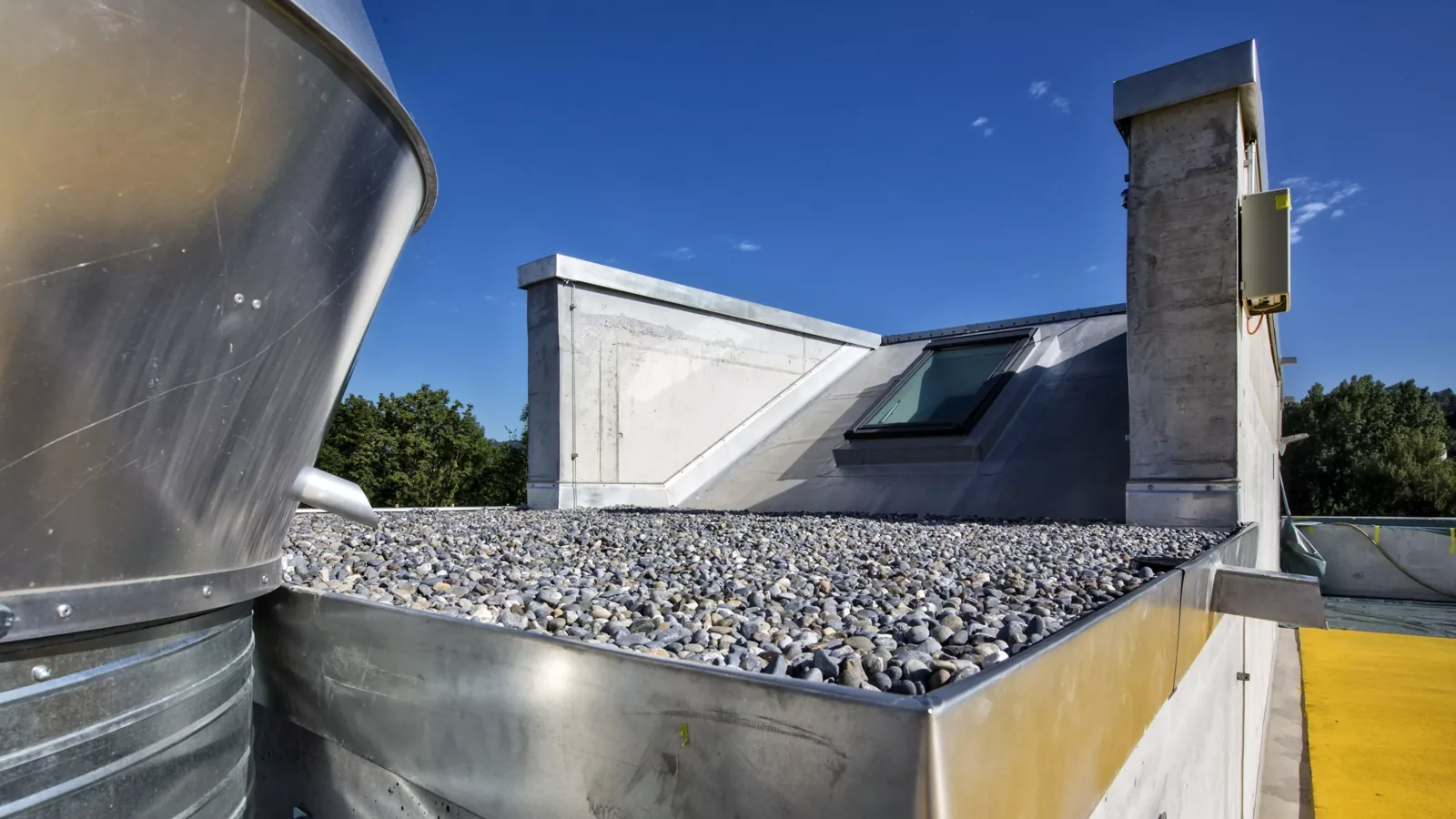
On a masonry building with a low-slope roof, the first failures are at the walls. Counterflashing pulls out of a mortar joint. A coping stone shifts. Mortar crumbles behind a flashing. A scupper cut through the parapet clogs with leaves. The roof field may be sound while the edges leak.
We start at the walls. We tap the mortar. We lift the counterflashing. We check each scupper and downspout. Then we walk the field. The sequence of the walk follows the sequence of the failure, from the edge inward.
Tight sites add steps. A parapet may be reachable only from the roof, and a scupper may drain onto a neighbor's lower roof. Before any repair we photograph the discharge points and the neighbor's side, since a repair that sends water to a new place only moves the problem.
What is happening underneath
Water that enters at a parapet runs down inside the wall. It dampens plaster, lifts paint and leaves salts on the brick. In winter, water in a masonry joint freezes and expands, widening the crack. The next rain gets in faster.
The building's age tells us when it was built, not what is on its roof. A roof on an old building may be a few years old or a few decades. We read the sheet, the layers and the flashing, and the report names what is there and what condition it is in.
Salts on a brick face are a clue. White crust where water has dried again and again points to a long-running leak. Fresh stains point to a recent one. We note both and photograph them, since the pattern of stains on the wall maps the path of water back to the roof.
The river and the roof
The Harpeth wraps around the downtown core on its north and east sides, floodplain limits touch many areas, and the river crested at 35.32 feet downtown in the May 2010 flood. Across Williamson County, roughly 1,500 residential and commercial structures were damaged, at a cost near $100 million.
A flood is not a roof event. But it is a lesson in how water moves through a downtown, and it explains why drainage matters here. Roof drains and downspouts tie into systems that also carry street water. We check where each downspout discharges and whether the outlet can take a heavy rain.
Scuppers and downspouts get a test in this district. We run water through each one, watch where it goes and note how fast it clears. A downspout that dumps against a wall or onto a sidewalk can undo the work done at the parapet, and a scupper set too high holds water against the flashing. These are small items with large effects, and they are on every downtown checklist.
Festival season and access
Dickens of a Christmas and other downtown festivals bring roughly 50,000 visitors in the second week of December, which puts crowds beside the district's masonry and low-slope commercial buildings. A roof job in that week is a poor idea. Lifts and dumpsters on narrow streets compete with crowds.
We plan around the calendar. Winter work on a layered roof is limited to days when materials can be applied within their temperature limits, and the downtown calendar adds its own dates to avoid. The schedule names them before work begins.
Quiet days are the best days for roof work downtown. A weekday morning in spring or fall, with no event on the calendar, gives a crew room to stage and a manager time to prepare tenants. We ask for the calendar and plan from it.
Repair or replace
Local failures at the walls call for repair: reset the coping, repoint the joint, rebuild the flashing. A field that is aging but dry may be coated or covered over. Wet insulation across a section means replacing that section. Every path has a cost range, with another winter's wait priced separately.
Two reviews can apply here: the code edition, which has been the state's 2021 set since August 17, 2025, and any historic-district review of visible changes. We confirm both at the permit office. Modified bitumen and built-up roofing are two layered systems that appear on low-slope roofs like these, and a flashing failure repair is the usual first step at a parapet.
Cost reflects the building. Tight access and hand-carried materials add time. Masonry repair adds a mason. A coping reset adds a lift. Each line stands alone in the estimate, so an owner can see which costs belong to the old building and which to the roof.
What to check next
After a parapet repair, watch the wall after the next heavy rain. Check the scuppers. Look at the coping joints. Record the date in the roof file. Plan the next walk for just ahead of the first hard freeze.
A downtown owner with buildings on the Murfreesboro Road corridor or in Cool Springs can keep one file format, and a roof condition report can rank all the roofs.
Keep a dated photo set of each parapet corner. Corners are where coping joints open first, and a set of photos taken each spring shows a slow change that no single visit would notice. The set costs nothing, takes ten minutes, and gives the next crew a baseline.
Commercial Roofing Questions
Why does water appear inside a brick wall?
It usually enters over the top, through a coping joint or flashing gap, and runs down inside the wall.
Does a historic district change how a roof is repaired?
It can. Review rules may apply to visible changes, so we confirm at the permit office before the scope is final.
Can roof work happen during festivals?
We avoid festival weeks for lifts and staging, and the schedule names the dates.
What is a counterflashing?
A metal cap set into a wall joint that covers the top of the roof flashing and sheds water.
How do you protect an occupied restaurant below?
We keep work zones away from kitchen exhaust, cover equipment and agree on hours with the manager.