Commercial Roofing in Smyrna, TN
A stopped machine is the first sign. A line supervisor sees water on a floor beside it, shuts the machine down and calls facilities. The roof is dry on top, the supervisor says, and the leak is still real. We walk that leak backward through the layers to the entry.
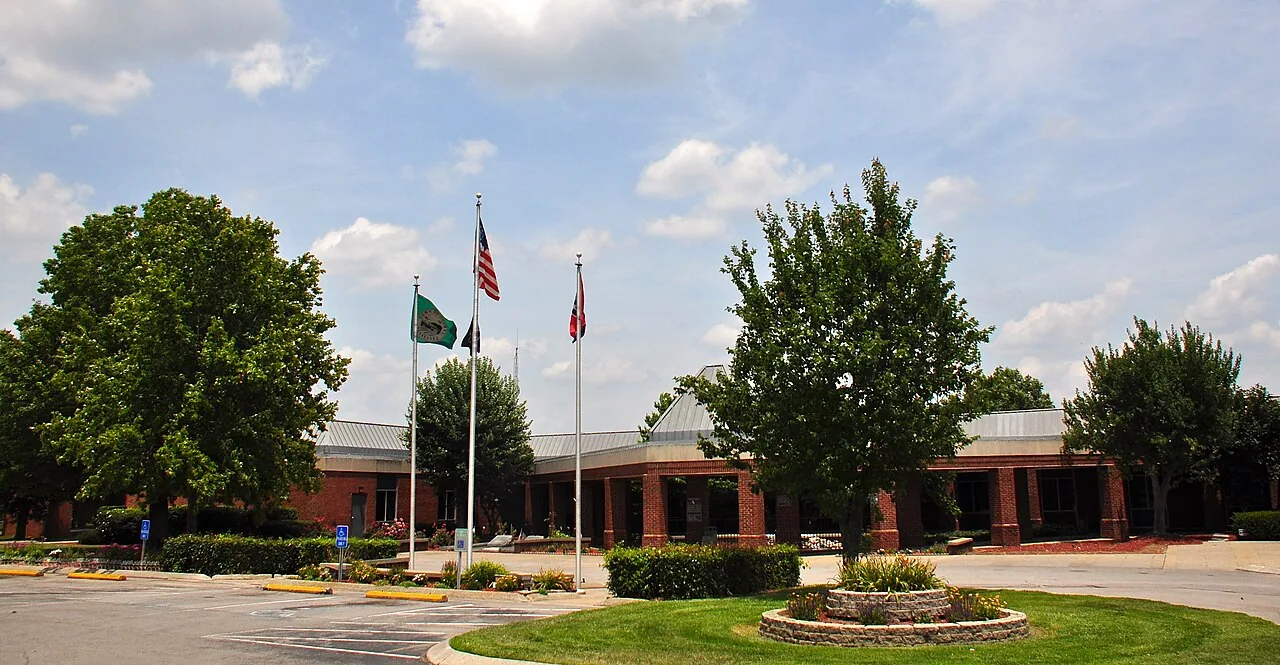
Smyrna, TN, had 53,070 residents in 2020, making it the largest town in Tennessee by population. Its employers range from the Nissan Smyrna Assembly Plant, which began production in 1983, to Asurion, Vi-Jon, Stonecrest Medical Center, Taylor Farms and Square D/Schneider Electric. Manufacturing, health care, food processing and office space give the town a wide mix of roofs, and each fails in its own order.
The first sign
In a plant the first sign is a drip near equipment, a stained ceiling panel or a wet spot under a skylight. Record the location, the time and the weather. If the stain follows rain, the roof is the suspect. If it follows a washdown or a process change, check the building's own systems first, which prevents a wasted roof repair. Ask the line supervisor what ran the night before, and ask facilities whether a coil, drain line or sprinkler head was serviced. Write the answers beside the photo.
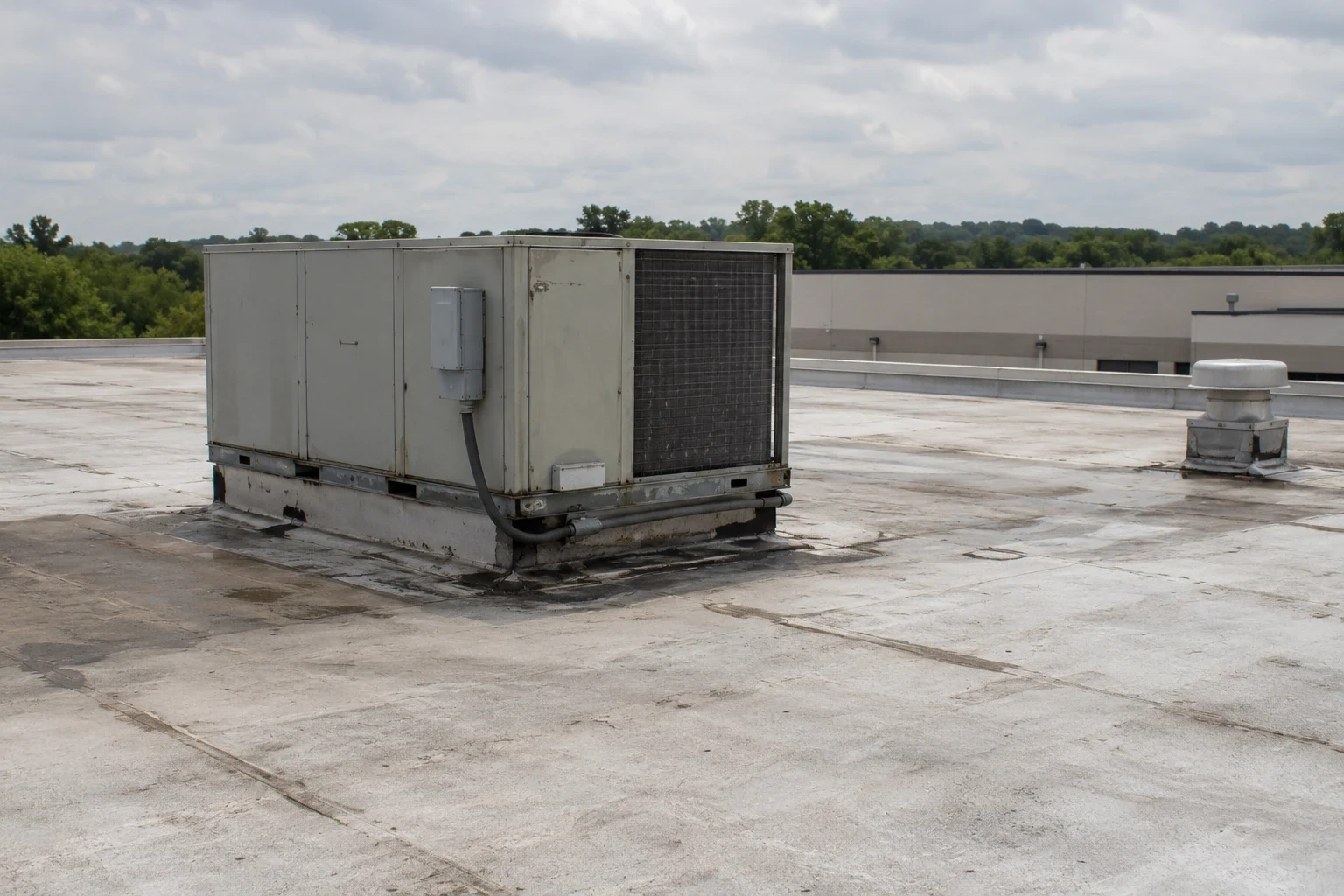
Then mark the spot on the roof plan. A manufacturing roof has many penetrations, from exhaust stacks to makeup air units, and any of them can be the source. The inspection counts them, rates each good, marginal or failed and puts the list in the summary with a photo for each. Marginal items are priced separately, so a manager can fix them in a planned stop instead of an emergency one.
What is happening underneath
A plant roof is a working surface. Exhaust discharges onto it, heat rises through it and units vibrate on it. All of that wears the membrane faster than a quiet roof would. In summer the surface cooks, and in winter the same roof sees freezes that reach the regional record of minus 22 F. Smyrna's mix of buildings, from large plants to medical and food facilities, means that the same weather hits roofs with very different demands underneath them.
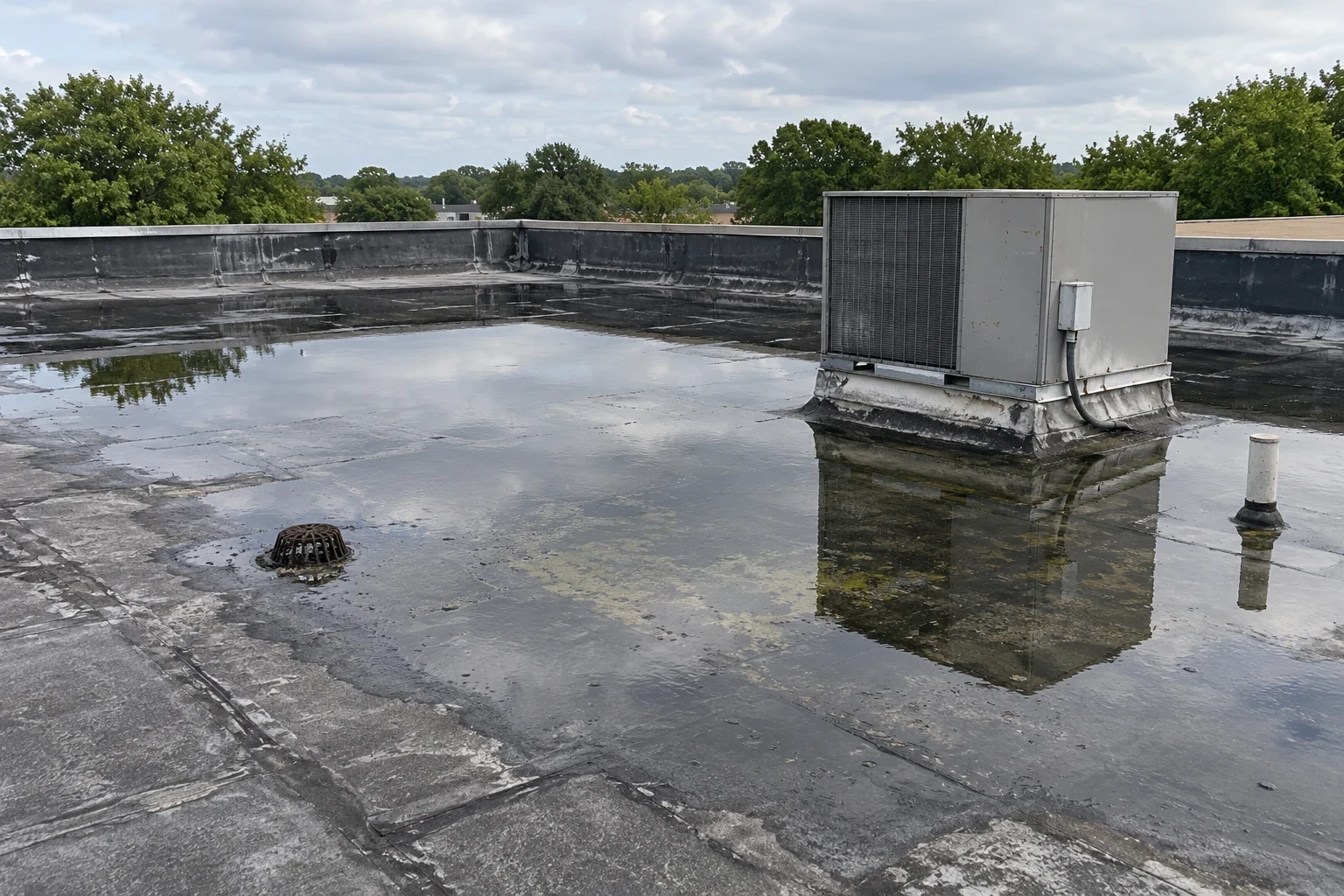
Water that gets in soaks the insulation and spreads. In a plant with process heat below, the water can flash to vapor, push on seams and blister the membrane. The wet layer is the thing to find. A moisture scan finds it faster than a walk, and core samples confirm it. Where the scan shows a large wet zone, the repair is drawn at its edge and priced for that zone only.
Where the water stopped: large plants
The Nissan Smyrna Assembly Plant covers 5.2 million square feet with capacity near 640,000 vehicles a year and employs around 8,400 workers. Those figures show the scale of industry in Smyrna, where a stopped line is a large cost and a roof job has to be sized to it.
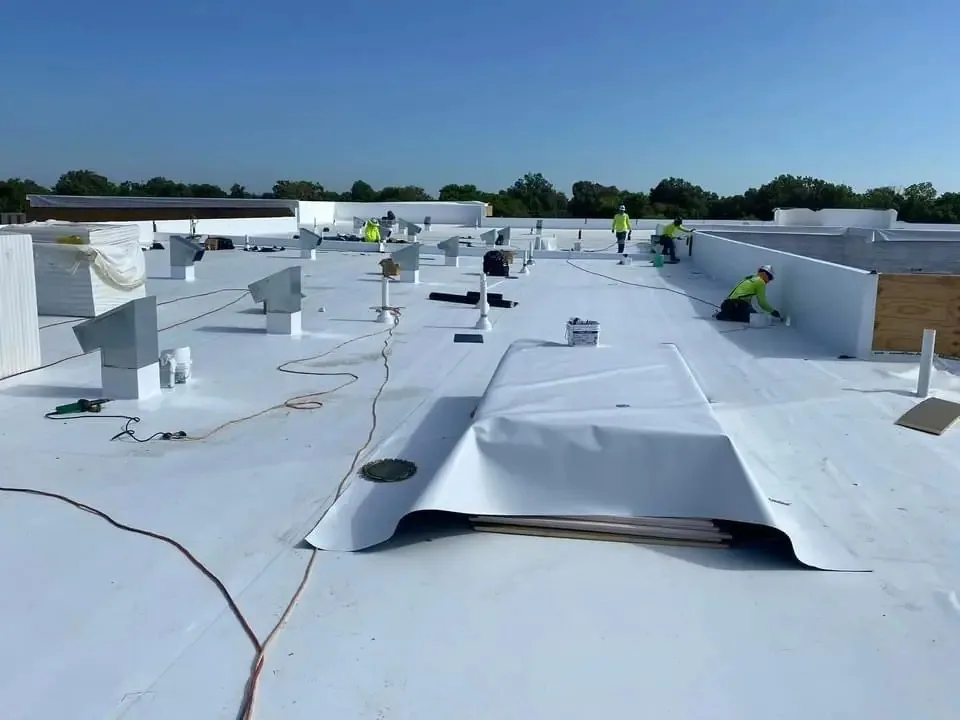
For any plant, the roof plan starts with operations. Which areas can lose power or climate control? Which lines cannot stop? Where is product exposed? We map the roof sections to those areas, protect the highest-risk spaces first and schedule work around shifts. The plant's safety rules apply to the crew: orientation, permits for hot work, lockout where needed and escorts in restricted areas. We ask for those rules before the first day and build them into the schedule. Repairs on a manufacturing plant roof run section by section, so production keeps going.
Health care, food and chemical operations
Stonecrest Medical Center, Taylor Farms and Vi-Jon operate in Smyrna, and each type of building asks something different of a roof. A medical building needs a dry interior and clean air. A food facility needs sanitation and no condensation. A chemical or personal-care plant may need roofs that resist exhaust and fumes. We learn the use before we recommend a system. A food area may need a roof that can be washed, with drains and curbs detailed to keep standing water away. A medical building may need low-odor adhesives and work hours outside patient peaks.
Exhaust and chemical exposure change the membrane choice. Some membranes soften with grease or solvents. KEE membranes are made for contaminant resistance, and PVC is also common near grease. Each choice goes in the scope with the reason, so the facility manager sees why a system was picked. Where a roof sits over a clean or sensitive area, the plan adds dust control and debris catchment under the work. A repair on one of these roofs uses compatible material and a documented method, and the record goes into the building's file.
Airport land and training sites
The Smyrna/Rutherford County Airport Authority was formed in 1990 on former Sewart Air Force Base land. The Tennessee Guard lists Volunteer Training Site-Smyrna and Combined Support Maintenance Shop #1 in Smyrna and operates an Army Aviation Support Facility at Smyrna Airport. Military roofing follows its own rules, which include escorts at the gate, badging, mission calendars and the Unified Facilities Criteria.
For civilian buildings near the airport, the ordinary commercial plan applies. For buildings that need installation access, the sponsoring office issues the instructions, and we ask early who sponsors the visit and what hours are allowed. The process mirrors military installation roofing elsewhere: a sponsor, a badge list and a schedule that fits the mission.
Storms, lakes and drains
Franklin's normals show about 53.79 inches of precipitation a year, and storm lines pass through Middle Tennessee in spring and summer. Portions of Percy Priest Lake lie within Smyrna's limits. Large roofs shed water fast, and the drains must carry it. A clogged strainer holds water on the roof and starts the standing-water line.
After a storm, we clear and flow-test each drain, then walk the perimeter. Ponding water is measured the day after rain and again two days later. If it stays, the cause is a drain, a low spot or a sagging deck, and each has a different fix. A drain cleaning is a visit. A sump rework is a day. A deck repair is a larger project, and the summary prices each one on its own line.
Repair or replace
Failures confined to dry insulation are repairs. A wet zone that has spread, a shrunk membrane or trouble at many details moves the choice to a recover or replacement. In a plant we phase the work around production and show the price of each phase. La Vergne and Antioch follow the same order, so the manager can set the pace.
Commercial Roofing Questions
Should the roof or the plant systems be checked first?
Check the timing. A leak that follows rain points to the roof. One that follows a washdown or a process change points to the building's own systems.
Can a plant roof be repaired without stopping a line?
Usually, in sections. We map roof areas to production areas, protect the most sensitive spaces first and work around shifts.
Do chemical or grease exhausts change the roof system?
They can. Some membranes soften with grease or solvents, so the membrane is chosen with the exposure in mind.
How are hidden wet layers found?
With a moisture scan, then core samples at the flagged spots. The scan shows the spread. The cores show the depth.
What should be sent before the first roof walk?
The roof plan, plus a note of which production areas sit under each roof section and when leaks last showed up.