KEE Roofing in Franklin, TN
A dull, tacky patch of membrane directly downwind of a kitchen exhaust fan is the first sign that a roof was not chosen for what vents onto it. The patch is where the sheet started to break down, and the job is to walk it backward: what comes out of the fan, how often, what it does to the plastic, and how far the damage has spread. KEE is the membrane built for that problem. It is a PVC alloy, welded at the seams like ordinary PVC, but blended with a polymer that resists fats, oils, and many chemicals and keeps its flexibility for longer.
Franklin, TN roofs take roughly 54 inches of rain a year and temperatures that have ranged from minus 22 F to 108 F, and a roof with exhaust adds a chemical load on top of the weather. Commercial Roofing Franklin explains which roofs need KEE and which do not, and checks the existing sheet around every vent.
What KEE is
The name comes from ketone ethylene ester, the polymer blended into the PVC base. It replaces much of the plasticizer that ordinary PVC uses to stay flexible. Plasticizer is the ingredient that migrates out of ordinary PVC over the years, so a sheet that holds its flexibility without it ages differently. The sheet is installed like other thermoplastic membranes: laid out in wide rolls, fastened or adhered, and welded with hot air. The weld is the same, and the same probe check applies. What differs is the resistance to the things that attack other sheets. Cooking fats, animal oils, and many solvents soften ordinary vinyl and some other membranes, and a sheet that holds its shape in the fan zone stays watertight there. Resistance is not immunity, though: heavy, constant discharge still stains a KEE sheet, and a build-up of baked grease holds heat against it.
Which roofs need it
KEE is chosen when the roof carries grease, animal fats, vegetable oils, or chemical vapor. Restaurants are the plain case, since kitchen exhaust throws fat onto the roof around the fan. Food processing, commercial kitchens in hotels and hospitals, and some laboratories also qualify. Franklin's restored historic downtown includes the former Dortch Stove Works and Magic Chef factory, converted in the late 1990s for offices, restaurants, retail, and event space, and a restaurant in a building like that vents onto its roof like any other. A roof with no such exhaust usually does not need the extra cost. The decision is easiest to make on the roof, where we can see how many fans there are, which way the wind carries their discharge, and whether the existing sheet shows damage. Where one fan is the only source, a local KEE patch around it may solve the problem without changing the rest of the roof.
How to read the fan zone
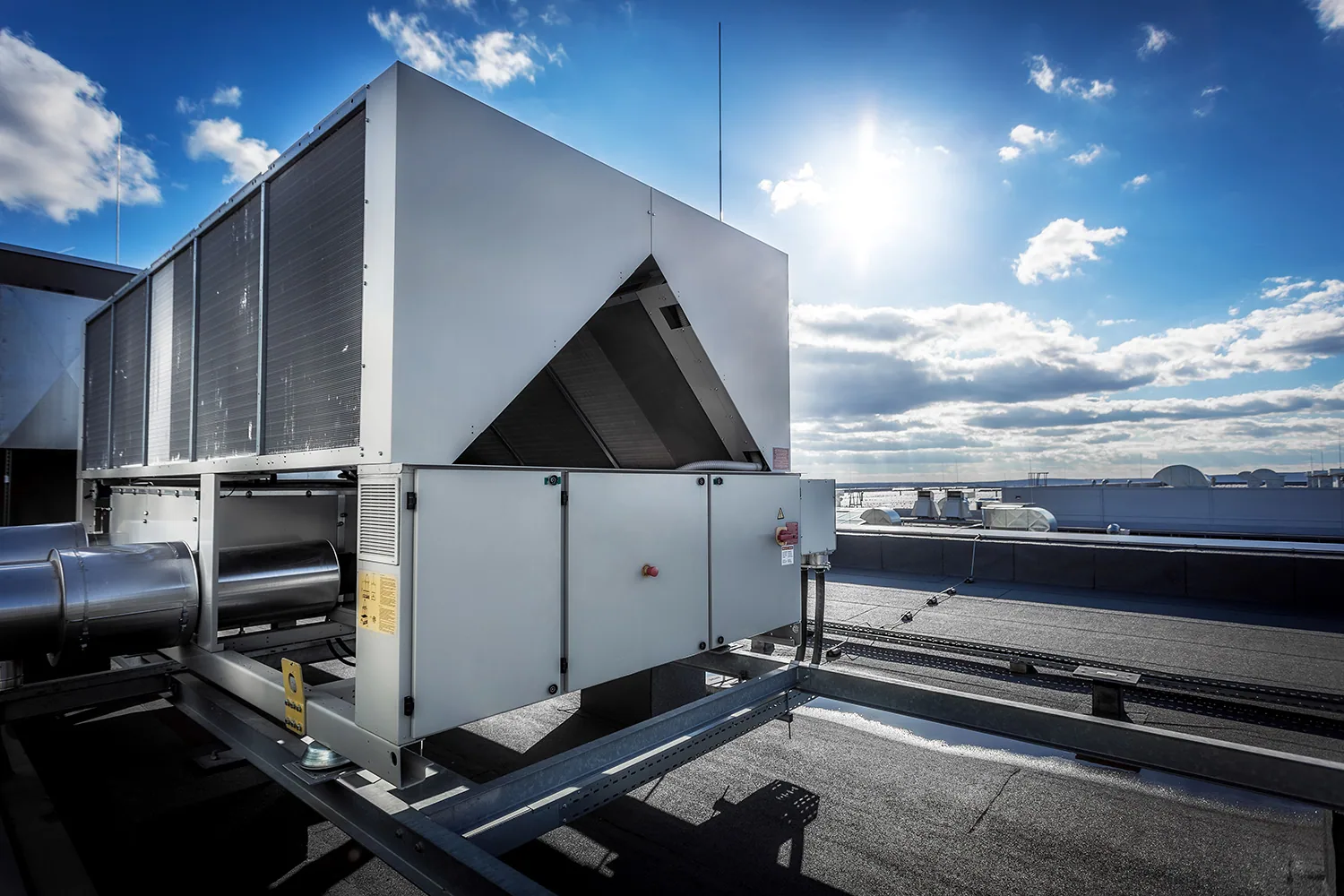
We start at every exhaust fan and walk outward in the direction the wind carries discharge. On a healthy KEE sheet, grease stains the surface but does not soften it. On a sheet that was never meant for grease, the surface turns tacky, swells, or blisters. We press with a thumbnail, look for a change in sheen, and check for discoloration that follows the wind. A grease trap on the fan and a protective pad under it keep the discharge off the membrane, and cleaning the pad on a schedule prevents a build-up that bakes onto the sheet. Many restaurant roofs have a path of footprints from the fan to a ladder, and the same grease that stains the sheet makes it slick underfoot. A walk pad on the path protects the membrane and gives the crew a safer route, and we note slippery areas on the roof plan for anyone who has to cross them.
Seams, flashings, and curbs
Like other welded membranes, KEE leaks first at seams and flashings. We probe each seam for lift and check welds at T-intersections, where three layers meet. Flashing at a fan curb is a handmade detail, and heat movement works it constantly. A fan that vibrates loosens the sealant at the curb cap and can shake fasteners free. A cracked cap lets water run down the side of the curb, behind the flashing, and into the insulation, which is how a roof with a healthy sheet still ends up with a wet layer under the fan. The photo trail from each visit shows whether a gap is growing. Walk the zone again after the first month of hot weather. A sheet that looked fine in spring can show a softened ring once summer heat and fresh grease work together, and the second look decides whether a pad, a trap or a patch is needed. A curb and equipment support repair is often the first fix on a roof with several fans.
Water, ponding, and storms
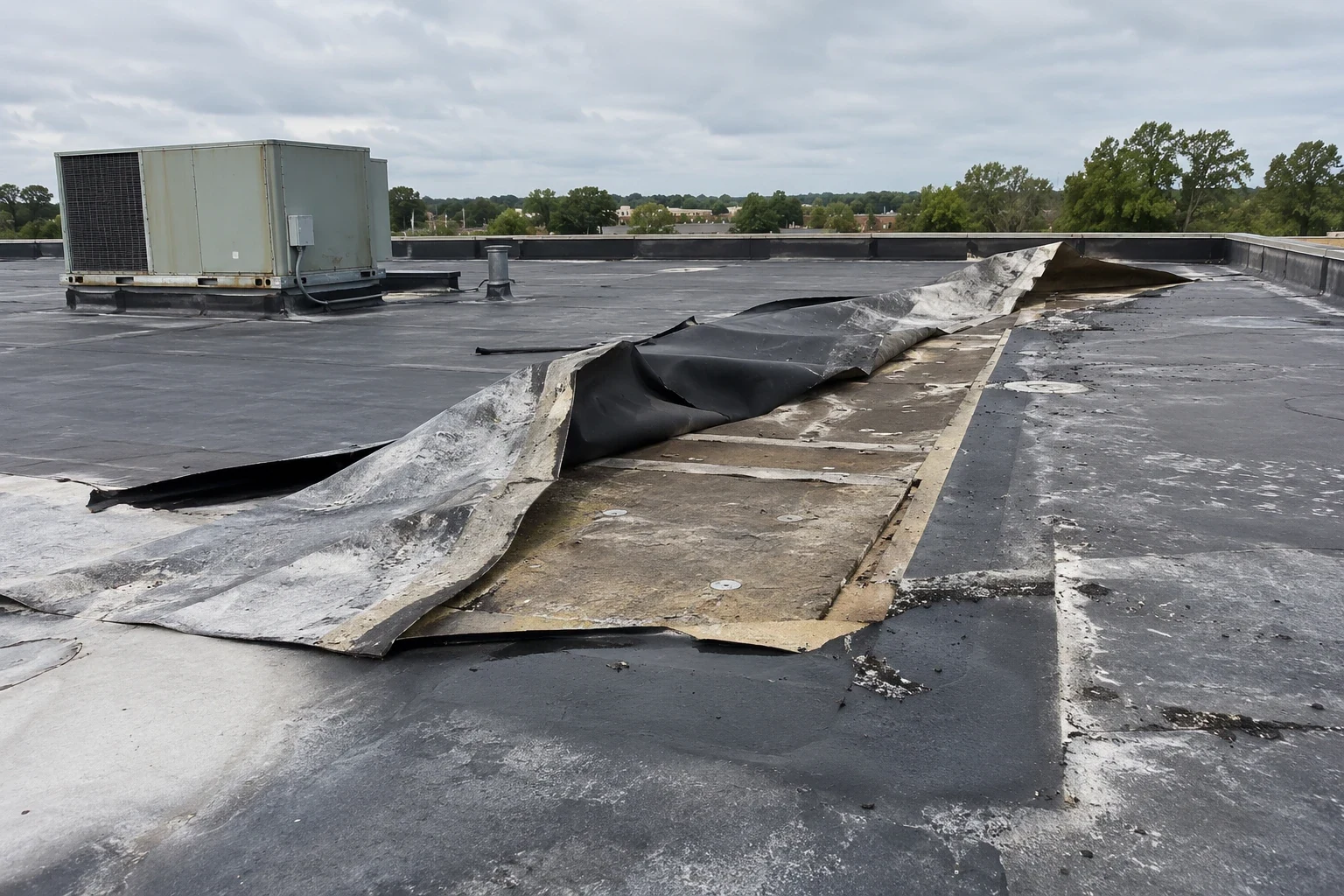
The standing-water line after a storm tells us whether drainage is working, and grease adds a reason to care: fat dissolves into pooled water and spreads across a larger area of the sheet. We clear drain strainers, check scuppers, and look for a low spot near the fans. Franklin's EF0 tornado in August 2023 left minor roof damage at some businesses on Highway 96. After a storm line, we check the edges, the fan housings, and the grease traps for displacement. A grease trap that has shifted no longer catches the discharge, and a fan housing that has lifted leaves a gap at the curb. A wind-damaged roof with kitchen equipment on it is checked for both before the next service day, because a shifted trap sends grease onto a clean part of the sheet.
Repair, recover, or replace
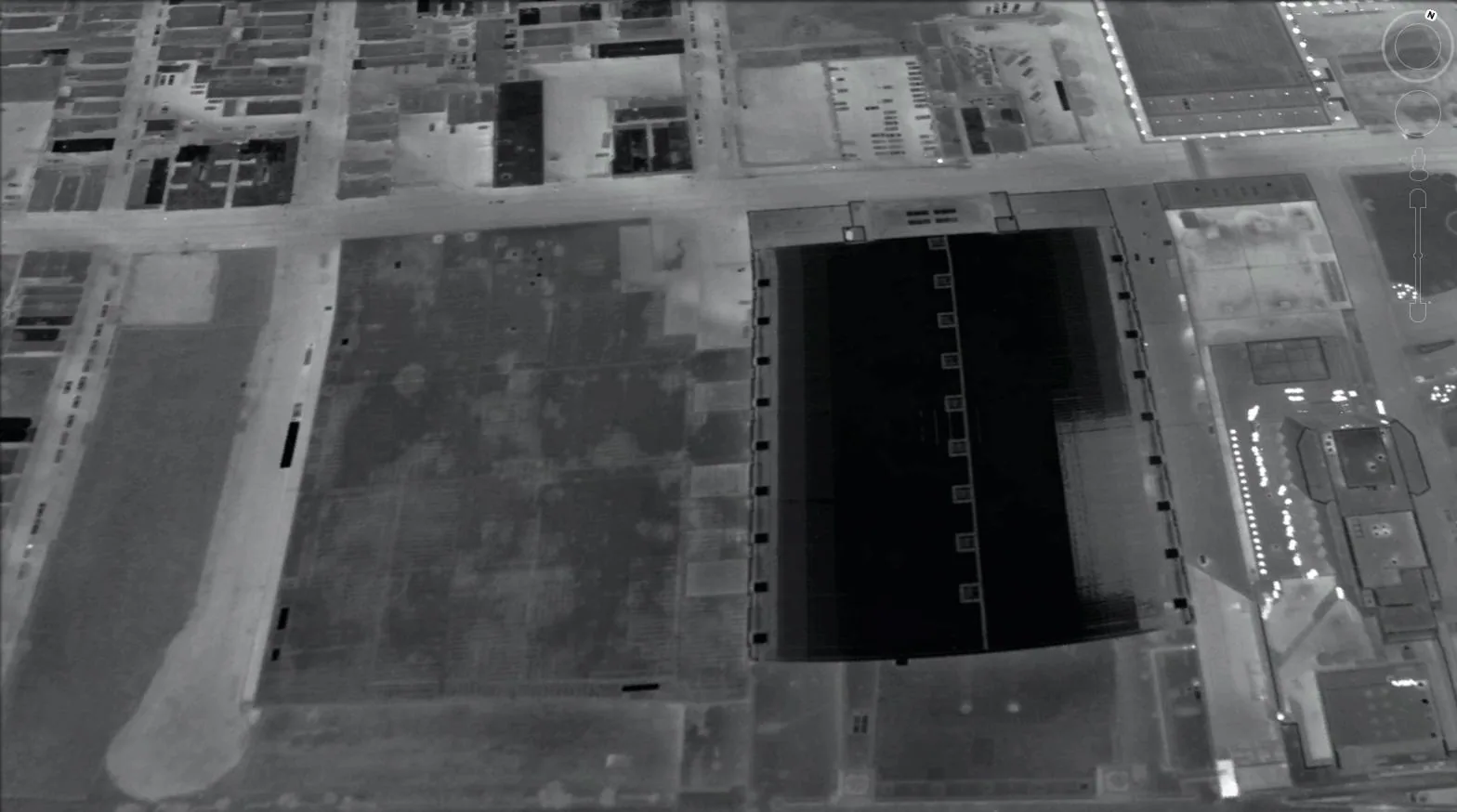
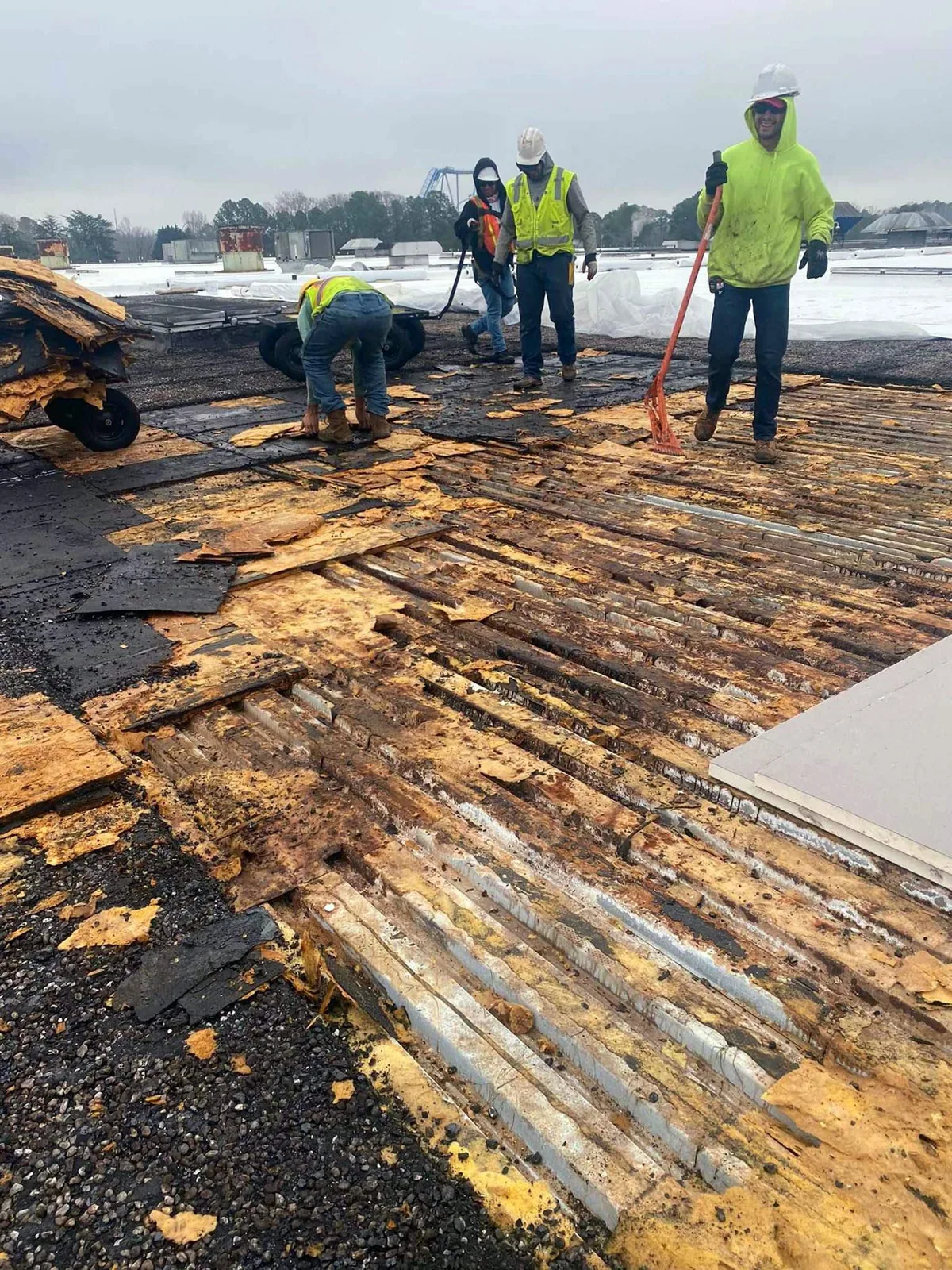
A damaged patch around one fan can be cut out and replaced with a KEE patch, and the fan gets a grease trap. A roof where the whole field has softened points to replacement. Insulation under a greasy roof is checked, since grease can wick under a leaking seam. We scan with an infrared moisture survey and cut samples to decide. The state's move to the 2021 editions of most international codes in 2025 means a replacement scope is checked with the building official.
Where it fits in Franklin
KEE belongs on restaurant roofs, on hotel kitchens, and on food service buildings in retail districts such as Cool Springs. For roofs with heavy exhaust, it is the alternative to standard PVC or TPO. We walk each building first and match the sheet to what vents onto it, and we write down the exhaust list so a later repair uses the same material.
Commercial Roofing Questions
Do all restaurants need KEE?
Not all. It matters where fan discharge reaches the roof in quantity. We check the exhaust layout and the existing sheet before recommending it.
Can I patch grease-damaged TPO with KEE?
Different membranes do not weld to each other reliably. We cut the damaged area back to sound material and match the patch to the existing sheet, or plan to replace the roof section.
How often should the fan pads be cleaned?
On a schedule tied to how much the kitchen discharges. We set the interval during the roof walk and note it in the file.
Does KEE cost more?
The sheet usually costs more than standard single-ply. The extra buys protection where grease and oils reach the roof. Elsewhere, it is not needed.
What if grease has already reached insulation?
Wet or greasy insulation is removed. Grease does not dry out, and covering it with a new sheet only moves the problem.