Commercial Roofing in Triune, TN
A downspout that dumps its water against the foot of a wall, with a dark stain on the wall above the splash, is the first sign. The roof may be fine. The failure is in where the water goes once it leaves the roof, and a manager who only looks up will miss it. In Triune, TN, an eastern Williamson County town at the intersection of State Route 96 and U.S. 31A and 41A, just north of I-840, water paths matter because the town sits along the Wilson Branch of the Harpeth River at an elevation of about 837 feet.
We walk the water backward from the stain to the roof edge and forward to the ground.
The splash line on the wall
A splash line is a stain that starts at the ground and climbs a few inches up a wall. It tells us that water is arriving fast and hitting hard. The cause is often a downspout without an extension, a scupper that spills against masonry or a gutter that overflows. The roof is working as built, and the discharge is the problem.
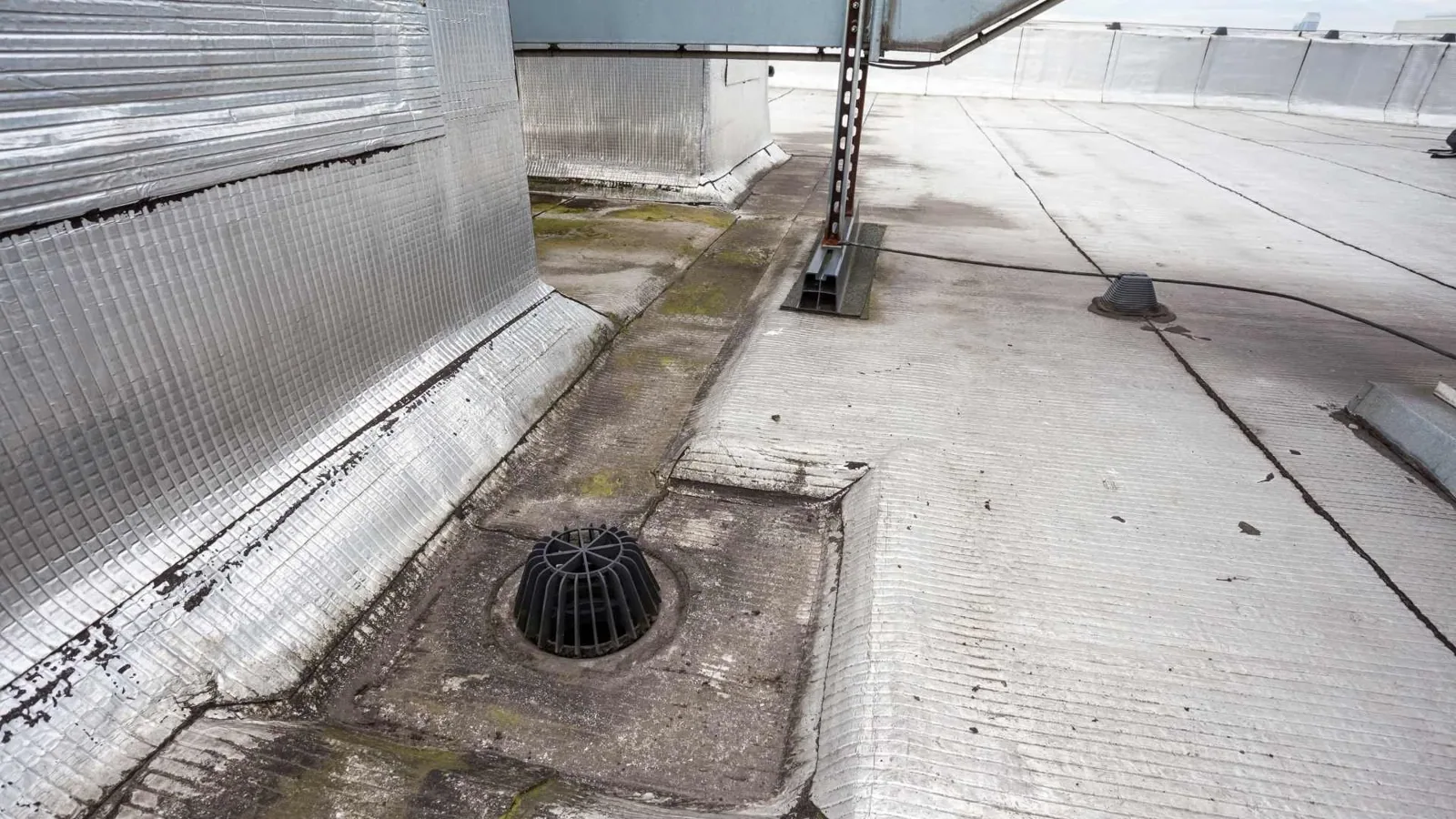
We photograph the stain, trace the water to its source and note where it enters the ground. Then we look at the roof's drainage as one system: drains, leaders, gutters, scuppers and the ground they meet. A failure at any link shows up as a stain somewhere else.
The ground gives clues as well. Eroded soil, exposed footing and a muddy strip along a wall show where water has run for a long time. Moss on the wall above a downspout shows a long habit of wetting. We photograph each clue and link it to the downspout or scupper that caused it.
Water-path thinking from May 2010
In the flood of May 1-2, 2010, the Harpeth crested at 35.32 feet in downtown Franklin, a few inches over its 1948 record, and roughly 1,500 homes and businesses across Williamson County were damaged, at a cost near $100 million. The event teaches a habit: ask where the water goes when the ground cannot take it.
For a commercial roof near a creek, the habit has two parts. First, make sure the roof sheds water quickly and cleanly. Second, make sure the discharge has somewhere to go. A roof that drains perfectly into a saturated yard sends water back against the building. We record both in the file.
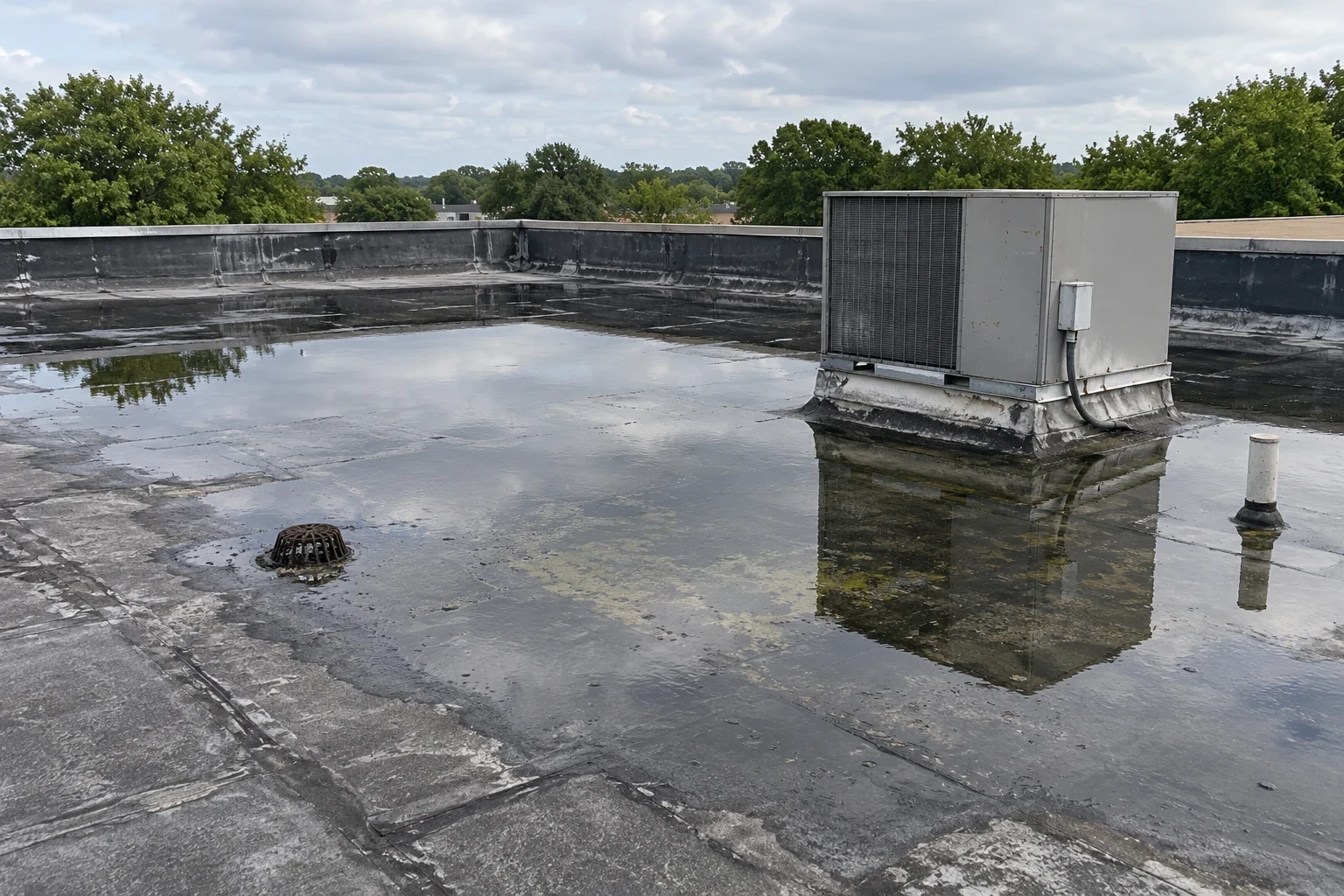
On the roof, the same habit shows up as a question about low spots. Water that lingers near a drain is the problem addressed in ponding water roof repair, and we measure it with a straightedge after rain. A pool that stays more than a day or two has a cause, and the photo trail shows it.
Equipment makers and their roofs
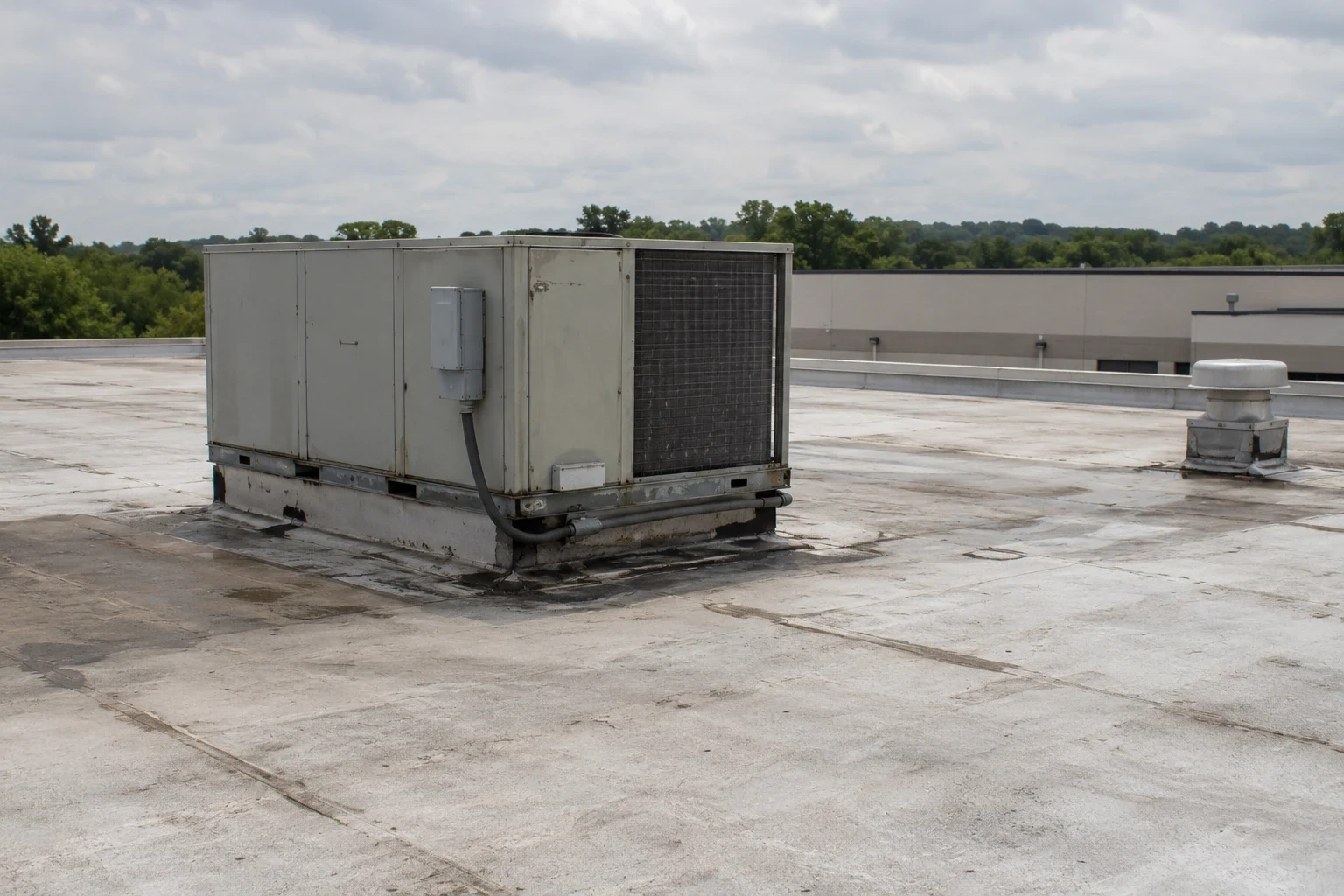
A manufacturing facility in Triune makes equipment for harvesting tobacco. Production buildings can carry rooftop exhaust, makeup air and process equipment, and each item adds a penetration, a curb and a place for heat and vibration to work on the roof. The first sign of trouble on such a roof is often a brown or white stain around an exhaust outlet.
We trace it from the stain to the outlet and look at the membrane, the flashing and the sealant. Chemical or heat exposure may be softening the surface, and the repair may require a different material at that spot. The same approach applies to any manufacturing plant roofing job, with the photographs showing the progression.
Heat is part of the picture. On top of a Franklin-area summer, with July highs near 91 degrees, a roof near hot exhaust gets extra thermal load. A black membrane beside an outlet can reach surface temperatures well above the air. We record the outlet's discharge direction and the distance to the nearest seam, because a seam too close to the heat is a seam that will open first.
Event weeks and access
Castle Gwynn hosts the Tennessee Renaissance Festival each May, and an event week changes how roads, parking and deliveries work around it. Roof work that depends on a lift or a truck should avoid those weeks if the building sits on an affected route. We ask owners for the dates and mark them on the schedule.
If an emergency arises during an event, we plan the approach in advance, keep material staging off busy lots and place barriers where pedestrians pass. The work order states the route, the hours and the person to call at the site.
Events also bring temporary structures, extra deliveries and crowds who do not know the roof is above them. A fence, a sign and a spotter keep passersby clear of the work. The plan prices these items from the start, since they are part of doing the work safely.
How to confirm the cause
To confirm a drainage failure, we follow a short sequence:
- Photograph the stain and the ground at the base of the wall.
- Run water from a hose onto the roof area and watch where it goes, with the owner's permission.
- Check the strainer, leader and outlet for blockage.
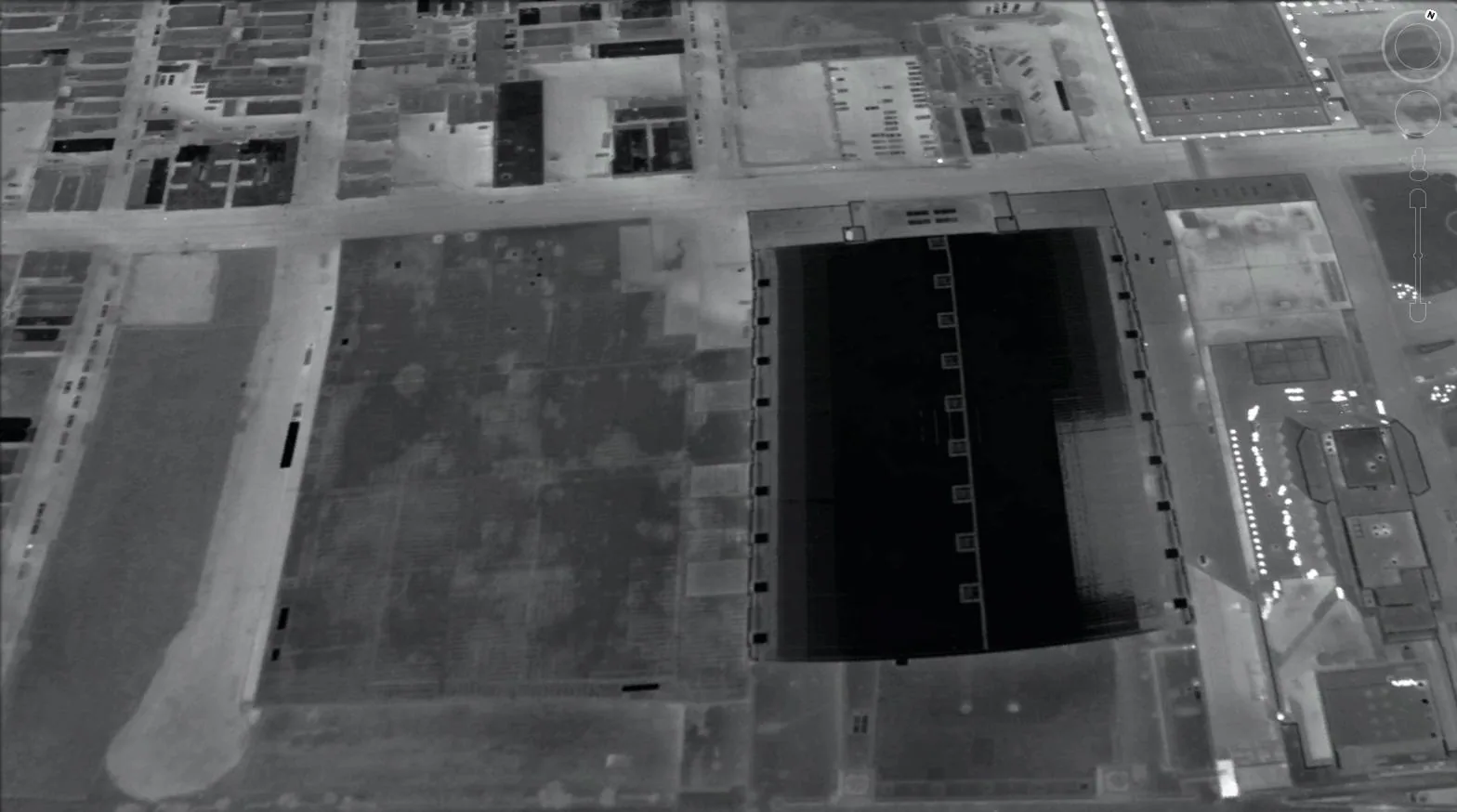
- Scan the roof edge with an infrared moisture survey to see whether water entered the roof edge.
The hose test is a simple one. It shows whether the drain works under flow, and it often finds a crushed or disconnected leader that a visual check misses.
A second pass happens after the first heavy rain. We return to the same stain and check whether it has changed. If the splash line is gone and the wall is dry, the fix worked. If the line remains, we look at the next link in the chain.
Repair, replace and what it costs
Most drainage failures are inexpensive to fix once found: a new extension, a splash block, a cleaned strainer or a re-sloped sump. If water has entered the roof edge, the repair may include edge metal and a section of membrane. If insulation is wet, it is removed and replaced.
Cost follows the area, the access, the number of outlets, the condition of the leaders and the system. We list the drivers in writing. For roofs that drain poorly because of their shape, roof drains and scuppers may need to be added or resized, which is a larger job and is scoped separately. Owners with sites in Fairview or College Grove use the same format.
The photo trail from first stain to final repair is the file the manager keeps. It shows the sign, the cause and the fix, each with a date and a number, so the next person who sees a splash line can start from the answer.
Commercial Roofing Questions
A wall has a splash stain. Is the roof leaking?
Not necessarily. The stain may come from a downspout or scupper that discharges against the wall. A walk checks both.
What is the hose test?
We run water onto a roof area and watch where it goes. It shows whether drains and leaders work under flow.
Do creeks matter for roofing?
They matter for where roof water can go. A saturated yard sends water back against the building.
Can chemical exhaust damage a roof?
It can soften or stain some membranes. The repair may call for a more resistant material at that spot.
Do you respond to emergencies?
Night or day. We contain the water first and walk the drainage path once the weather clears.