Commercial Roofing in Fairview, TN
A gouge in the membrane a few inches long is the first sign, with a clean edge on one side and a torn edge on the other. It looks minor from the hatch. In Fairview, TN, a Williamson County city of 9,357 residents in 2020, where trees were down with scattered power outages during the August 12, 2023 storm system, a gouge like that is often the visible end of a longer failure. A limb hit the roof, the sheet parted, and water began to reach the layers below.
We walk that failure backward from the gouge to the wet layer, and we photograph each step.
The gouge and what it hides
A cut in a membrane is only the top of the story. Water that enters a cut spreads sideways between layers, following the top of the insulation, and it can travel several feet before it reaches a seam or a penetration where it drips down. The stain on the ceiling may be nowhere near the gouge.
That is why we mark the gouge and then scan around it. A moisture survey shows the size of the wet zone, and a core cut confirms what the survey suggests. The photo trail of the gouge, the scan and the core is the proof that the damage is bounded or that it is not.
Edges tell the direction of the strike. A clean edge on one side and a torn edge on the other show which way the limb was moving, and the torn edge usually points downwind. We note the direction on the plan, then look downwind for a second mark, since the same limb may have bounced or dragged. A single storm can leave three or four marks across one roof section.
What a falling limb does
A limb does damage in three ways. The first is impact: the sheet is crushed against the deck, and the fabric inside it fractures. The second is cutting: a broken end slices through the surface. The third is dragging: wind pushes the limb across the membrane and tears a long line. Each leaves a different mark, and each tells us the direction of the force.
After the August 12, 2023 storm system, trees were down near Fairview and one blocked both lanes of Highway 100. Where trees fall, roofs nearby are worth checking. A membrane puncture repair starts with finding every mark, not only the obvious one.
Impact damage is the hardest to see. The surface may look whole while the reinforcing fabric inside has broken, and the break lets water wick in over time. We press every suspect spot with a gloved hand and probe with a blunt tool. A soft or crunchy feel under a sheet that looks continuous marks a hidden crack, and we circle it for a core.
Debris in drains and valleys
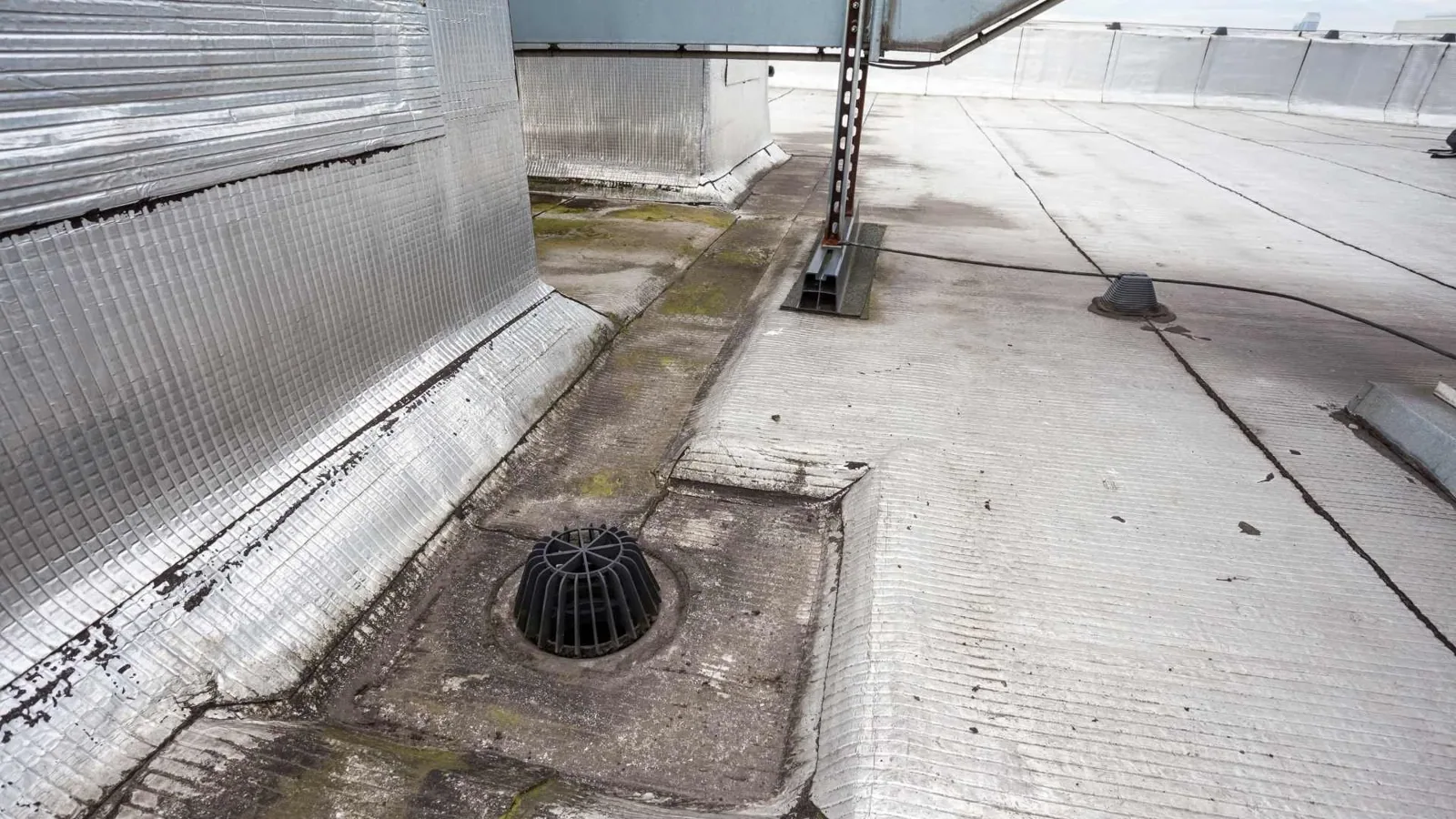
Branches, leaves and small limbs end up in drains, scuppers and the low points of a roof. A clogged drain holds water on the surface, and standing water loads the membrane and wets the seams. After a storm, the first walk clears debris, photographs each drain and notes whether water is standing.
Debris is also an abrasion problem. Leaves and twigs blown across the roof grind against the surface in wind, and a pile against a wall can hold moisture against flashing. A roof drains and scuppers check belongs in the first hour after any storm that brings down limbs.
Gutters and edge metal fill with debris too. A gutter packed with leaves overflows at its low end and soaks the wall below. A packed edge also holds water against the fascia and the roof edge, which loosens sealants. The post-storm walk clears them and photographs each run.
Outages and rooftop equipment
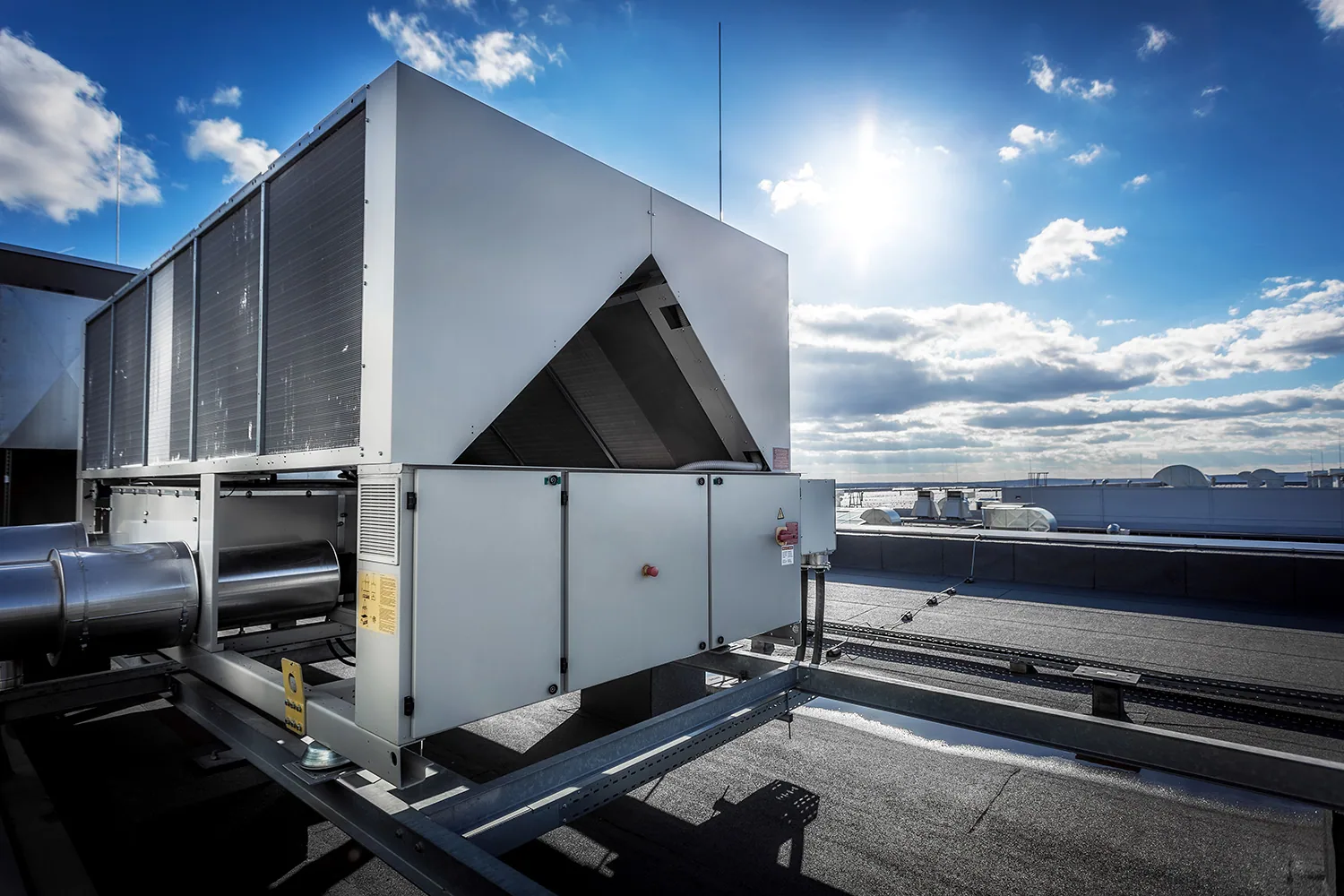
Scattered power outages follow a storm like the August 2023 system. When power returns, rooftop units restart, and a unit that was damaged or shifted can leak refrigerant or condensate onto the roof. The first walk after an outage checks each unit for movement, each curb for crushed flashing and each condensate line for a break.
These are small checks that find large problems. A displaced unit crushing its flashing will leak for months before the stain appears, and the photo trail shows when the unit was last sound. Our rooftop equipment curb and support review covers the details.
Surges are another quiet effect. A unit that restarts repeatedly can vibrate on its curb, and the vibration loosens fasteners and sealant over time. We tighten what is loose, reseal what has opened and note the date, so recurring movement shows in the log.
Routes in and out
State Routes 100 and 96 give Fairview direct access to I-40 and I-840, and a storm that closes a state route changes how crews and materials arrive. At the first walk we note the approach, a second route if the first is blocked, and the space for a lift or a truck. The work order lists these routes for the driver.
Fairview had an estimated 10,877 residents in 2025 and sits about 25 miles from downtown Nashville. Distance matters for response. We schedule the first visit to stop water, and we hold the permanent repair for dry weather.
Storm response also depends on utilities. If a power line is down near the building, the roof is not safe to reach, and we wait for the utility. The work order records the hold, the time and the person who cleared the site, so the file shows why a repair began when it did.
How to confirm the damage
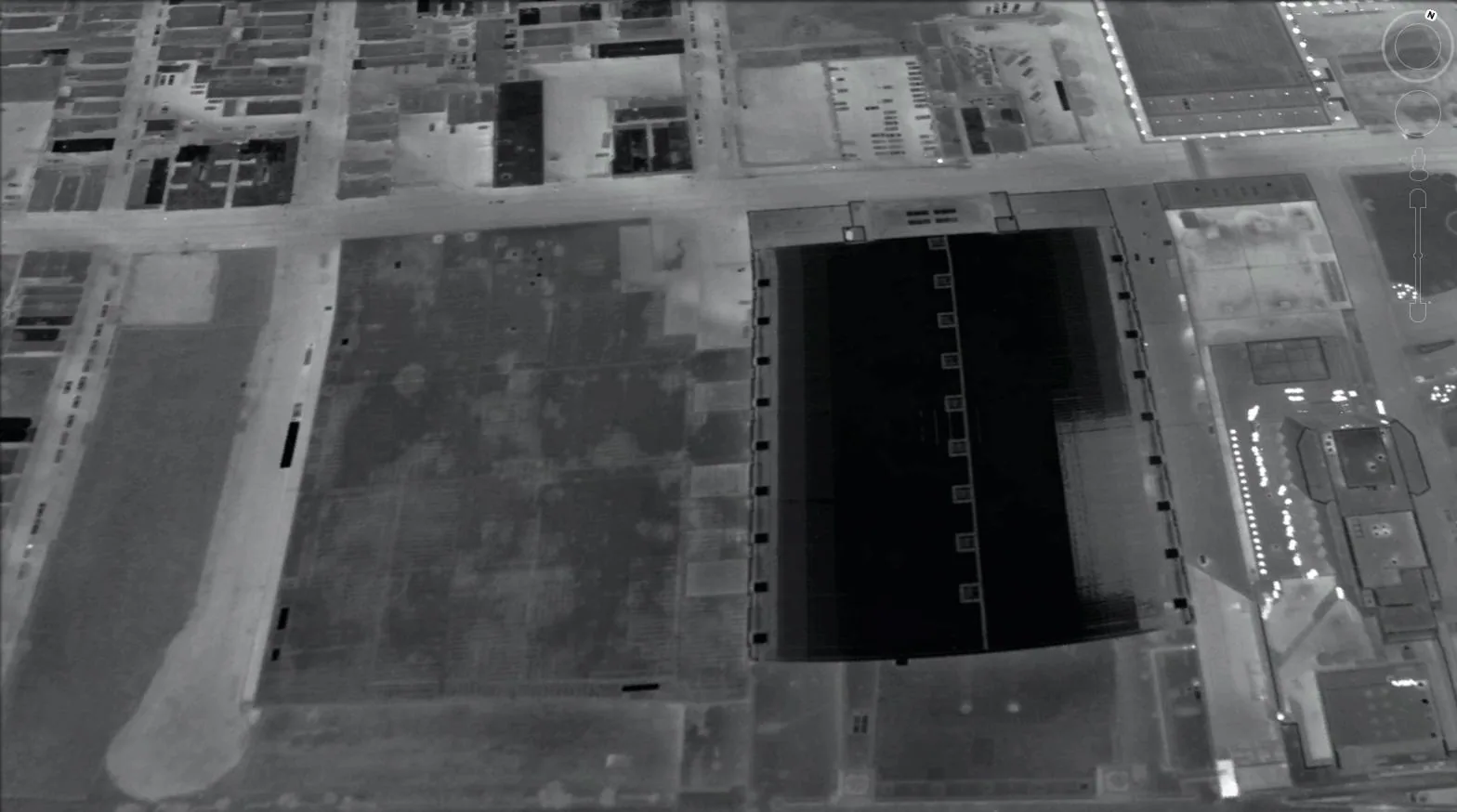
We confirm in order. First, photograph every mark on the surface and tag it on the plan. Second, scan with an infrared moisture survey once the roof has cooled. Third, cut a core at the warmest spot. Fourth, probe the area around each mark to find where the sheet is still bonded.
If the core is dry, a local repair is likely enough. If it is wet, the wet layer must be removed. The boundary comes from the readings, not from guesswork, and it goes on the plan so the next inspector can see it.
The photo trail is numbered. Each mark, scan image and core has a number that matches the roof plan, so a manager can pull up any one of them and see what it showed. That detail also helps an adjuster, who can follow the trail without walking the roof.
Repair or replace, and what drives cost
A few small cuts on a dry roof are a repair. Many marks across a section whose membrane is already tired may justify replacing that section. Cost follows the area, the access, the number of marks, the insulation condition and the system. We list them in writing.
If the roof is insured, the photo trail supports roof insurance claim assistance. Owners with sites in Nolensville or Triune use the same steps.
Commercial Roofing Questions
A limb hit the roof but nothing leaks. Is it fine?
Not yet known. A cut can let in water for weeks before a stain appears. A walk and a scan show whether the layers are dry.
Can a cut be patched the same day?
A temporary patch can be. The permanent repair waits until the roof is dry and the wet zone is mapped.
How far does water travel from a cut?
Several feet along the insulation is common. The moisture scan shows the actual reach.
Should drains be checked after every storm?
After any storm that brings down limbs or leaves. A clogged drain turns a small problem into a leak.
Do you work at night?
Any hour of the day. After a storm the first stop is the opening, then the debris, then the drains.