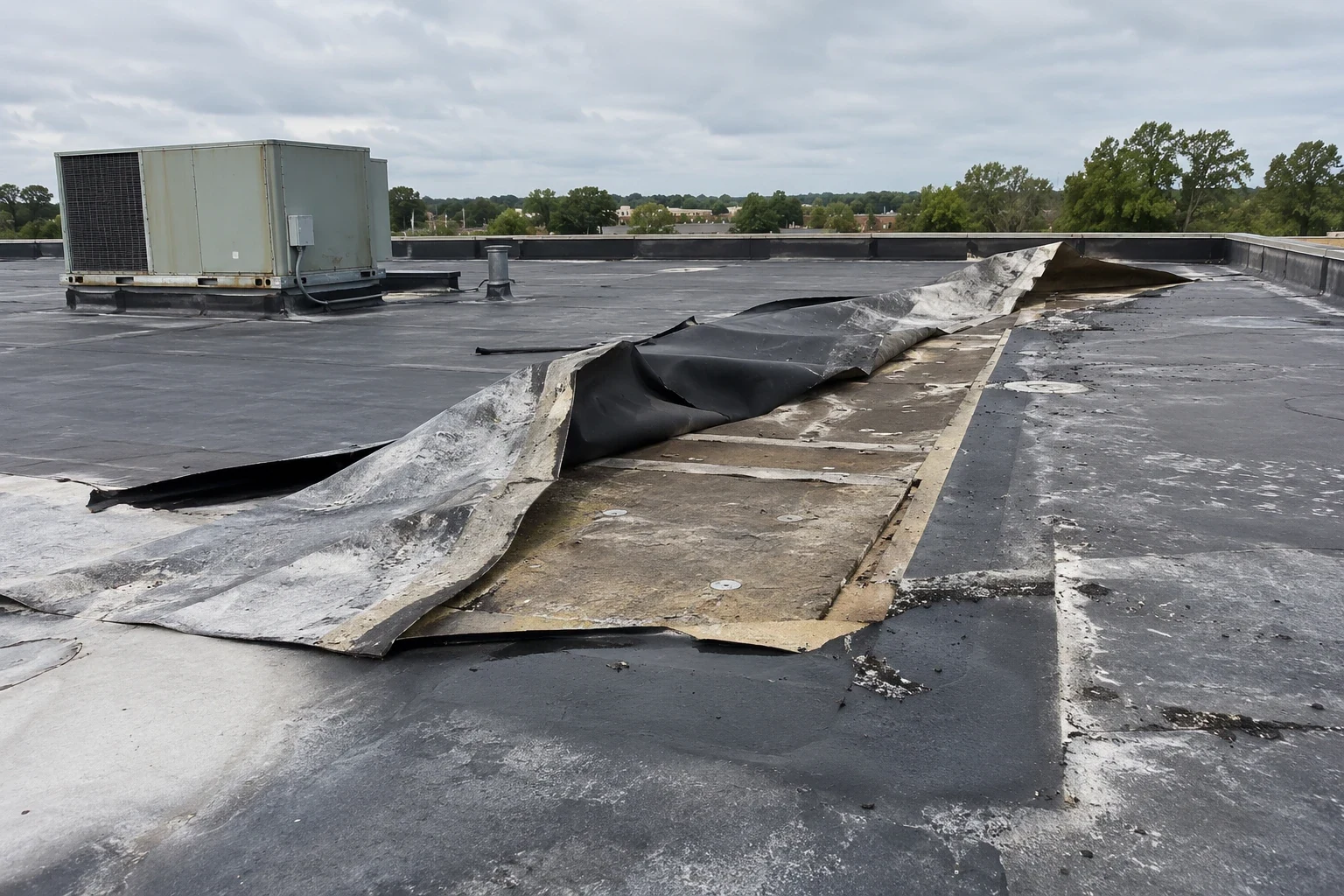
Skylight and Penetration Flashing in Franklin, TN
A brown stain that rings a ceiling tile directly under a pipe, a vent or a skylight is the first sign of a flashing failure, and the water is rarely where the stain is. It enters at the penetration, runs along the deck or the insulation and drops somewhere downhill. Skylights, curbs and penetration flashing are the places where a roof is cut open, and every cut needs a seal that outlasts the membrane around it. In Franklin, TN, where a summer roof runs hotter than the air and winter lows have reached minus 22, those seals work through a wide range of movement.
We trace each stain backward to the opening, check the flashing and tell the property manager what failed and why. That trace is the core of any commercial roof leak repair, and it keeps the repair at the opening and not at the stain.
Pipe Boots and Vent Stacks
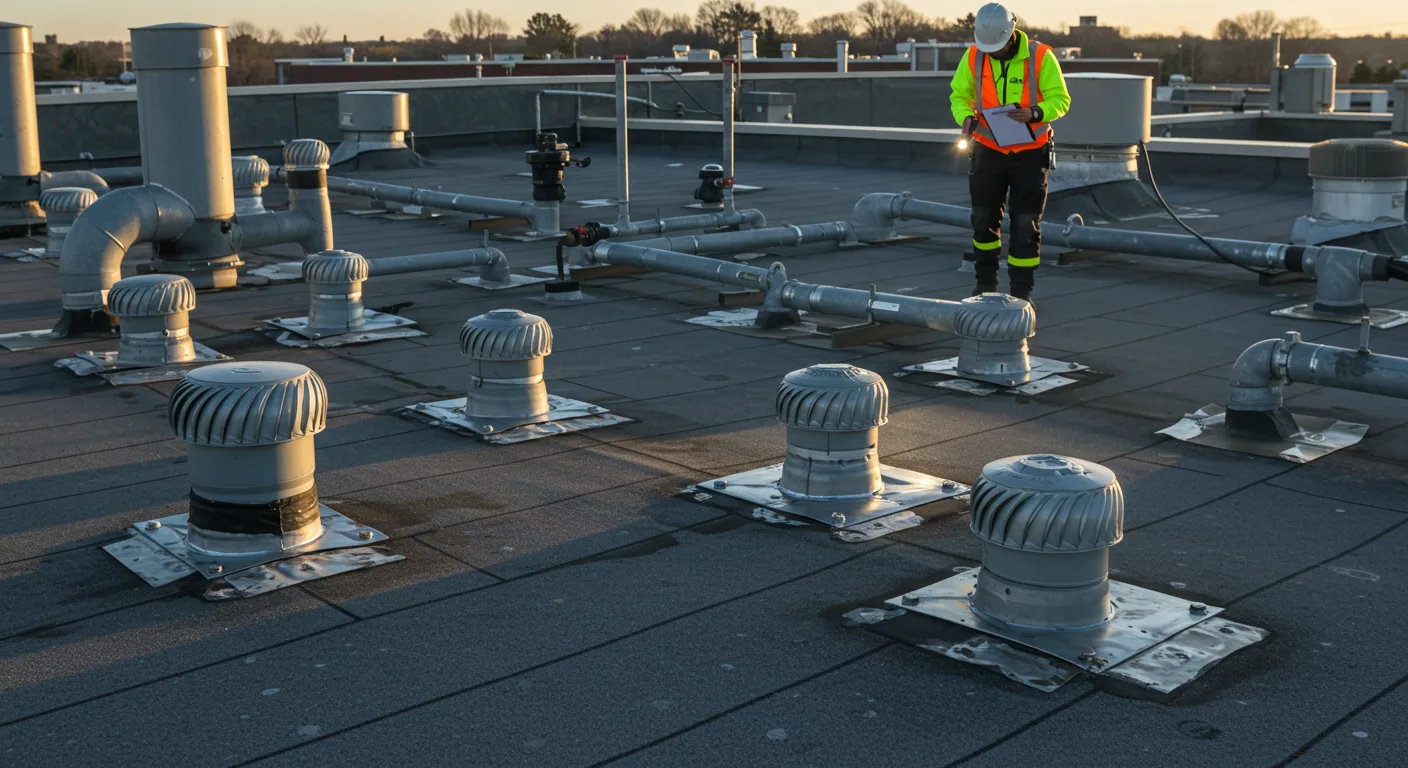
A pipe boot is a collar that fits over a pipe and seals to the roof. The rubber or plastic ages in sun and heat, hardens and cracks, and the seal at the base loosens. A hairline crack lets in a thread of water that follows the pipe down.
We press each boot, look for cracks and check the clamp and sealant at the top. Replacement costs little, takes minutes per boot, and a boot replaced on a maintenance visit prevents a leak. For pipes that have moved or a cluster of lines, a custom flashing replaces a stack of boots.
Conduit and cable runs are a quieter source of leaks. Each line that passes through the membrane needs a seal, and a run added after the roof was built may have only a bead of caulk. We replace those with a proper pocket or boot and record the product used.
Equipment Curbs and Supports
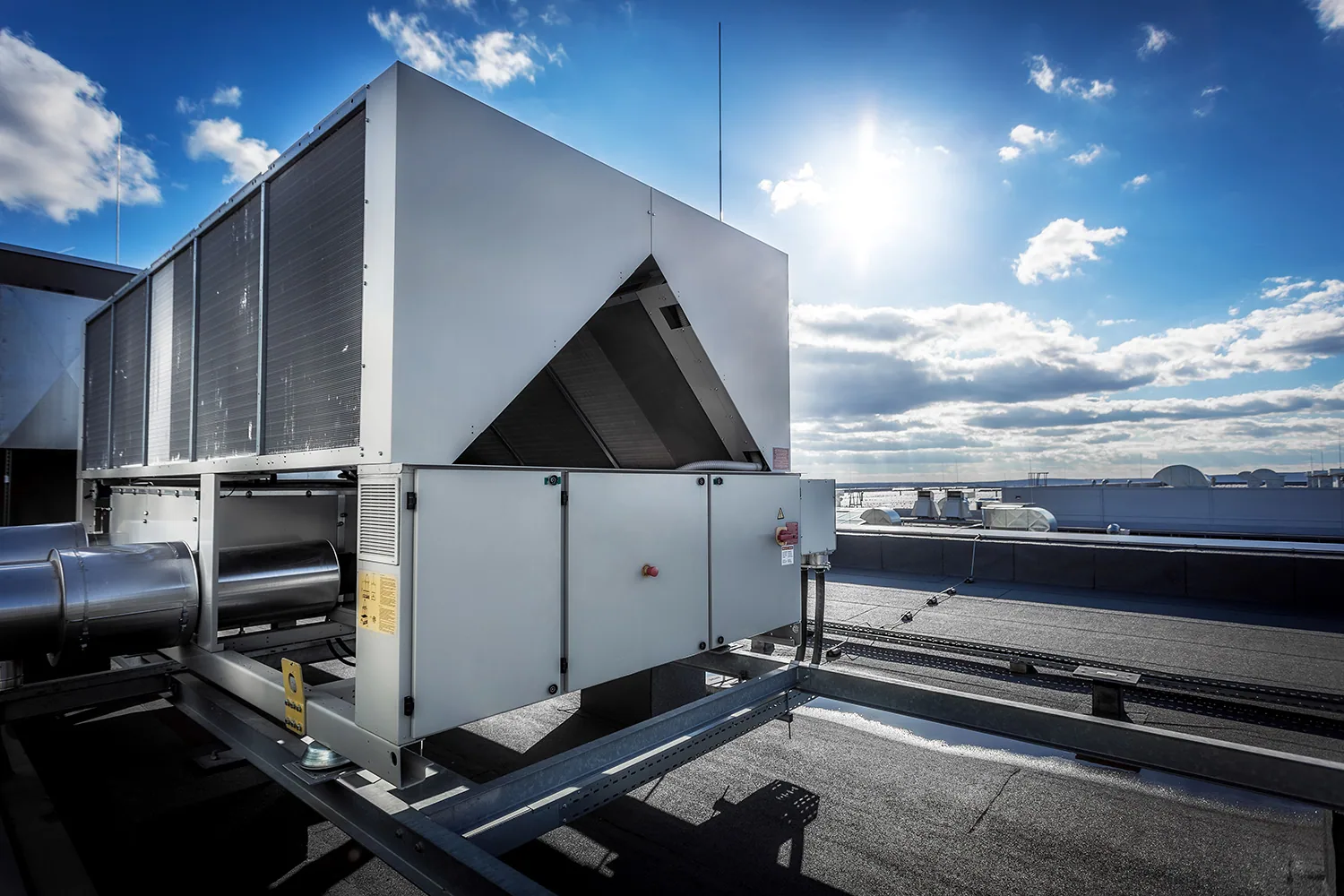
A curb is a raised frame that carries a rooftop unit, and the membrane turns up its sides and caps at the top. The corners are the weak points. Heat and cold move the curb, the membrane pulls, and the corner splits. Service traffic wears the surface in front of it.
We probe each corner, press the flashing and photograph the termination. The rooftop equipment curbs and supports are the frames, and the flashing is the seal around them. In the McEwen area east of I-65, office buildings climb six to eleven stories, so rooftop units there sit high and take wind on every side of the curb.
We check the curb walls for rust, the cap for gaps and the base flashing for lift. A curb that was raised later may have flashing that stops short of the new height. Each finding is photographed against the numbered sketch, and anything that needs a crane or a lift is scheduled with the tenant's quiet hours in mind.
Skylights and Their Frames
A skylight has three parts that can fail: the glazing or dome, the frame and the curb flashing around it. Domes crack or cloud with age and can be bruised by hail. Hail of about three-quarters of an inch, flagged in a July 2026 warning for northeastern Williamson County, is a size that can mark a plastic dome. Frames corrode or open at the corners, and sealant dries.
We inspect each skylight from above and below. Stains at the frame's lower edge, condensation between panes and light cracks in a dome all tell us where to look. A repair may be a new gasket, a reflashed curb or a replacement dome, and each option gets a cost range and a reason. A damaged unit is replaced, not patched.
Condensation can pass for a leak at a skylight. Warm moist air meets a cold pane and drips from the frame. The difference shows in timing: condensation follows cold mornings, while a leak follows rain. We check both, and we look for weep holes that have clogged with dirt.
Sealant, Counterflashing and Termination
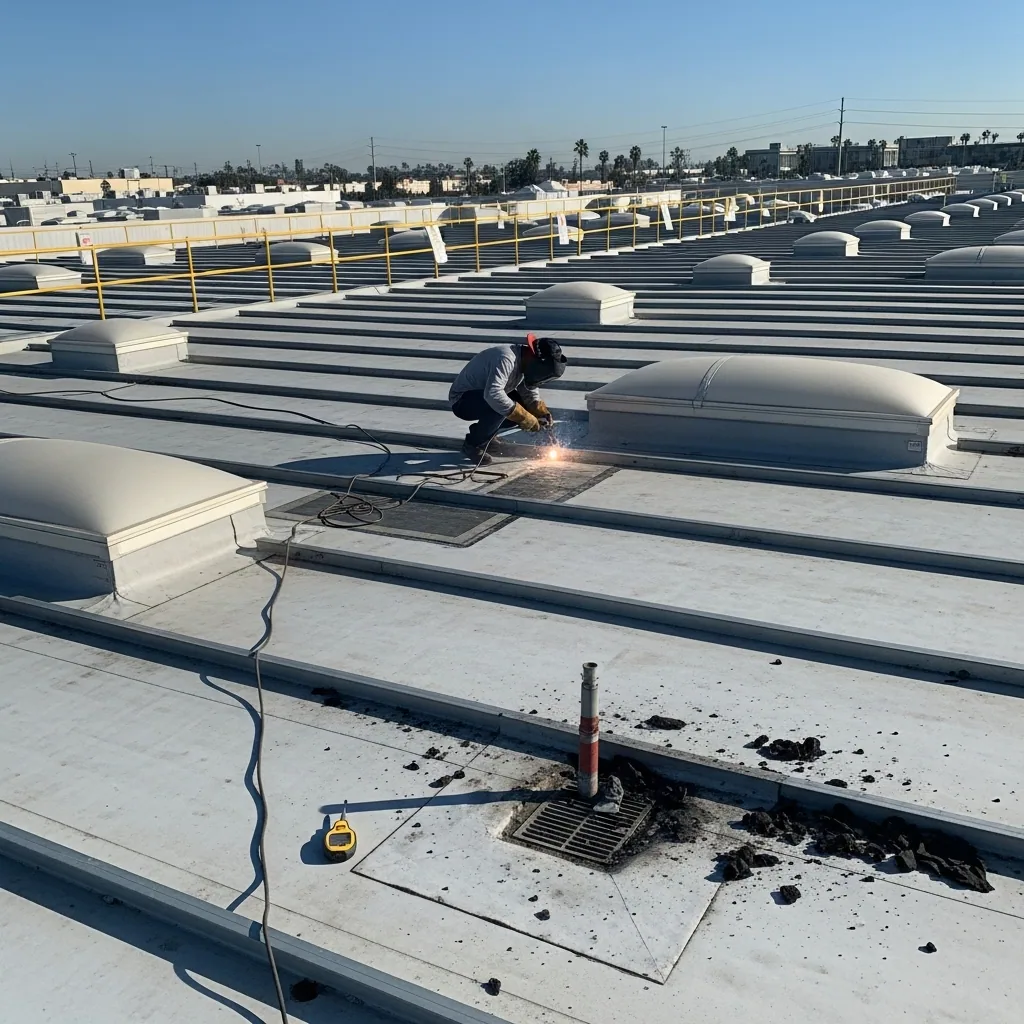
Sealant is the part that fails first. It dries, shrinks and pulls from the surface. A bead that has cracked is easy to see, and a bead that has lost adhesion looks fine until water gets behind it. We cut out failed sealant, clean the surface and lay a new bead tooled to shed water.
Counterflashing is the metal that laps over the base flashing and covers its top edge. Where it has pulled away or been bent, water runs behind. Terminations at the top of a flashing need a bar or a sealed edge. A flashing failure repair rebuilds the layers in the right order.
The order matters. Base flashing goes on first and laps the membrane. Counterflashing laps the base. Sealant finishes the top edge. Reversing any layer sends water behind the next one. We photograph each stage so the finished detail can be checked against the work.
Heat, Cold and the Movement at a Seal
A roof surface in Franklin summer runs far hotter than the air, with a record high of 108. In winter the same roof sits near freezing, with a record low of minus 22. Every penetration moves with that swing, and a rigid seal cracks where a flexible one holds.
We choose sealants and flashing materials for movement. Rooftop pipes expand and contract with their contents, and a hot line moves more than a cold one. A boot or flashing fitted to a pipe that moves a lot has room for it. A heat and ultraviolet damage check looks for the signs on the sunny side first.
Cold moves seals as well. A boot that fit tightly in July can shrink and split in January. For that reason we inspect penetrations in both seasons, and we record the condition on each visit so the pattern of movement shows.
Mapping Every Penetration
A roof sketch that numbers every penetration turns a leak hunt into a lookup. Each boot, curb, skylight and conduit gets a number, a photograph and a date. When a stain appears, we compare it to the nearest numbered item.
Added equipment is the usual source of new leaks. A unit set later, a conduit run through the membrane and a pipe added for a tenant each create an opening. The file shows which ones were flashed, when and by whom. A preventive maintenance visit checks them against the sketch. In Cool Springs and other office areas, the sketch grows with the building.
Commercial Roofing Questions
Why does a leak appear far from the skylight?
Water travels along the deck and the insulation before it drops. The stain marks where it exits, not where it entered.
Can a cracked pipe boot be sealed with caulk?
Caulk is a short-term patch. A cracked boot should be replaced or fitted with a repair collar.
Do skylights need regular inspection?
Yes. Check the dome, frame and flashing each spring and after hail.
What causes condensation in a skylight?
Warm moist air meeting a cold surface. It is not a leak, but it can wet a ceiling and hide one.
Can a leaking penetration wait until the next roof replacement?
Rarely. Water entering at one opening wets the insulation, and wet insulation spreads the damage. A repair now costs far less than insulation replacement later.
What should I send to start?
The roof plan, how old the roof is and what leaks you know of make a starting set. The roof walk traces each stain to its opening, and a short written summary follows.