Commercial Roof Leak Repair in Franklin, TN
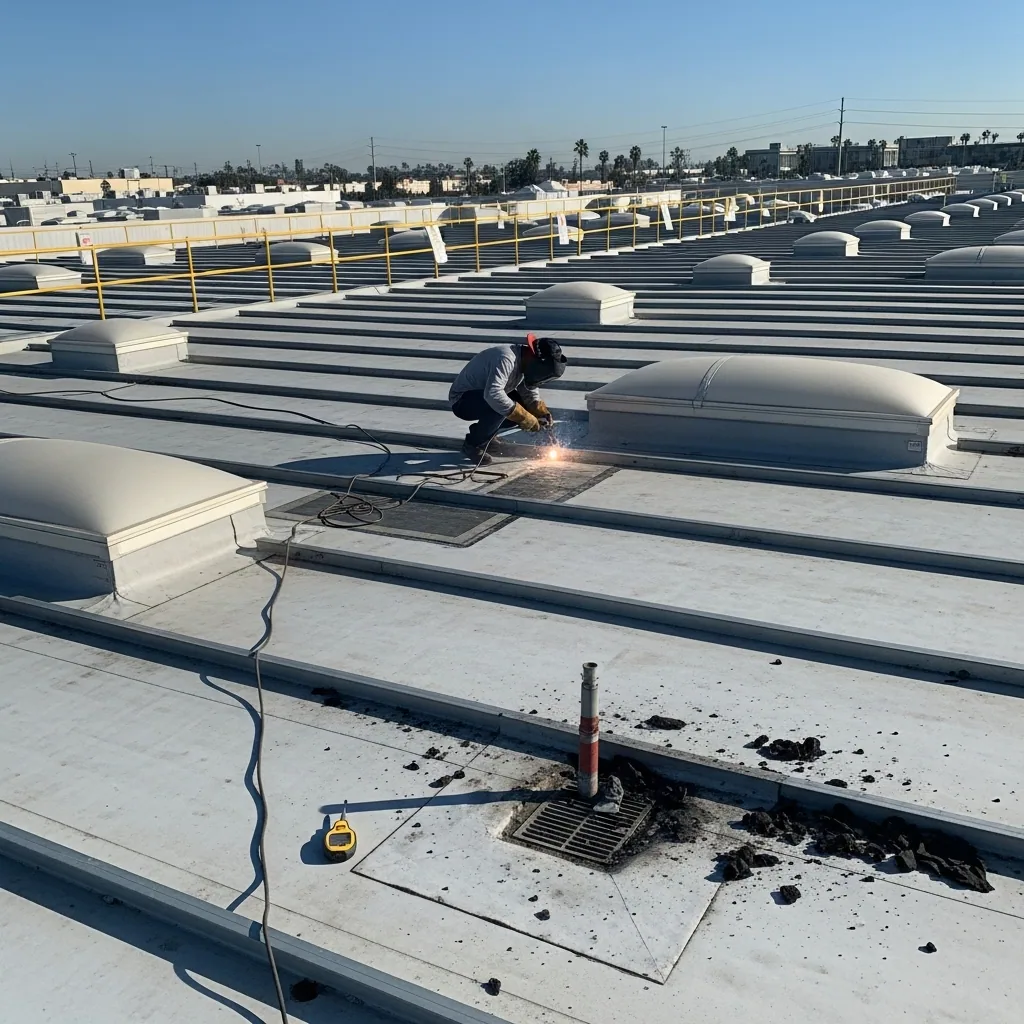
A leak report is a clue with a time stamp. When did the water show up, how much, and what was the weather the night before? Those three answers tell a roofer more than the ceiling stain does. Commercial Roofing Franklin traces and stops active leaks on commercial roofs in Franklin, TN, and we treat the first call as the start of an investigation, not a repair order. The goal is to stop water today and to know why it came in, so the same leak does not return in the next hard rain.
Leaks on low-slope roofs are slippery to find. Water can enter at one point, run along the deck or between insulation boards, and drip somewhere thirty feet away. Here is how we narrow that path, and what to do while you wait.
The First Hour
While the roof is still wet, small steps protect the building. Move stock and equipment out from under the drip. Place containers and, if the ceiling bulges, puncture it carefully at the low point so the water drains in a controlled way instead of collapsing the tile. Photograph the stain, the date and the weather. Turn off power to any fixture the water is touching.
If the leak is severe or storm-driven, our emergency response can tarp or dry-in the roof the same day. For a slower leak, we schedule a roof walk and begin the trace.
Tracing the Water Path
We start where the stain is and work uphill along the roof slope. Water on a low-slope roof runs toward drains, so the entry point is usually higher than the interior drip, and often on the side the slope descends from. We check each seam, each flashing, each penetration and each drain along that line.
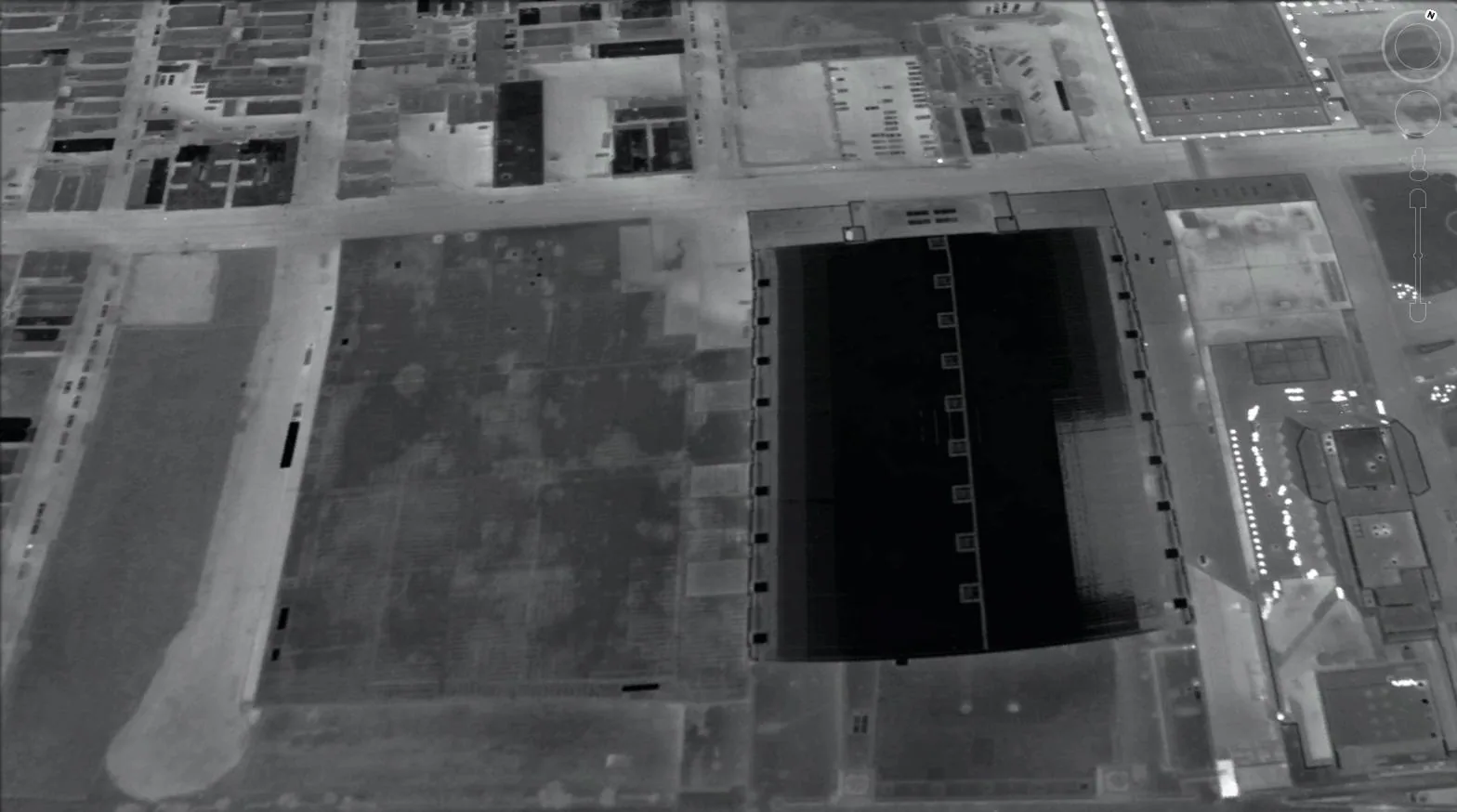
Where the surface does not reveal the entry, we use tools. A moisture meter or an infrared scan shows wet insulation that guides us toward the source. A water test, in which we run a hose over one small area at a time while a second person watches inside, is slow but conclusive. We change only one variable at a time, so we know which one mattered.
Where Leaks Start
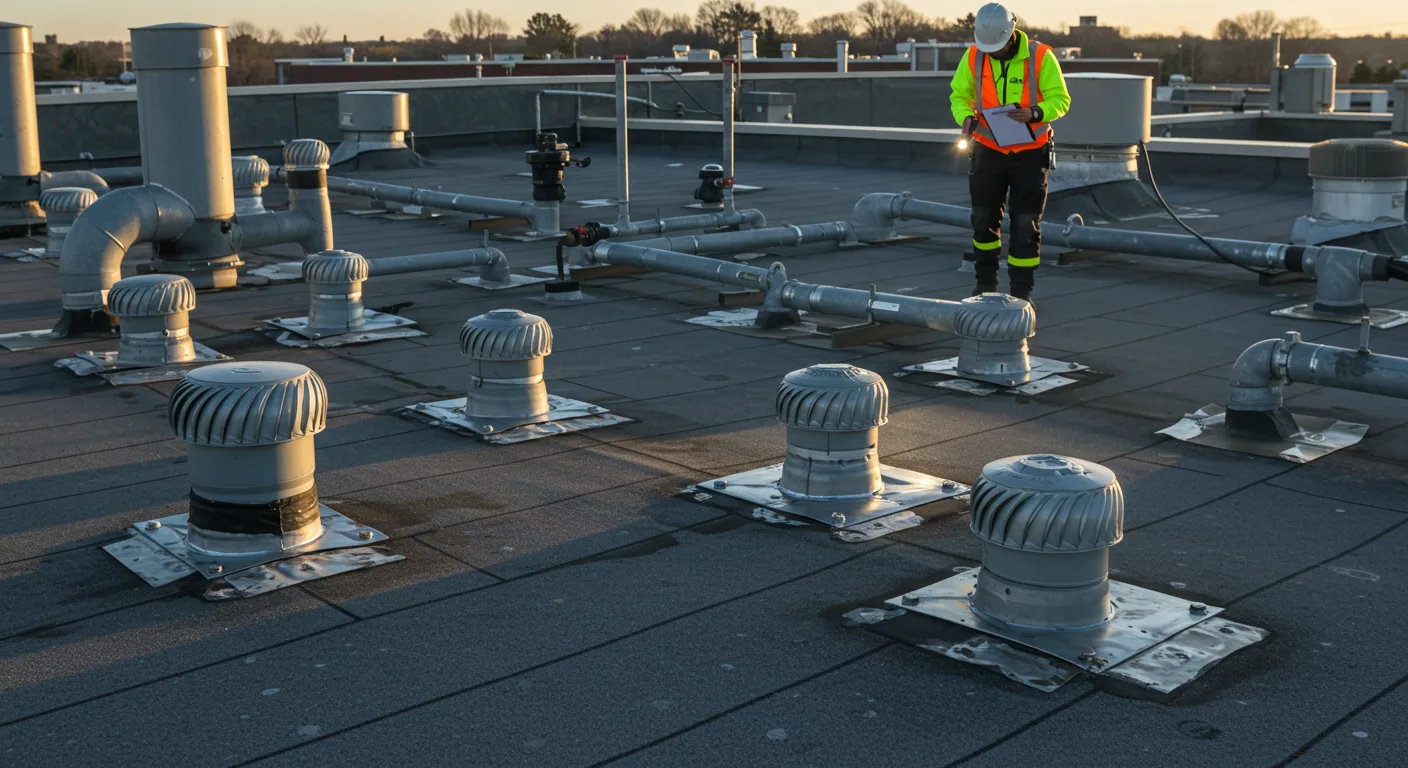
On most commercial roofs the culprits repeat. Flashings at parapet walls pull away as the wall and roof move at different rates. Pipe boots crack in sun and cold. Pitch pockets dry out and open. Seams on single-ply membranes lift at the edges. Drain bodies leak around their clamping rings. Roof hatches and skylights fail at their curbs. In an older roof, a crack in the field can also let water in, but those are less common than detail failures.
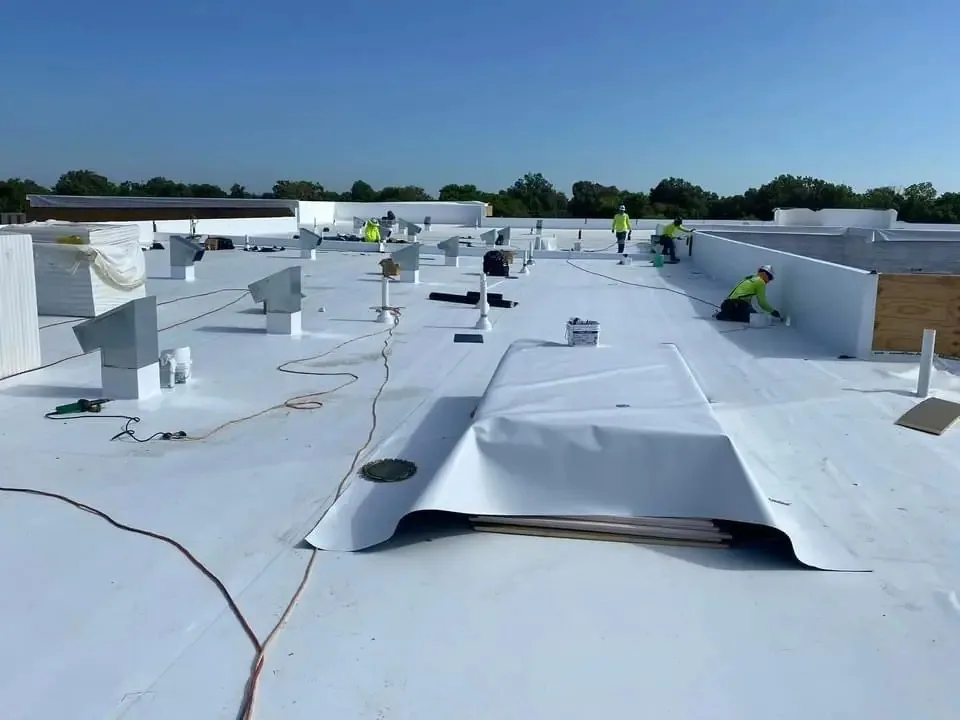
Equipment is a frequent source too. Air handlers, exhaust fans and conduit penetrations add openings to the roof, and each one is a seal that has to hold. After tenant work, a new opening that was never properly flashed is one of the first things we look for. Rebuilding a failed penetration or skylight flashing means new base flashing, a fresh counterflashing and a sealed termination at the top.
After a Storm Line
Storm leaks come in clusters. Franklin's EF0 tornado on August 12, 2023 came with several funnel clouds reported near the city, including one along Highway 31 north of downtown. A storm like that can lift a seam or tear a flashing and leave the roof dry until the next rain.
That delay is why we ask building managers to inspect after any storm that brought high winds, even when nothing appears wrong inside. The July 2026 warning for northeastern Williamson County named Franklin and Brentwood, called for gusts near 60 mph and hail up to three-quarters of an inch, and said roofs could be damaged. The earlier you find a lifted edge, the smaller the repair.
Older Office Parks
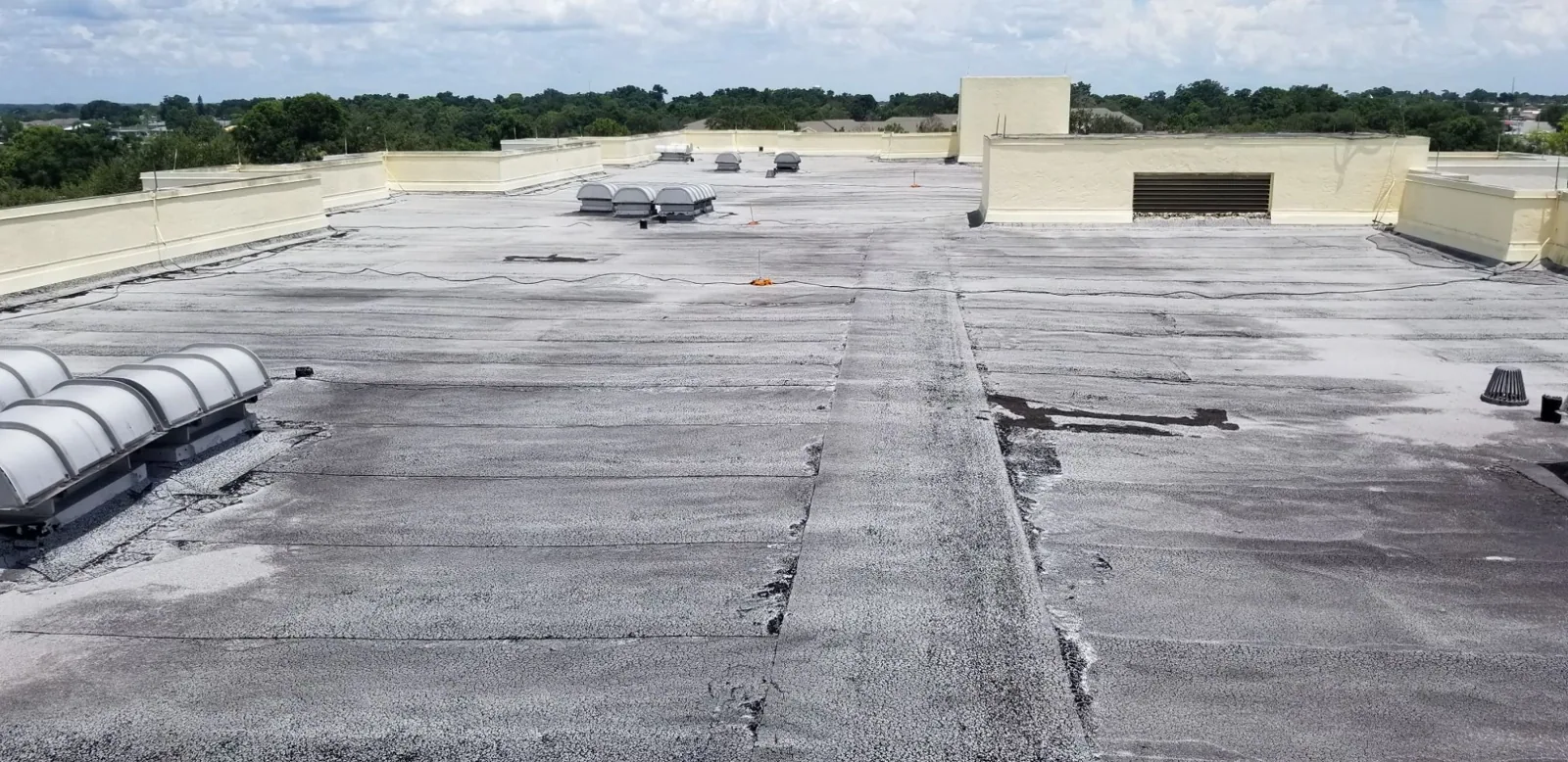
Maryland Farms in Brentwood is a good example of why age matters. Its office complex was built a few years after the city's 1969 incorporation, and Eastpark, one of its buildings, dates to 1975. Roofs in an older office park like Maryland Farms can carry layers of old patches that hide the real entry point.
In those cases we map previous repairs before we cut anything. A patch that has failed is often a sign of a cause nobody has fixed, such as a drain that sits too high or a parapet that moves. In Cool Springs, where office roofs sit under rooftop equipment on six-to-eleven-story buildings, every unit on the roof is an opening that has to stay sealed. Either way, the fix starts with the cause.
Protecting What Is Below
A leak is a building problem before it is a roof problem. Water that reaches a ceiling can reach wiring, server rooms, inventory and finished floors, and in medical or food settings it can force a shutdown. When we arrive, we ask where the water is landing and what sits below it. We can place temporary diverters, cover sensitive equipment and, when the building allows, move the work to the roof section that matters most first.
Timing matters as much as technique. A building manager who calls during the rain gets a different response than one who calls two days later, because we can see the active entry point while water is moving. If you can, send a photo of the interior stain with the time, and note which way the drip runs. Those small details save an hour of searching on a large, flat surface.
We also keep tenants informed. A short note about when the crew will be on the roof, which access hatch they will use and whether noise should be expected keeps the repair from becoming a second complaint.
After the Leak Stops
Once water is out, we dry what we can. Wet insulation often cannot be dried in place, and leaving it lets rot and mold develop. We report how far the moisture has spread and whether a partial replacement is needed. For recurring leaks, a planned repair or a section replacement usually costs less than repeated emergency calls.
We also document everything for your insurer. Photographs, dates and a written description of cause and repair help if you file a claim, and they separate sudden damage from long-term wear.
Commercial Roofing Questions
Why did it leak only during the heaviest rain?
Because a small opening admits water only when it sits underwater. Heavy rain or ponding raises the water level above a flashing or seam that stays dry in light rain.
Can you find a leak when the roof is dry?
Often yes. Dry roofs show worn seams, cracked sealants and open flashings, and an infrared scan after sunset can reveal wet insulation. A hose test confirms the entry point.
Is a leak always a roof problem?
Not always. Rooftop air handlers can drip condensate, plumbing can leak into a ceiling, and wall cracks can admit water. We check these early so we do not repair a roof that was never the cause.
How soon should wet insulation come out?
Soon. Wet insulation loses its value, adds weight and feeds corrosion in the deck. Small wet areas can be cut out and patched, while wide areas point to larger work.
What should I tell my insurance carrier?
Tell them the date, the weather and what you saw. We provide photos and a written cause so they can separate storm damage from wear.