Heat and UV Roof Damage Repair in Franklin, TN
A white powder on your fingers after you rub the roof is the first sign of heat and UV damage. It is called chalking, and it means the top layer of the membrane is breaking down under the sun. Nothing is leaking yet, but the roof has started to lose its skin, and we walk the pattern backward to see how far it has gone.
Franklin, TN is not a desert, yet the roofs here carry a heavy sun and temperature load. July afternoons average near 91 degrees, the hottest day on record reached 108, and the coldest dropped to minus 22. Between those two extremes, a membrane expands, contracts and slowly ages every single day.
Chalk on your fingers
Heat and UV damage is slow, so the signs are subtle. Look for chalking on the surface, a dull or faded color, fine cracks that look like dried mud, curled edges at laps, shrunken membrane pulling away from walls and curbs, and blistering on bitumen roofs. Granules gathering in the gutters or at drains point to surface wear on a granulated cap sheet.
Check the south and west exposures first, because they get the most sun. Compare shaded areas under rooftop equipment with open areas nearby. If the shaded patch looks fresh and the open field looks worn, the sun is the cause. Take close photographs with a coin for scale, so later visits can show whether the wear has advanced. Put the coin beside each sample spot so the scale stays the same on every visit.
Rooftop equipment leaves its own signature. Black marks and discolored rings beneath exhaust fans, heat-stained patches near condenser discharge and scorched-looking membrane downwind of flues all show where local heat adds to the sun. Photograph those spots separately, because their repair may involve moving a vent as much as patching a sheet.
Sun and daily swing
Two processes work together. Ultraviolet light breaks the chemical bonds in the top layer of the membrane, which is why surfaces chalk and crack. Heat does something different: it makes materials expand during the day and contract at night, and it speeds up the loss of the plasticizers and oils that keep a membrane flexible.
A roof surface in full sun can run far hotter than the air above it. A dark roof absorbs more of that energy than a light one. Over years, a membrane that was soft becomes stiff, and a stiff membrane cannot follow the movement of the building. It cracks at seams, pulls at flashings and splits at corners. The first leak is the last step in a long sequence, not the first.
The daily swing matters as much as the peak. A membrane that moves a little every day fatigues like a paper clip bent back and forth. On the office roofs along Carothers Parkway, a long seam or a long run of flashing moves further than a short one, so the fatigue shows at the ends first.
Where the water stopped
When a heat-aged membrane finally lets water through, the path is usually a crack at a corner, a pulled seam or a shrunken flashing. Franklin receives about 54 inches of rain a year, and every one of them tests the weakest spot. Water enters, wets the insulation and runs along the deck to a low point.
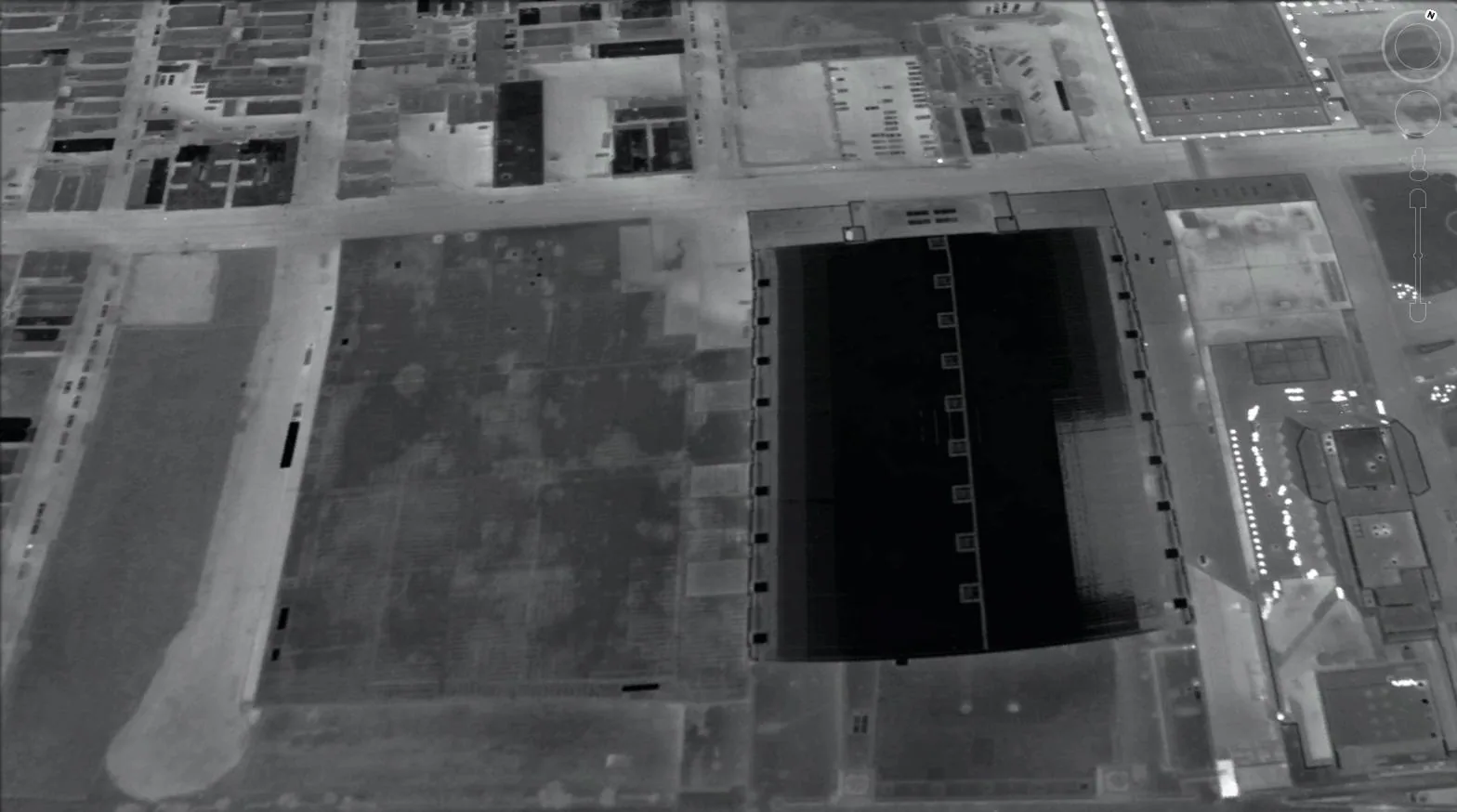
We trace that path by working outward from the stain, then confirming with an infrared moisture survey. On the broad low-slope roofs of the Cool Springs offices and retail centers, where rooftop equipment shades parts of the roof and exposes others, the survey can show a pattern of wet insulation near equipment, where thermal movement is greatest.
Compare samples
To confirm heat and UV damage, we compare samples. A small core or cut sample from a worn area is checked for thickness, flexibility and the condition of the reinforcing layer. A sample from a shaded area gives a baseline. If the exposed sample is brittle and thin, the sun has done its work.
We also test the adhesion of any coating, check seams with a probe and measure shrinkage at walls. A membrane that has shrunk away from a wall by more than a thumb width is under tension and likely to split at the next cold snap. The results go into a report with photographs, so the owner sees the condition by area.
Keep every sample labeled by location, date and exposure, with the side of the building it came from. When the same area is sampled again two years later, the owner has a rate of change, not a guess, and the replacement budget can be scheduled with real data.
Coat or replace
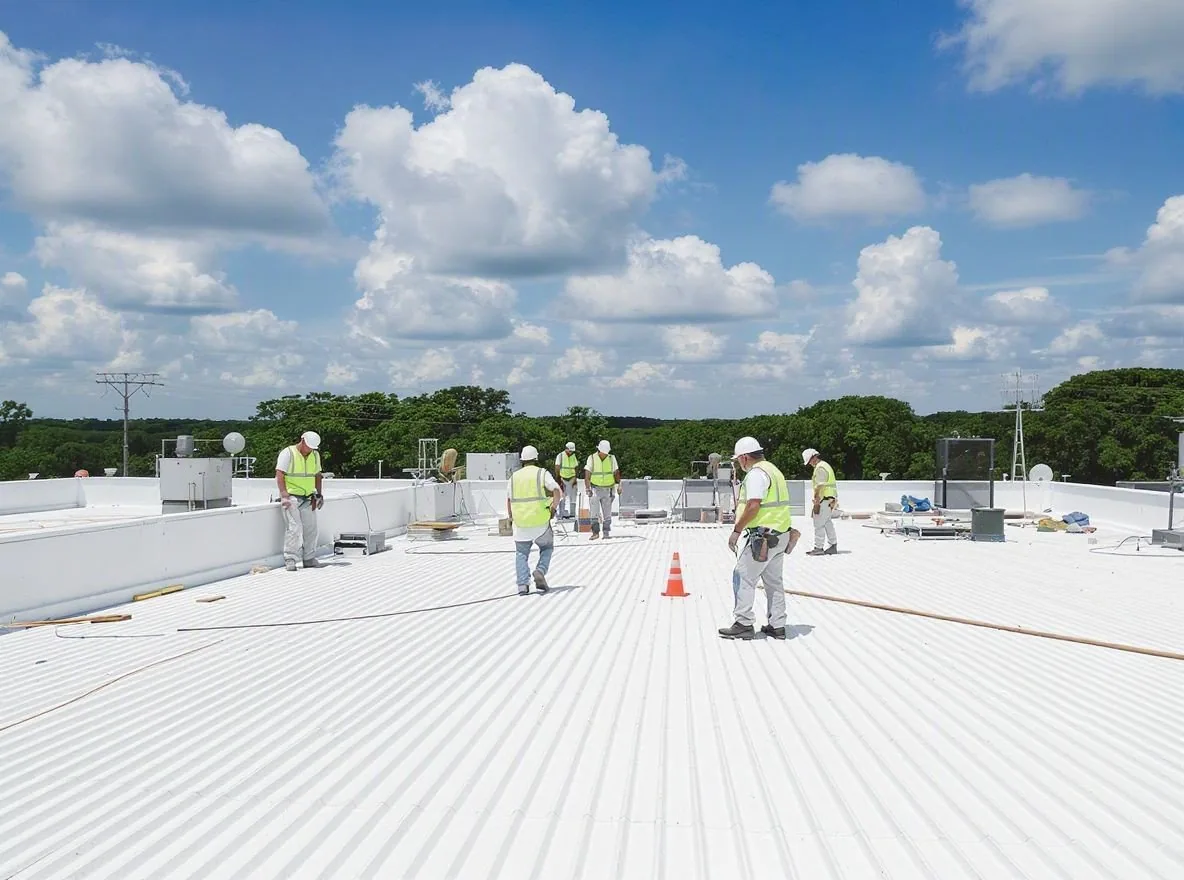
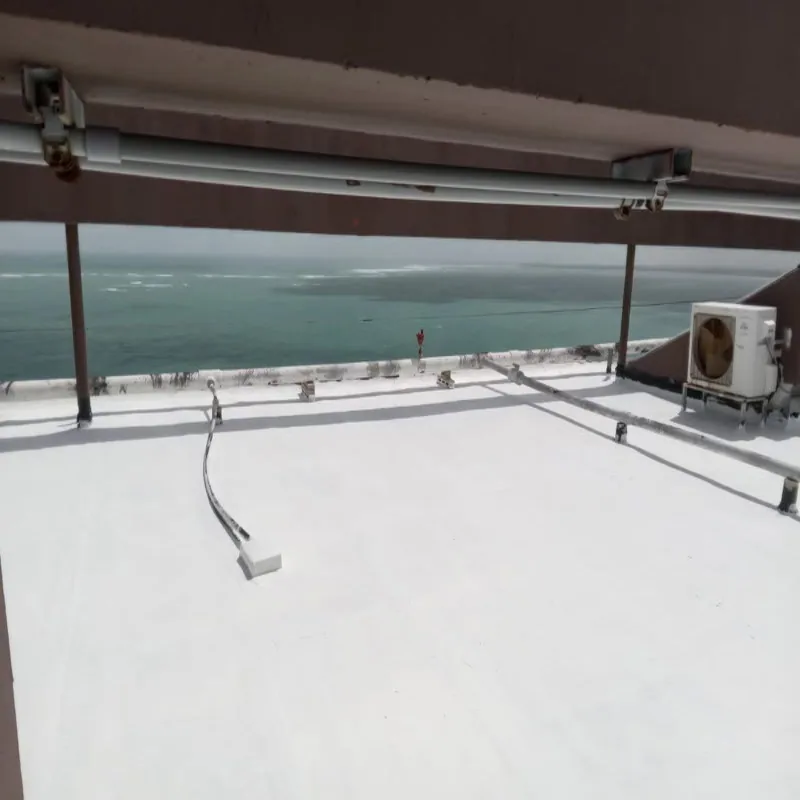
Surface chalking on a sound membrane can often be cleaned and coated. An acrylic roof coating or a silicone coating restores the surface, adds reflectivity and seals fine cracks. Our roof coating restoration process starts with a moisture survey, because coating over wet insulation shortens the life of the roof.
Where the membrane is cracked through, shrunken or brittle across a wide area, repair stops being a good use of money, and recover or replacement is the answer. A cool roof installation can cut surface temperature on the new system. Open laps found along the way are fixed as seam failure repair, and shrunken terminations are rebuilt as in flashing failure repair.
What it costs
Heat and UV work is the most plannable repair on a roof, because it moves slowly. A coating restoration costs less than replacement and extends service life when the roof is dry and sound. The main drivers are roof area, surface preparation, the condition of seams and flashings, and the coating chemistry.
Planned early, it is also the cheapest. A roof at the first sign of chalking can be cleaned and coated for far less than a roof that has cracked through. Ask for a condition report every few years, so you can see the trend and schedule the work before leaks start.
Reflective coatings and cool roof surfaces also change the building's cooling load, though the saving varies with insulation, equipment and use. Warranty terms on coatings vary by manufacturer and by the roof's condition at the start, and the written scope states which terms apply before the work is approved.
Commercial Roofing Questions
Is chalking a sign the roof needs replacing?
Not by itself. Chalking shows surface wear. If the membrane beneath is flexible, dry and well bonded at the seams, cleaning and coating can extend its life for years.
Does a white roof last longer in the sun?
A reflective surface runs cooler and moves less, which slows aging. It has to stay clean and intact to keep that benefit, so periodic washing and inspection belong in the maintenance plan.
How can I tell whether the insulation is dry before coating?
A moisture survey and core cuts show it. We do not coat over wet insulation, because the coating traps the moisture and the roof fails sooner.
What happens in a freeze after a hot summer?
A stiff, aged membrane contracts and can split at seams and corners. Winter is when many heat-aged roofs first leak, so a fall walk is worth the time.
How often should I check for heat damage?
A walk each spring and fall catches early signs. Photograph the same spots each time so change is visible, and keep the photos in the roof file.