Tornado Damage Roof Repair in Franklin, TN
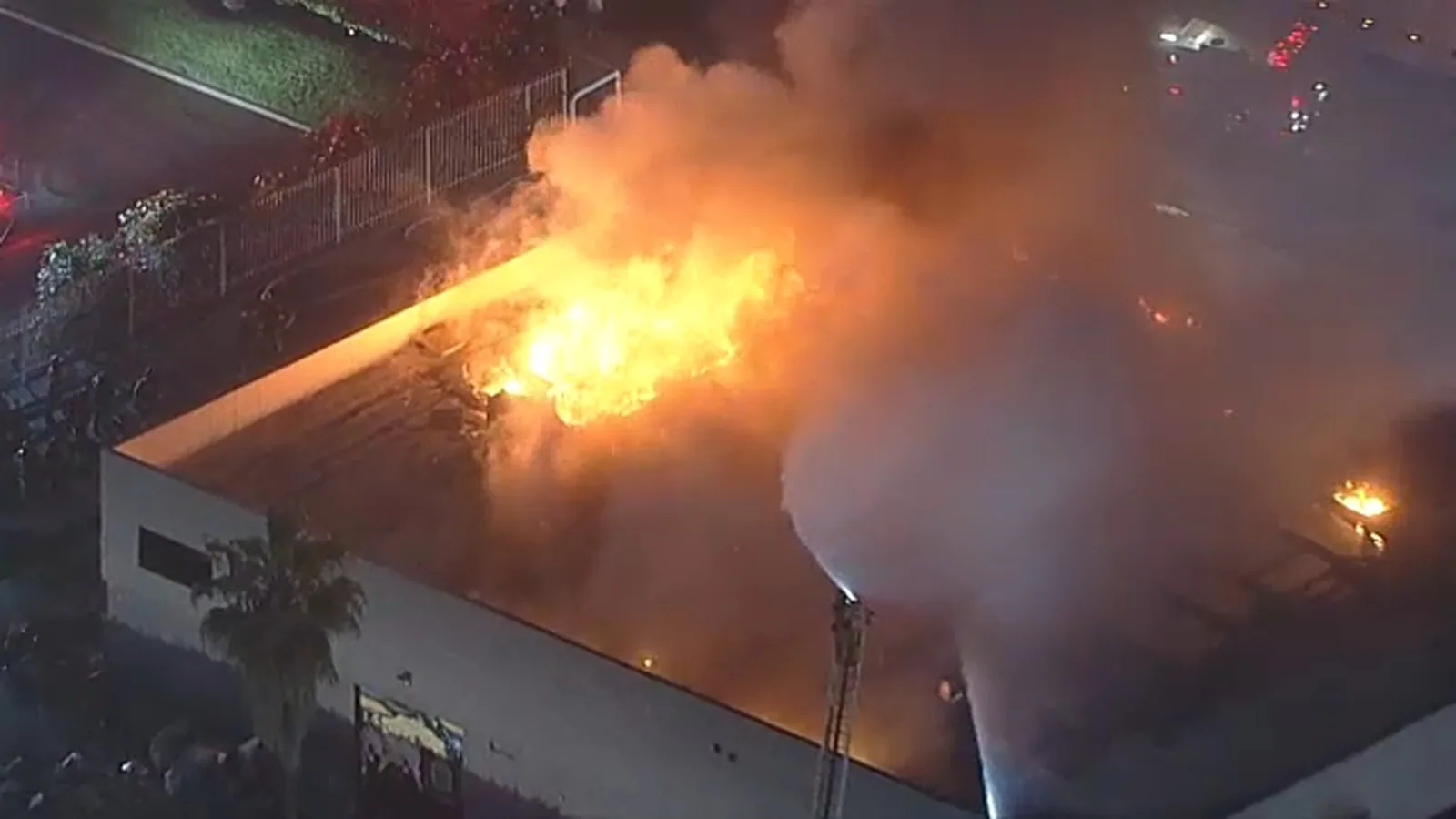
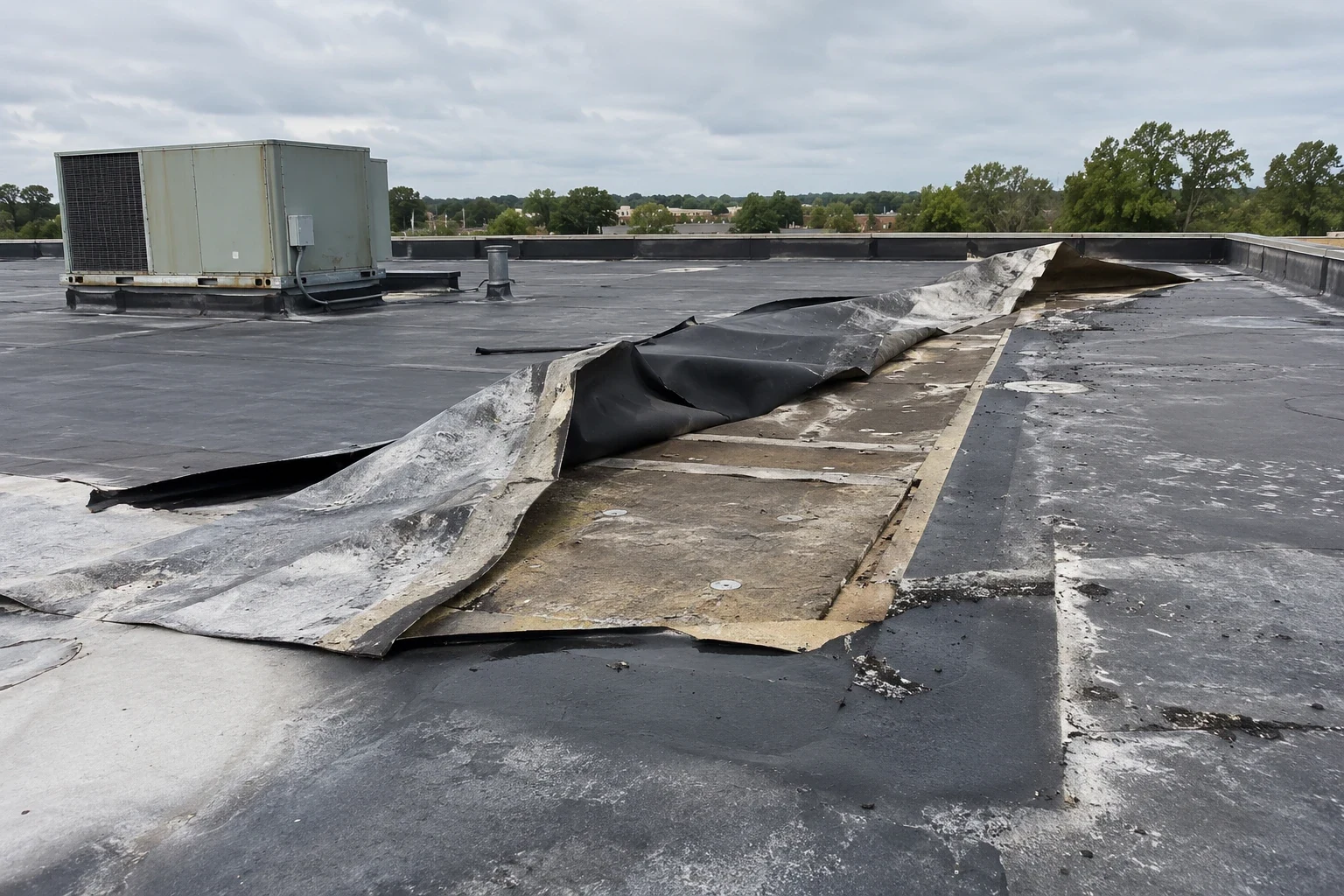
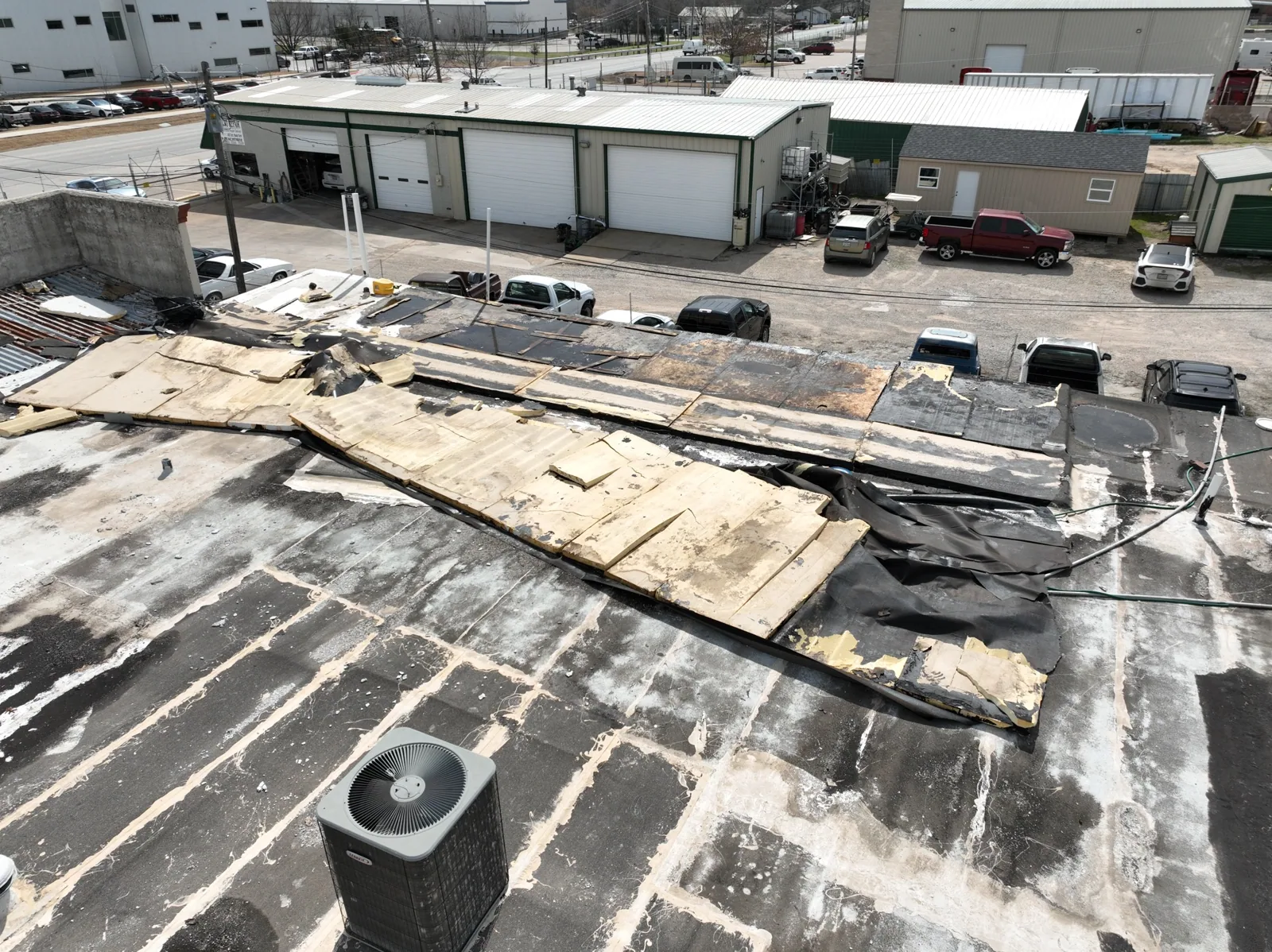
Debris on the roof is the first sign after a tornado: branches, siding, insulation, pieces of someone else's building. Under the debris, the roof may be missing a section of membrane, a rooftop unit may have shifted on its curb and the deck may be open to the sky. The order of work matters, and we walk it from the opening back to the cause.
Brentwood, just north of the McEwen area, sits in the Dixie Alley tornado zone, where the risk is highest from November through May. A weak tornado can leave minor roof damage and a strong one can open a deck to the sky, and either way the first job in Franklin, TN is to close the roof before the next rain.
Debris and openings
Walk the perimeter from the ground before going up. Roof sections missing, membrane hanging over the edge, rooftop units out of position, mechanical screens bent or gone, and debris on lower roofs or in the parking lot all show the pattern of the wind. Photograph from the ground, then from a lift or drone if the roof is not safe to enter.
Inside, look for daylight through the deck, wet ceilings and collapsed tiles. Note which side of the building took the damage. Tornadoes strike on a narrow path, so one end of a long building may be untouched while the other is open. That pattern helps the adjuster and the repair crew understand the event.
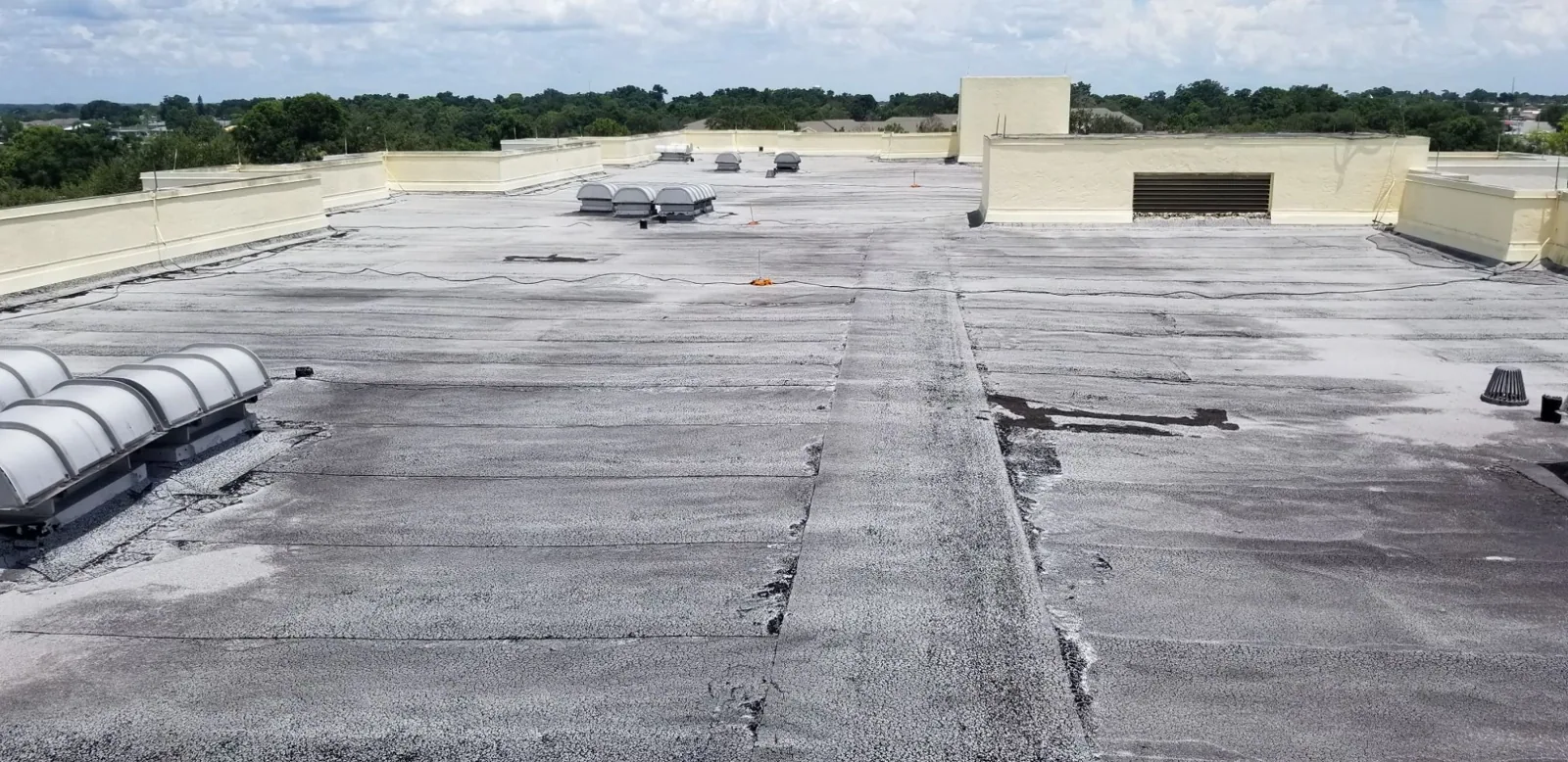
Check the quiet places too. Pipe boots, exhaust caps, antennas and skylight domes are small, light and exposed, and they are often the first things a strong wind takes. A missing cap is an open penetration, and it leaks in the next rain just as a larger opening does. Mark each one on the plan so the temporary seal covers all of them in one pass.
Wind plus debris
A tornado combines extreme uplift with flying debris. The pressure drop lifts the roof deck and membrane, and the wind strips whatever is loose. An opening in the envelope lets wind pressurize the inside of the building, which pushes up on the roof from below and can make the damage worse.
Scale matters. Franklin's EF0 on August 12, 2023, estimated at 75 mph, crossed the Highway 96 and Royal Oaks Boulevard area and did only minor damage to roofs and exteriors at some businesses. The March 3, 2020 outbreak was a different class: an EF-3 with winds near 165 mph that hit businesses in Germantown and East Nashville and warehouses in Mount Juliet. The same physical process, at different strength, produces very different roofs.
Brentwood has recorded tornadoes on Christmas Eve 1988, in January 2013 and in March 2017, a reminder that the season is long and that winter storms count. A roof that survives one event can still be weakened by it: fasteners loosened, edges lifted a little, sealants cracked. The next, smaller storm then finds the weak point. That is why a post-storm walk matters even when no damage is obvious.
Triage by water
Tornadoes often arrive with heavy rain, and open roofs take it in. We trace where water entered, how far it traveled and what it soaked: insulation, ceilings, stock and electrical equipment. Triage follows the water. Areas open to rain are covered first, then areas with exposed insulation, then the rest.
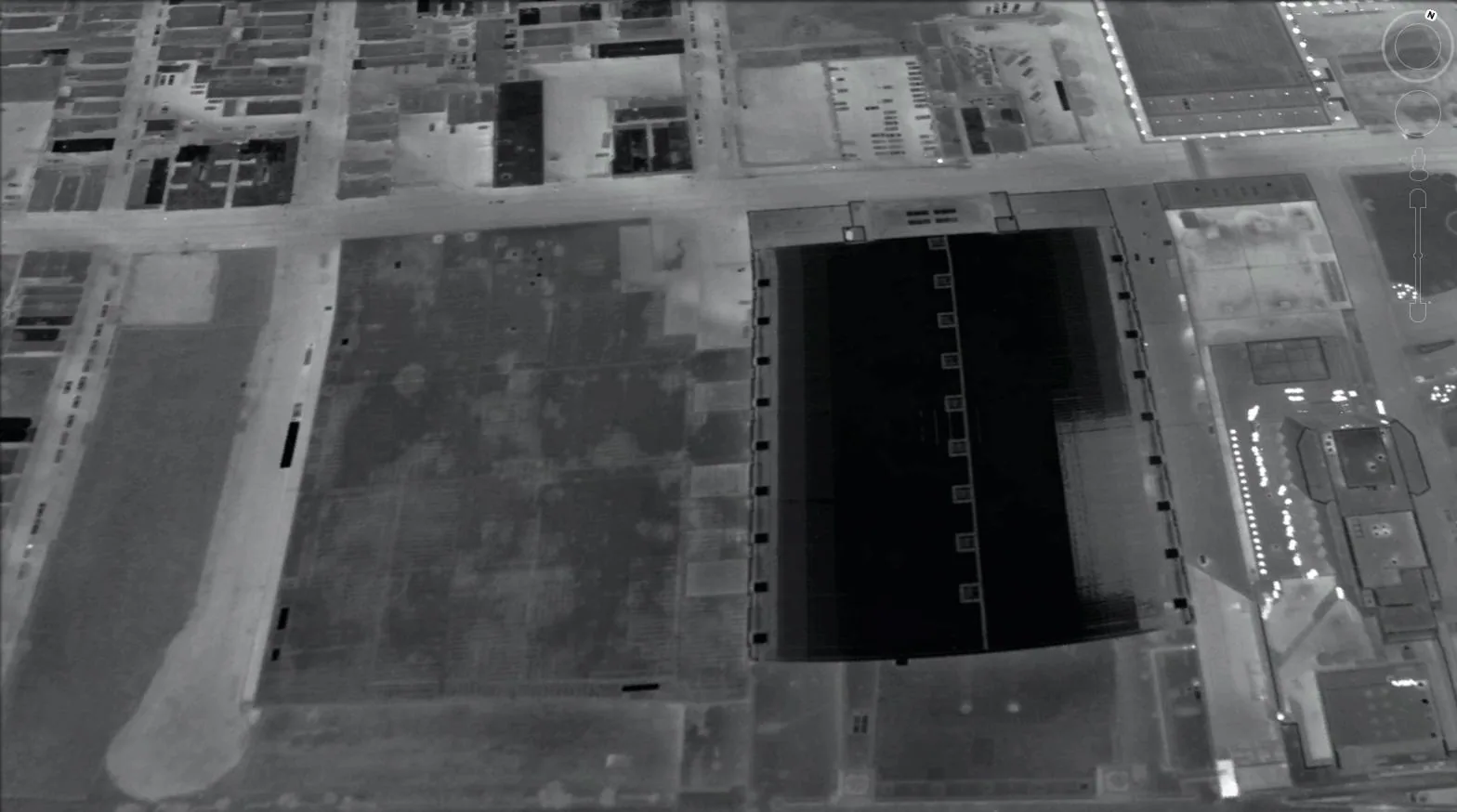
Our emergency roof repair crews answer at any hour, including holidays, with materials for temporary seals. After the storm passes, an infrared moisture survey maps wet insulation so the scope reaches all the damage and not only the visible part.
Stock and records need protection too. Pallets, files and electronics under an opening are moved or covered before anything else, and the list of what was wet goes into the claim file with photographs.
What to document
A tornado claim differs from a wind claim in scale and evidence. We document the debris field, the direction of failure, the damaged equipment and the condition of the deck. A structural engineer should evaluate any roof with deck damage or displaced framing before crews work on it. Our measurements, photographs and core results support that review.
The record separates the storm's work from older wear. A roof with corroded fasteners and a failed edge before the storm is documented as such, because the carrier will ask. The same record feeds the wider storm damage repair scope, and it is the backbone of the insurance claim file.
Repair or replace
Minor tornado damage, such as a torn membrane section, a displaced curb or a lifted edge, is repaired in the same way as any wind damage roof repair. Debris is removed, wet insulation is replaced and the membrane is patched or re-fastened.
When the deck is open or distorted, or the membrane is stripped across a large area, replacement of the affected section is the choice, and sometimes of the whole roof. The rebuild follows the building code edition the local jurisdiction applies. Tennessee cities may adopt any edition within seven years of the latest published one, and the state itself updated to the 2021 model codes in 2025, so the edition that applies is confirmed before design.
Phasing follows the weather. The crew leader marks the tear-off limits, sizes each day's opening to what can be dried in by evening and keeps temporary seals staged for the next storm line. Tie-ins to undamaged membrane are photographed before they are covered, and the closeout walk checks each one with the owner.
What it costs
After a tornado, cost is driven by area, deck repair, wet insulation and the temporary protection needed. Demand for crews rises after a regional event, so materials and schedules can stretch. A written scope with a priority order lets the owner approve the first phase quickly. Around West Harpeth and Highway 96 West, where neighborhood retail, a pharmacy and offices sit along a two-lane route, small commercial buildings share the same Highway 96 exposure.
Open seams that the storm exposed are repaired as seam failure repair, and exposed punctures follow membrane puncture repair. Grouping them into one mobilization lowers the cost of the visit and shortens the time the roof is open.
Commercial Roofing Questions
What do we do first after a tornado?
Make sure people are safe and the building is cleared for entry, then stop water entry. Photograph before any cleanup, note the time, and call for a temporary seal. The permanent repair is planned once the damage is mapped.
Is every tornado a total loss for the roof?
No. Many produce partial damage, such as lifted edges, torn sections and displaced equipment. The inspection defines the boundary of the damage, and the repair stays inside it unless the evidence points to more.
Should we wait for the adjuster before covering the roof?
No. Temporary protection is expected of the owner and limits the loss. Keep the photographs and receipts so the adjuster sees the original state and the steps taken since.
What about rooftop units that moved?
They are checked for damage and reset on their curbs. The curb flashing is repaired, and the electrical and mechanical connections are inspected by the right trades before the unit returns to service.
How do we prepare for the tornado season?
Before November, check edges, coping and equipment tie-downs, clear drains and photograph the roof. A fastened edge fails later than a loose one, and a dated photo set shows the roof's condition before any storm.