Aircraft Hangar Roofing in Franklin, TN
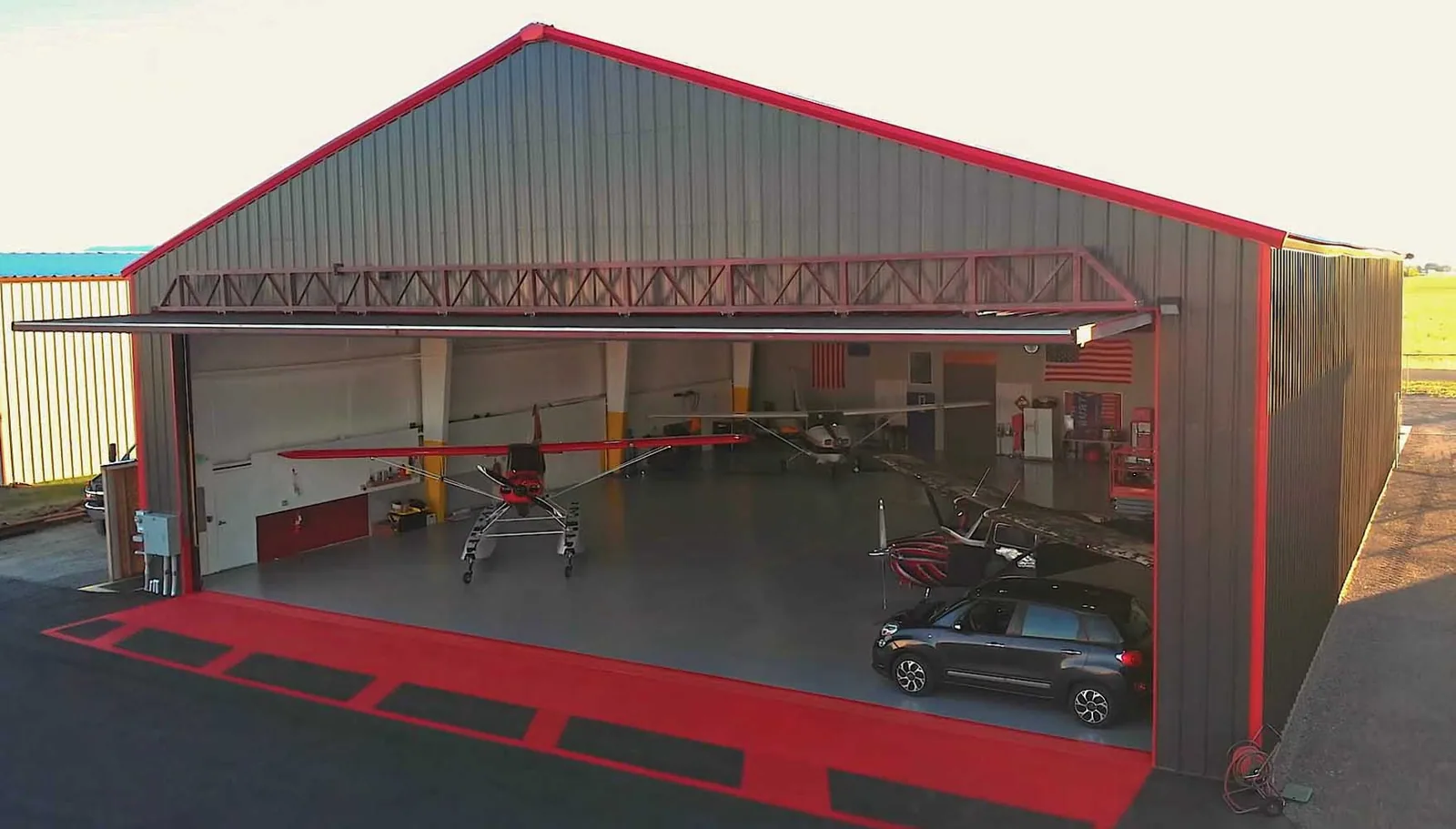
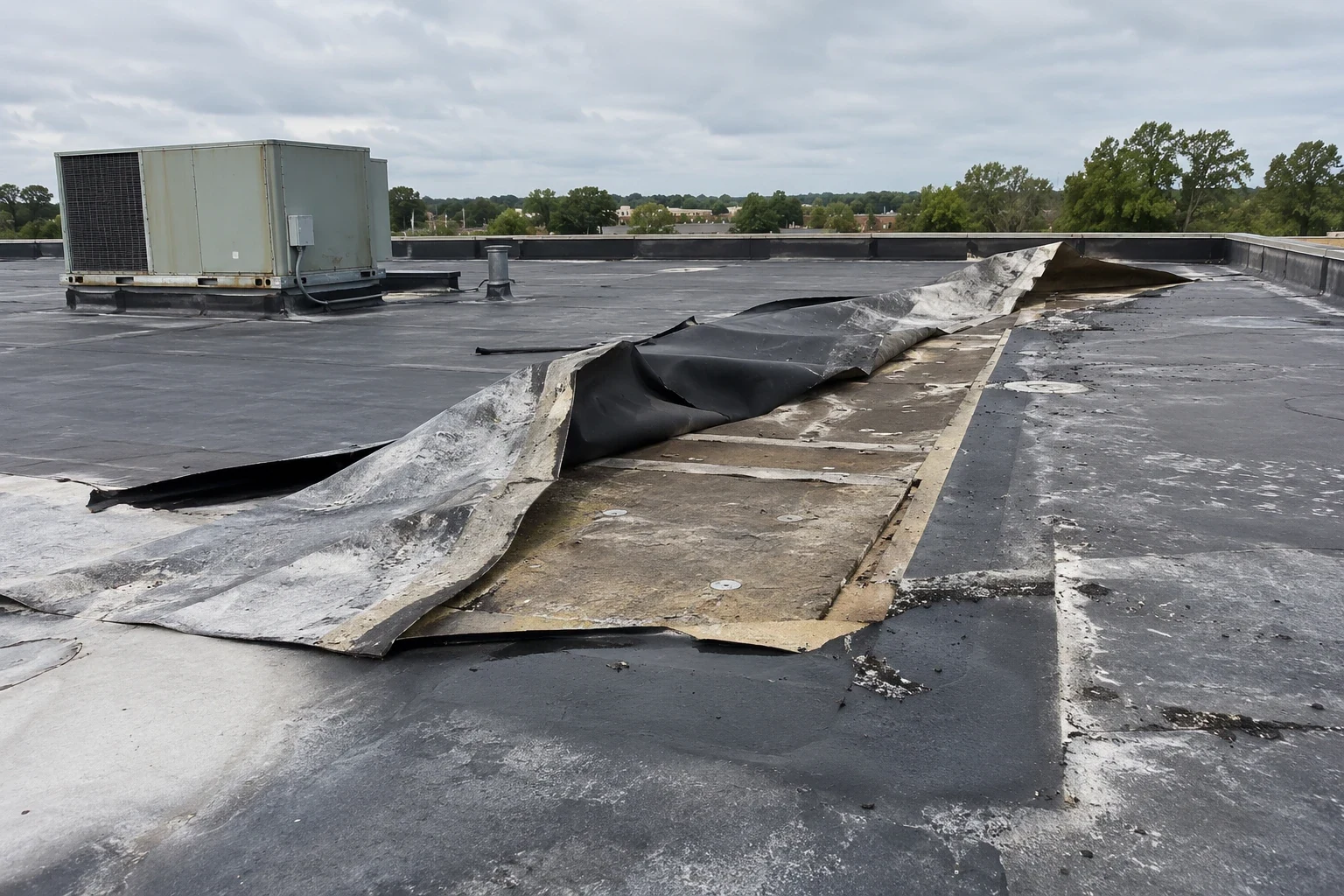
A slow drip onto a hangar floor, landing in the same spot after every rain, is the first sign, and it is the one that makes people move aircraft. The puddle only marks where the water landed. The job is to trace it up through the ceiling space, the insulation and the roof panels to the single lap, fastener or flashing that let it in. Hangars near Franklin, TN are broad, tall buildings with long roof spans and big doors, and each of those features gives water its own way in. The failure sequence is the same as on any roof, and following it on the actual building shows which repair will hold.
Why a long roof leaks differently
A hangar roof spans a wide clear area with few interior supports, so the roof system carries wind, snow and thermal movement across long distances. Metal panels or membranes on a hangar can run a long way from end to end. Heat expands the roof in the afternoon, and the cold contracts it overnight, and the ends and the laps take the movement.
Franklin summers average near 91 F, with a record high of 108 F and a record low of minus 22 F. That swing moves a long roof by a measurable amount, and fasteners and sealant at the laps feel every inch. Laps are checked for open sealant, fasteners for backing out and end closures for gaps. Each finding is photographed and marked on the roof plan.
Skylights and roof lights are common on large, tall buildings and deserve a separate look. The curb flashing, the glazing seal and the drainage of the unit are the three failure points. A cracked panel, a lifted curb corner or a plugged weep path each produces a drip that lands far from its cause, and the trail shows the line from the drip back to the roof.
Drip from condensation or from the roof?
Not every drip is a leak. A hangar roof can sweat when warm, moist air meets a cold underside, and the drops can look like rain. The first check is timing. A drip that starts hours after rain is water from outside. A drip that starts on a cool morning with no rain may be condensation.
We confirm which it is. A moisture scan across the roof shows wet insulation from an outside source, and the absence of a wet layer points to condensation. Fixing condensation means insulation, vapor control and ventilation, not sealant. Fixing a leak means finding the opening. Getting this wrong wastes a season, so the trail records both the weather and the readings.
Insulation condition matters for both causes. Wet insulation loses its resistance and drips later, long after the rain. Compressed or missing insulation lets the underside get cold enough to sweat. We mark both on the plan with core photographs, and the finding tells the owner whether to fix the opening, the insulation or the ventilation.
Wind, storm lines and uplift
Brentwood next door sits in the Dixie Alley tornado zone, and Franklin's EF0 of August 2023 carried estimated winds of 75 mph. Large, light roofs over open volumes are sensitive to uplift, and the edges and corners carry the load. After a wind event we check ridge caps, eave trim, end-wall flashing and panel attachment.
Hangar doors matter as well. A door left open during a gust loads the roof from below, and the roof edge at the door head takes the force. We check the header flashing and the roof edge above the door track. The wind damage repair scope starts from those photographs.
Gutters and downspouts on large buildings carry a lot of water in a few places. A clogged downspout can spill onto the ramp or into a door track. We check the gutters, brackets and outlets as part of the wind walk, because a bracket pulled loose by gusts is a drainage failure waiting for the next rain.
Access, safety and aircraft
Roof work over aircraft needs a plan. Aircraft are moved or covered, tools and fasteners are controlled, and fall protection covers large open areas. Work near taxiways or ramps may need coordination with airport operations. We identify those rules at the walk and write them into the work order.
Where a hangar sits on a restricted site, badges, escorts and gate schedules come first. The Tennessee Air National Guard's 118th Wing at Joint Base Berry Field, about 20 miles northeast of Franklin on the Nashville International Airport property, is an example of an aviation site where access rules shape the schedule. Roof work on military property follows base access, escort and material-inspection rules, and the work is built to the Unified Facilities Criteria for roofing where a specification calls for it.
Aviation buildings around Nashville and Smyrna
Joint Base Berry Field hosts the 118th Wing, which supports unmanned aircraft operations, and Tennessee Army National Guard Black Hawk helicopters that moved there from Smyrna in 2015. The base sits on the 4,555-acre airport property, which has four concrete runways. The Guard also operates an Army Aviation Support Facility at Smyrna Airport.
Hangars, maintenance shops and support buildings in the Nashville airport area and in Smyrna each carry their own roof and their own access rules, and the same walk fits a National Guard armory or a flex industrial building next door. The inspection format stays constant, so an owner or a facilities office can compare buildings on one rating scale, starting from the same places on every roof: the doors, the skylights and the long laps.
Repair, retrofit or replace
One failed spot on a sound hangar roof is a repair. Many failed laps or widespread corrosion may suit a metal roof retrofit over the existing panels, if the structure can carry it. Replacement is the answer when the roof has reached the end of its life or the insulation is wet.
Each option is laid out with the evidence and the cost drivers: roof area, height, access, the need to move aircraft, weather windows and the condition of the structure. A commercial roof inspection gives the rated baseline, and the written summary shows what each choice would involve for operations.
Timing is its own cost driver. Hangars with aircraft tenants cannot always stay empty for long, so the plan often phases work by bay and by weather window. About 54 inches of rain fall on Franklin in a year, so dry weeks are valuable, and the schedule is built to use them.
Commercial Roofing Questions
How do we tell condensation from a leak?
Compare the drip's timing with the weather. Water that arrives after rain, over wet insulation, is a leak, and a drip on a dry, cool morning is more likely condensation.
Can roof work happen with aircraft inside?
Often, with aircraft moved or covered and tools controlled. We plan the sequence with the operator.
Does a hangar door affect the roof?
Yes. An open door lets wind load the roof from below. The edge above the door takes the force, so we check it after storms.
What if the hangar is on a military base?
Base access, escorts and material inspection rules apply, and the specification may call for UFC roofing criteria. We plan lead time for each.
How often should a hangar roof be inspected?
Spring and fall, with another walk after severe storms. A hangar with an older roof earns extra visits.