Flex Industrial Roofing in Franklin, TN
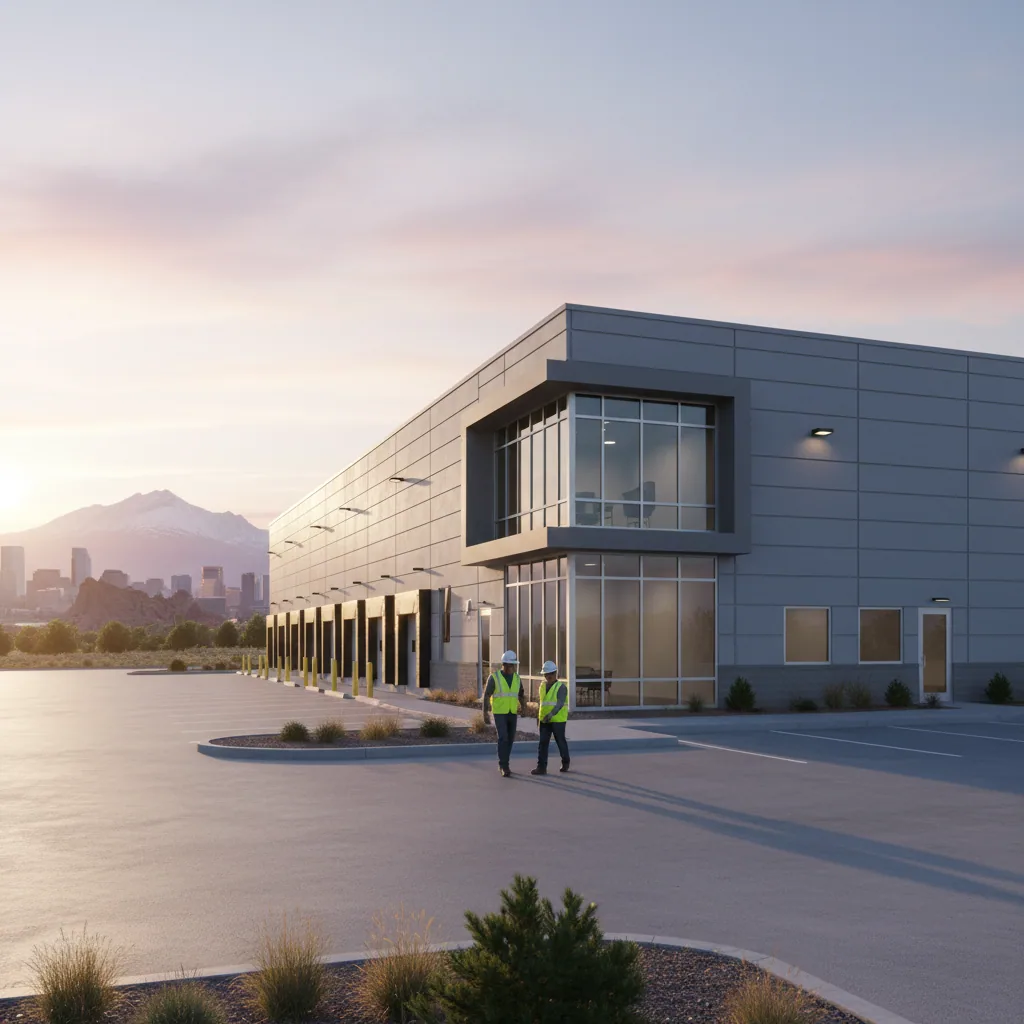
A ceiling tile stained brown in one tenant's showroom, while the unit next door stays dry, is the first sign of a flex building leak. The stain marks where the water landed. Our job is to trace it back through the shared roof to the opening above, and the first question is always which part of the roof belongs to which tenant. Flex and light-industrial buildings in Franklin, TN put offices, showrooms and warehouse space under one long roof, so a single failure can touch several leases. A clear failure trail shows where the water came in and who it reached, and that settles most of the repair decisions that follow.
One roof, many tenants
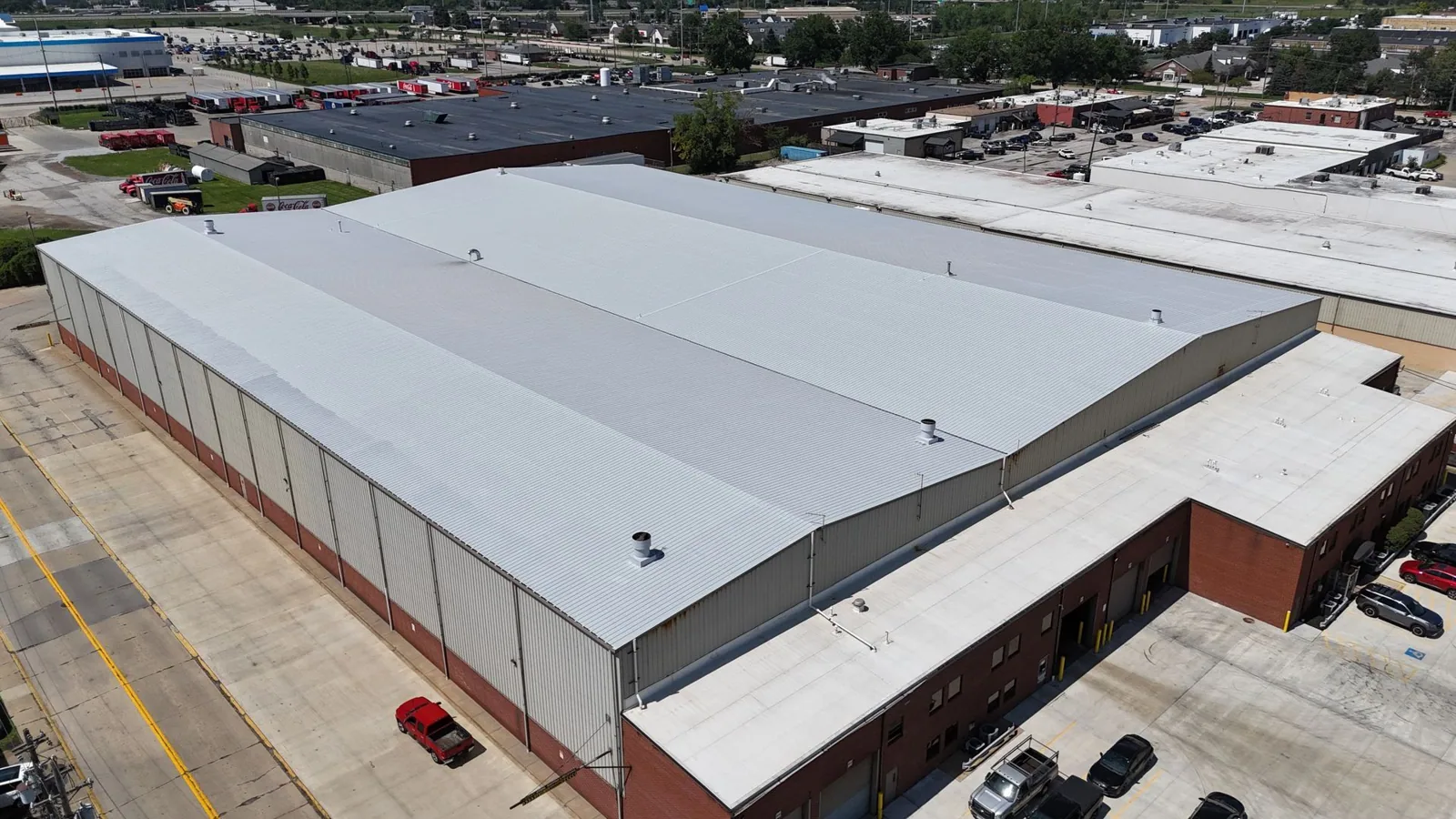
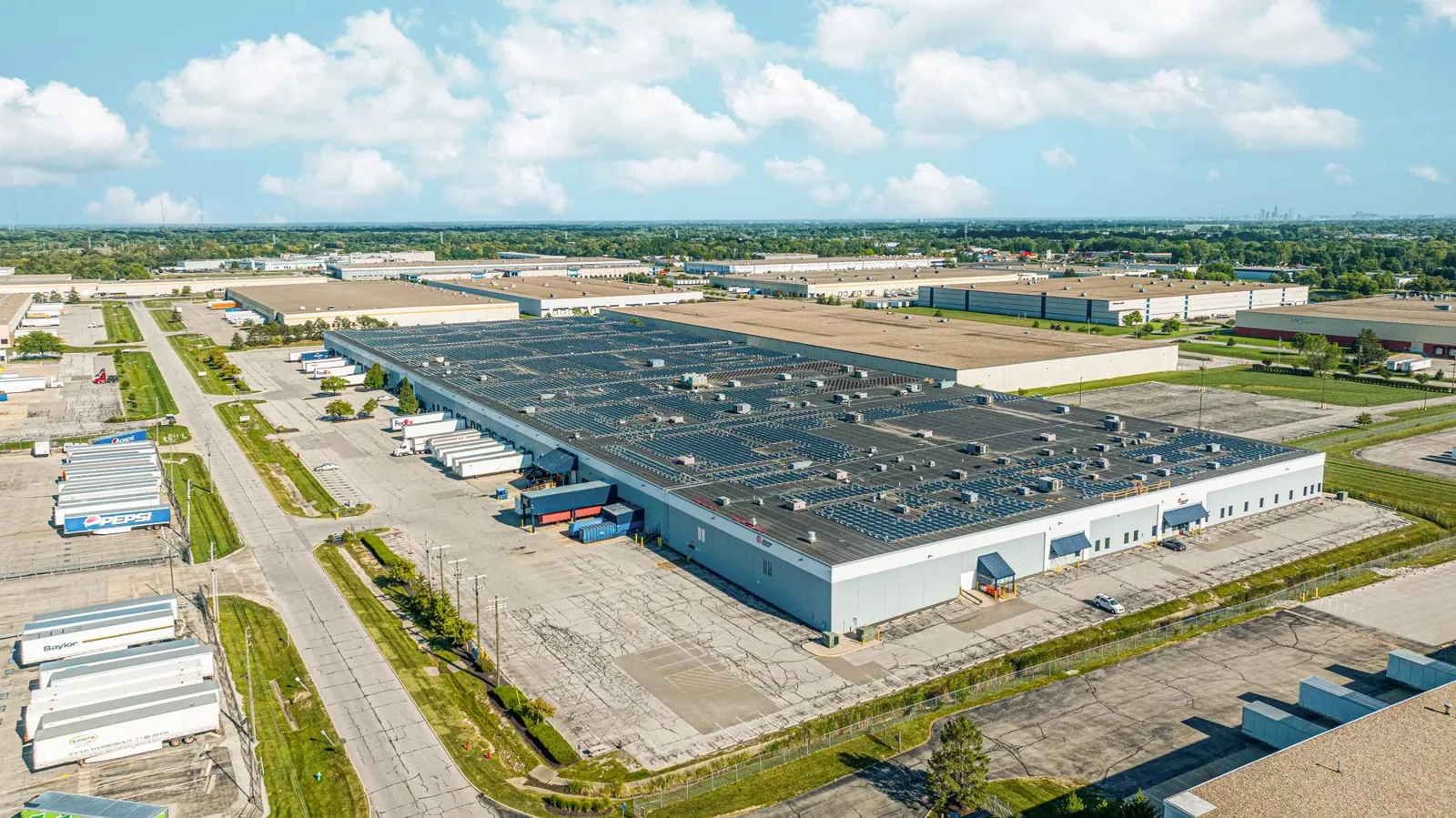
A flex building is usually long and low, with units side by side and a shared roof. The roof is cut into bays by walls, and each bay may have its own rooftop unit, its own vents and its own drain. Water from one bay can travel along the deck into the next, so a stain in unit four may start above unit two.
We draw the roof plan by bay and mark every drain, curb and penetration. The leak trace then follows the bays, and the written record names the bay where the water entered. For a property manager, that record is useful on the lease side as well as the roof side, since it ties the repair to the right space.
Neighboring uses matter for the plan. Flex space sits beside warehouses and plants, and the roofing questions overlap with warehouse roofs and manufacturing plant roofs: shared drains, rooftop exhaust and long wall joints. A manufacturing tenant using flex space for light assembly can add heat or residue to the roof above it.
How heat opens the details
July afternoons in Franklin average near 91 F and have touched 108 F. A flat roof under that sun runs hotter than the air, then cools at night, and every curb, vent and wall joint moves with the swing. Sealant hardens, flashing pulls and a hairline opens.
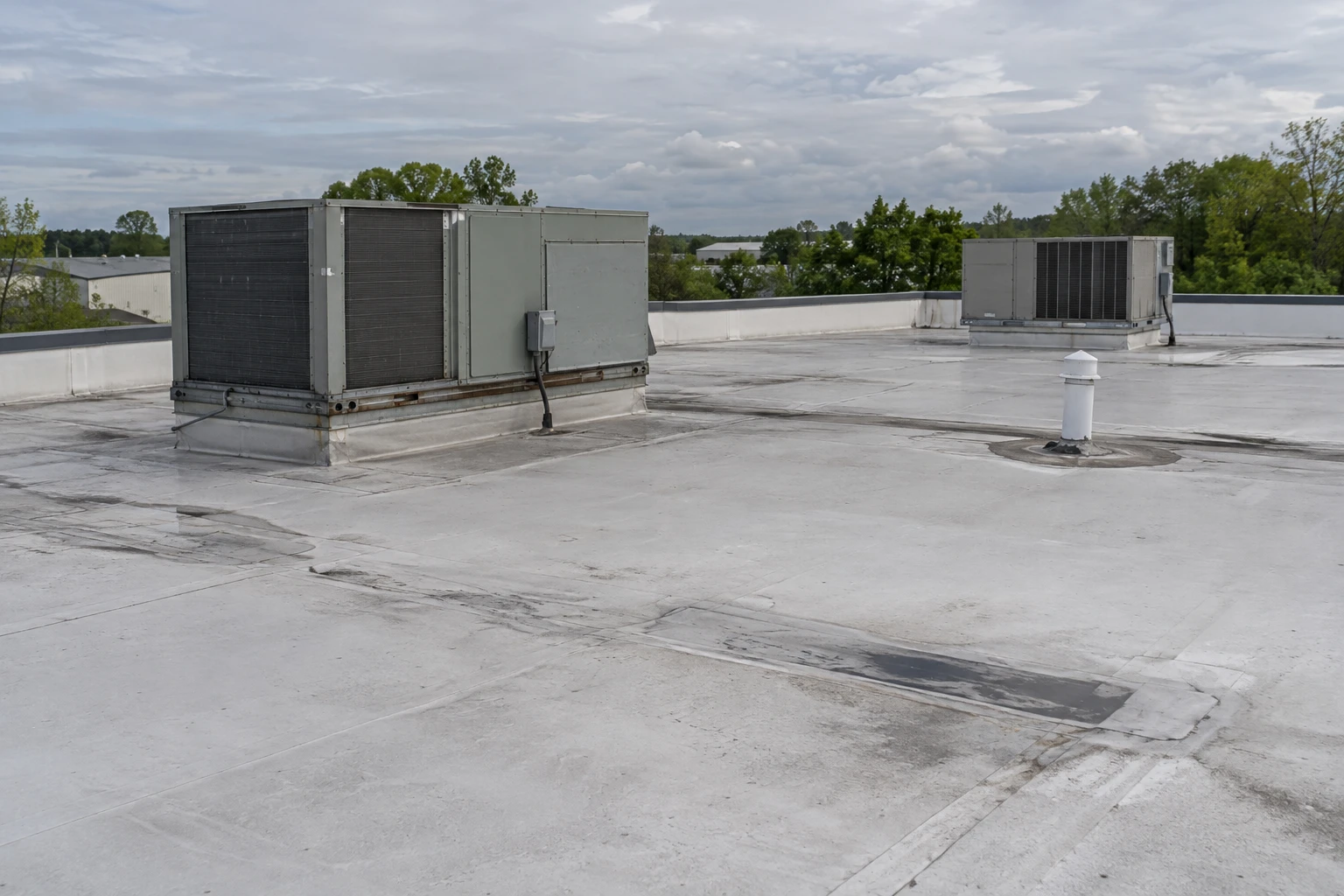
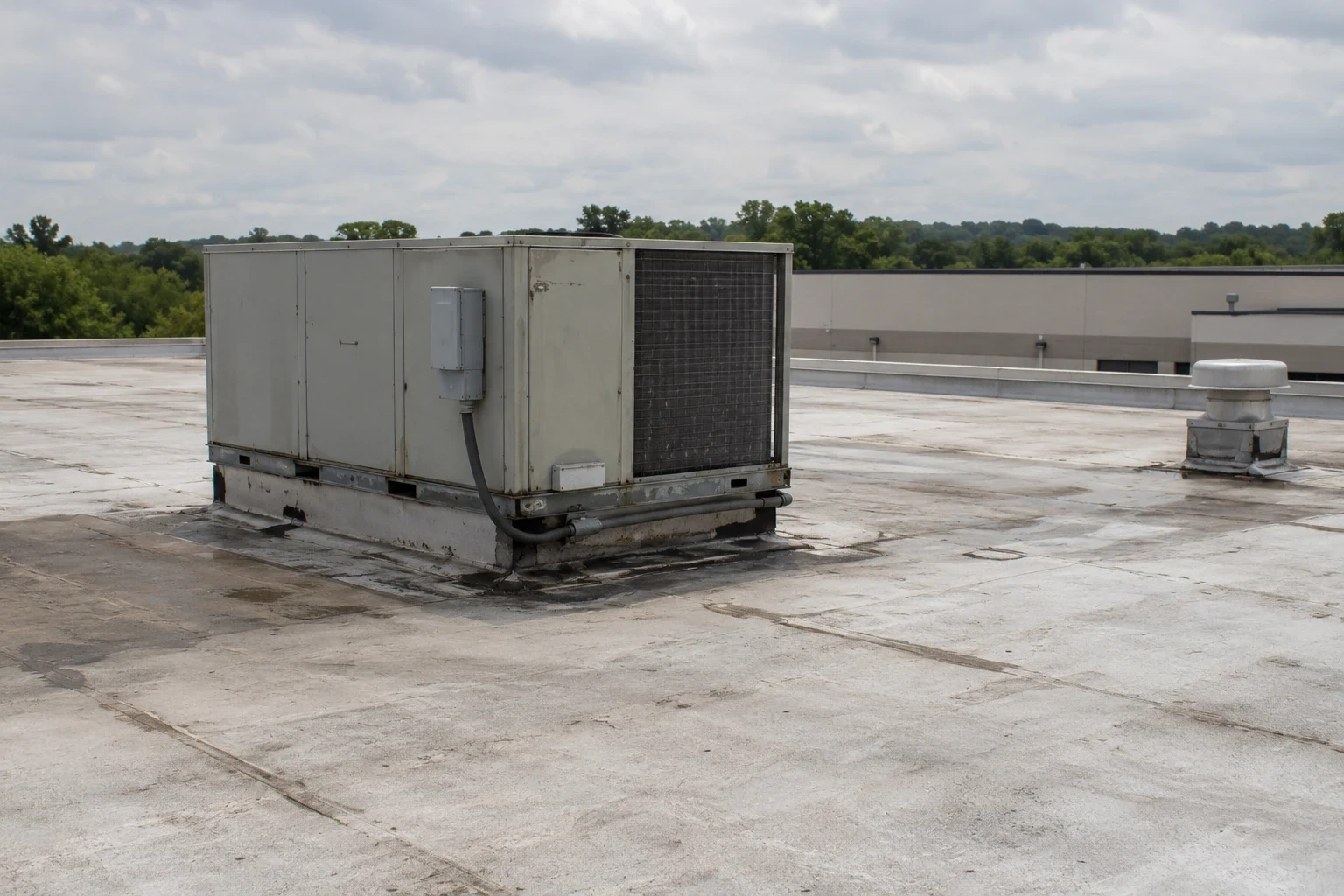
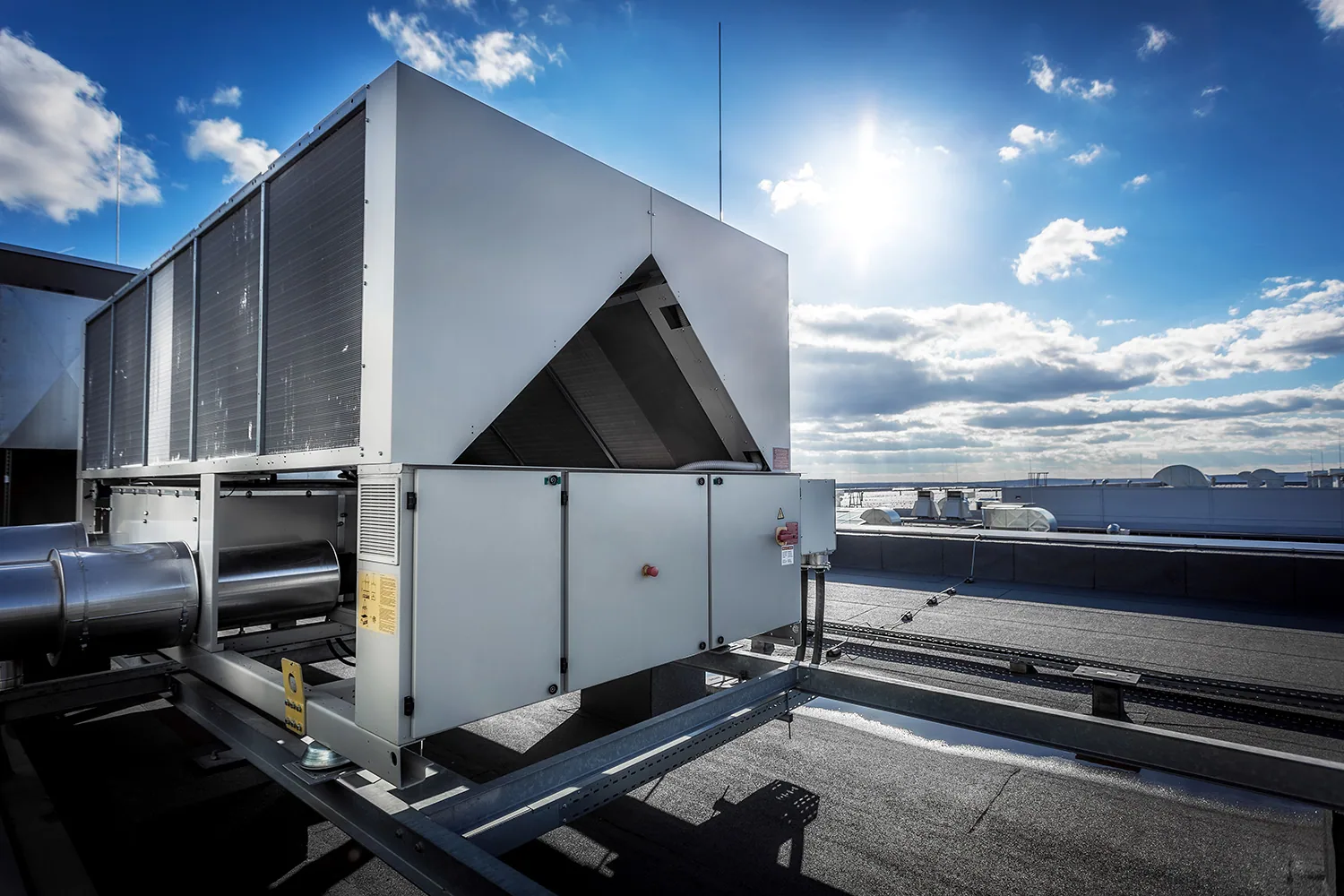
The pattern repeats on rooftop units. Each tenant may have a unit on a curb, and each curb is a place where the membrane was cut and patched by hand. We check curb corners, counterflashing and the seal at the unit base, and we probe the nearest seam. A hand held on the surface in July tells you how much it is moving. A failed curb is repaired as rooftop equipment curb work, with the flashing rebuilt to move with the unit.
Vents and exhaust fans serving light-industrial tenants deserve a separate pass. Grease, solvent vapor and heat can wear the membrane near an exhaust outlet, and the sealant around the curb takes the brunt. We look for discolored or softened membrane, residue on the surface and gaps at the fan base.
Where the water stopped
Roughly 54 inches of rain a year puts real work on flex-roof drains. A packed strainer leaves a pond for a day or two, and the pond finds any seam that has stiffened. The trace begins at the stain and spreads across drains, curbs, seams and wall joints.
A scan outlines the wet layer and a few cores check it, which produces a map from the stain to the entry point. A moisture survey across the whole building also shows whether other bays have wet insulation that has not yet leaked.
Overflow openings are the second line of defense. If a main drain clogs, the overflow scupper keeps water from loading the roof. Overflow scuppers are inspected for height and clearance and photographed. A building without working overflows carries a risk nobody notices until a heavy rain.
Storm lines and wind-lifted edges
Dixie Alley's tornado season, November through May, includes Brentwood next door, and Franklin's EF0 of August 2023 left minor roof damage at businesses along Highway 96. Long flex roofs have long edges, and wind finds them first.
After a storm, we walk the perimeter and check coping, drip edge and membrane at the corners. A lifted edge is a small repair if it is found early. The photo trail made after the storm also helps with a claim, and it is the same record a storm damage roof repair starts from.
Equipment on a flex roof can shift in a gust if tie-downs are weak. We look at unit tie-downs, cable restraints and panel latches, and we log anything loose. A unit that moves on its curb tears the flashing, and the stain appears in the tenant's ceiling days later.
Southall, Cool Springs and the warehouse-style belt
The city plan puts much of Franklin's industrial development in Southall, along Columbia Avenue south of Downs Boulevard, where an existing rock quarry also sits. West of CoolSprings Galleria, a pocket of offices, showrooms and institutional uses sits in large, warehouse-style buildings.
An owner with flex buildings in Columbia Avenue and Southall and near Cool Springs can use one inspection format for both. The file lists each building, its bays, its roof age and its repair history. That makes it easy to see which roofs need work first, and it keeps tenant questions answerable.
The McEwen area that holds Cool Springs is the city's principal regional commercial area, with nearly 12 million square feet of mixed commercial, office and industrial buildings, and each flex building in it gets its own rating.
Working around tenants
Flex tenants range from showrooms to light manufacturing, and each has its own limits on noise, dust and access. We meet the property manager before the work, list the tenants under the work area and agree on hours. Interior protection goes up in the affected bays, and the crew works in sections that can be closed the same day.
Tenants hear about the work in writing, with the dates and a contact. Access to the roof is the part tenants forget. One hatch usually serves the whole building, so we agree on who holds the key and ask each tenant's service vendors to sign in at the hatch. A sign-in sheet lets us match a new puncture or a loosened curb to the day a vendor was on the roof. If a tenant reports water, we log the time and the response. The close-out file lists what was done in each bay. A larger job runs the way occupied building reroofing does.
The cost drivers are short: roof area, number of bays, access to each, interior protection, deck condition and membrane choice. We list them in the summary so the manager can compare repair by bay with a full replacement, and so tenants see why the work is being done.
Commercial Roofing Questions
How do we tell which tenant's roof area leaks?
Draw the roof by bay and trace the water from the stain outward. The record names the bay where it entered.
Who pays for a shared roof repair?
The leases answer that. The file shows the bay, the cause and the repair, so the manager can apply the terms to the same facts.
Can we repair one bay at a time?
Yes, if the surrounding roof is sound. The scan shows whether neighboring bays are wet.
What if tenants run sensitive equipment?
We locate the equipment at the walk and protect it first. Work near it is scheduled with the tenant.
How often should a flex roof be inspected?
Twice a year works for most, once before the wet season and once after, with a walk after severe storms.